Mayo GAA: The Mighty and the Meek, They Shall Inherit the Earth

What I will write here may seem the realm of the fantastic, but bear with me and for a moment merely consider the possibility that it may be true.

Also, keep in mind, there is no existing evidence that it’s not true.

A few days ago, I had the utmost pleasure of sitting with novelist, playwright, radio and television social and political commentator and former public relations director of Sinn Fein, Danny Morrison, in the Upper Cusack Stand at the venerable Croke Park Coloseum to watch what – for me – was one of the most exciting, thrilling sporting spectacles I have every witnessed, either live or recorded.

Granted, my complete and utter support was with Mayo and I was devastated that particular, rather impoverished, mainly rural western county lost – especially in the aching way that it did. Though not half as heart-broken as the throngs of anguished people – hardy grown men, teenagers, young children, mothers and grandmothers – who shuffled past me for the exit gates at the final whistle, tears flowing profusely from their eyes.

For the purpose of this post, for those uninterested in Irish GAA football, Mayo – rank outsiders at 3-to1, considerable odds in view of the fact that there were only two teams on the pitch for this All-Ireland football final and both had 15 skilled, experienced able-bodied men each – lost its ninth final since 1989 and the chance to win its first Sam Maguire Cup in 66 years. Indeed, this was the third time in five years it has lost in the final (including a narrow defeat after a replay to Dublin last September, its rivals again this past Sunday). In sheer contrast, for Dublin Sunday’s victory marked their first three-in-a-row in 94 years.

In terms of probability, the cumulative odds of Mayo losing so many finals are probably calculated in the millions to one (not bad odds if you’re fond of punting a penny or two at the local bookmakers).

So how did this peculiar, bizarre defying-the-odds situation come to pass?

Let’s consider for a moment that it had nothing to do with football.

I know, I know you’re thinking: ‘that’s ridiculous, it’s football, one team wins and one team loses, that’s how the game is played, and the team that wins is the one that scores most goals/points.

But million to one odds of such a thing happening? By reason alone, is that even possible?

My contention is that something else – something strange, something far beyond football –could be at play here.

So, as a committed pantheist, this is my take on last Sunday’s fantastic football final.

It has been reported that there’s a curse on the Mayo football team that has prevented it winning the coveted All-Ireland football final since 1951. That curse, the reports go, was placed upon the team by an angry priest. The reason: the team on its victorious way back home across Ireland by bus with the Cup in safe stow came upon a funeral and failed to pay their rightful respects to the dead.

That story smells of a downright lie.

Why?

Because there are no funerals in Catholic Ireland on the Sabbath, the very day the football final is played. And don’t be telling me the Mayo team, any team, wouldn’t rush back home with the coveted trophy on the very day it won it.

You might then ask: ‘then where did this story originate, and why?

Credit where credit is due.

The Catholic Church, universally, not just in Ireland, has developed a highly-sophisticated propaganda machine over the centuries since it emerged from its ancient Egyptian forbearers (Google details on Isis and Osiris to find out how the Church unashamedly plagiarized and cunningly adapted an already existing mystery cult that also involved baptism in water).

mayo curse, GAA football

Thus, putting word out in the right circles, media and otherwise, that one of their priests had the power to curse a football team and prevent it from ever winning a national trophy after so many attempts is an easy-peasy task for such a rich and powerful institution.

But there’s another version, one that has been quashed quite easily by that same institution, for its own power-hungry, money-making purposes.

It’s not that the fine, upstanding people of Mayo – for which the players on the 1951 winning team are upstanding Ambassadors – are to blame. It’s not that they failed to pay their respects to the dead. As decent, honest people, they would surely have done so, with the same passion, dedication and sincerity that they showed last Sunday afternoon, even when three points down in the first 85 seconds and playing with just 14 men for almost the entire second half.

There is another possibility (remember, I merely asked at the beginning of this post that you humor me and consider a possibility).

That the players, coaches and management of that wonderful 1951 winning team were down-to-earth, honest-to-goodness people I have no doubt. And for this reason, I don’t agree for a second that they would not pay their sincere respects at the death of a fellow Man.

But what if it was not the dead person they didn’t respect (if there ever was one, which is now in grave doubt for the above mentioned reason), but the priest himself?

What if they didn’t believe, in their hearts of hearts, that this priest was neither dignified or decent enough to be a true representative of any God, regardless of its origin? Further, what if, in their heart of hearts, they actually believed they didn’t need Other Gods, that they themselves were Gods, mini-Gods all interlinked, like all of us here across the Earth, indeed throughout the Universe. That they were – to use Biblical terminology – among ‘the Mighty and the Meek, those who Shall Inherit the Earth.’

Mighty? Absolutely. Was there not more than ample evidence of that on the football pitch Sunday afternoon? In the way the Mayo players fought for every ball no matter how remote the chances were they’d catch it; supported each other so valiantly in every situation; placed themselves in considerable physical danger to capture every ball that came their way.

Meek? Absolutely. Was there not more than ample evidence of that on the football pitch Sunday afternoon? In the quiet, dignified way they accepted defeat, all the more admirable considering they were beaten by one single, solitary point scored by Dean Rock with mere seconds to go after six full minutes of extra time just after their own kicker, Cillian O’Connor, hit the woodwork in a grueling, hard-fought match.

You might now say: ‘it hardly makes a difference now anyway, the priest’s curse won the day, didn’t it?’ Maybe, or perhaps, just perhaps, it wasn’t the power of the priest at all. Maybe it was the misplaced power of belief in the priest by a mass of people. Maybe – as seems to be happening right now following multiple cases of horrendous clerical pedophilia resulting in lies and ruined lives – when more people stop believing in this misguided way, justice and righteousness will return to our Fair(y) Land.

All I ask, dear reader, is for you merely to consider the possibility that what I write here might just be true.

Then we can bang our drums for Mayo again in next year’s final –and hopefully cheer them on as they return Home to their Rightful place as Gods once again.

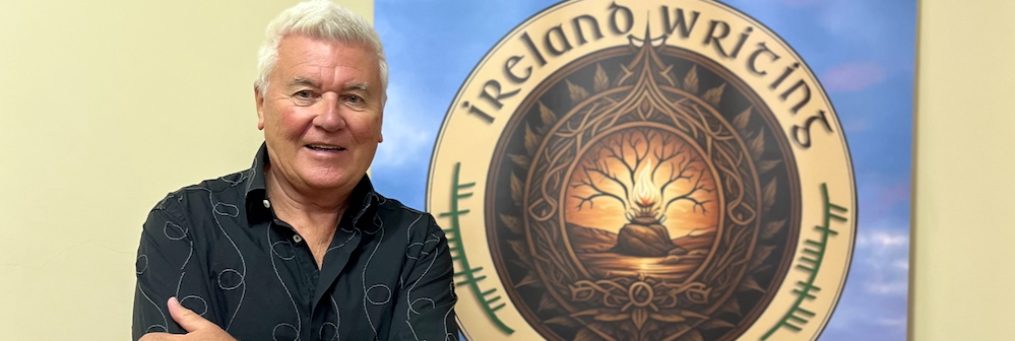
Author, playwright and civil rights activist, Danny Morrison, to attend ‘Ireland Writing Retreat’

Interesting experiences fire the imagination, so it’s little wonder Danny Morrison has become master of both the written and the spoken word as author of numerous books, including fiction and non-fiction, short stories and plays, as well as being a newspaper editor, insightful radio and television commentator, community arts festival chairperson and elected public official.

Ireland Writing Retreat‘ is proud to welcome Danny as one of the guest trainers at this year’s event which begins at Teac Jack in Gaoth Dobhair at the end of June. Participants from places as diverse as Minnesota, Cork, New Hampshire, Dublin and Missouri are to attend this year’s international gathering.

I have met Danny on many occasions over the years, often at political, media and writing events (the most recent being at the Sinn Fein Ard Fheis in Dublin) and was honored when he invited me to speak at the West Belfast Festival that he chaired a few years ago. Interestingly, before knowing Danny, I knew his lovely younger sister, Susan, as she and her friends and myself and mine would strut our stuff, teenage-style at the weekly Clonard dances on the Falls Road to the sounds of Sweet, T. Rex, Mott the Hoople, Queen and David Bowie. Susan, now sadly departed, married a close friend of mine, John Patterson, who came with their daughter to my 50th birthday party at the Gaoth Dobhair golf club where we wandered down nostalgia road together. Danny and I have much in common, both being from Andersonstown and having attended some of the same schools, including St. Theresa’s Primary and St. Mary’s Grammar in Belfast. I admire greatly what he has suffered in his lifetime, what he has achieved and what he has become. It’s  wonderful he has agreed to come to the Donegal Gaeltacht to be a trainer at this year’s writing retreat but also to take part in a special Q&A public event at Teac Jack about his life.

Danny Morrison author

Unique life experiences make for interesting stories as illustrated by published author and creative writing trainer, Danny Morrison.

Born in Andersonstown, west Belfast, the friendly, down-to-earth Irishman has led such an intriguing and eventful life, including internment without trial and imprisonment for eight years while barely in his 20s, that it has imbued him with multi-faceted views on both the world of politics and the world of literature.
Morrison grew up in a solid, working-class family, reaching teenage years just as the so-called ‘Troubles’ in northern Ireland erupted, with civil rights protests becoming widespread, then civil strife and finally a peace agreement based upon a fairer and more just society for everyone.

As a young man, influenced by what was happening around him and the anti-Vietnam protests in the US, Morrison developed a yearning to write and a need to confront injustice. When his sister loaned him the money in 1971 to buy a typewriter, his fate was sealed.

'Rudi - In the Shadow of Knulp, Danny Morrison

Later, both before and after becoming editor of An Phoblacht/Republican News, he wrote many articles, political pamphlets and even scripts for documentary films on Irish history until, in the 1980s, he became national director of publicity for the Sinn Féin political party.

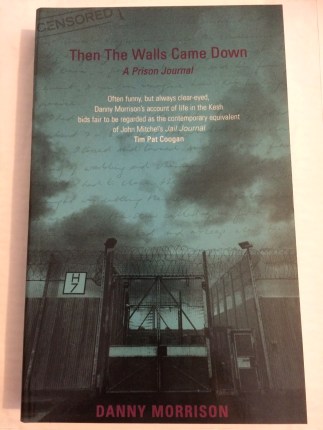
His love of creative writing flourished even in jail and led to Morrison’s first novel, ‘West Belfast,’ being published in 1989 but never formally launched. In 2015 a revised edition was re-issued to celebrate the 25th anniversary of the first publication. ‘On the Back of the Swallow,’ his second novel, was written in prison and published nine months before his release, in May 1995. ‘The Wrong Man,’ his third novel, also begun in prison, was completed after his release and published in 1997. Morrison’s three works of non-fiction are: ‘Then The Walls Came Down,’ based on his prison letters, published in 1999; ‘All The Dead Voices,’ a part-memoir, published in 2002; and ‘Rebel Columns,’ a collection of his political writings, published in 2004. He edited a book of essays, ‘Hunger Strike,’ which was published in 2006 by Brandon. His fourth novel, ‘Rudi – In the Shadow of Knulp,’ inspired by ‘Knulp,’ the 1915 novel by Hermann Hesse, was published in 2013.

Then the Walls Came Down book, Danny Morrison author


His writing also spans the short story format leading to published work in various magazines and broadcasts on BBC, RTE and Lyric FM radio. Interestingly, ‘We’ve Got Tonite’, a love story he penned, was banned by the BBC in 1992 despite having already been recorded. He also adapted ‘The Wrong Man’ for the stage. The play was hosted in London, Edinburgh, Belfast and Dublin and was nominated by ‘Fest’ magazine as one of the top three dramas of the 2005 Edinburgh Fringe Festival.

Morrison has also written articles for such prestigious newspapers as ‘The Irish Times,’ ‘The Observer,’ ‘The Guardian,’ “The Washington Post’ and ‘The Boston Globe’ and is currently working on a fifth novel, ‘Band on the Run’ and a play, ‘The Mental.’

For a number of years, Morrison has been in strong demand as a trainer of creativity writing and recently completed a writer-in-residence program in Berlin.

1916 celebrations: a mixed basket of Easter eggs

Easter Monday 1916 Revolutionary celebrations in Dublin had its up and downs, its successes and its disasters.

And I was fortunate to have experienced many of them.

First prize goes to Mother Nature. Realising the heroic efforts of the men, women and children of the Rising had been pretty well ignored by the average JoeMacBlow in Ireland back then – it decided to put on a special show for the centennial.

And what a show it turned out to be, perhaps the brightest, prettiest, sunniest day this year. One that brought out thousands of Irish people to walk the sacred walkways tread by Connolly, Pearse, Plunkett and co., with many of the people wearing turn-of-the-20th century clothing, including tweed waistcoats, flat-caps, bonnets and brogues.

Being from West Belfast, I was also delighted to learn that security for Easter Monday’s 1916 commemorations in Dublin was organised by MICAB, the company owned by Andersonstown-based, former Republican prisoner, John Trainer. I guess all that experience in ‘security operations’ we got over the last few decades up North helps.

1916 commemorations Dublin

Meeting friendly security guards from Ardoyne at the Dublin 1916 Easter Monday celebrations was an utter delight.

Last prize on the sacred day goes to highly-paid, long-time RTE Loyalist, Miriam O’Callaghan. Behaving like a Russian doll with seemingly nothing inside but herself, she got smaller and smaller as an event she hosted entitled “Reflections on Exile – How we are viewed by our American cousins” at The Gaiety Theatre near Stephens Green wore on.

Miriam O'Callaghan, RTE presenter, 1916 Rising events, John Lee historian

Oops! Overpaid RTE presenter, Miriam O’Callaghan, made a few screw-ups on Easter Monday- none more woeful than to eminent historian John Lee at a packed event at The Gaiety Theatre during Dublin’s 1916 Rising tribute events.

Dear Miriam, salary in excess of 300,000 euro, plus expenses, made so many gaffes, she became comical entertainment embodied.

First of all, she had the talented musician-cum-singer Mick Moloney perform his lovely rendition of the ballad, ‘James Connolly,’ twice as RTE’s ineptness meant it had failed to record him properly.

Then, speaking to eminent New York University Irish history professor John Lee, she said, “Is that the proclamation of independence you have there on your knee? Do you know how important that is?” The solemn professor looked aghast.

Later, in a pathetic transplanted D4 attempt to redeem herself, the misguided O’Callaghan asked the same unfortunate, “Let’s talk some more about 1916? How important was it?” adding for assertive emphasis, “Spell it out for me.”

Mairead Mooney of Donegal-based Altan fame deserves strong credit for her words and her singing, though dressed as she was in an All-Black outfit, one might have thought she was a cheerleader for the New Zealand rugby team. But with that sulky-blonde-hair-all-down-my-back look lending her that unique sexy-sensual-come-get-me-wide-eyed-innocence combo, she sang a beautiful, unaccompanied version of ‘Roisin Dubh.’

Mairead Mooney, Donegal-based Altan, 1916 Rising events

Entering the political arena, Mairead Mooney, lead singer and fiddle-player with Donegal-based Altan, said at an event at The Gaiety Theatre on Easter Monday that the 1916 Irish rebels would “turn over in their graves” if they saw what Ireland had become.

Then, sitting on the ‘intellectual’ couches with Lee and Armagh-born Pulitzer-prize-winning poet, Paul Muldoon, for the Q&A session (probably under her PR minder’s guidance to raise her profile for a future Senator’s spot on the Arts and Culture panel when Sinn Fein rises to Government status), she said, bravely enough, “the rebel leaders of 1916 would probably turn over in their graves to see what Ireland has become today,” adding, as a matter of course, “more money should be given for the arts. After all, that’s what Ireland is known for throughout the world.” (And there I thought it was for widespread nepotism, corruption and political and financial incompetence).

Joseph Hillen Ashbourne, Irish Citizen Army parade,

My younger brother Joseph practices his routines as a member of the Irish Citizens Army, encouraged by his Brasov-born partner, Angela.

Then there was my brother Joseph. So proud of him, I am. Selected to march up O’Connell Street on Easter Sunday, he was also chosen to be a member of the Irish Citizens Army and promptly dressed up in suitable 1916 attire the very next day to re-enact the Battle of Ashbourne, the only victory in the entire revolution. And that was just a few of his duties over the Easter celebrations.

Dublin Easter Rising events

Two against one isn’t fair, but having commandeered my brother’s Lee Enfield, I obviously have the upper hand against Joseph and our nephew. Dara.

When I left Dublin this morning, he was headed to Liberty Hall for yet another event he had been asked to participate in at which President Michael Higgins spoke.

And last, but not least, my Transylvanian-born wife, Columbia, now an Irish citizen, who duly took up with a Republican group and marched proudly (with me alongside as dutiful husband) past the GPO, Dublin Castle and the Four Courts to Kilmainham Jail where rebel leaders were executed.

Columbia Hillen, Sinn Fein, Easter Rising Commemorations

My Transylvanian-born wife, Columbia (in blue, with scarf, and the only person with such a name among 21 million Romanians) displays her Republican spirit on O’Connell Street on Easter Monday.

So let’s wait to see what the next 100 years brings. Considering her birthplace, Columbia may be the only one of us alive then.

Minister of Public Expenditure raps Údarás na Gaeltachta for lack of transparency

Minister of Public Expenditure and Reform, Brendan Howlin, has rapped Údarás na Gaeltachta on the knuckles for failing to release vital information on spending of public money affecting Donegal and other Gaeltacht areas.

Following a refusal by Údarás to provide details on hefty pension payments to former executives that accounts for more than half its annual budget under a Freedom of Information (FOI) request I filed, formal written parliamentary questions were submitted by TDs angry about the lack of transparency by the Gaeltacht economic development group.

FOI

Such questions culminated in one by Mary Lou McDonald, Sinn Fein TD and member of the Public Accounts Committee (PAC) on my behalf, directly to the Minister, “To ask the Minister for Public Expenditure and Reform in view of his stated commitment to transparency and accountability in the spending of public moneys, his views that it is acceptable for a public body fully funded by the Exchequer to withhold from the public record details of public service pension arrangements on retirement for senior managers; and if he will legislate to require all publicly funded bodies to make such information public in the interests of open Government.”

A formal written response has just been received from Minister Howlin, in which he, in effect, tacitly states that Údarás was wrong to turn down my FOI request seeking details of pensions for former executives paid wholly out of public funds, and that it should release the information forthwith.

The Minister writes, “Under the 2014 (Freedom of Information) Act, the terms and conditions of any individual who holds or held any office or other position remunerated from public funds in a public body, rather than just those of a Director or member of staff as provided for under the 1997 Act, are not afforded the protections under the Act in relation to personal information. On that basis, the type of information to which the Deputy’s question refers i.e. public service pension arrangements on retirement for senior managers which would be part of remuneration, would be available from a public body that was subject to FOI, other than where a specific exemption applies against the release of such information.

The Minister elaborates further, “Under the Freedom of Information Act 2014, as was the case in the original Freedom of Information Act in 1997, an exemption from the provisions of Freedom Of Information (FOI) is provided for personal information. The 2014 Act also expanded the definition of what does not constitute personal information in the context of FOI.”

In answer to McDonald’s question as to whether the Minister “will legislate to require all publicly funded bodies to make such information public in the interests of open Government,” the Minister writes, “Given the matter is already provided for by the Freedom of Information Act 2014, I do not consider further legislative action is required.

As we have seen with scandal-hit FAS and other Irish state bodies that abused peoples’ trust and misspent public money, the only way to prevent corruption is by creating greater transparency. The government coalition of Fine Gael and Labour made this a central issue in their electoral platform. In the three years since they took office, little progress has been made.

cartoon

Several weeks ago, Ireland was placed 31st position ‘in the league of transparent nations’ following research by the World Wide Web Foundation. It is the worst of any European nation, even behind countries such as Russia, Mexico and Brazil. The group’s categorized Ireland as a country that faces challenges to “mainstreaming open data across government and institutionalizing it as a sustainable practice.” It also said “core data on how the government is spending taxpayers’ money and how public services are performing remains inaccessible or pay-walled even though such information is critical to fight corruption and promote fair competition is even harder to get.”

Tim Berners-Lee, Web, founder of the Web Foundation and the London-based Open Data Institute, said, “Governments continue to shy away from publishing the very data that can be used to enhance accountability and trust” and highlighted the power of open data “to put power in the hands of citizens.”

Údarás is a classic case in point.

lenses

Dinny McGinley, former junior minister for the Gaeltacht, wrote back in a vague response to my FOI request saying simply that Údarás had informed him it was “a data controller, defined under the Acts as a person who either alone or with others controls the contents and use of personal data.

For so many years untouchable hidden behind a veil of Irish-language support, Údarás perhaps is in many ways no different to FAS in terms of greed and individual self-interests. According to Údarás sources, former board members in Donegal remained in boardroom meetings during discussions on lucrative payments to their very own companies and organisations. In addition, not one but at least three Donegal Údarás board members have been up before the Standards in Public Office Commission on corruption charges relating to double dipping on expenses. When one considers the expense claims for board members, particularly under the long-time chairmanship of Liam Cunningham from Glencolmbcille (from 2005 to 2010 he received more than 155,000 euro in fees and expenses, according to Highland Radio), one has an idea of the unchecked, proliferate spending that went on.

Some details as already reported by Highland Radio –

  • Four former Donegal members of the Údarás board each received in excess of 100,000 euro each, over a four-year period, in travel expenses.
  • Fianna Fáil member Daithi Alcorn earned nearly €120,000 between 2005 and 2009;
  • Fianna Fail Senator Brian O Domhnaill received €115,000 while independent Donegal member Padraig O Dochartaigh received €105,000.

Over one billion euro of public money has already gone into supporting Udaras na Gaeltachta yet unemployment rates in Gaetachts are consistently highest in the nation.

Misspending of public money (an issue brought up by the former head of the PAC, see 3-part series article series), includes all-expenses trips to Las Vegas for Udaras board members and their spouses – supposedly to meet a delegation of the IDA;

In truth, Údarás was – and perhaps still is – a cash cow for well-to-do insiders in west Donegal.

It is long past time Údarás prepared proper annual reports instead of the porous documents it now produces that disguise the spending picture and that it holds open public meetings to allow the people of the Gaeltacht to know exactly how their hard-earned money is being spent.

TV3’s Vincent Browne ‘People’s Debate’ in Donegal attracts lively discussion

While Fine Gael and Labour were expected to take a beating at yesterday evening’s Vincent Browne-hosted ‘People’s Debate’ in Letterkenny – in part deserved as the two parties refused to participate – Fianna Fail also took a drubbing.

OLYMPUS DIGITAL CAMERA

At one point, after listening to the party’s TD Charlie McConalogue berate government policies, the veteran TV host exclaimed, “I cannot understand how you can make these criticisms. Fine Gael is simply following Fianna Fail policies. Fianna Fail laid down the strategy for dealing with the banking bailout and Fine Gael and Labour are merely following it.”

McConalogue made another mistake later in the debate saying, “the agreement with the Troika was negotiable,” thus contradicting what the public had been told by Fianna Fail that the deal under former Taoiseach Brian Cowen and Minster of Finance, Brian Lenihan, was non-negotiable. Browne was quick to make the point, “Your party said details of the agreement with the Troika were non-negotiable, yet now you say they were. Make up your mind.”

On the emotive issue of water charges, McConalogue – after much fudging said he would halt Irish Water and suspend water charges. Again, Browne responded, “Your party, Fianna Fail, already had a plan in place in 2010 to impose water charges, but now you’re saying you’re having second thoughts.”

OLYMPUS DIGITAL CAMERA

Browne, at his best as a current affairs host when pushing political guests for a clear-cut answer, didn’t let the lively capacity audience down, especially when badgering the four-member panel for their views on a potential coalition after the next election. Asked whether he would take a ministerial seat under a Fine Gael or Fianna Fail led coalition Sinn Fein’s Pearse Doherty seemed somewhat uncomfortable in his seat.

“That is a hypothetical question and such decisions are made at our party Ard Fheis,” he said finally, as if caught by surprise, but recovering. “What we have agreed is that unless water and property charges are dropped, we will not go into any coalition.” He acknowledged, “Some members have voiced their opinion that they would go into a coalition as a minority party. We are a party hungry for change, we are not hungry for power.”

When asked the same question, his Sinn Fein colleague TD Pádraig MacLochlainn was more direct, unhesitatingly replying, “I will not participate in a government led by either Fianna Fail or Fine Gael.” As if taking strength from this, Doherty later stated categorically, “If asked by a government led by Fianna Fail or Fine Gael to be a minister, I would refuse.”

OLYMPUS DIGITAL CAMERA

After chastising the two Sinn Fein members for not giving a straight ‘yes’ or ‘no’ answer, McConalogue himself began the dance of the slippery eel until, under bombardment from host and audience, he finally said, “I would not like to participate in a Fine Gael-Fianna Fail coalition but if I was outvoted by my party colleagues I’d have to go along.”

In his two-minute intro, Doherty said “four years ago we were promised a democratic revolution yet all we have had is more of the same with cronyism, stealth taxes and high levels of unemployment, no more so than right here in Donegal. There is a fairer and better way of moving forward and Sinn Fein’s job strategy can reshape this county.” He added that it was little wonder Donegal was known as ‘The Forgotten County.’ “I know Vincent you didn’t come here by train because this is one of only five counties in all Ireland without a mainline railway service.” Under an FOI request he said he has asked for a government paper produced on the future of small schools, adding that Donegal has the second largest number of such schools, with four teacher or less.

When corruption and lack of transparency within Údarás na Gaeltachta was brought up, including its refusal to release key information on its public spending such as lucrative pension payments to former executives which amount to half of its entire annual budget, Doherty said his party had tabled formal parliamentary questions on the issue, adding, “there should be full disclosure about people in receipt of high public pensions, it is important to have complete transparency so such payments can be scrutinized by the public.”

McConalogue said in his intro, “the last four years of government have been an attack on Donegal with post office closures, agriculture being hard hit and worsening heath services,” adding, “we have strong potential here but we need better infrastructure including the A5 project up and running and wider broadband.”

Referring to the pre-election catchphrase ‘Frankfurt’s Way or Labour’s Way,’ MacLochlainn said the government’s record has proved very different, “with a reduction in classrooms, budget cuts across the board and Donegal having the lowest allocation of medical staff of any county.” He added, “Donegal people are hard-working and passionate. All we’re asking is a fair chance and for Dublin to meet us halfway.”

Regarding the water charges, he added, “For thirty years, Sinn Fein has opposed these charges and now it has become the straw that broke the camel’s back. There has simply been too much austerity. Irish Water is a white elephant. My message is ‘scrap the water charges and go back to the drawing board.’ ”

While decrying the lack of proper health services and unfair stealth taxes, Independent TD Thomas Pringle said renewable energy had tremendous potential for Donegal as had the biomass wood industry. Speaking of Killybegs, he also said the fishing industry had been “hard-hit.’ He said water conservation should be a top priority because so much is being lost through poor network connectivity. He also said he was proud of challenging the bank bail-out through the courts and being in the forefront of water charge protests (continuing the momentum, a major ‘Right2Water’ protest took place earlier today – Saturday – in Letterkenny, with others elsewhere nationwide).

All four TDs, when asked directly, said they would vote ‘yes’ in the upcoming referendum on same-sex marriage.

Over the lively, two-hour event at the Clanree Hotel, there was no shortage of questions from the floor with periodic rambunctious catcalls, cheering and booing, which caused short stoppages and words of warning from the presenter.

OLYMPUS DIGITAL CAMERA

True to his word, Browne attempted to cover as many topics as possible such as equality, including the upcoming same-sex marriage referendum; family services, education, employment and health. Speakers ranged from parents of terminally-ill children; school teachers, social workers and community activists working on behalf of people as diverse as lesbians, gay, bisexuals, transgender, cancer sufferers, the disabled, and many others.

Some light-hearted moments and biting comments helped take the edge of emotions as when a thirsty Vincent Browne ran out of water and promised he’d even pay for some and when James Woods from Gortahork commented that with so much emigration, Donegal was turning into a wildlife refuge.

OLYMPUS DIGITAL CAMERA

All in all, ‘People’s Debate’ is an excellent initiative by TV3, no doubt demanding detailed planning to host such shows in all the constituencies of Ireland.

Fine Gael and Labour’s decision to spurn them, indicating fear and a lack of understanding of the difficulties facing ordinary people, could ultimately cost them vital votes in the polling booths.

OLYMPUS DIGITAL CAMERA

OLYMPUS DIGITAL CAMERA

OLYMPUS DIGITAL CAMERA

OLYMPUS DIGITAL CAMERA

OLYMPUS DIGITAL CAMERA

OLYMPUS DIGITAL CAMERA

OLYMPUS DIGITAL CAMERA

OLYMPUS DIGITAL CAMERA

OLYMPUS DIGITAL CAMERA

OLYMPUS DIGITAL CAMERA

‘Whatever you say, say nothing!’ – motto of Údarás na Gaeltachta

‘People have no right to ask how we spend their money.’

That’s the attitude of Údarás na Gaeltachta, which has once again refused to release key information about how it spends public funds.

Udaras

A Senate committee revealed that Údarás pays millions of euro every year in pensions to former executives, some of whom were local Donegal employees including Cathal MacSuibhne, former regional manager based in Gaoth Dobhair.

cathal

Sinn Fein’s Trevor Ó Clochartaigh, a member of that Senate committee, exclaimed, “I nearly fell off the chair when I heard that almost half the current expenditure goes on pension payments to 136 people who are no longer employed by the organisation. Small wonder Údarás is not able to function more effectively.

He added, “This raises serious concerns regarding the levels of monies being paid and who is receiving them.”

Under transparency rules, other public bodies have made a breakdown of such pension figures available for examination, but in response to a Freedom of Information (FOI) request I made, Údarás refused to do so, citing gobbledegook about data protection.

As a result, having brought the matter to the attention of a number of TDs, the Údarás pension issue has risen to the highest levels of national government, to the office of Brendan Howlin, Minister for Public Expenditure.

I can reveal in this blog that on my behalf various leading politicians including Public Accounts Committee (PAC) member, Mary Lou McDonald, have attempted to find out the individual pension figures but Údarás has stonewalled every request, preventing their release.

MaryLou

How it happened

Údarás responded to my initial FOI request last year seeking details on pension and lump sum payments to former executives in a letter signed by Padraic O’Conghaile – a ‘cinnteoir’ at the organisation’s headquarters in Galway.

In the letter, he wrote, “I am refusing these records as they relate to the pension of an individual under Section 28.1 (Personal Information). The FOI Act defines personal information as information about an identifiable individual that: ‘would, in the ordinary course of events, be known only to individuals or members of the family or friends, of the individual.’ I believe that the right to privacy of these persons with regard to such information far outweighs any public interest there may be in this matter.

The fact, that all the pensions and payments are publicly-funded and thus not “known only to individuals or members of the family or friends, of the individual” as he asserts – did not seem to enter Mr. O’Conghaile’s thinking. Or, perhaps, did, but he refused to acknowledge it.

Following this response, I requested several TD’s to present formal written parliamentary questions in the Dail on the same issue.

For example, Mary Lou McDonald, a member of the Public Accounts Committee (PAC), submitted her parliamentary question to the Minister for Arts, Heritage and the Gaeltacht asking the Minister to “reference the specific provisions of the Data Protection Acts 1988 and 2003 to which he referred (supporting Údarás’ denial of information); the basis on which he believes Údarás na Gaeltachta does not, unlike in the case of all other senior managers across the civil and public sector, have to make public the details of public service pension arrangements on retirement for senior management.

Dinny McGinley, then junior minister, wrote back in a vague response saying simply that Údarás had informed him it was “a data controller, defined under the Acts as a person who either alone or with others controls the contents and use of personal data.

dinny

Put in simple words, it means Údarás, while deriving all its funding from public money, considers ‘People have no right to ask how we spend their money.’ McGinley’s response also has no logical meaning whatsoever under present Irish law. Instead it is a classic delaying tactic. The former Minister did not bother to question it or seek elaboration.

That response led McDonald to submit a follow-up question, this time to Minister Howlin, reading, “given the Minister’s stated commitment to transparency and accountability in the spending of public monies, whether in his view it is acceptable for a public body fully funded by the exchequer to withhold from the public record details of public service pension arrangements on retirement for senior managers; and if he is prepared to legislate to require all publicly funded bodies to make such information public in the interests of open government.

HOWLINBRENDAN

It is most disappointing that a simple request to a fully publicly funded body about its spending has led to such a reactionary response from an organisation such as Údarás, which is responsible for the economic, social and cultural development of the Gaeltacht.

Such utter lack of transparency and disregard for public concerns has already led to such widespread corruptive practices as those at FAS when it was discovered hundreds of thousands of euro went on lavish holidays including first-class travel and expensive rounds of golf for executives and their wives. Údarás itself has yet to account for trips paid out of public funds for board members, executives and wives to visit attractive international destinations, including Las Vegas.

Public money is a precious thing and every penny of it ought to be properly accounted for and judiciously spent.

I will reprint Minister Howlin’s response on this blog when it is received. It should provide a most interesting read.

Bunbeg, once pretty, now disfigured

Once pretty, Bunbeg is looking more and more like a toothless old hag.

Derelict spaces, decrepit ‘For Sale’ signs and boarded up, empty and run-down buildings have pockmarked its once thriving main street.

OLYMPUS DIGITAL CAMERA

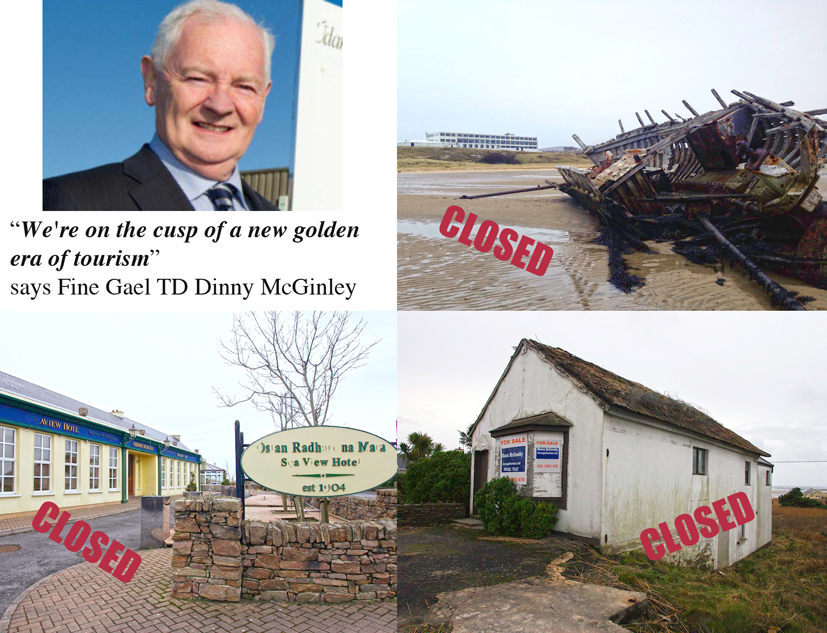
The iconic, century-old Seaview Hotel, which employed over 108 people seven years ago (talk of Cayman Islands and meat debts has no place in this blog), stands empty and forlorn this week , joining a heap of other ‘deadwoods’ on the street  – a once popular restaurant opposite and three other nearby hotels, The Errigal View, the Ostan Gaoth Dobhair and The Brookvale, as well as a mix of shops, bars and cafes, all now closed and crumbling.

Ironically, one of the few buildings to be renovated and opened on the main street is the constituency office of Fine Gael TD and former Gaeltacht, Arts and Tourism Junior Minister Dinny McGinley, the man who proudly pronounced this week, “We’re on the cusp of a new golden era of tourism.”

colaj good

Talk about poor timing.

Not to mention poor positioning. McGinley’s office lies a mere 50 yards from the deserted Seaview Hotel, first established in 1904.

News this week of the Seaview’s demise is a stark reminder of the abnegation by Udaras, the area’s main economic regeneration group, of its prime responsibility for creating  jobs, including those in the hospitality sector, with Gearoid O’Smaolain its main tourism development officer.

Eamon McBride, former President of the Gaoth Dobhair Chamber of Commerce, put it simply: “the area is crying out for more attractions.”

Job losses, lack of transparency

Aside from the 35 jobs, both full and part-time, lost at the Seaview this week, hundreds have been lost at other Udaras-sponsored businesses such as Largo Foods, Nuance and Sioen Apparel over the last few years. In fact, the Udaras Donegal office has performed consistently worse than any other Gaeltacht region in Ireland in terms of its job-creation record.

Sinn Fein TD Pearse Doherty this week called on the Government to immediately publish the findings of a delayed report by a working group tasked with examining job creation in the Gaoth Dobhair area. One hopes he will demand the same of the local Udaras office. Only then, can the organisation be properly analyzed to ascertain if the public is getting ‘bang for its buck,’ or if drastic changes need to be made internally if it is found that employees lack the skills-set necessary for the important task at hand.

photo and chart good

Gaeltacht disintegration

The intriguing part of the sad saga surrounding what is, in effect, economic mismanagement of the Irish-speaking area, is that while towns within it, such as Gortahork, Falcarragh and Bunbeg, are literally peeling apart, both economically and physically, Dunfanaghy, just outside the borders of the Gaeltacht, is riding a wave, with bars and cafes enjoying a boost in trade, especially at weekends – without the benefit of public funding of any kind.

While Udaras Donegal announced this week it will release proposals for economic development, observers say this is more a cosmetic exercise aimed at organisational survival than a serious attempt at strategic innovation and staff revision – that it has not even hosted a single open public meeting to ascertain the views of ordinary people, the very people who pay for its running costs. Interestingly though, while widespread job losses have occurred in Udaras-sponsored companies in Donegal, no such losses have occurred within the local Udaras office itself.

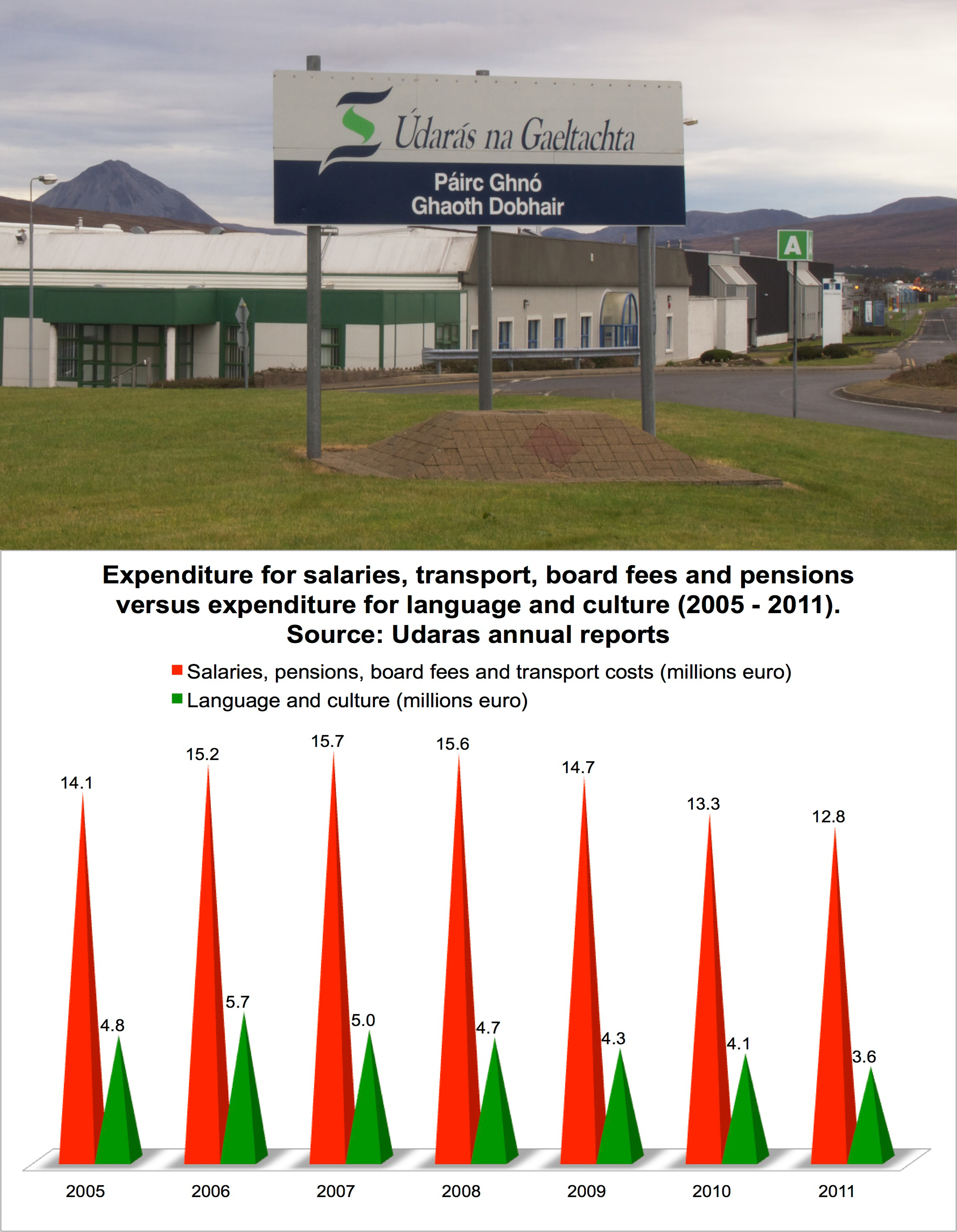
Based on its operational history (see above graph), should we accept as normal that out of its seven million euro budget for this year as announced by Udaras officials, two-thirds go towards salaries, pensions and expenses, and the remaining one-third only to economic and language development?

Is it not long past time this organisation came under closer public scrutiny and thus be made more accountable?

Meeting the IRA chief of staff on the steps of a New York library

library

New York Library’s ornate limestone building – an unlikely place to to meet the IRA’s former chief of staff.

Standing on the broad steps of the New York Library on Fifth Avenue and 42nd Street awaiting the arrival of the IRA’s former chief of staff was quite an exciting experience, especially for a naïve teenage undergraduate such as I was then.

Living in west Belfast in the midst of ‘The Troubles,’ I imagined it could conceivably have been a key scene from a movie about a clandestine guerrilla operation.

But it was nothing like that.

By then, Seán Cronin, the IRA’s former chief of staff and mastermind of Operation Harvest, a campaign that carried out military operations on British security installations, was a well-respected author, academic and US correspondent for The Irish Times. In contrast, I was a humble humanities student at the Ulster Polytechnic, now the University of Ulster, working part-time in the Celtic Bar on the Falls Road for disco money.

Seán Cronin

Dungloe-born social activist Peadar O’Donnell – about whose  life a conference was held this week (see news story below) – had brought us together.

Months before, I had – by chance, for an undergraduate thesis – become one of the last persons to interview Peadar in Dublin just before his death. And Seán was writing a book about the 1930s, a tumultuous period in Irish history when Peadar with Frank Ryan, George Gilmore and others had launched the Irish Republican Congress (the subject of my thesis).

It being a time before Google, Facebook or e-mail – in fact, fax was a new-fangled machine I had only vaguely heard of – neither Seán nor I knew what each other looked like. And as there were scores of people lingering on those broad library steps that sunny summer’s day so many years ago, meeting up wasn’t so easy.

But eventually we did, Seán saying later – half-jokingly – that his past training had helped him scope out the situation and pick me out as “the Belfast boy among the Yanks.’

After introductory formalities including my proudly handing over my thesis (part of which he later published in his book), we retreated out of the hot sun into a nearby coffee house. There we spent some time chatting about this and that – his days in the IRA, his arrest and imprisonment, his work as a journalist and not least, the man who had brought us both together, Peadar O’Donnell. Little did I know then, of course, that I too would become an international journalist and live and work in west Donegal as Peadar had.


Peadar O’Donnell

Teacher, social activist, soldier, author

As people attending this past weekend’s annual conference in Dungloe learned, Peadar was one of the foremost radicals of twentieth-century Ireland. Born in that town into an Irish-speaking family, he was a teacher on Arranmore Island but by 1919 was a leading organiser of the Irish Transport and General Workers’ Union and had also attempted in Derry to set up a unit of the Irish Citizens Army. Later he joined the IRA and remained active during the Irish War of Independence, leading guerrilla activities in the border area, becoming commander of the IRA’s Donegal Brigade in 1921. He gained a reputation as being headstrong, and sometimes launching operations without orders. Summing up aspects of his character, a speaker at the conference this week said if at a wedding Peadar wanted to be the groom and if at a funeral, the corpse.

Opposing the 1922 Anglo-Irish Treaty, Peadar was among the IRA leaders who took over the Four Courts in Dublin and helped spark the outbreak of civil war. Imprisoned in Mountjoy, he participated in a mass Republican hunger strike, resisting for 41 days.

civil war photo

Turbulent times in Ireland’s revolutionary history – radical changes that deeply affected leaders like Peadar O’Donnell and Sean Cronin.

Through it all, the west Donegal man saw himself as closely following the principals of James Connolly, seeing the republican cause not solely in Irish nationalist terms. In 1923, while still in prison, he was elected as a Sinn Féin TD for Donegal and after his release took over as the editor of the republican newspaper, An Phoblacht. He did not take his seat in the Dáil and did not stand at the 1927 general election. He tried to steer the IRA in a left-wing direction and founded organisations such as the Irish Working Farmers’ Committee and the Anti-Tribute League, which opposed the repaying of annuities to the British government owed since the Irish Land Acts. He also founded the short-lived socialist republican party, Saor Éire.

The Irish Republic Congress that he helped establish was a left-wing movement that met with success in organising Belfast Protestants under the Republican Congress banner, leading to a march by the Shankill Road branch to Bodenstown churchyard in June 1934 to honour Theobald Wolfe Tone. The Congress ultimately split, however, on a proposal to turn it into a political party, O’Donnell rejecting this idea, arguing that it had more power as a united front. Like Gilmore and other Irish Republicans, he ended up fighting in the Spanish Civil War for the International Brigade against Franco.

After the 1940s, O’Donnell devoted more of his time to writing and less to politics, publishing his first novel, Storm, in 1925. This was followed by Islanders (1928), which received national and international acclaim, The New York Times describing it as a novel of ‘quiet brilliance and power’, the London Spectator ‘an intensely beautiful picture of peasant life.’ Other books followed – Adrigoole (1929), The Knife (1930); On the Edge of the Stream (1934); The Big Windows (1955) and Proud Island (1975). He also edited the Irish literary journal, The Bell, having founded it with well-known writer, Seán Ó Faoláin.

Peadar married Lile O’Donel in 1924, even though they had never met before. But they had communicated extensively during his time in prison. They began their honeymoon in a Dublin hotel that evening but by the following morning he was on the run once again as he had been identified.

Dying at the tender age of 93, he left strict instructions –  ‘no priests, no politicians and no pomp.’ His wishes were granted.

Looking back down the years, remembering my discussions on this larger-than-life character over a cup of tea in a downtown Manhattan café with someone as distinguished as Seán Cronin, whose own life was every bit as colorful and adventurous, seems now to have been a figment of a lively imagination.

I probably didn’t fully appreciate then the incredible opportunity that had been presented to me to turn the pages of history in the company of great men who wrote them. Now, with the wisdom of age and hindsight, I think I do.


Conference celebrating life of Peadar O’Donnell highlights key social issues

OLYMPUS DIGITAL CAMERA

(l to r) Clare Daly TD for Kerry and social activists Paula Leonard and Clarrie Pringle describe the struggle by women in Irish society to gain recognition.

Analysis of a women’s co-operative in the Rosses that attracted over 200 knitters and of a left-wing movement, the Irish Republican Congress, were elements of a three-day conference this week celebrating the life of Dungloe-born socialist, teacher and author, Peadar O’Donnell.

At a panel chaired by community leader, Paula Leonard, social activist Clarrie Pringle described how collective efforts “cut out greedy middlemen who took hefty profits from the hard work and knitting skills of local women.”

“Knitting needles were known as ‘poverty sticks’ then as Donegal women attempted to stave off hardship,” she said. “So successful was the co-operative that not only did women get more money for their work but greater independence by learning business skills, including working with banks and statutory bodies.” Later still, some women started their own small companies, quite unusual for the time, she added.

Also speaking on the panel entitled ‘Women in Struggle’ held at Ionad Teampaill Chroine in Dungloe, Clare Daly TD in Kerry, praised the efforts of Pringle and her colleagues “as showing what women can achieve if given a fair chance.” Daly said the key role women have played in Irish history, including the Ladies’ Land League, has been “skewed or silenced by certain bodies for political and social purposes, but now thinking must change to meet modern reality.”

The two speakers agreed that difficulty of divorce and restricted access to contraception in the emerging Irish state made it hard for women to progress socially and politically.

OLYMPUS DIGITAL CAMERA

( l to r) Author and Dublin Sinn Fein councillor, Eoin O’Broin, TD Thomas Pringle and Eugene McCartan, General Secretary of the Communist Party of Ireland, analyze the success and failure of the Irish Republican Congress.

Both Daly and Pringle blamed the Catholic Church for “holding back the progress of women in Irish society.” Daly said, “There is no place for the church in political life, in selecting core curriculum in schools nor in governing women’s bodies” while Pringle added, “When we look back on the oppression of women and children in Ireland, we must inevitably view the Catholic church as a predominant influence. Shame of sexuality was bred into women for over a hundred years.”

They both called for a human rights module to be introduced into the national school curriculum,

In a second panel chaired by TD Thomas Pringle, Dublin Sinn Fein councillor, Eoin O’Broin, and Eugene McCartan, General Secretary of the Communist Party of Ireland, discussed the merits of the 1934 Irish Republican Congress, an effort by Peadar O’Donnell and others to create a stronger left-wing republican base to combat poverty and inequality.

“In many ways, the Congress, though short-lived, was a high point of left-leaning Republicanism of that era but it was also a lesson in abject failure,” said O’Broin. “It showed the immense challenges involved in linking nationalist and socialist traditions then and building socio-economic bridges, especially in northern Ireland.”

He added, “With the IRA’s ambivalence towards such a radical movement, Fianna Fail’s continued platform building then and the inability of Congress leaders to read the political situation and devise proper strategies, it, in effect, helped result in sixty years of Fianna Fail rule.” Saying there are “many lessons to be learned from the Congress,” McCartan added, “Greater appreciation of working-class issues is key to a fairer society as is the building of a common consciousness and a confidence in ordinary people that they can change things.”

John Crowley, who travelled from Scotland to attend the conference, said, “Overall, there were some very interesting analyses and from diverse viewpoints with many of the issues still relevant in today’s society.”


West Donegal whale protection group formed as threats to human health resurface

Following an often emotional public meeting held at Teac Jack in Glassagh earlier this week, a wildlife protection group has been formed in west Donegal to lobby for government policy changes towards stranded marine animals and to promote specialized training.

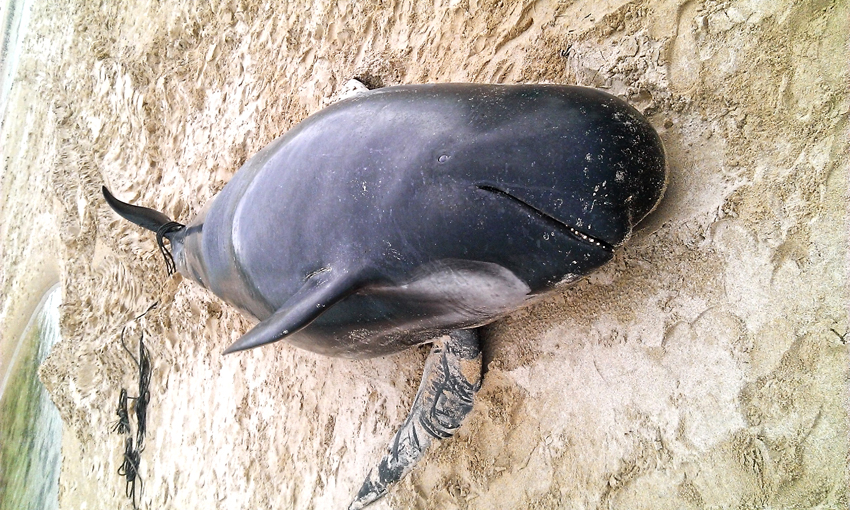
The ‘North West Whale & Dolphin Support Group,’ which was established at the Tuesday evening meeting, follows concerns by many local people about the treatment of a pod of 13 pilot whales that were left stranded on Ballyness beach near Falcarragh, which all died of slow suffocation after five days. It is the 13th such stranding this year in Donegal, including a sperm whale stranded off Machaire Rabhartaigh beach. Around 32 other whales died off Rutland Island two years ago and were cut up and transported to Cavan where they were incinerated.

Meanwhile, concerns have arisen as to what caused the mysterious deaths of all the whales amid a recent rise in the numbers of marine animals being stranded off Donegal’s coast.  And that, whatever it is, may also be a hazard to human health.

whale 2

A stranded pilot whale struggles for life at Ballyness beach near Falcarragh, west Donegal. (Photo by Antonia Leitner).

Chairperson of the meeting, Amanda Doherty, with Selkie Sailing, who has also launched a petition that has attracted more than 230 signatures on the issue, said she was pleased by decisions those attending had made together.

“We want to raise community awareness and have the current policy regarding cetacean strandings in the area reviewed,” she said. “It should be a more flexible policy to allow for the particulars of different situations that occur. This is best practice according international standards and Ireland should follow it.”

Some people at the meeting – many of whom tried their best to save the dying whales – became emotional as they described the traumatic situation at Ballyness beach and the agony of the cetaceans as they slowly died of suffocation in shallow water.

Members of the National Parks and Wildlife Service (NPWS), led by Dave Duggan and Pat Vaughan, decided “to let nature takes its course” rather than try to save the whales or apply euthanasia to reduce the whales’ suffering. They also did not ask the coastguard for assistance to bring the whales out to sea, as has happened in other parts of Ireland. The state-funded Donegal county veterinary office under the leadership of Charles Kealey, chief veterinary officer, has also come under criticism for refusing to get involved in any way to help the whales, including making sure the mammals were dead before they were buried. (In contrast, see photo below of a cetacean (dolphin) being treated more humanely in another part of Ireland, with vets and the coastguard involved).

Strandedwm_shay-fennelly_2007

Westport-based Irish Coastguard assist with a stranded Common Dolphin which could not be refloated. A Mayo vet administered an injection to humanely end its suffering. Photo by Shay Fennelly

Pearse Doherty Sinn Fein TD for west Donegal, who has submitted a number of formal questions over the last week in the Dail to Ministers regarding the treatment of stranded whales and other cetaceans, attended the meeting and gave his advice on the best way forward for the group. Doherty said it was important the new group work with current organisations such as the Irish Whale and Dolphin Group (IWDG) and the National Parks and Wildlife Service (NPWS) and suggested a two-pronged approach – making sure policy at the IWDG matched international standards, and the establishment of  ‘first responders’ in the local area, recognized by the NPWS and IWDG – people who could take the lead in developing situations.

The newly-formed ‘North West Whale & Dolphin Support Group’ decided to hold monthly meetings and invite Simon Berrow, founder of the IWDG, to provide specialized training for members on how to best help stranded whales and other cetaceans and to meet with a small working group on the same day to discuss further action. Clare-based Berrow is a full-time lecturer at the Galway-Mayo Institute of Technology teaching on the Applied Freshwater and Marine degree course and project manager of the Shannon Dolphin and Wildlife Foundation.

After being contacted about the meeting, Berrow told the author of this blog, “We are delighted to hear of the formation of a local group. We look forward to working closely with them to prepare a better response to stranded cetaceans in the future and also to encourage local recording.”

Offshore toxic waste dumping? Military submarine activity?

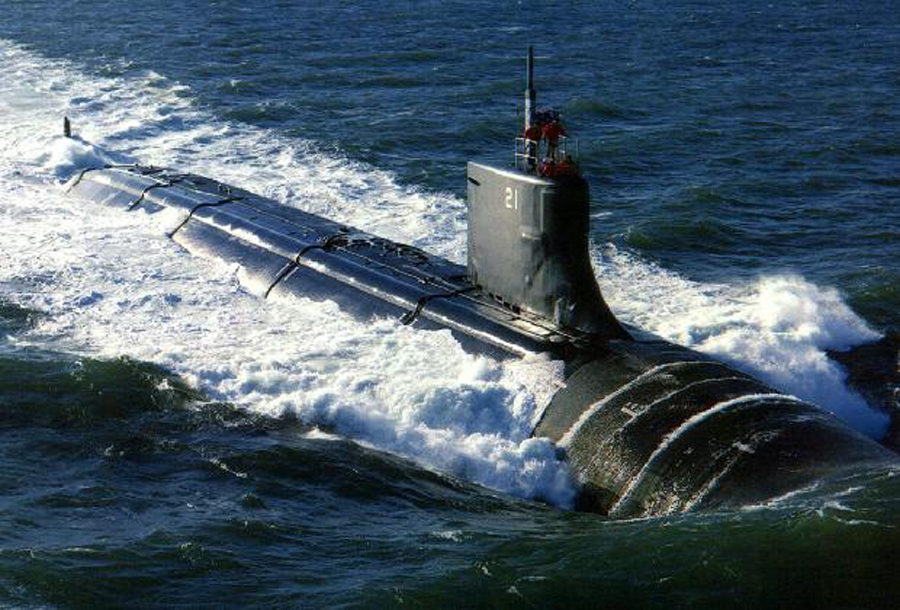
At the same time, concerns regarding the health hazards to human life – as well as marine – from toxic dumping at sea and military submarine activity and experiments that may have caused the strandings have resurfaced locally.

dumping 2

Oceans that become graveyards for poisonous debris that pose dangers to human as well as marine life.

International regulations state that discharges of waste material – often poisonous by nature – should not be made within a certain distance of any landmass, according to the Seas at Risk. But who’s watching? Some major ports have cleaning facilities such as Edinburgh, Belfast and Dublin, but this costs money so some incorrigible corporations say ‘why bother’? As the coast of Donegal is in direct line of most transAtlantic ocean traffic between Europe and the Americas, the amount of waste dumped offshore is probably immense, one respected scientist saying ‘enough to create mountains under the sea.’ Much of this material contains cancer-causing chemicals (carcinogens) such as manganese, benzene, coal-tar, radium, petrolatum, parabens, vinyl chloride lead and zinc. With recent technological developments, many of these chemicals are in the form of deadly nanoparticles (particles less than the size of a human or animal cell) which, airborne, can then penetrate the cells, causing untold damage.

Nanoparticles: Technological and industrial development has outstripped health research into their potential dangers in everyday foods and consumer products.

Nanoparticles: Technological and industrial development has outstripped health research into their potential dangers in everyday foods and consumer products.

Could this be the cause or partial cause of disease in whales and other marine animals? Researchers say they have found large quantities of these chemicals in the whale tissue samples taken and tested. And doctors report larger than normal incidences of human cancer in local people.

In addition, some of the waste is in the form of non-biogradable plastics. Because they don’t dissolve but break up into smaller elements, these plastics have formed what scientists now call ‘plastic islands’ – often the size of countries, one is larger than the US state of Texas, which in itself is 17 times larger than Ireland – that float in our seas, causing disruption to the normal flow of currents. Consequently, the dangers to both human as well as marine animal health is high. For a long time, many people in northwest Donegal have suspected such dumping to have taken place offshore, with menacing results (see further information here).

A special group was established within the last two years at Ionad Naomh Pádraig in Dore by Freddie O’Donnell and Aodán Ó’Gallchoir to examine correlations between high levels of cancer in the Gaeltacht area and dumping of waste in coastal waters nearby. Known as ‘Scaoil Saor ó Ailse’ (Break Free from Cancer’), the group’s public relations officer, Joe Diver, said former local doctor Paddy Delap, said such waste was affecting peoples’ health, particularly cancers of the skin, lung and brain, with an abnormally high level of fatalities. A deep-sea diver then broke his decades-old silence on Raidó na Gaeltachta, describing how he found a large area of the sea bed littered with large black drums with hazardous signage on them in the waters off Tory Island, adding, “We were looking for shipwrecks, went down 40 to 45 metres and came across black drums with green stuff growing on them. There were a few thousand of them. They were heaped in a hill-like structure and had skull and crossbones on them. The diver said the drums would have since disintegrated and their hazardous material dissolved into the ocean off the Gaeltacht coast.”

submarine

Military submarine activity and experiments at sea: what are the hazards for Man, Plant and Animal?

Areas affected could include Gaoth Dobhair, Cloughaneely and The Rosses. Calls for greater funding for a more comprehensive analysis were ignored by the relevant authorities, mainly on the instructions of Dublin, some say for economic and political reasons. Further, fearing such research could stir up waves of protest if the result became known, efforts were made by authorities, mainly Fianna Fail, then in power, to trivialize what little had become known. Politics and money trumped peoples’ health and once again the ‘Forgotten County’ was forced to live up to its unfortunate title.

Damage control became main concern for a certain cadre of elite: the party in power in the Dail and its big-business supporters. “This situation has been going on for far too long,” said one medical practitioner who has treated cancer patients in the area. “It is long past time national funding was made available to investigate this situation thoroughly. If it happened in certain other parts of the country, it probably would already have taken place long ago. Surely the deaths of so many marine animals and the high number of cancers affecting people means the issue should be looked at very closely.  To some extent, it’s in the hands of ordinary people. They should be lobbying their government representatives by e-mail, phone and letter. If not, nothing will be done.”

Several of the whales at Ballyness beach were found to have lesions, blemishes and lumps on its skin, but National Parks and Wildlife Service officials declined to say where any disease may have originated. As whales are highly social creatures that travel in communities, some say healthy whales may have refused to abandon sick or injured pod members and followed them into shallow water. “We can’t say for certain,” said Pat Vaughan, district conservation officer for the NPWS. “What we do know is that whales and other marine animals can have high levels of certain toxic elements in their bodies.”

Whale-protection group offers complimentary specialized one-day training in west Donegal

Meeting to take place at Teac Jack, Glassagh, this Tuesday (July 22) at 8pm

Officials with the Irish Whale and Dolphin Group (IWDG) have offered to host a complimentary one-day whale life-saving course in Falcarragh, Donegal over the next month for those interested in helping any struggling mammals that become stranded on the county’s beaches.

To avail of this offer, please contact directly Simon Berrow, founder of IWDG at coordinator (at) iwdg.ie

In addition, as part of a larger lobbying campaign for changes to the government’s policy on cetacean strandings, a meeting is being organised at Teac Jack in Glassagh, Donegal, under the auspices of Selkie Sailing and Gareth Doherty, environmentalist and wildlife enthusiast. The meeting is due to take place this Tuesday (July 22) at 8pm.

The generous offer of training from the IWDG comes as the well-respected organization denied vehemently that any call was received from the National Parks and Wildlife Service (NPWS) for help in dealing with the 12 stranded pilot whales that died at a west Donegal beach last week.

Berrow, who will visit west Donegal this weekend, said, “In contrast, it was someone from our group, Brendan Quinn, who called one of our senior members, Mick O’Connell, who in turn called the wildlife service in Glenveigh and got no response. Mick then called David McNamara, a wildlife service ranger, who went to the scene at Ballyness beach and observed the situation from a nearby hill with hundreds of people gathered around the beached whales. He then waited for them to leave the scene.”

Members of the family of pilot whales stranded off Ballyness beach, Falcarragh, Donegal, last week.

Members of the family of pilot whales stranded off Ballyness beach, Falcarragh, Donegal, last week. Photo courtesy of Selkie Sailing

Voicing his disappointment that Dave Duggan, the acting NPWS regional manager in Donegal, nor Pat Vaughan, a NPWS conservation officer, requested help from the IWDG, Berrow said, “No call was ever received by us asking for our assistance. We would have come up – or at the very least have given advice on the phone. We also have detailed guidance on our website about how to handle a stranded whale situation, which could have been easily accessed and followed. We could have saved some of these whales.”

He also said a statement by Vaughan that nothing could be done for the dying whales but “let nature takes its course” and let the 12 whales die from slow suffocation over five days is ”pure rubbish.”

Another pertinent question to be asked: Where was the state-funded Donegal county veterinary office, run by Charles Kealey, chief veterinary officer, and his staff in all of this? With the local and national media attention the situation received, they would have to have been deaf, dumb and blind not to have heard of the tragedy, and if concerned in any way, should have been at the scene pronto to assist. And definitely, to make sure whales were not buried alive, which expert sources say – without veterinary expertise – could well have happened.

In Berrow’s view, “Everything went pear-shaped because nobody, no group, took ownership of the situation. The wildlife service won’t take responsibility for stranded whales. The IWDG is a small NGO, manned mainly by volunteers but we help where we can. Lack of responsibility at Ballyness, Falcarragh, meant that well-meaning members of the public had to step in. Unfortunately, most of them did not have the proper expertise or training. People like Amanda and Gareth Doherty deserve great credit for what they did, and are still doing, to help protect our marine wildlife.”

Photo by Antonia Leitner

Stranded pilot whale at Ballyness beach, Falcarragh, west Donegal (Photo by Antonia Leitner)

Berrow said the IWDG offers training in both identification of cetaceans (mainly whales, dolphins and porpoises), as well as one-day courses on effective methods for dealing with stranded whales “but no-one in Donegal has asked us to do such training. We could bring the equipment, we even have a life-size, inflatable pilot whale that we use for simulating saving techniques. All we need is for someone to organise a venue and a place to stay overnight for trainers.” He said trained IWDG volunteers “are thin on the ground in Donegal.”

Berrow also said the Donegal wildlife service’s contention that there were no vets with sufficient expertise about whales and that no adequate drugs in the county to euthanize the 12 whales was also misleading. “I’d be shocked if there is not enough Pentabarbitone in Donegal. Anyway, they could have contacted us or the Dublin Zoo which uses the drugs on large animals such as giraffes or even Tony Patterson, the relevant officer across the border in Northern Ireland who I’m sure would have gladly helped.”

In the Republic of Ireland, Pentabarbitone is administered by “a 14 gage needle, the longest one possible, preferably over six inches.” Around 60 to 80 milligrammes are used per kilo of animal. Pilot whales are on average between 1,000 and 1,800 kilo.

Regarding the alternative option for euthanasia, Berrow said, “The wildlife service at Glenveigh Park – due mainly to the deer population – have several persons well-trained in gun and rifle use. Using a .303 calibre rifle with solid bullets fired through the blowhole into the heart chamber, the unfortunate whales could have been put out of their misery within two minutes, instead of them having to suffer for five whole days with blisters on their skin the size of footballs.”

An international petition launched last week calling for more humane treatment of stranded whales in Ireland has already attracted more than 200 signatures (see petition here)

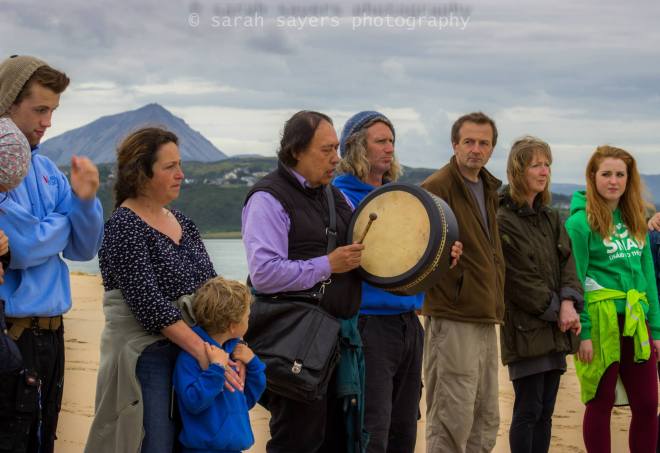
Local people gather with Native American Indian Gary (White Deer) for special prayers and a blessing of family of whales that died at Ballyness beach, Falcarragh, Donegal (photo courtesy of Sarah Sayers).

Local people gather with Native American Indian Gary (White Deer) for special prayers and a blessing of family of whales that died at Ballyness beach, Falcarragh, Donegal (photo courtesy of Sarah Sayers).

Berrow said a small government grant was awarded to the IWDG for 2011-13 to run a stranded whale scheme but only to monitor the mammals and handle data on them. There has been no funding for training courses.  This year the contract went out to tender, then withdrawn in May. “With the increase in sightings of whales and dolphins off Ireland’s coast, it is crucial to have protocols and funding in place now,” he said.

He added that there is no national policy on taking tissue samples or conducting post-mortems on the mammals to find out what caused them to strand. “We have an agreement with the National History Museum and take samples wherever possible and place them there in a freezer,” he said. “But there should be a more concerted, organized effort by the relevant government authority.”

Meanwhile, Donegal Sinn Fein TD Pearse Doherty said, “I have huge concerns regarding the policy enacted by the National Parks and Wildlife Service when the pilot whales were beached in Falcarragh recently.” He added, “It is my belief that locals with knowledge in this area should have been assisted in their further attempts to rescue the whales and I commend them for their heroic efforts. I support the petition calling for this review of this policy and I have submitted a number of Questions to the Minister calling for this review, which are due to be taken tomorrow.”

Doherty has submitted several formal written questions to the Dail, including one viz-a-viz, “if there is an official policy in place within his Department which outlines the procedure for the rescue efforts of beached whales; if this policy is circulated to the various stakeholders such as Local Government and the NPWS and if the Minister will make a statement on the matter?”

Formal protocols and increased government funding are necessary to save the Irish whale population (Photo courtesy of Selkie Sailing)

Formal protocols and increased government funding are necessary to save the Irish whale population (Photo courtesy of Selkie Sailing)

A second question asks, “if it is best practice to allow beached whales to perish without any intervention in order to ease the suffering of the animal; if it is standard practice to prohibit volunteers from making rescue efforts ; if the Minister intends to review this policy in the near future in light of the distress of the whales beached in Falcarragh, Donegal recently and if the Minister will make a statement on the matter?”

A third question deals with lack of equipment, in which he asks for “the reasons why the necessary equipment was not available to the NPWS in Donegal to allow them to humanely put the beached whales in Donegal to death by chemical injection and if the Minister will make a statement on the matter?”

The worldwide organisation, the Whale and Dolphin Conservation group, active in over 25 countries globally, has also waded into the controversy, officials from its headquarters in the UK stating, “It’s a real shame that there is not a strandings network in Ireland as there is in for example the UK. Here there is an incredibly well set-up and coordinated network of volunteers (BDMLR) that are trained in what to do in the event of a stranding and are first responders to any live (and sometimes dead) stranding.”

It continued, “By having these volunteers in place around the country any whales and dolphins that strand have the best possible chance of being refloated and surviving the ordeal. In a nutshell, what needs to happen is a) Interested Irish citizens need to come together and try to recreate what has been achieved in the UK via BDMLR, and b) the Irish Government need to commit to providing funds to set-up a programme similar to the Cetacean Strandings Investigation Programme (CSIP) here in the UK.” (see HERE example of how strong organisation and proper protocols can save some members of the whale population).