A sad, rather pathetic, Christmas story

Twas the night before Christmas, when all through the house
Not a creature was stirring, not even a mouse.
The stockings were hung by the chimney with care,
In hopes that St Nicholas soon would be there.’ (Clement Clarke Moore)

As winds howl around me and rain rattles my window panes like the chattering of false teeth, I recall this sad, rather pathetic, Christmas story…

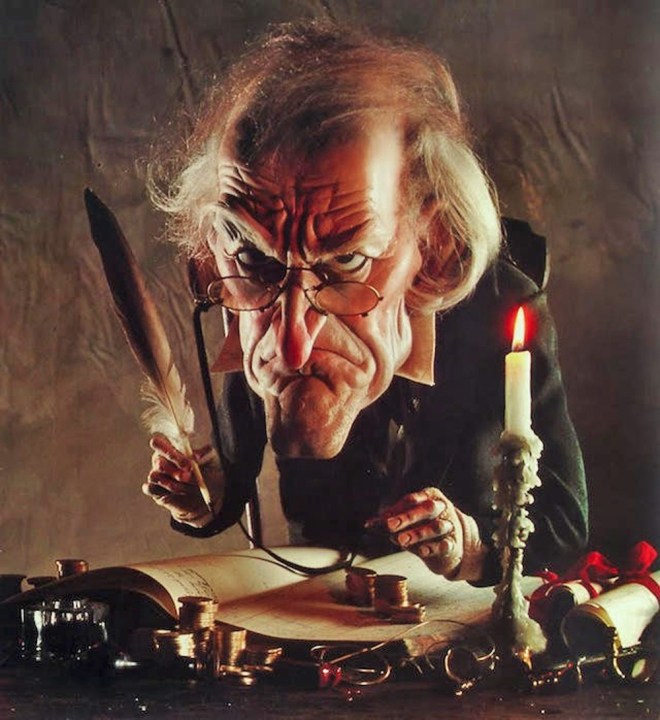
Prominent politician-on-the-cusp-of-greatness on the Irish national stage gets stuck on a knife-edge. Someone with access to key information can prove he falsified expenses on the back of the average Seamus/Sean/Patrick ‘Joe O’Blow’ citizen, both as a board member of Irish-language body, Údarás na Gaeltachta, and Donegal County Council.

Concerned about the effects on its chances of returning to Power if things get sour, spin doctors at his political party’s Dublin head office get involved. Politician-on-the-cusp-of-greatness also calls in his own local cronies, most from the west Donegal Gaeltacht area – well-paid fellows in silk suits, some of whom made financial hay on the back of his and his party’s long-term, some say overly-long, stay in power.

Christmas story Donegal, politicians in Donegal

Money, money – who says I’m interested in money?

They say ‘deny, deny,’ which said politician-on-the-cusp-of-greatness does. He’s hoping the custodians of the county council and the national Irish-language body – many of whose top brass owe their own cushy, well-paid admin jobs, expenses and pensions to his own political party – will sit on it like dementia-suffering chickens, and do nothing.

But the evidence is much too solid, and from a respected and knowledgeable insider too, comprising definitive documents that prove beyond a shadow of a doubt the culpability of said politician-on-the-cusp-of-greatness.

Also, hushed voices are alleged to whisper in the Corridors of Power, ‘there’s so much more that could easily come to light and make donkeys of us all.

Aforesaid local top brass know they must do what’s unavoidable. Otherwise their own jobs, generous expenses and pensions could be on the line. So, faced with no alternative, they bring the allegations – rather reluctantly – to the attention of the relevant authorities, hoping it will all go away and they can return undisturbed to their comfy desks, genteel lifestyles and holiday homes on the Spanish coast.

But that doesn’t happen.

An investigation begins by the six-member, national Standards in Public Office (SIPO) chaired by an experienced, former High Court Judge.
corruption in Donegal, what's on in Donegal

Now let me think: two places at the same time. Mmmmm, surely it must be possible. Anyway, who’s lookin’?

Re-enter stage left the local and national spin-doctors-cum-advisors to said politician-on-the-cusp-of-greatness. Okay, not ‘deny, deny,’ but ‘delay, delay.’ Until it all blows over and our All-Consuming Party climbs back on to its Rightful Throne. ‘Knowing the fickleness of the average dumb, thick-as-shite, Irish voter, that’s inevitable,’ they say, ‘quicker than you can slip a brown envelope into a pocket.’ Then we can blow this under the carpet as we have done with much more serious stuff in the past.’

But national elections come around. And, lo and behold, the hoped-for Dramatic Return to Power, which they feel is theirs by Right, they being the ‘Soldiers of Destiny,’ doesn’t happen.

The battle cry, as per the silk-suited, well-heeled advisers and cronies, then becomes not ‘deny, deny’ or even ‘delay, delay’ but that bastion of Irish patriotism. The one, they feel, will blind the thick-as-shite voters to the insignificant wrongs of falsifying expenses and screwing the average Seamus/Sean/Patrick Joe O’Blow.

The sacred language. The language of Pearse, Plunkett and Wolfe Tone.

Let’s tell them, by George: ‘We want any investigation to be conducted in our native language, as Gaeilge, le do thoil. If not, we’ll not recognize this court.’ Quite ironic, as the comprehensive falsifying of expenses, by all accounts, was done in the dignified language of the Royal British Crown.

And so it’s done.

And so the cost continues to rise…and rise…and rise even more.

Finally, the rather inevitable conclusion was reached, just last week after around two years of delay: politician-on-the-cusp-of-greatness has indeed screwed over the average thick-as-shite Seamus/Sean/Patrick ‘Joe O’Blow.’ Regardless of our rapid technological development, it seems it’s still impossible for a homo sapien to be in two separate physical places at the very same time.

But guess what?
poverty in Donegal, Senator O'Donnel Donegal

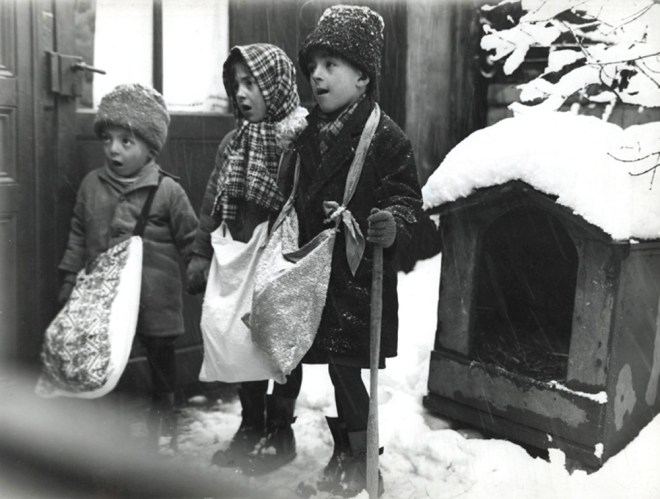
Hey Mister, Merry Christmas, can ye spare a penny cos the politician-on-the-cusp-of-greatness stole all our parents’ money?

Instead of costing the average Seamus/Sean/Patrick thick-as-shite ‘Joe O’Blow’ a couple of thousand euro, it costs, wait for it – with lawyers’ fees, documents, photocopying, translation costs, administrators and secretarial overtime etc – a whopping 350,000 euro.

To put this sum in perspective, this is the equivalent of around 12,000 (that’s twelve thousand) round-trip airfares on flybe for cancer patients from Donegal’s Carrickfinn Airport for specialist treatment in Dublin.

Yet, even sadder, so unimportant and insignificant is scarce public money, both Donegal county council and Údarás na Gaeltachta have just announced they’re not going to ask for the money back from said politician-on-the-cusp-of-greatness.

Now isn’t that a sad and pathetic Christmas story?

But know what the even sadder thing is?
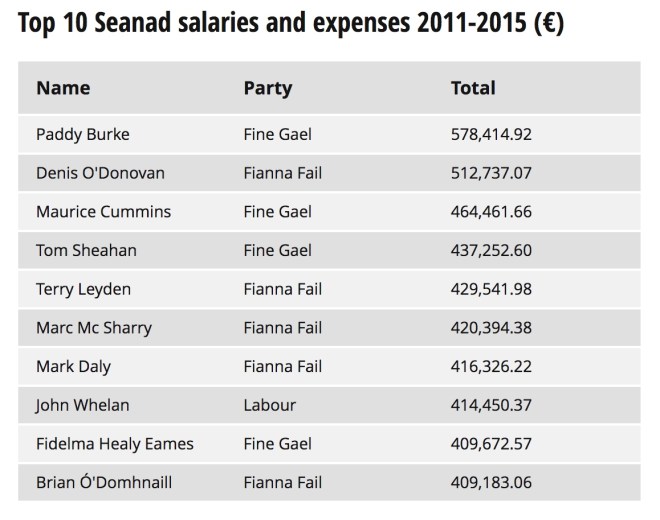
Said politician-on-the-cusp-of-greatness continues to be paid out of Seamus/Sean/Patrick ‘Joe O’Blow’s’ thick-as-shite’ pocket. In fact, between 2011 and 2015, said politician was among the top ten most expensive Senators in the entire Irish nation – 409,183.06 euro to be exact in salaries and expenses. That’s about a 100,000 euro a year. Did you ever earn that figure?

As for the party of our politician-on-the-cusp-of-greatness. Fianna Fail by name. Beset by ever-increasing, power-hungry pains and after spending a great deal of time, effort and money defending ‘Their Man’ and spinning the truth, they – in their instantaneous wisdom – cut him loose. Snip. You can always come back another day, they say, the Seamus/Sean/Patrick thick-as-shite-Irish-voter suffers genetically from short-term memory problems, so we’re all okay, in it together, if you know what I mean.

Now, you tell me. Who’s the real loser in this sad, rather pathetic, Christmas story?

Donegal politicians, Fiana Foil Donegal

Yeah, it’s pretty bad. We ain’t got no shoes or socks. Where did the money for them go anyway, you ask? Well, it’s a sad, rather pathetic, Christmas story…


If you’re interested in political and corporate corruption in a suspense novel linking Donegal to the US, read newly-published ‘Pretty Ugly.’ Can be purchased direct from Amazon, in eBook or print form, or in Donegal from Gallaghers or Matt Bonners Bunbeg, or Easons Letterkenny.

 

Soap-opera style farce diminishes Údarás promotion of EU LEADER scheme

For a well-paid state official to sit down in a childlike huff in an open public meeting and refuse to speak because someone is recording information on a key issue – funding under the EU LEADER scheme for community and entrepreneurial projects for Donegal – borders on ‘Coronation Street’ soap-opera style farce.

That’s exactly what happened at Áislann Ghaoth Dobhair this past week when Gearóid Ó Smoláin, a staff member of Údarás na Gaeltachta, refused to continue speaking to local people on how they could best access money under the EU rural development programme – one for which the local office of Údarás is entitled to a whopping 600,000 euro out of a project budget of 2.3 million for the Donegal Gaeltacht alone, as regional manager, Mícheál Mac Giolla Easbuig, told me in private when asked.

Not only, but while the meeting was billed as a bilingual one, Mac Giolla Easbuig spoke only in Irish until I asked if he would also please speak in English as there were some people in the room who were not fluent ‘as Gaeilge’ and would not understand what he was saying.

Initially, when asked to do so, Mac Giolla Easbuig declined, saying words to the effect of ‘well, we’ll just go on and see how things go.’ When I reminded him that EU regulations indicate such meetings should be conducted so that everyone understood (and indeed, reading later, that Article 8 of the Irish Constitution states both Irish and English as official languages of Ireland), he relented and nodded to his colleague, Ó Smoláin, to do so.

Such attitudes can easily lead to accusations of discrimination and racism by language.

Udaras Donegal Leader program

On the issue of recording (I was taping on my mobile phone some of the more pertinent information), Mac Giolla Easbuig supported Ó Smoláin’s rather ill-tempered ‘not speaking’ huff and also asked me to stop. Instead of relenting when reminded that this was billed by Údarás itself in its promotions as an open public “information meeting” and also that EU regulations permitted recording of it, he turned to the audience and asked for their opinion.

As someone put it to me afterwards, “it was like offering Jesus or Barabbas to the crowd.”

Saying I acknowledged his preference but that I would continue to exercise my civil right and record key elements of the information being imparted, Mac Giolla Easbuig finally had a whispered word with Ó Smoláin and the latter stood up and continued where he’d left off – bilingually.

Ironically, it is interesting to note that Ó Smoláin complained to the ‘Donegal Daily that he was misreported by me in an earlier story related to an alleged Catholic Church operated pedophile treatment and drug addiction center funded by Údarás being established in Falcarragh. In that case, Stephen Maguire, the news website’s co-owner, informed me that Ó Smoláin told him an official recording showed I had misreported what he had said. When I contacted the Scottish organizer of that event held at An Chuirt hotel, I was informed by e-mail that no such official recording existed, indeed that the meeting was not recorded at all. Based on that alone, one would think Ó Smoláin, of all people, would have welcomed an actual recording by me last week, rather than the reaction he displays below.

What is most disappointing, indeed sad, about what happened last week at Áislann Ghaoth Dobhair, aside from my own discomfort as a member of the local community at being subjected to such ill-treatment, was that this kind of socially embarrassing situation – which some might say is tantamount to linguicism (racism by language) and racial profiling, and thus contravening EU rules and regulations – could have, and should have, been easily avoided. That is if indeed the main aim of Údarás was to provide relevant information, as opposed to just ticking the EU ‘public meeting’ box to qualify for its generous administrative ‘handling fee.’

Earlier that day, interested in contributing to community development, I had called the Údarás office and had been informed the meeting would be bilingual. Thus my surprise when Mac Giolla Easbuig spoke only in Irish. In today’s convenient age of technology, providing simultaneous translation should be mandatory, especially on such a key issue and as the LEADER ‘handling fee’ is so high so it can easily be afforded. I believe such translations ‘as Gaeilge’ should also be conducted for all meetings taking place here in English. This would help those not fluent in Irish to improve their language skills.

More important than potential accusations of xenophobia – meaning hundreds of non-Irish speaking people living in the Donegal Gaeltacht from other countries including EU-members such as Holland, France and Italy and other parts of Ireland might be facing linguistic discrimination by Údarás when applying for funding – such social exclusion could be a tragic loss to the struggling economy of the Donegal Gaeltacht with one of the highest unemployment rates in the nation.

Údarás’s role is to strengthen the Gaeltacht’s economy and keep our proud native language alive. Well-funded – staff at Údarás have the highest salaries of any organization under the The Department of Arts, Heritage, Regional, Rural and Gaeltacht Affairs – it is expected to perform its duties in many ways, including job creation. Speaking only ‘as Gaeilge’ and not bilingually, Mac Giolla Easbuig and Ó Smoláin would, in effect, have prevented non-fluent Irish speakers in the Donegal Gaeltacht community from participating fully in the meeting. Worse, some non-Irish speaking members of the audience might well have excellent project ideas that could provide gainful employment to needy local people, people with families who wish to stay in the Donegal Gaeltacht and speak our native language on a daily basis.

Wanting to align our business ethics with those of global mainstream thinking, it would have been better for both men to remember one of the principles of the recently-signed ‘Conscious Business Declaration’ being presented to the United Nations – ‘Business must behave as a positive and proactive member of the local and global communities in which it operates.’

If last week’s meeting was any example, then Údarás na Gaeltachta – with its obvious inherent bias – perhaps should not have been given the EU LEADER programme to administer, for which it will receive the whopping ‘handling fee’ as mentioned above. Keep in mind, Údarás also receives millions of euro annually from the Irish public pocket.

Gearoid O’Smaolain Udaras, Leader program

Gearoid O’Smolain, staff member in the Donegal office of Udaras na Gaeltachta, speaks during last week’s meeting.

No mature analyst doubts the challenges facing Údarás in attracting major companies to such a peripheral rural area with substandard road infrastructure as the Donegal Gaeltacht – but that still does not excuse the organization from doing simple things well. This lack of attention to detail may be one of the main reasons why there is consistently high unemployment in the Donegal Gaeltacht, which in itself indicates the organization is not doing its job properly and needs experienced entrepreneurs with know-how, technocrats and public relations specialists on its staff.

I had already raised the issue regarding the potentially positive economic contributions non Irish-speaking people could make within the Gaeltacht here with Donegal-based Michael Heaney, Údarás national director of enterprise & investment with, at an international ‘TransAtlantic Connections’ conference organized by the Institute of Study Abroad Ireland and Drew University, New Jersey earlier this year. I then sent a follow-up e-mail directly to him to meet and discuss how such a strategy could be developed. As yet, in the intervening six months, I have not received a single invitation to meet and discuss. That sort of attitude does not bode well for the future.

Isn’t it better for the common good of the community to work together in an inclusive, transparent manner, rather than in an exclusive and opaque one? My hope is that this blog encourages open, mature debate on a thorny dilemma and also helps prevent cronyism, the same ‘inner circle’ elites accessing LEADER funds while ‘blow-ins’ and ordinary local people lacking ‘the right connections’ being left empty-handed. That only results in emptier pubs, cafes and restaurants and a depletion of our Gaelic sports teams as more families board emigration planes for far-off places.

It is also worth questioning whether Údarás na Gaeltachta contravened strict EU regulations last Tuesday evening by strongly promoting a single financial lender, Clann Credo, a Catholic Church run entity, to the exclusion of other national and international lenders. This was done both through printed materials (a color brochure in the EU LEADER information package) and by its main on-stage speaker, Ó Smoláin. The inevitable question must be asked: Was this a paid promotional advertisement and did the Donegal chapter of Údarás or the national Galway-based headquarter receive the payment?

All comments welcome.

Are Fine Gael, Fianna Fail, Labour and pseudo-Independents set on destroying power-sharing in Donegal?

Early last Monday morning as most of us woke up groggily and struggled out of bed to face the week, a dramatic closed-door meeting of the Independent Grouping within Donegal Council was taking place in Lifford at which the very future of politics in the county was being decided.

Or at least that’s one interpretation: that pseudo-Independents (my sobriquet for them) backed by the Coalition Government partners of Fine Gael and Labour together with Fianna Fail were aiming for.

But the political cat might be out of the bag, so to speak.

Could it be that someone poured (or was it self-administered?) poisonous elixir into the ears of certain councillors that the life of an independent within traditionally conservative Irish political circles is a short one, so they’d better rejoin the party fold again – before it is too late? “Being in a party makes for an easier life,” may have been the song on the hymn sheet. “You’ve got the company of like-minded people. Talk up the party you formerly belonged to until we win the Dail, then we – together with you – will control Lifford as well.” If it was, perhaps instead, without knowing, they’ve been listening to the Song of the Sirens.

Donegal councillors, county council meeting

(l to r) Let’s decide on a plan of action. Councillors Frank McBrearty and Michael McBride confer discreetly at Monday morning’s meeting of Donegal County council.

Intriguing backstory

As Councillor Michael McBride told me last week, a motion by John Campbell at Monday morning’s private Independent Grouping meeting to have John O’Donnell expelled from the group supported, by Michael Cholm MacGiolla Easbuig and himself, was defeated by five other councillors, a strange situation to say the least as only last month, they had all voted to make him resign.

But that wasn’t the biggest surprise of that morning.

That came just a few minutes later, immediately Campbell and Easbuig left the Independent Grouping in protest.

“Much to my amazement, someone suddenly called for the dissolution of the entire Grouping,” recalls McBride, who chaired the meeting but said he cannot remember who made what he considered a bizarre call (strange loss of concentration as chairperson at so vital a time). “And it was agreed upon so quickly I can’t but believe they had all discussed this much earlier, in private.”

The five councillors in the Independent Group who voted against O’Donnell’s expulsion were Nicholas Crossan, Tom Conaghan, Niamh Kennedy, Ian McGarvey, and John O’Donnell himself, most former party members.

Later that same evening McBride sent me an e-mail purportedly written by Kennedy stating that, “a decision has been taken to suspend the independent grouping and that no positions would be removed from any member as an investigation is currently underway by the ethics registrar of Donegal county council.”

She added, “None of us are involved in the 25/30 councillors referred to by Cllr.  O Donnell (on the RTE programme). This decision has been taken in the interest of the people of Donegal and in order to accommodate the smooth running of the business of Donegal county council following this past two months of turmoil.” But one is still left wondering why the Grouping was suddenly dissolved? Could it be, as McBride said, that they were fed up working with the fiery Frank McBrearty, who first proposed O’Donnell’s expulsion. Or with the intellectually able Campbell and passionate Easbuig? Or is something more sinister going down?

Franc McBrearty, Donegal councillors

Loosening his tie. But then again, Councillor McBride wasn’t wearing one, was he, at the council meeting? Just a bout of nervousness then? Or indecision?

Asked about his feelings on the dissolution of the Independent Grouping, McBride said, “I didn’t want that. It’s good for the council to have the four-group all-inclusive set-up that it has. To my understanding, that kind of power-sharing is unique in the whole country, something Donegal should be proud of.”

I asked McBride several questions

“Would you like O’Donnell – your former business partner in Dúncrua Teoranta, which was granted 120,000 euro from Udaras na Gaeltachta – expelled from all council committees.”

“I would have no problem with him being removed from all committees.”

“Why then did you abstain in the full council vote on the matter this Monday?”

“Because of the way I was treated fairly when I was co-opted on to the council for former Senator Jimmy Harte’s seat.”

“So, you would have been okay with a council decision to expel him, but not for you to vote on it?”

“Yes, it would have been democracy in action.”

Conversation ends.

Shakespeare: Is there something rotten in the state of …. Donegal?

Why would the trio of Fianna Fail, Fine Gael and Labour want the Independent Grouping at Donegal County Council dissolved? Here is a possible answer.

We’ll have a national elections very soon – we’ll know this week just when – and if the situation demands it, these three parties, regardless of what they say now, will try to ‘intermingle’ to form the next Government. But according to latest polls, their Donegal TD candidates desperately need all the help they can get even to shuffle lamely past the finish line – thus the pseudo-Independents. Fifteen years ago, the electoral breakdown was Fianna Fail a massive 70 per cent, Fine Gael 30 per cent, Sinn Fein 0.2 per cent and the rest Independents and Pseudos. Within the last five to six years, the Donegal political pendulum has swung dramatically and is now around 25 per cent Fianna Fail, Fine Gael 18 per cent, Sinn Fein a mighty 40 per cent, and rising, and the rest Independents and Pseudos.

And, let’s be quite clear about this: the main reason some pseudo-Independents are ‘Independents’ is that either their parties didn’t choose them to run last time out or that they’d never have won if they’d gone under that party’s ticket, especially if they’d gone under the Fianna Fail banner. In politics, however, such slights and inconveniences are often forgotten in the greedy grab for the prize piñata.

Concillor O'Donnell, Donegal politics

(r to l) Fianna Fail Donegal County Council chairperson, Ciaran Brogan, prepares for the meeting with council chief executive, Seamus Neely.

What happened behind closed doors Monday morning one week ago after Campbell and Easbuig stood on principle and left could be a classic political quid pro quo situation. ‘Talk up the party in the nationals in a few weeks time and you can run under our ticket for a council spot next time round, and, believe me, you’ll feel more secure for doing so,” could have been the way it was put.

Then again, my hunch might just be the workings of an over-active imagination. The truth might be that the Independent Grouping is a motley group, a raggle-taggle band with perhaps their hearts in the right places, but no cohesion. And so inexperienced and pulled apart by differences that they don’t even realize what their full potential could be if they created unity from diversity and voted for the right things.

This, however, is the perfect time – with national elections six weeks away – to find out which of the above-mentioned theories is the right one. True colors will begin to seep through. Threads will start to unravel.

If something more sinister is afoot, perpetrators of the cloak-and-dagger plotting have sadly overlooked one vital element – common decency. The overriding public mood is one of disillusionment, bordering on despair. If the three main political parties have indeed won the pseudo-Independents over – backed by business elites with much to gain by keeping O’Donnell on the council and on the ever-important ‘Roads’ committee which oversees tens of millions of euro in construction projects – trouble lies ahead. Keep in mind, the council’s annual budget is 133 million, 127 fixed and 6 to 7 discretionary. Construction of the Dungloe-Glenties road is in five-stages, the second, for example, cost around four million euro and the tender for the next stage is end of this month.

The ‘plotters’ may, however, have made the fatal mistake of ignoring the simple, unadorned hopes of ordinary folk, throughout Donegal and throughout the country, hopes for a sliver of common decency among politicians after all the putrid corruption they’ve been forced to roll in over the last five years or so.

Donegal people demonstrating, Donegal county council

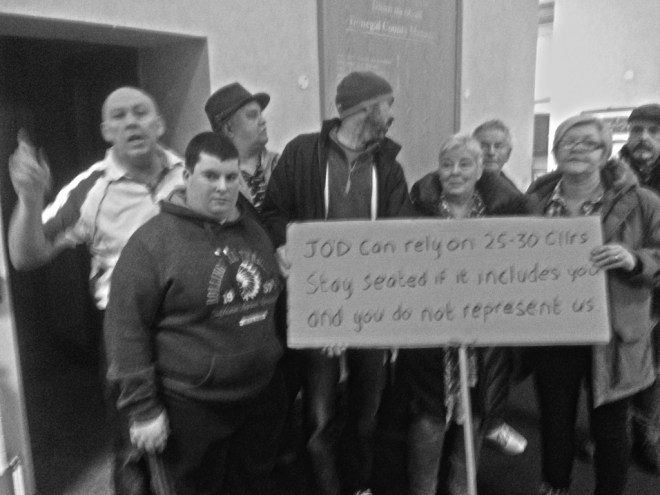
Protestors inside the County Chamber voice their sentiments about Councillor John O’Donnell, corruption and cronyism within and outside Donegal County Council.

Another key question is now being asked in the corridors of power in Lifford: not if, but how many, high-level executives within Donegal Council – many of which were employed both within the county and imported from outside the county, with generous salaries and pensions under the previous, long-running Fianna Fail government – are involved in this purge of True Independents and the break-up of power-sharing? After all, they have to reward their paymasters.

What a shame if such a deceitful game is being played, in this of all years – the centennial anniversary of our national independence.

But in a very short time, you, dear Reader, will have the chance to put things right – by availing of your unalienable right to walk behind a curtain and put your ‘X’ exactly where you want it to be.

Perhaps, this blog will help you choose well. I certainly hope so. It’s a rare chance to truly show that we are indeed ‘different up here.’

As for Councillor O’Donnell….

Epitome of nonchalance

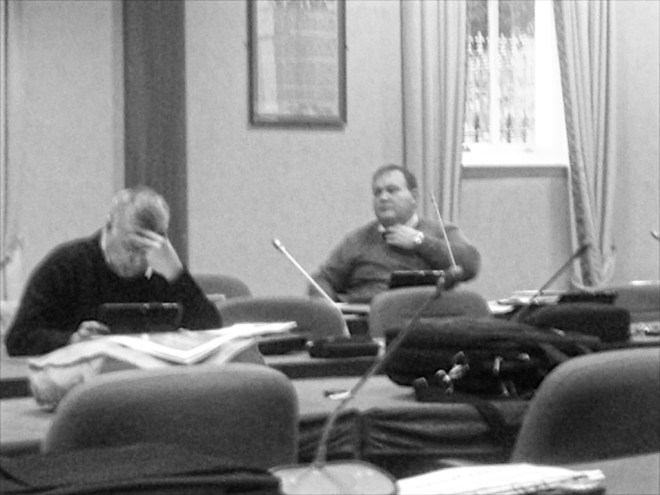
I was quite astounded watching the councillor last Monday morning nonchalantly reading that morning’s edition of the ‘Donegal News’ as the political maelstrom swirled all around him in the council chamber. Either this young man has nerves of steel, I thought, or he is so utterly sure of what will happen that there is absolutely no need for him to be concerned in any way, about anything or anyone. Wish I could wake up feeling that way, as I’m sure do thousands of unemployed, elderly, sick, disabled and struggling mothers trying desperately to feed their children on paltry, insufficient income coming into homes across this county, across the country.

John O'Donnell, Sinn Fein Donegal

Nonchalance or absolute certainty? John O’Donnell displays his lack of concern about the possibility he might be expelled from Donegal County Council on Monday morning. That very evening, he released a press statement thanking his fellow councillors for supporting him.

During a short adjournment, I approached O’Donnell and introduced myself as Gaeilge, thinking – as he had attracted so much Údarás funding – he would be fluent. Perhaps it was due to my poor pronunciation or stumbling vocal ways, but he didn’t seem to understand, so I changed my questioning to as Bearla.

“Can you speak? I’ve a few questions I’d like to ask.”

I’ve been told by my legal advisers not to say anything,” he responded. “They’ve told me to let the ethics investigation takes it course. I’ve nothing to answer for anyway. People are just out to get me and use me as a platform for their own political gains.”

“What would you say to your fellow councilors here if they ask you any questions about your various business interests and debts owed through them?”

“I’d say, ‘That’s none of anyone’s business. It’s my private affair, mine only.”

“What about the 120,000 euro granted to your company, Dúncrua Teoranta, by Údarás na Gaeltachta just before it went bust, can you explain that?

“My legal advisers have told me to say nothing and that’s what I’m going to do.”

“Will you pay the money back?

“No comment.”

Then he went back to reading his newspaper.

O’Donnell, a long-time family member of Fianna Fail, also declined to comment on the court case he faces this Wednesday, Feb. 3 for failing to pay 33,000 euro in compensation to a Creeslough woman whose foot he drove over in a car accident. If O’Donnell does not show up for that case, District Court Judge Paul Kelly has said he will have him arrested.

Next week’s court case should be just as entertaining as the county council meeting last  week – with potentially very serious consequences for all concerned. If, having said he has no money, he pays up, you have to ask yourself: where did the spondulix come from? If his solicitor delays the proceedings, you’ve got to ask yourself: why? Could it be waiting for the results of the upcoming elections? If, however, he is convicted, I am ainformed O’Donnell automatically loses his council seat. There’s a lot at stake.

Go along if you can. It should be as good as an episode of ‘Judge Judy,’ hopefully better – unless some shadowy person(s) gets to the judge before then.

D-Day approaches inside the Donegal County Council Chambers

As D-Day (O’Donnell Day) approaches within the chambers of Donegal County Council this morning perhaps it’s not beyond the realms of possibility that beleaguered Councilor John O’Donnell has simply been misunderstood over the last few weeks and that this occasion, the first full council meeting since airing of the RTE ‘cash for favors’ controversy, gives him the opportunity to clarify matters.

As the debate gets underway, the eyes and ears of many of the nation’s political and financial elite will be on little ole Donegal, that ‘wee beautiful place on the edge of the Atlantic’ in the very far corner of the country, that is and isn’t an integral part of the island of Ireland, depending which perspective from which you look.

Councillors John O’Donnell, Michael McBride, Ciaran Brogan and all their fellows in the chamber will have the chance to show that, in the right and proper way, “we are different up here.”

Now what that ‘difference’ means is the key question we all hope will be answered truthfully and forthrightly today, hopefully before lunch-time comes around – though that is as likely as seeing a polar bear wearing suntan lotion eating brussels sprouts with a spoon at the side of a heated swimming pool.

Will this morning’s open public event echo the catchphrase that became so popular in the 1970s after the Oscar-winning movie ‘Network’ was first screened? Then lead character, Howard Beale, (played wonderfully by actor Peter Finch), on the brink between brilliance and madness, says passionately, “I don’t have to tell you things are bad. Everybody knows things are bad,” then screams, “I’M AS MAD AS HELL, AND I’M NOT GOING TO TAKE THIS ANYMORE!” his words being carried swiftly from person to person, young and old, man and woman, boy and girl, city to city across the whole of the nation.

If these words are echoed in the council chamber today in Lifford, who’s going to say them first? And will they mean them?

Could they be the battle-cry for a new, rejuvenated Donegal?

Could this be the historical moment we begin to shrug off the cloak of cronyism and corruption that has draped this county for far too long, with the collusion of various governments, and stymied our cultural, social and economic development?

To achieve this not small feat, a comprehensive, collective community effort is required and for that we, in turn, require the strength of the media, broadcast, print and digital  – not the way the print media acted over the last few days, publishing what was in effect a joint press release from  Údarás na Gaeltachta and John O’Donnell on the front and inside pages, nor Highland Radio, avoiding the controversial, not-so transparent payments made from one entity to the other.

If efforts to rid this county of counterproductive ‘goings-on,’ we need local media to be brave, enterprising and outspoken. It is their future as much as it is ours that is at stake.

While this article in yesterday’s ‘The Sunday Business Post’ gives most of the facts surrounding Mr. O’Donnell and Údarás, there is still much more to be said.

Sean Hillen Sunday Business Post, Councillor O'Donnell Donegal

For the sake of fairness and democracy, let Cllrs. O’Donnell and McBride have their say. Give them the chance to explain how and why they were granted the 120,000 euro from Údarás and about how much exactly, and O’Donnell to clarify to whom one of his other companies, Kilmac Form Work Limited, owes millions of euro in debt, and where indeed those millions are now. And why he has still not paid 33,000 euro in injury compensation to an unfortunate Creeslough woman who’s foot he drove over in a car accident.

John O'Donnell Donegal, Donegal councillors

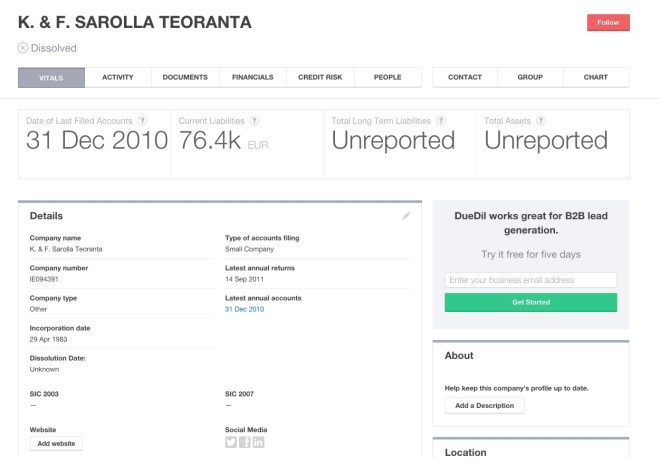
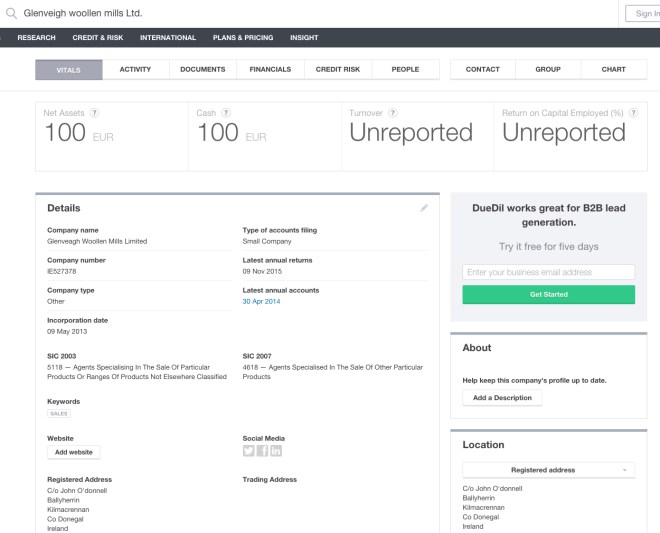
Oh, and let there be an explanation by O’Donnell about how his former company K&F Sarolla Teo (‘wool’ in English) went bust owing over 76,000 euro in 2013, which intriguingly led him to set up Glenveigh Woollen Mills Ltd in May of the same year .

Glenveigh Woolen Mills Ltd, councillor John O'Donnell

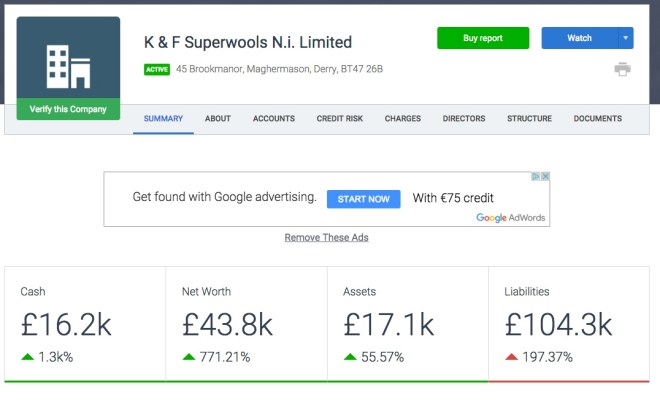
Strangely – perhaps merely a coincidence – K&F Sarolla Teo looks very much like K&F Superwools in Northern Ireland, with – and again it may just be a coincidence – the same director, namely John O’Donnell.

Would it be too much of a coincidence if it was discovered there were grants– those chunky cross-border kind of ones – involved in these companies also?

K&F Superwools, Donegal counicllors

For goodness sake, while we’re at it, as anyone who’s anyone will be there in the council chamber this morning, let Councillor Ciarán Brogan, Donegal County Council Chairperson, explain how his company, Sark Construction, perhaps now renamed Kasmor, managed to obtain an estimated 10 million euro in Donegal council construction contracts.

Gosh, it all sounds as if the craic will be mighty at the Donegal Council meeting this morning (kick-off 11am). For what it’s worth, alternative entertainment options on the box at exactly the same time are (and I kid you not) – ‘Wanted Down Under’ on BBC1; ‘The High Chaparral’ (or is that ‘Hang ‘Em High’) on TG4; ‘Judge Judy’ on TV3; ‘Conspiracy Theory’ on TCM; and ‘Four in a Bed’ on Channel 4.

Funny how all of them – including the local council option – have a similar ring to them.

I know which one I’m choosing.

Exclusive: Donegal councillors John O’Donnell and Michael McBride funded by Údarás na Gaeltachta

At a time when controversial ‘cash for favors’ Donegal councillor John O’Donnell was refusing to pay more than 33,000 euro compensation to a Creeslough woman he injured in a car accident 16 years ago, Údarás na Gaeltachta granted him and fellow councillor Michael McBride more than 122,000 euro in public money (see document here Udaras grant), I can reveal exclusively in this blog.

John O Donnell Donegal, independent councilor Donegal

O’Donnell was founder, director and secretary of Dúncrua Teoranta, the company receiving the money. Interestingly, a second director of the company was fellow councillor, Michael McBride, who also acted as company secretary. Both men – now declaring themselves independent councillors – were then members of Fianna Fail. A third director named was Sarah Doherty.

Documents show McBride and O’Donnell became directors of Dúncrua Teoranta on the same day, 14 Sep 2006, when it was set up to sell metal ore. They are also listed as company secretaries. McBride was director for a year and four months, until February 2008 when he resigned. The company’s address was listed as just inside the Gaeltacht, at Cuirin, Termon.

Dúncrua Teoranta

Údarás approved funding for Dúncrua Teoranta of 122,300 euro in 2008, paying out 66,850 euro in that year alone. The owners put the company into bankruptcy within months of the money being given. Aidan Garcia of Collins Garcia Corporate Recovery, 28 Fitzwilliam Place, Dublin was appointed as liquidator.

“As the money was given at a time when the company was close to bankruptcy, it seems it’s yet another case of cronyism, money given to two Fianna Fail politicians by a Fianna Fail dominated organization,” commented one observer with inside knowledge of Údarás operations.

Interestingly, O’Donnell was granted the money by Údarás at a time when he owned another company, Kilmac Form Work Limited, which later went into receivership with documents showing it had liabilities of 4.8 million Euro. Much of that debt, as declared during a High Court hearing in 2012, was owed to AIB Finance, thus to ordinary Irish people as the bank was bailed out by the State through injections of billions of euro of public money.

Kilmac Form Work Limited

O’Donnell registered Kilmac Form Work Limited on 6 April, 2005 in Ballyherrin, Kilmacrennan, several kilometers from Duncrua Teo, described as being involved in the manufacture of metal structures. It is currently listed as ‘Receivership’ with two directors, O’Donnell and his brother. The ‘Irish Independent’ reported recently that O’Donnell was forced to make back settlements to the taxman totaling over 330,000 euro. I have contacted both Councillors McBride and O’Donnell for comment but neither has responded. Údarás finally released a statement confirming it did grant O’Donnell the money. Where were Údarás officials when the RTE ‘cash for favors’ investigation was aired to such national furore weeks ago? Cowering in a corner hoping no-one would notice it had given scarce public money away so recklessly?

Urgent questions require immediate answers

The documents unearthed for this blog call into question the actions of both O’Donnell and Údarás na Gaeltachta.

O’Donnell is already firmly in the public spotlight due to his being caught on RTE camera allegedly offering ‘favors for cash’ on Donegal council business, as well as being under threat of arrest for failing to pay compensation due to Ms. Petra Kucklick of Creeslough whom he injured when he drove his car over her foot in 2000. District Court Judge Paul Kelly was quoted in the local media saying he will have the councillor arrested if he does not appear in person at the Letterkenny court on February 3rd to explain why he has failed to pay any of the compensation to the injured woman. O’Donnell seemed to have had lots of money at one time and could have easily paid the compensation, why did he decide not to do so?

Almost all of the main political party representatives in Donegal have called directly for O’Donnell’s resignation, as did Independent councillors, Micheal Cholm Mac Giolla Easpuig, who has called for a boycott of next week’s full council meeting due to take place on Monday, January 25, Dessie Shiels, who left a meeting Letterkenny Municipal District Council last week in protest, and Frank McBrearty, former Mayor, who resigned last week from the Independent Grouping on Donegal County Council in protest as O’Donnell not being expelled.

Donegal Now‘ news service said Cllr. McBrearty explained that Cllr Michael McBride’s casting vote as party whip means he has the power to expel Cllr John O’Donnell from the group and the committees given to him under the all inclusive deal. The news service quoted McBrearty saying: “I will perform my duties as an Independent councillor and do my very best for the people that elected me. I will not be associated with Cllr John O Donnell when he clearly said he could get the backing of 25 to 30 other councillors. I am not one of these councillors and am making my position clear by taking this stand. I do not understand the reluctance of some councillors to support my decision but that’s for them to decide.”

The information these documents reveal also come as councilor Shiels, who will contest the next national elections, recently left a meeting of the 10-member Letterkenny Municipal District Council in protest at O’Donnell’s attendance. “In the aftermath of the RTE investigates programme which aired on RTE in November past, I personally cannot involve myself in county council meetings, whether at Municipal District Level or at full plenary council level in the presence of councillor O’Donnell,” Shiels said. “To do so would, to my mind, compromise everything that I have tried to do to date since being elected to Donegal County Council to restore public confidence in politics in Donegal.”

Added another observer, who prefers his identification to remain confidential at this times, said, “I wondered why Michael McBride was so quiet in his condemnation of O’Donnell.”

Is John O’Donnell the kind of political leader the people of Donegal want? Is this what we mean when we say proudly, “we’re different up here?”

Does Údarás na Gaeltachta lack good governance?

Key questions also remain about the operations of Údarás na Gaeltachta, particularly in Donegal.

Did anyone at the organization check into the financial health of O’Donnell and his companies before granting him 122,000 euro of public money? If so, why did it go ahead and approve the grant? If it did not check, then it is guilty of ignoring its duties to the public whose money supports the organisation’s entire operation.

Perhaps, in addition to the controversial wind farm development issue that was the focus of the RTE program, perhaps O’Donnell can clarify how he got the money from Údarás for Dúncrua Teoranta. It is not believed either O’Donnell or McBride have paid any of the money back.

Also, as the Office of the Director of Corporate Enforcement (ODCE) identified the requirement for a ‘Section 56’ on O’Donnell’s company – which allows interested parties to bring concerns before the liquidator and thus try to recuperate their money – has Údarás done so in relation to the loss of public money (the grant)? If, not, why not? Is this yet again willful disrespect of public interest?

Or in the light of the allegations arising from the RTE program – did some people at Údarás get kick-backs for pushing the money through for O’Donnell? Considering Fianna Fail’s long-time dominance of Údarás and that party’s record of skullduggery in bankrupting Ireland, such allegations cannot be ignored. In addition, this blog revealed that Údarás hired Finbarr Boyle as business training manager for local entrepreneurs through the EU funded CeanaglG project in Donegal even though Boyle was already under investigation, had already pleaded guilty as part of a plea bargain and was later proven guilty of stealing more than 200,000 euro from a village school, including money earmarked for children’s food. Does the organization suffer from a severe lack of good governance?

Oh, and by the way, where did the 122,000 euro go? As Cuba Gooding Jr. said in that wonderful film, ‘Jerry Maguire’ – “Show us the money!”

Changes required at Údarás?

With frequent revelations about the operations of Údarás – including free trips for executives, board members and their wives to Las Vegas (to meet officials of Enterprise Ireland) and ‘insider trading’ schemes whereby former Údarás board members and top executives received money for their own organizations and projects – economic experts are questioning whether the group is fit for purpose. These concerns are especially sensitive locally as well as in Brussels as the Government decided recently it will operate the multi-million euro EU LEADER programme in the Donegal Gaeltacht where decisions on money allocation will take place over the coming months.

Some sector analysts as well as ordinary people in the Gaeltacht community say that after several decades of failure and with unemployment in the Gaeltacht at an all-time high, the economic regeneration model for the regions is simply not working and that Údarás na Gaeltachta should simply be dismantled and replaced with a new and more efficient organization, one featuring well-trained technocrats, not politically-appointed personnel.

Others say that much-needed changes are already underway, an example being the recent appointment of Letterkenny-based, former county council director of services for community, culture and planning, Micheál Ó hÉanaigh, as director of enterprise and employment, marine and natural resources at Údarás. Ó hÉanaigh, credited with launching the Donegal Diaspora project.

However, one must also note the recent reaction by Joe McHugh, Fine Gael Minister for the Gaeltacht, to the questionable activities at Údarás – he said the organization would receive an extra one million euro in public funding this year.

Praise and prise

As one year ends and another begins I look back at the privilege I’ve had of writing in this blog about exceptional individuals who – through skill, initiative, invention, passion and sheer persistence – deserve great praise.

They’ve brought added color and a refreshing sense of diversity to Donegal, one of the most remote parts of Ireland straddling its most northwesterly Atlantic seaboard.

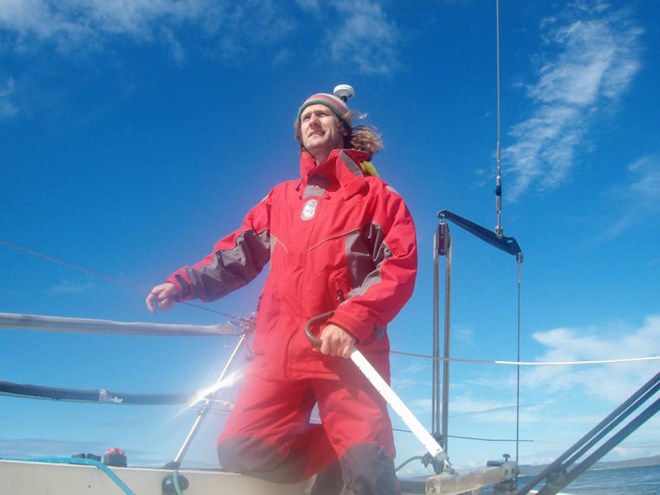
Consider Sabba Curran from Dore, who some years ago, without knowing much about boats drove down through England at exactly this time of year and returned with one in tow. Now he owns ‘The Cricket’ one of the largest passenger boats in the area and brings people for enjoyable excursions to Gola Island and much farther out on leisure fishing trips.

The Cricket boat to Gola Island, ferry to Gola Island, Donegal islands

Or Gareth Doherty, whose boat-trips with his grandfather unwittingly launched him on a series of sea-loving escapades. Now, with a plethora of certificates to his name as master of different crafts, Gareth takes visitors, young and old alike, on sailing and canoeing adventures, teaching them the skills he himself has learned over the years and showing them the beauty of the bird and sea-life population all around us.

Selkie Sailing, Gareth Doherty

Then there’s Pól Ó Muireasáin, one of the most refined Irish speakers in the entire Donegal Gaeltacht, or indeed any Gaeltacht for that matter. Having taught as Gaeilge at university and worked as a translator in Brussels on complex European issues, there’s very little Pól doesn’t know about our native language, grammar, linguistic or etymology.

Brimming with civic spirit, there’s few challenges Pól won’t try, including line-dancing as a nun and a cowboy, then imitating that most famous of seasonal characters, Santa, thus bringing untold pleasure to young and old alike.

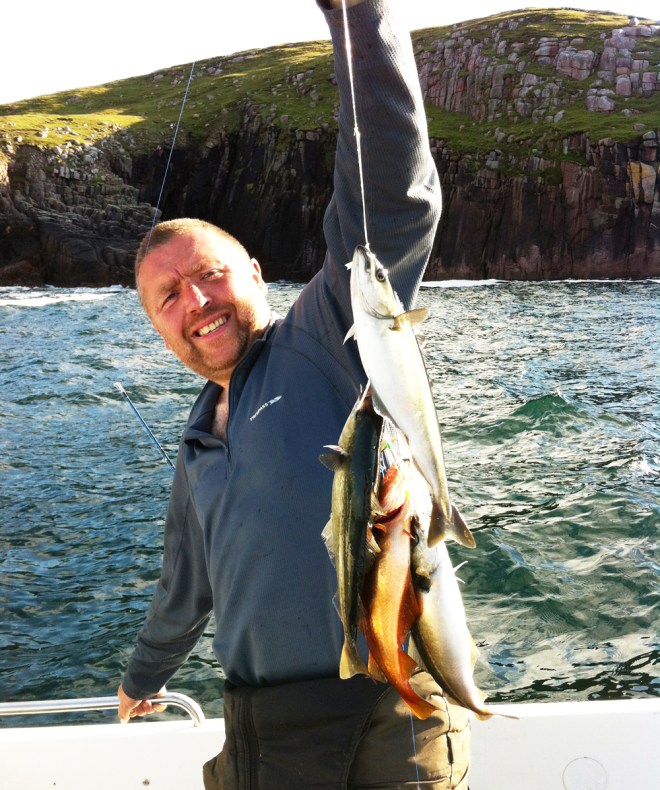
fishing in Donegal, Gola Island Ferry, sea foreger

Photo by Sean Hillen

Trips with these three men over the last few years has filled me with the kind of exhilaration and child-like exuberance one rarely finds in the bland concrete-and-glass urban settings I’ve often lived in.

But it’s not just lovers of the sea that help restore one’s faith in humanity. There’s also lovers of the land. Such people as Seamus Doohan, walking guide and lover of all things Celtic.

Seamus Doohan walking guide, walking Donegal

Having had the pleasure of experiencing his tours for an article in ‘The Irish Times’ as well as for this blog, I can guarantee a right-royal good time in his company, meandering among the hills of Donegal while learning about the colorful history of the area – including flesh-eating plants, soaring eagles and Pagan wishing stones.

Treading a different terrain altogether is Kathleen Gallagher.

Kathleen Gallagher Falcarragh,

Standing at Falcarragh crossroads just before sunset one year, I – like hundreds of others – was astounded to see a dramatic spectacle unfold before our eyes. At the edge of the hazy horizon, slowly coming into view, appeared wave upon wave of grisly, shapeless, blood-spattered zombies, horrible-looking members of the UnDead who, as they drew near, suddenly burst into a frenzy of brilliantly-choreographed dance moves to the pounding music of Michael Jackson’s ‘Thriller.’ Such a mesmerizing event, part of a community festival, is but one example of the sheer creativity of this lively, zesty individual who’s probably the envy of Galway’s ‘Macnas.’

Kathleen’s artistic talent brings me conveniently to another transplant to Donegal, this time from the heart of Scotland – a man who has brought Kings, Queens, medieval murderers and even ‘Cold War’ spies to this small part of the world. From James Joyce’s ‘Ulysses’ to Shakespeare’s ‘Macbeth’ to Graham Greene’s ‘The Third Man,’ Murray Learmont is a stage supremo directing members of the Cloughaneely Players to theatrical success.

Murray Learmont theatre director, theatre in Donegal

‘Toss a stone and you’ll hit a musician on the head.’ Such were the memorable words I recall hearing from someone after first setting up home in Bun na Leaca fifteen years ago. It’s an understatement. ‘Toss a stone and it’ll bounce from the head of one musician to another, to another, to another….’ is a more accurate depiction of the situation.

I’ve had the pleasure of hearing so many performing, it would be impossible to name them all here, but two whose lives I’ve written about deserve mention.

Few around here, nor in places beyond Ireland, don’t remember ‘Goats Don’t Shave’ and its founding member, singer and songwriter extraordinaire, Pat Gallagher, who penned the immortal tribute, ‘Las Vegas in the Hills of Donegal’ that became an instant national hit. Such is his musical prowess Pat can meander effortlessly from one genre to another, from ballads and blues to folk rock and country. Listen to ‘A Returning Islander,’ ‘Turfman’s Blues,’ ‘Children of the Highways,’ and ‘Let the World Keep on Turning’ and you’ll understand just what I mean.

Pat Gallagher musician, Goats don't Shave

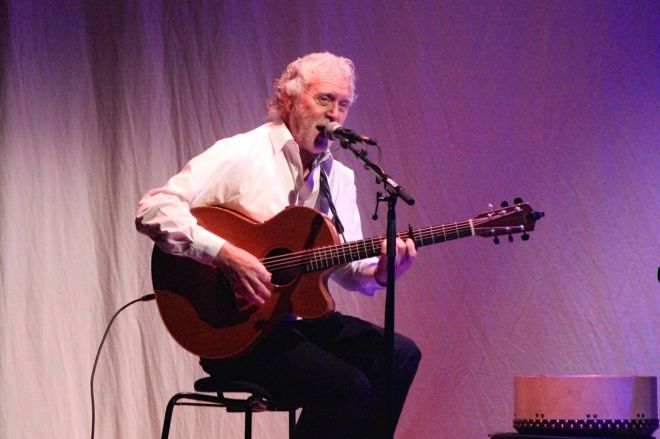
Then there’s Ian Smith. Not managing to become a native of west Donegal, he did the next best thing – married beann álainn, Breda, from here. Formerly a guitarist and singer with a rock band in England, Ian left thousands of groupies broken-hearted and settled near Burtonport – and has never looked back, well, hardly ever. During that time he has played with some of the best musicians in the world and has cut not one but three full CDs, one of which ‘Restless Heart’ showcases his immense song-writing talent, with many of the titles his own work.

Ian Smith musician, folk music Donegal

That’s the praise bit of the headline. What about the prising bit?

Such talented people as mentioned have not received the kind of support they deserve from those with their hands on the cash that is meant to enrich the cultural, social and economic soil of west Donegal.

Instead of providing generous funding for touristic and artistic initiatives that help attract welcome visitors to the area and create jobs, the powers-that-be at the Gaeltacht’s leading funder, Údarás na Gaeltachta have either repeatedly fed the billion euro they’ve received to well-known, rich elites; to themselves or acquaintances; to developers to build now derelict, deserted industrial estates; and to companies which have gladly accepted the hand-outs, then promptly left the area, leaving out-of-work unfortunates in their wake.

Perturbed by the stories I’ve been told by local people about such discrimination and the wall of informational silence constructed by Údarás – I began prising apart, bit-by-bit, snippets of information through the Freedom of Information Act about the spending policies of aforesaid economic development organization.

To say I was surprised and disappointed at what I found is a distinct understatement. Astonishment would be a more suitable word. Lack of strategy, absence of clarity, cases of cronyism and nepotism – in fact, all the dubious goings-on that continue to bedevil Ireland and prevent its healthy development.

With the New Year approaching, I’ll continue to praise and prise. Perhaps, in doing so, I’ll help create a bit more transparency as well as highlighting some more of the real heroes of the area and thus contribute something to the area where I live.

I hope so cos’ I’m a terrible singer, can’t play a musical instrument if my life depended on it. As for gardening, what’s the difference between a parsnip and the tail of a donkey? Don’t even mention boating.

In the meantime, have a happy and contented New Year, wherever you are, whatever you do!

Crooks, citizens or celebrities?

Ethics, or lack thereof, has been the raging catchphrase in Donegal recently with county councilor John O’Donnell  caught on RTE camera allegedly offering lobbying services for cash and Bunbeg-based, EU-funded former school principal, Finbarr Boyle, stealing more than 200,000 euro from a village school, including money earmarked for childrens’ food.

But what’s all the commotion about? Hasn’t there been such unsavory goings-on right here in Donegal for years? Why the shock? Or is there any, really?

In last weekend’s edition of ‘The Irish Times,’ columnist Fintan O’Toole, painted a scary scenario, a malaise spreading nationwide.

…other cultures criminalise the things they find unacceptable; we find unacceptable only the things that have been criminalized. If you can get away with it, we reckon, it can’t be all that bad.” He then quoted Central Bank Governor, Patrick Honohan on white-collar crime, saying, “It is remarkable, first of all, how long it takes, how heavy the procedures are and how light the consequences.

Back in Donegal.

Ardara-born Finbarr Boyle’s story is well-publicized “School principal pleads guilty to 7 counts of theft and forgery.”

As a journalist and editor for over thirty years, I thought sharpened instincts had made me a good judge of character – boy, was I ever wrong.

Sitting at a lunch prepared by my wife in my home with Mr. Boyle as guest some time ago, I would never have guessed the man across from me would stoop to such lows as using a village school’s money where he was principal to treat himself royally to holidays in England, Spain and other fine places, car and house payments and expensive golf equipment.

Finbarr Boyle Donegal, CeangalG,

(l to r): Concubhar Ó LIatháin, CeangalG Marketing Manager, Claire Nic Neacail, Alasdair Morrison CeangalG Director, Dinny McGinley Fine Gael TD and Fionbar Ó Baoill – CeangalG Training Manager.

Mr. Boyle was given space inside the headquarters of Údarás na Gaeltachta in the Gweedore Industrial Estate, Bunbeg as a training manager – surprising, as that particular organisation has refused to gave any free space to small, local entrepreneurs in that same estate, a situation local Sinn Fein TD Pearse Doherty, has consistently taken issue with.

I must admit, Mr. Boyle impressed me then, a fast talker, assertive and supremely confident. Yes, I know what you’re probably thinking – ‘Sounds like a conman to me.’ As things turned out, you are absolutely right. But I was left sad and disillusioned after learning of his multiple theft. He struck me then as the kind of person who could be a positive force for change, especially as we discussed the importance of ethics and the need for the Donegal Gaeltacht to rid itself of its historic cronyism and nepotism which have warped normal economic development of the region.

Yet this is the same person found guilty of seven counts of theft over a number of years (he admitted to many more as part of his plea bargain), for whom Judge John Aymler may not impose a custodial sentence because, in part, 25,000 euro of the money taken may be paid back within a year. That’s around a tenth of what was stolen.

Who says crime doesn’t pay?

A key question, however, still remains unanswered: Mr. Boyle was caught red-handed several years ago (the investigation has been ongoing for at least seven (7) years), so how did he obtain a well-paying position as training manager of a lucrative, multi-million euro, tax-payer supported EU funded project – ironically, one aimed at helping economically disadvantaged people? Was this , in itself, a classic case of nepotism and cronyism? Regardless of the multiple thefts, people have asked, “Does a school principal have the business credentials to train entrepreneurs?”

When contacted by me this week on the issue, Dr D. Munro, chair of the CeangalG Steering Group, Sabhal Mor Ostaig in Scotland, e-mailed back, saying, “Mr. Boyle’s actual contract of employment, for the post of Training Officer, with the wider CeangalG Project, was formally and directly managed through our Project Partners, Údarás na Gaeltachta.” He added that Mr. Boyle was “employed by the project between 9th Sept 2013 and 31st March 2015.” The Gardai investigation began as late as 2008 and Mr. Boyle, according to media reports, admitted his thefts almost two years ago (January last year).

Mr. Munro added, “At no stage in either the recruitment process or during his subsequent period of employment, was CeangalG ever made aware of there being any on-going police investigation.” Mr. Munro cc his email to the law company of Wright, Johnston & Mackenzie and to the University of the Highlands. Have I touched a red button?

Entitled CeangalG (ConenctG), this project is funded by the EU’s INTERREG IVA, Bòrd na Gàidhlig, MG ALBA, the Scottish Government, Sabhal Mòr Ostaig and Cultúrlann McAdam Ó Fiaich and focuses on the Gaeltachts of Donegal, Scotland and Belfast. On it’s website, it states:

CeangalG Donegal, INTERREG IVAAs for independent councilor John O’Donnell, the ball is largely in his court. He can do the dignified thing and bow out. If he stays, he places the entire council under a shadow. Independent councillor Frank McBrearty says he should be removed from all committees. But it seems resigning is the last thing O’Donnell will do. Another Independent councillor, Micheál Cholm Mac Giolla Easbuic, is right in asking fellow councilors to walk out of the chamber at the next meeting in protest. Someone has to stand up, otherwise – due to blatant impunity – it will get much worse. Let’s see if that happens. If not, then Fintan O’Toole’s words ring frighteningly true.

John O Donnell Donegal, independent councilor Donegal

Independent councilor John O Donnell: will he do the right thing?

But questionable dealings are nothing new in Donegal, as many local people have told me.

Under the auspices of the former Fianna Fáil government, Liam Cunningham (Liam Ó Cuinneagáin), was paid substantial sums for his services as member and long-time chairperson of Údarás na Gaeltachta – more than a quarter of a million euro. Between 2002 to 2012, his travel expenses alone amounted to 131,730 euro. His fees amounted to 206,962 euro.

More than that, documents requested by me under the Freedom of Information Act also now show that at least one company he established, Oideas Gael, received generous amounts of money – more than 350,000 euro in a series of payments – from the very same organization he chaired for so long. Mr. Cunningham said Oideas Gael was a hobby. With a financial return like that, that’s quite a hobby.

In stock market terms, is this not a case of insider trading, and therefore unethical? After all, no better-placed person to access money from a group than the person who’s on the inside track of that very same group, knowing intimately its budgets, its strategy and its key staff. When called by me about this situation in a phone interview, Liam said, “Sean, things were different then. I don’t see it as a conflict of interest.” Different then? How is it different? The question was never answered.

Oideas Gael, Liam Cunningham Donegal

Liam Cunningham: is it wrong to lobby for money from the very funding organisation that you chair?

Some readers might say, ‘Liam hosts Irish-language classes.’ That’s true, but so do many others and they don’t benefit from the rich financial backing Oideas Gael received so handily. Still others could do so – if they had that kind of money. Is such treatment fair and ethical? Is the playing ground a level one? How many times has Údarás said there’s not enough money for your project?

The particular situation of Mr. Cunningham also raises an inevitable question: was it linked to an ongoing quid pro quo agreement among local Údarás board members then? And has anything changed since? Interested to find out? You have the right to know, and here’s how. (See below).

Mr. Cunningham has since been named, ‘Donegal Person of the Year.’ Considering the dire economic development of the Gaeltacht, where I live, under his watch, the question must be asked, ‘Is this how we want the term ‘model citizen’ to be defined?”

Michael Heaney, formerly a director of services with Donegal County Council, has recently been appointed director of Enterprise & Investment with Údarás. Will his leadership change the way Údarás doles out money, how it selects projects to fund? Or will the same old cadre of elites be the recipients? Time will tell.

As Údarás is helping DLDC select projects for funding under the EU’s upcoming LEADER programme, it will be operating under much tighter European regulations than the rather loose Irish ones it has been working under thus far. It will be interesting to monitor the quality of their project selection process for LEADER.

As O’Toole writes in last Saturday’s column, “If corruption is very low on the list of priorities for criminal justice, it is little higher on the list of political priorities…. So long as impunity reigns, the rare eejit who gets caught will always evoke sympathy… What marks out (Ireland) is the breathtaking degree of impunity for all white-collar crimes.

Isn’t it long past time this situation changed? The upcoming election gives us the chance to affect such change. In  ofthis regard, it is worth noting the words  ‘Donegal News’ columnist Martin McGinley’s in Friday’s edition, “We get what we accept.”

You have the right to know:

You can find out additional information on the dealings of Údarás by e-mailing Judy Ní Dhubháin at judy(at)udaras.ie. Quoting the FOI Act 2014, you can ask for any information you like, financial or otherwise. The service is free.

Anyone wanting answers from CeangalG, can contact Dr D. Munro, chair of the CeangalG Steering Group at dm.smo(at)uhi.ac.uk or +44 (0) 1471 888352. Claire Nicolson is the organisation’s administrator claire(at)ceangalg.net Alasdair Morrison, a former minister in the Government of Scotland, is its director. Or through Údarás na Gaeltachta, Donegal. Tel: 074-9560100. Fax: 074-9560101. Email: dnag(at)udaras.ie

Be sure to tell me what you find out. I’d be curious to know.

Donegal entrepreneur Moira Ní Ghallachóir pushes for local tourism diversity

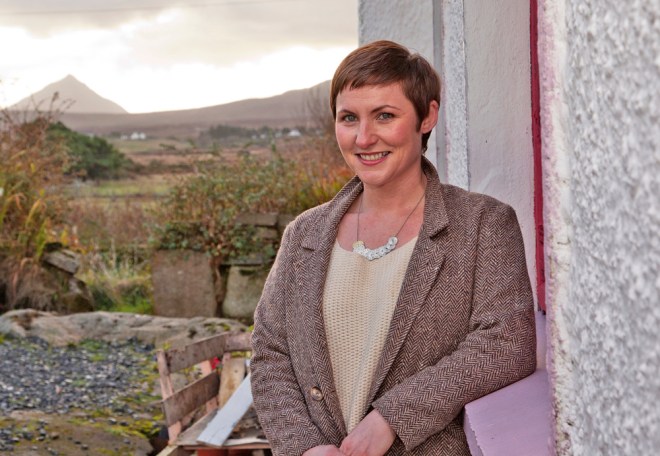
With no particular experience in tourism and no specific agenda, Edinburgh-born Moira Ní Ghallachóir bravely packed up her bags in London four years ago and returned to west Donegal where she grew up, to re-invent herself – and says she has never looked back.

Moira Ní Ghallachóir Donegal,

Back home, and lovin’ it! Photo by Philip Mulligan

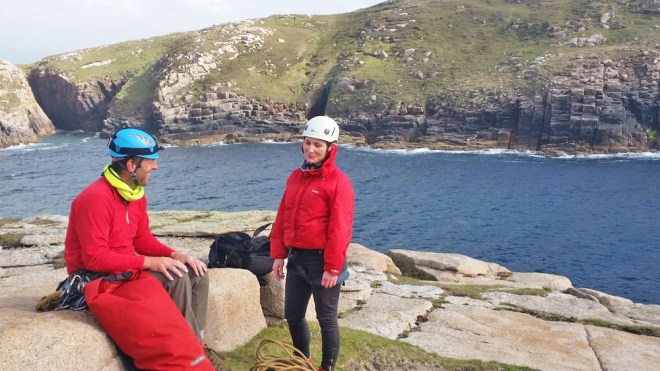
Living in her grandmother’s home in Derryconnor just outside Gortahork in the Gaeltacht, she noticed the large number of local people with outdoors skills such as Iain Miller, an experienced mountaineer, and Gareth Doherty, a sailing instructor, so she launched mng Ventures to organize outdoor adventures linking their skills to clients.

mng Ventures, Donegal outdoor activities

Iain Miller puts Moira ‘through the ropes.’

“I looked at my life in London, the work-week, then partying all weekend, and asked myself, ‘Is this it?’ ” said the petite, short-haired 39-year-old woman sitting in An Crannog, a community-based complex in the coastal town of Bunbeg under the management of Cathal Ó Gallchóir, where she was given free office space for a year to help develop her business. “If someone had told me I’d be earning as little as I have over the last three years, however, I’d have said, ‘You must be joking.’ But, honestly, I feel more fulfilled, happier and healthier than I’ve ever been. With islands, mountains, lakes and the Atlantic Ocean right beside us, this place is truly world class. That’s what inspired me to set up a business.”

While Moira is armed with plenty of enthusiasm and networking links gained from living in Ranafast from age 8 to 18, she is concerned at what some describe as ‘generational grant dependency,’ the over-reliance on public hand-outs for projects rather than sheer entrepreneurial spirit.

mng Ventures, Rock agus Roam

Ready to ‘Rock agus Roam, a project organised by mng Ventures!

“Many people feel they have to be supported by government grants and if there is none, then ‘game over’ it cannot be done,” she said forthrightly. “We need to realize what we have and build on it. Some people say, ‘We need an adventure centre,’ not realizing that the adventure centre is all around them. Many also don’t appreciate what a beautiful landscape they have here. How can they then expect tourists to appreciate it? They’ve got to believe in their business and tell it as it is, get the word out there, with honesty and an authentic voice. Why be quiet about generating jobs or being environmentally-friendly? With today’s technology we can promote ourselves at the click of a button.”

Moira also believes greater co-operation among local people is required for group success. “We need to work together more closely, we’re still not doing enough of that. We need to start clustering.”

activities in Donegal, Donegal people,

Captivating seascapes around the northwest coast of Donegal.

Taking language as a cultural issue, she adds, “There is a lot of fear here in the Gaeltacht around the Irish language issue. Yet it can be our greatest strength, an important part of our cultural landscape. I have never viewed the Irish language as central to the growth of my business, but I embrace it with respect, with ‘meas.’”

In fact, Moira says having a bilingual business is “a challenge, double the effort as it’s often difficult to marry English and Irish,” with even announcements having to be written, edited and designed in both languages.

rock-climbing, sea kayaking, sailing, island hopping, whale watching

Speaker Finbarr Bradley captures his audience on Saturday.

Her statement inadvertently raises an important issue for Gaeltacht areas. Is too much precedence given to Irish-speaking-only entrepreneurs for funding from grant-awarding bodies such as Údarás na Gaeltachta, than local non-Irish speaking applicants or ‘blow-ins’ as they are referred to locally? In terms of larger grants, language doesn’t seem to be a barrier, with English-speaking call centers having received millions of euro over the years from Údarás. With smaller entrepreneurs, however, ‘blow-ins’ report having very little success accessing grants from the organization for projects that they say could create badly needed employment.

While Moira admits to it being, “hard to make a decent living here,” she is optimistic things will get better. “About three hundred are already booked for outdoor pursuits next year,” she says proudly. While she says success so far has been ‘built on my own investment and initiative,” she adds that she has accessed grant funding from Foras na Gaeilge for the Colmcille Trail (Colmcille Eirinn is Alba) project launched recently and from Údarás for a three-month pilot programme, which ends in January.

entrepreneurs Donegal, outdoor activities Donegal

She also says she will probably apply for the upcoming EU-funded LEADER programme aimed at economically regenerating rural areas.

Though mng Ventures organizes a wide variety of activities including rock-climbing, sea kayaking, sailing, island hopping, whale watching and hill walking, Moira believes there is still not enough diversity of tourism offer in west Donegal. “We need more choice and we need to work from the inside out to achieve that.”

where to eat in Gweedore Donegal, Donegal cafes

Caitlin Gallagher, owner of Caife Kitty, and her daughter served up delicious food and drinks to everyone Saturday.

Her words were echoed by Finbarr Bradley, professor and co-author of ‘The Irish Edge’ and a mentor to Moira’s fledgling company. At an event Saturday organized by Moira at Sean Teach Niall O’Domhnaill Loch an Iúir where fine food was prepared by Caitlin Gallagher of Caife Kitty in Bunbeg, he said, “This area of Donegal is rich in landscape and culture and that’s what many people are searching for now, something experiential, something spiritual, something authentic. Building upon all that you already have here so naturally is the best way forward.”
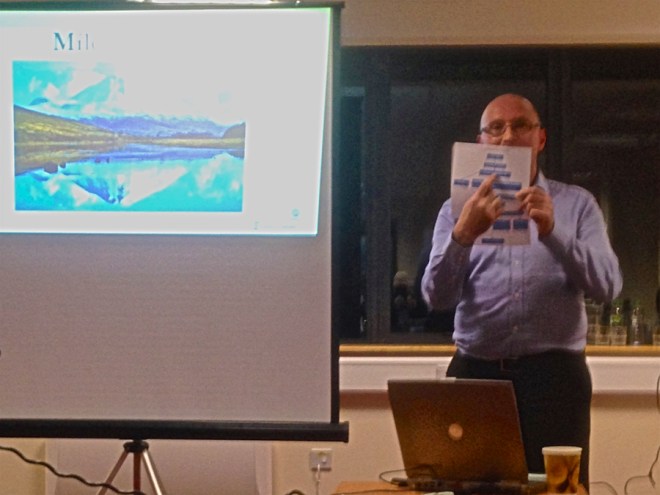
Finbarr Bradley author, University College Dublin

Watched by excellent singer Noeleen Ni Cholla (centre), Finbarr Bradley talks about the importance of ‘cultural authenticity’ in tourism development.

Good writing gives me goose-bumps

Having arrived in picturesque west Donegal – Bun na Leaca to be precise – over six years ago and recognizing it for the artists’ haven that it is, my wife, Columbia, and I thought about establishing a creative writers’ retreat.
After all, surely such a pristine and bucolic landscape could inspire great prose. 

Ireland Writing Retreat participants enjoy a special Celtic legend coastal walk with guide, Seamus Doohan.

Not that such an idea hadn’t been done before.  Poet partners, Janice Fitzpatrick Simmons and her late departed husband, James, had done so many years previous, setting up a ‘Poet’s House’ in a refurbished cottage at Clonbarra, outside Falcarragh.

Then funding was more generous and tens of thousands of euro annually wasn’t much of a problem for Udaras na Gaeltachta, the Arts Council, Donegal County Council, LEADER, and other sources.
Times have changed, however, and the public funding pump is dripping slowly, a mere trickle at best. Seanie FitzPatrick and Co. and Fianna Fail made sure of that.

Rose Sweeney teaches future members of the ‘Riverdance’ cast the basic ‘sevens’ of Irish ceilidhe dancing.

County Librarian and Divisional Manager of Cultural Services, Eileen Burgess, a keen supporter of our idea, issued warnings: “It’s a wonderful project but there’s simply no money in the kitty. You’d pretty much be on your own.”

But you know how it is – an intriguing idea comes along, sticks to you like furze in a meadow and simply won’t fall away no matter how hard you try.
So, even though there are more than one hundred creative writing conferences and book festivals throughout Ireland – many in the much-publicized, tourist-centric counties of Dublin, Cork, Galway and Kerry – we took the plunge.
After all, isn’t Donegal the prettiest of them all?

Washington-based triple book author and former CNN editor, John DeDakis, enjoys a leisurely trip on ‘The Cricket’ to Gola Island with other writing retreat participants.

Of course, wisdom told us to delay until better economic times were upon us. But passion drove us forward, screaming, ‘tempus fugit.’ We swayed for a while between the two.

We’re going into our third year now and have managed to attract participants from far off fields, many of whom had never been to Ireland before never mind the back-roads of the Donegal Gaeltacht – Wyoming, Sydney, Utah, Perth, Stoke-on-Trent, New Jersey to name but a few.
Not bad for a project without public funding of any kind.

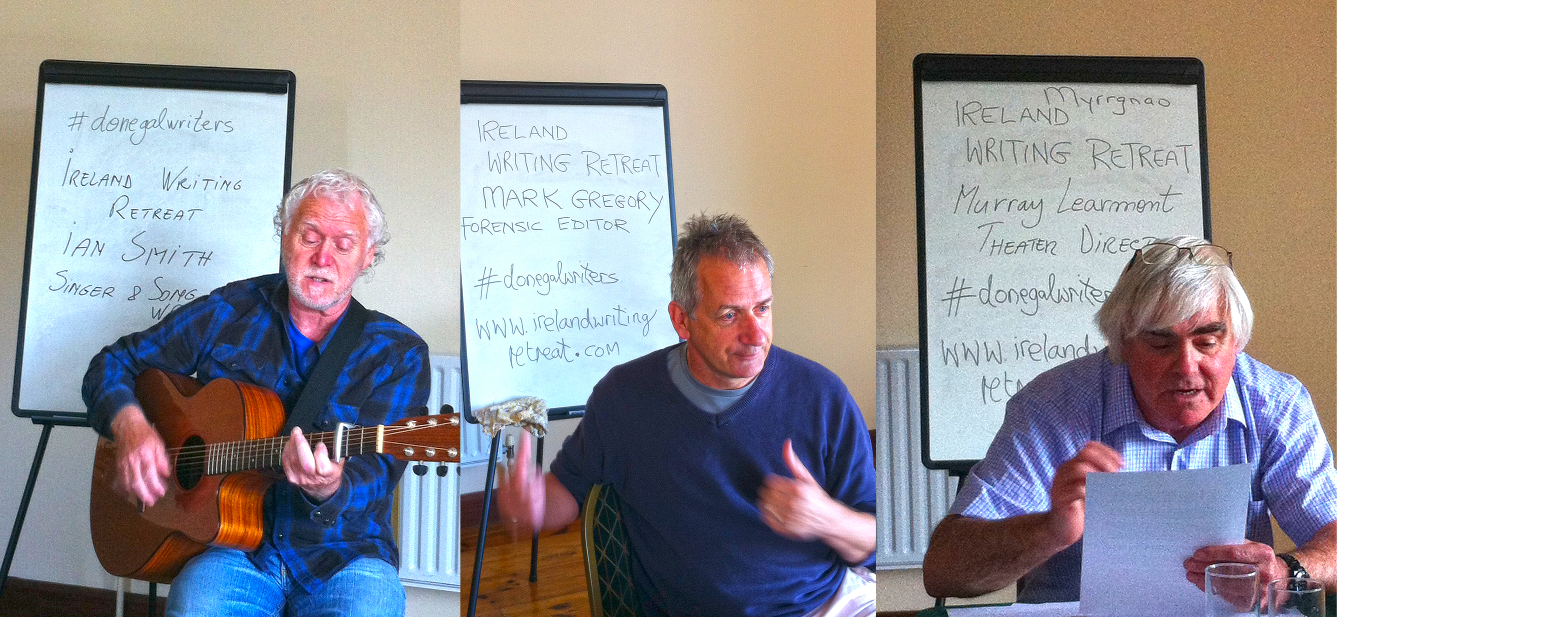
Guest speakers at the Ireland Writing Retreat held at Teac Jack, Gaoth Dobhair. (l to r) Singer-songwriter-guitarist, Ian Smith; Mark Gregory, forensic editor; actor/director Murray Learmont.

Imagine where it could go with a bit of financial support – but perhaps only if it’s located in one of the aforementioned counties.

As for this year, international stars of the week-long retreat included John DeDakis, triple book author and former senior editor at CNN for 25 years who flew directly from Washington to be at Teac Jack’s, the retreat location; Anthony Quinn, experienced author of crime fiction with a crafty literary twist; and Mark Gregory, a much-heralded forensic editor (the person who reads book manuscripts minutely word by word, syllable by syllable).

Plot, character, suspense – (l to r) Authors John DeDakis and Anthony Quinn discuss the challenging task of writing novels.

But committed locals also loaned their weight enthusiastically to the endeavor – actor and drama group director, Murray Learmont, guided participants on improving their public reading skills; singer-songwriter-guitarist, Ian Smith granted insights into the challenging task of lyric writing; Rose Sweeney taught participants their ‘sevens’ in preparation for a ceilidhe in the backroom of the popular Glassagh venue; Pól Ó Muireasáin gave an enlightening tour of Gola Island; and Seamus Doohan led participants on a Celtic legend coastal walk – all of which was grist to the mill for writers’ creativity.

Eddie, the uncrowned King of Gola Island (in blue) with walking guide, Pol O’Muiresean, (r) talk about life on the west Donegal island many years ago.

The ‘Donegal News’ considered this year’s ‘Ireland Writing Retreat,’ which ended last week, worthy of an article in today’s edition.
article
Onward to 2016.
 

Minister of Public Expenditure raps Údarás na Gaeltachta for lack of transparency

Minister of Public Expenditure and Reform, Brendan Howlin, has rapped Údarás na Gaeltachta on the knuckles for failing to release vital information on spending of public money affecting Donegal and other Gaeltacht areas.

Following a refusal by Údarás to provide details on hefty pension payments to former executives that accounts for more than half its annual budget under a Freedom of Information (FOI) request I filed, formal written parliamentary questions were submitted by TDs angry about the lack of transparency by the Gaeltacht economic development group.

FOI

Such questions culminated in one by Mary Lou McDonald, Sinn Fein TD and member of the Public Accounts Committee (PAC) on my behalf, directly to the Minister, “To ask the Minister for Public Expenditure and Reform in view of his stated commitment to transparency and accountability in the spending of public moneys, his views that it is acceptable for a public body fully funded by the Exchequer to withhold from the public record details of public service pension arrangements on retirement for senior managers; and if he will legislate to require all publicly funded bodies to make such information public in the interests of open Government.”

A formal written response has just been received from Minister Howlin, in which he, in effect, tacitly states that Údarás was wrong to turn down my FOI request seeking details of pensions for former executives paid wholly out of public funds, and that it should release the information forthwith.

The Minister writes, “Under the 2014 (Freedom of Information) Act, the terms and conditions of any individual who holds or held any office or other position remunerated from public funds in a public body, rather than just those of a Director or member of staff as provided for under the 1997 Act, are not afforded the protections under the Act in relation to personal information. On that basis, the type of information to which the Deputy’s question refers i.e. public service pension arrangements on retirement for senior managers which would be part of remuneration, would be available from a public body that was subject to FOI, other than where a specific exemption applies against the release of such information.

The Minister elaborates further, “Under the Freedom of Information Act 2014, as was the case in the original Freedom of Information Act in 1997, an exemption from the provisions of Freedom Of Information (FOI) is provided for personal information. The 2014 Act also expanded the definition of what does not constitute personal information in the context of FOI.”

In answer to McDonald’s question as to whether the Minister “will legislate to require all publicly funded bodies to make such information public in the interests of open Government,” the Minister writes, “Given the matter is already provided for by the Freedom of Information Act 2014, I do not consider further legislative action is required.

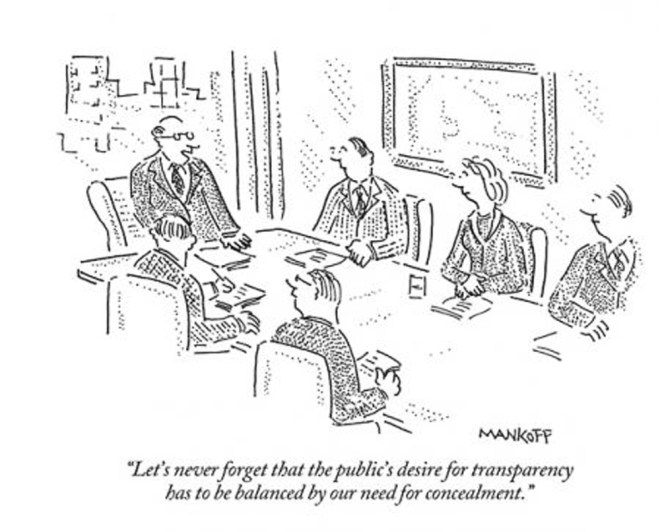
As we have seen with scandal-hit FAS and other Irish state bodies that abused peoples’ trust and misspent public money, the only way to prevent corruption is by creating greater transparency. The government coalition of Fine Gael and Labour made this a central issue in their electoral platform. In the three years since they took office, little progress has been made.

cartoon

Several weeks ago, Ireland was placed 31st position ‘in the league of transparent nations’ following research by the World Wide Web Foundation. It is the worst of any European nation, even behind countries such as Russia, Mexico and Brazil. The group’s categorized Ireland as a country that faces challenges to “mainstreaming open data across government and institutionalizing it as a sustainable practice.” It also said “core data on how the government is spending taxpayers’ money and how public services are performing remains inaccessible or pay-walled even though such information is critical to fight corruption and promote fair competition is even harder to get.”

Tim Berners-Lee, Web, founder of the Web Foundation and the London-based Open Data Institute, said, “Governments continue to shy away from publishing the very data that can be used to enhance accountability and trust” and highlighted the power of open data “to put power in the hands of citizens.”

Údarás is a classic case in point.

lenses

Dinny McGinley, former junior minister for the Gaeltacht, wrote back in a vague response to my FOI request saying simply that Údarás had informed him it was “a data controller, defined under the Acts as a person who either alone or with others controls the contents and use of personal data.

For so many years untouchable hidden behind a veil of Irish-language support, Údarás perhaps is in many ways no different to FAS in terms of greed and individual self-interests. According to Údarás sources, former board members in Donegal remained in boardroom meetings during discussions on lucrative payments to their very own companies and organisations. In addition, not one but at least three Donegal Údarás board members have been up before the Standards in Public Office Commission on corruption charges relating to double dipping on expenses. When one considers the expense claims for board members, particularly under the long-time chairmanship of Liam Cunningham from Glencolmbcille (from 2005 to 2010 he received more than 155,000 euro in fees and expenses, according to Highland Radio), one has an idea of the unchecked, proliferate spending that went on.

Some details as already reported by Highland Radio –

  • Four former Donegal members of the Údarás board each received in excess of 100,000 euro each, over a four-year period, in travel expenses.
  • Fianna Fáil member Daithi Alcorn earned nearly €120,000 between 2005 and 2009;
  • Fianna Fail Senator Brian O Domhnaill received €115,000 while independent Donegal member Padraig O Dochartaigh received €105,000.

Over one billion euro of public money has already gone into supporting Udaras na Gaeltachta yet unemployment rates in Gaetachts are consistently highest in the nation.

Misspending of public money (an issue brought up by the former head of the PAC, see 3-part series article series), includes all-expenses trips to Las Vegas for Udaras board members and their spouses – supposedly to meet a delegation of the IDA;

In truth, Údarás was – and perhaps still is – a cash cow for well-to-do insiders in west Donegal.

It is long past time Údarás prepared proper annual reports instead of the porous documents it now produces that disguise the spending picture and that it holds open public meetings to allow the people of the Gaeltacht to know exactly how their hard-earned money is being spent.