…with a hint of time-travel

In a rather bizarre turn of events with a hint of time-travel, fiction has predicted reality.

In my suspense novel, ‘Pretty Ugly’ released several weeks ago, a key scene depicts a lead character on a plane crossing the Atlantic reading a travel guide about the place to which he is going – the northwestern region of the ‘Forgotten County’ Donegal.

Pretty Ugly novel, Fodor's top experiences

Donegal Fodors guide, Sean Hillen Fodors guide

Fast-forward several weeks and Fodor’s, the world’s largest English-language publisher of tourism and travel information, owned by Penguin Random House, released an article by me on, yes, you’ve guessed it, the very same place – with excerpts from ‘Pretty Ugly’ introducing the article. See the full article below that was published several days ago.

Sean Hillen Fodors, Pretty Ugly novel

As Fodor’s has such a wide reach globally, I’m hoping this article helps bring more international guests – many of whom have never been to Ireland – to enjoy this beautiful and lesser-known part of Ireland’s coastline, strengthen the hospitality sector in the hard-hit Gaeltacht and create more jobs for local cafes, pubs, restaurants, hotels and B&Bs.

A sad, rather pathetic, Christmas story

Twas the night before Christmas, when all through the house
Not a creature was stirring, not even a mouse.
The stockings were hung by the chimney with care,
In hopes that St Nicholas soon would be there.’ (Clement Clarke Moore)

As winds howl around me and rain rattles my window panes like the chattering of false teeth, I recall this sad, rather pathetic, Christmas story…

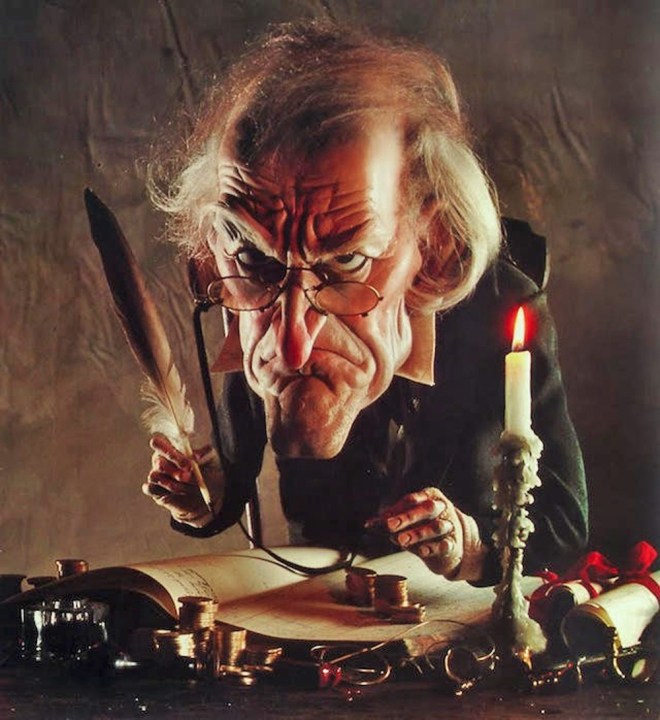
Prominent politician-on-the-cusp-of-greatness on the Irish national stage gets stuck on a knife-edge. Someone with access to key information can prove he falsified expenses on the back of the average Seamus/Sean/Patrick ‘Joe O’Blow’ citizen, both as a board member of Irish-language body, Údarás na Gaeltachta, and Donegal County Council.

Concerned about the effects on its chances of returning to Power if things get sour, spin doctors at his political party’s Dublin head office get involved. Politician-on-the-cusp-of-greatness also calls in his own local cronies, most from the west Donegal Gaeltacht area – well-paid fellows in silk suits, some of whom made financial hay on the back of his and his party’s long-term, some say overly-long, stay in power.

Christmas story Donegal, politicians in Donegal

Money, money – who says I’m interested in money?

They say ‘deny, deny,’ which said politician-on-the-cusp-of-greatness does. He’s hoping the custodians of the county council and the national Irish-language body – many of whose top brass owe their own cushy, well-paid admin jobs, expenses and pensions to his own political party – will sit on it like dementia-suffering chickens, and do nothing.

But the evidence is much too solid, and from a respected and knowledgeable insider too, comprising definitive documents that prove beyond a shadow of a doubt the culpability of said politician-on-the-cusp-of-greatness.

Also, hushed voices are alleged to whisper in the Corridors of Power, ‘there’s so much more that could easily come to light and make donkeys of us all.

Aforesaid local top brass know they must do what’s unavoidable. Otherwise their own jobs, generous expenses and pensions could be on the line. So, faced with no alternative, they bring the allegations – rather reluctantly – to the attention of the relevant authorities, hoping it will all go away and they can return undisturbed to their comfy desks, genteel lifestyles and holiday homes on the Spanish coast.

But that doesn’t happen.

An investigation begins by the six-member, national Standards in Public Office (SIPO) chaired by an experienced, former High Court Judge.

corruption in Donegal, what's on in Donegal

Now let me think: two places at the same time. Mmmmm, surely it must be possible. Anyway, who’s lookin’?

Re-enter stage left the local and national spin-doctors-cum-advisors to said politician-on-the-cusp-of-greatness. Okay, not ‘deny, deny,’ but ‘delay, delay.’ Until it all blows over and our All-Consuming Party climbs back on to its Rightful Throne. ‘Knowing the fickleness of the average dumb, thick-as-shite, Irish voter, that’s inevitable,’ they say, ‘quicker than you can slip a brown envelope into a pocket.’ Then we can blow this under the carpet as we have done with much more serious stuff in the past.’

But national elections come around. And, lo and behold, the hoped-for Dramatic Return to Power, which they feel is theirs by Right, they being the ‘Soldiers of Destiny,’ doesn’t happen.

The battle cry, as per the silk-suited, well-heeled advisers and cronies, then becomes not ‘deny, deny’ or even ‘delay, delay’ but that bastion of Irish patriotism. The one, they feel, will blind the thick-as-shite voters to the insignificant wrongs of falsifying expenses and screwing the average Seamus/Sean/Patrick Joe O’Blow.

The sacred language. The language of Pearse, Plunkett and Wolfe Tone.

Let’s tell them, by George: ‘We want any investigation to be conducted in our native language, as Gaeilge, le do thoil. If not, we’ll not recognize this court.’ Quite ironic, as the comprehensive falsifying of expenses, by all accounts, was done in the dignified language of the Royal British Crown.

And so it’s done.

And so the cost continues to rise…and rise…and rise even more.

Finally, the rather inevitable conclusion was reached, just last week after around two years of delay: politician-on-the-cusp-of-greatness has indeed screwed over the average thick-as-shite Seamus/Sean/Patrick ‘Joe O’Blow.’ Regardless of our rapid technological development, it seems it’s still impossible for a homo sapien to be in two separate physical places at the very same time.

But guess what?

poverty in Donegal, Senator O'Donnel Donegal

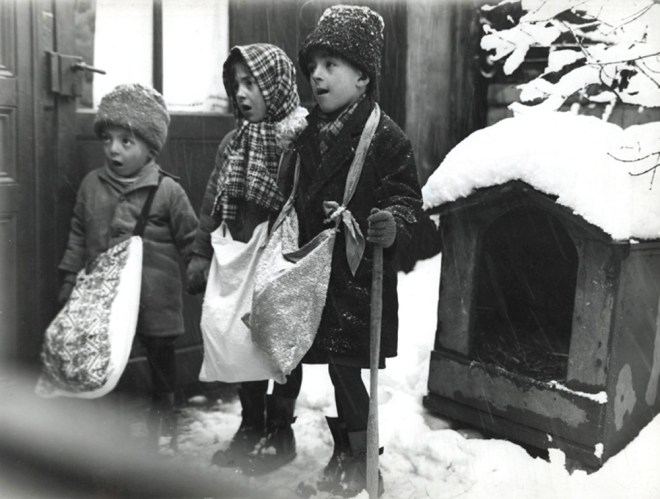
Hey Mister, Merry Christmas, can ye spare a penny cos the politician-on-the-cusp-of-greatness stole all our parents’ money?

Instead of costing the average Seamus/Sean/Patrick thick-as-shite ‘Joe O’Blow’ a couple of thousand euro, it costs, wait for it – with lawyers’ fees, documents, photocopying, translation costs, administrators and secretarial overtime etc – a whopping 350,000 euro.

To put this sum in perspective, this is the equivalent of around 12,000 (that’s twelve thousand) round-trip airfares on flybe for cancer patients from Donegal’s Carrickfinn Airport for specialist treatment in Dublin.

Yet, even sadder, so unimportant and insignificant is scarce public money, both Donegal county council and Údarás na Gaeltachta have just announced they’re not going to ask for the money back from said politician-on-the-cusp-of-greatness.

Now isn’t that a sad and pathetic Christmas story?

But know what the even sadder thing is?

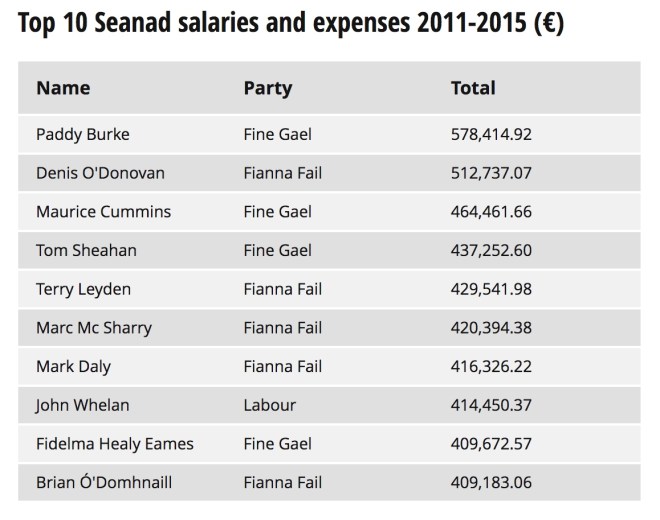
Said politician-on-the-cusp-of-greatness continues to be paid out of Seamus/Sean/Patrick ‘Joe O’Blow’s’ thick-as-shite’ pocket. In fact, between 2011 and 2015, said politician was among the top ten most expensive Senators in the entire Irish nation – 409,183.06 euro to be exact in salaries and expenses. That’s about a 100,000 euro a year. Did you ever earn that figure?

As for the party of our politician-on-the-cusp-of-greatness. Fianna Fail by name. Beset by ever-increasing, power-hungry pains and after spending a great deal of time, effort and money defending ‘Their Man’ and spinning the truth, they – in their instantaneous wisdom – cut him loose. Snip. You can always come back another day, they say, the Seamus/Sean/Patrick thick-as-shite-Irish-voter suffers genetically from short-term memory problems, so we’re all okay, in it together, if you know what I mean.

Now, you tell me. Who’s the real loser in this sad, rather pathetic, Christmas story?

Donegal politicians, Fiana Foil Donegal

Yeah, it’s pretty bad. We ain’t got no shoes or socks. Where did the money for them go anyway, you ask? Well, it’s a sad, rather pathetic, Christmas story…


If you’re interested in political and corporate corruption in a suspense novel linking Donegal to the US, read newly-published ‘Pretty Ugly.’ Can be purchased direct from Amazon, in eBook or print form, or in Donegal from Gallaghers or Matt Bonners Bunbeg, or Easons Letterkenny.


Grassroots initiative promotes men’s health and well-being

Few things deserve greater praise than a community-led initiative that helps increase the quality of life of its members – thus the Men’s Sheds concept.

Started only five years ago, the idea has enjoyed phenomenal growth with more than 350 such sheds throughout Ireland already with an amazing 10,000 people attending activities every week, and a growth rate of 1.5 sheds per week. Donegal alone has 10 sheds.

What’s the aim? A simple, yet admirable one – improving members’ mental and physical health through diverse activities.

See article below I wrote for this week’s edition of the ‘Donegal News.’ It contains a couple of Donegal contacts for those interested in finding out more.

Making Lives Better in the Shed

Many men throughout Donegal travelled to Belfast this past weekend for the biggest international gathering of ‘Men’s Shed’ members with the goal of developing diverse activities and closer links with each other to help improve members’ physical and mental health.

Embracing the traditional concept that the garden shed has long served as a sanctuary for men, a place where they ease the everyday stresses of life, ‘Men’s Sheds’ are spaces where men meet and work together on diverse projects. Community-based and non-profit, they are open to all men who want to enjoy a safe, friendly and inclusive environment.

Sheds without Borders, Gaobh Dobhair Men’s Shed

Members of Gaobh Dobhair Men’s Shed (Scioból na bFhear), Liam Ó Gógáin, Paul Treacy, Michael Coll, Dónal Clancy and Austin O’Donnell, at Belfast international ‘Sheds without Borders’ conference.

Founded just five years ago, the Irish Men’s Sheds Association (IMSA) organized the Belfast event, entitled ‘Sheds without Borders,’ which was attended by several hundred people from countries such as Scotland, Wales, Australia and Ireland. The association has experienced phenomenal growth and now represents sheds both here and across the border with a rapidly-increasing membership of 350, with around 10,000 ‘shedders’ attending weekly. It is growing at a rate of 1.5 sheds per week. Membership is also expanding in Northern Ireland, with 44 sheds and around 1,000 attending weekly. Donegal now has about 10 sheds county-wide.

Reflecting on their growing popularity, Liam O’Gogain, a member of Gaobh Dobhair shed (Scioból na bFhear) in the local industrial estate who went to Belfast with several colleagues, said, “Worldwide, sheds have a proven positive mental health dividend for members countering feelings of isolation with a relaxed, community spirit and an opportunity to share your skills and learn new ones.” He said “increasing public awareness” about them was key, with the shed he attends meeting every Monday and Thursday evening 7-10 pm. Anyone interested can contact sciobolgaothdobhair@gmail.com or call Liam on Mobile 087 254 3997 for details.

Liam Ó Gógáin Donegal, Men's Sheds

Shedders enjoy a joke while converting a disused room into a tea-room using bits and pieces.

Enthused by the Belfast conference, O’Gogain said he heard, “endless stories from men of all ages about how their shed has transformed their lives, through friendship, conversation and simply having fun with projects,” which, he added, “creates effusive, natural companionship.”

Asked why Men’s Sheds’ are particularly important in Donegal, he added, “With the loss of the manufacturing jobs base here, Scioból na Bfhear, like other such sheds, provides a welcoming environment for men from every background from their mid-30s to their 80s, any age, to gather and work together through craic and collaboration.” As to the benefits of last weekend’s international event at Belfast City Hall, he said, “We made friends and contacts with other sheds in Donegal and throughout the country who offered information, ideas and support to fledgling sheds. Interesting talks ranged from mental health to adult learning.”

Back from Belfast and speaking about inclusiveness and easing social isolation, Gerry Connolly, chairperson of the Ballybofey-Stranorlar shed established last year, now with 30 members, said, “We started, in part, because may men here in the area suddenly became unemployed either out of illness or redundancy when the crash happened but we also have many retirees.” Members completely renovated and rewired a Portacabin for meetings, which is also used by other community groups, and will make ‘buddy benches’ for schools with the help of a skilled woodturner. Those wishing to know more can contact Gerry at Mobile 086 825 0550.

Shed activities nationwide range from boat-building to making ornamental crafts from wood such as candle-holders and toolboxes to simply playing pool or table-tennis and creating choral groups.

Unique chance to meet Washington-based author and former CNN editor in west Donegal

Wandering through a dappled glade in Glenveigh National Park a short while back, Lugh and Siog, our two loving, lively, not-so-shy Irish collies – as is their habit – found some new friends. A bearded man, his wife and his daughter.
That man turned out to be Washington-based former CNN senior editor and triple-book author, John DeDakis, a friendly fellow over on this side of the Pond on a short holiday – his first foray into Donegal.
He must have liked what he saw, for that same man I am delighted to say, will now speak at a special public event hosted by ‘Ireland Writing Retreat’ at Teac Jack in Gaoth Dobhair this Monday evening, June 29, at 8pm, sharing his decades-long experiences in American TV and radio broadcasting – including interviewing Alfred Hitchcock – as well as writing three crime suspense novels.
Interestingly, the protagonist in John’s three crime novels is a young woman, so – having honed his writing skills from a female perspective – he will talk about what he learned about the mistakes men make in trying to forge meaningful relationships with women.
In his fourth novel, which he is working on now, John deals with the death of his 22-year-old son. During his talk, he will explain why he wanted to tackle such a personal and painful topic.
John will also offer advice to those who feel they have an interesting story to tell, but are confused about how to get started writing it.
 
Staffed 24 hours, seven days a week at CNN‘s world headquarters in Atlanta, Georgia, and in bureaus worldwide, the television and online news network has a global team of almost 4,000 news professionals. Its news and information services are available in five different languages across all major TV, internet and mobile platforms reaching more than 380 million households worldwide.
“It is a delight to be a part of the Ireland Writing Retreat in Donegal,” said John earlier this week, several days before he departed from the US capital. “It is wonderful that such an international event as this takes place amid such a beautiful landscape, a perfect backdrop for artists of all kinds, including creative writers.” 
His exciting and informative multi-media presentation is entitled ‘From Journalist to Novelist Or How I Learned to Start Making it Up.’ If you’re interested in news, journalism, current events or creative writing – don’t miss it.
Among the many roles, John played at CNN was as senior script editor of the popular Emmy and Peabody-Award winning programme, ‘The Situation Room,’ hosted by Wolf Blitzer, which offered expert analysis of the world’s top news and current affairs stories, both national and international.
John is travelling direct to west Donegal from Washington this weekend to join a line-up of top-notch published authors in diverse genres, including crime, magic realism and science fiction, for the week-long ‘Ireland Writing Retreat’ where they will help retreat participants improve their creative writing skills.
His interest in the crime suspense genre began long before he finished the first of his three published novels, ‘Fast Track,’ ‘Bluff’ and ‘Troubled Water.’ He enjoyed the rare privilege of conducting a 40-minute, one-on-one interview with the man who has been nicknamed the ‘Master of Suspense,’ Alfred Hitchcock. The career of this British director, who pioneered many techniques in psychological thriller movie genres, spanned half a century and included such film successes as ‘The Birds,’ ‘Dial M for Murder’ and ‘Psycho.’
John was also White House correspondent for CBN News during the last three years of Ronald Reagan’s presidency. He is an adjunct journalism faculty member at the University of Maryland-College Park and has been a lecturer at the American University, Washington, D.C. and Writer-in-Residence at the Callanwolde Fine Arts Center in Atlanta, teaching fiction writing classes and holding one-on-one writing tutorials.
For details on how to book your place see Ireland Writing Retreat

Bunbeg, once pretty, now disfigured

Once pretty, Bunbeg is looking more and more like a toothless old hag.

Derelict spaces, decrepit ‘For Sale’ signs and boarded up, empty and run-down buildings have pockmarked its once thriving main street.

OLYMPUS DIGITAL CAMERA

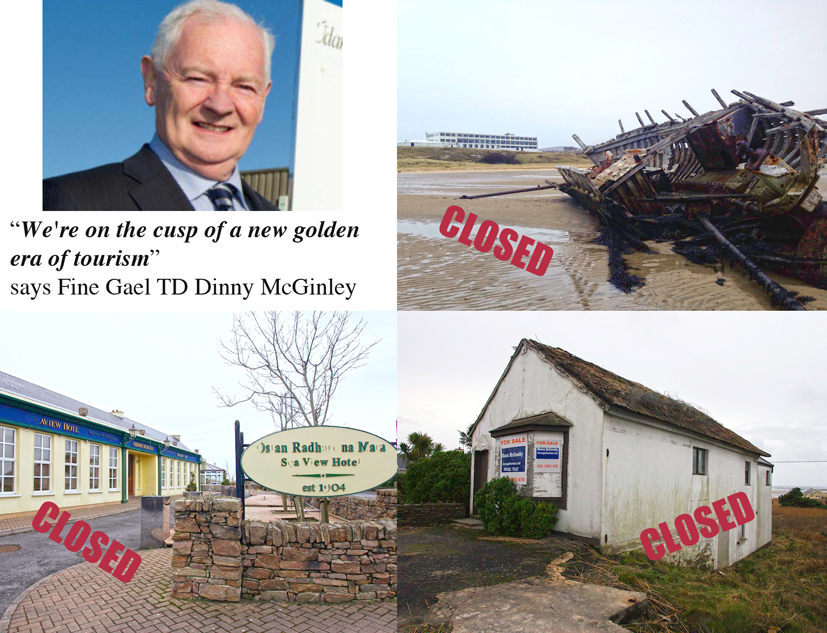
The iconic, century-old Seaview Hotel, which employed over 108 people seven years ago (talk of Cayman Islands and meat debts has no place in this blog), stands empty and forlorn this week , joining a heap of other ‘deadwoods’ on the street  – a once popular restaurant opposite and three other nearby hotels, The Errigal View, the Ostan Gaoth Dobhair and The Brookvale, as well as a mix of shops, bars and cafes, all now closed and crumbling.

Ironically, one of the few buildings to be renovated and opened on the main street is the constituency office of Fine Gael TD and former Gaeltacht, Arts and Tourism Junior Minister Dinny McGinley, the man who proudly pronounced this week, “We’re on the cusp of a new golden era of tourism.”

colaj good

Talk about poor timing.

Not to mention poor positioning. McGinley’s office lies a mere 50 yards from the deserted Seaview Hotel, first established in 1904.

News this week of the Seaview’s demise is a stark reminder of the abnegation by Udaras, the area’s main economic regeneration group, of its prime responsibility for creating  jobs, including those in the hospitality sector, with Gearoid O’Smaolain its main tourism development officer.

Eamon McBride, former President of the Gaoth Dobhair Chamber of Commerce, put it simply: “the area is crying out for more attractions.”

Job losses, lack of transparency

Aside from the 35 jobs, both full and part-time, lost at the Seaview this week, hundreds have been lost at other Udaras-sponsored businesses such as Largo Foods, Nuance and Sioen Apparel over the last few years. In fact, the Udaras Donegal office has performed consistently worse than any other Gaeltacht region in Ireland in terms of its job-creation record.

Sinn Fein TD Pearse Doherty this week called on the Government to immediately publish the findings of a delayed report by a working group tasked with examining job creation in the Gaoth Dobhair area. One hopes he will demand the same of the local Udaras office. Only then, can the organisation be properly analyzed to ascertain if the public is getting ‘bang for its buck,’ or if drastic changes need to be made internally if it is found that employees lack the skills-set necessary for the important task at hand.

photo and chart good

Gaeltacht disintegration

The intriguing part of the sad saga surrounding what is, in effect, economic mismanagement of the Irish-speaking area, is that while towns within it, such as Gortahork, Falcarragh and Bunbeg, are literally peeling apart, both economically and physically, Dunfanaghy, just outside the borders of the Gaeltacht, is riding a wave, with bars and cafes enjoying a boost in trade, especially at weekends – without the benefit of public funding of any kind.

While Udaras Donegal announced this week it will release proposals for economic development, observers say this is more a cosmetic exercise aimed at organisational survival than a serious attempt at strategic innovation and staff revision – that it has not even hosted a single open public meeting to ascertain the views of ordinary people, the very people who pay for its running costs. Interestingly though, while widespread job losses have occurred in Udaras-sponsored companies in Donegal, no such losses have occurred within the local Udaras office itself.

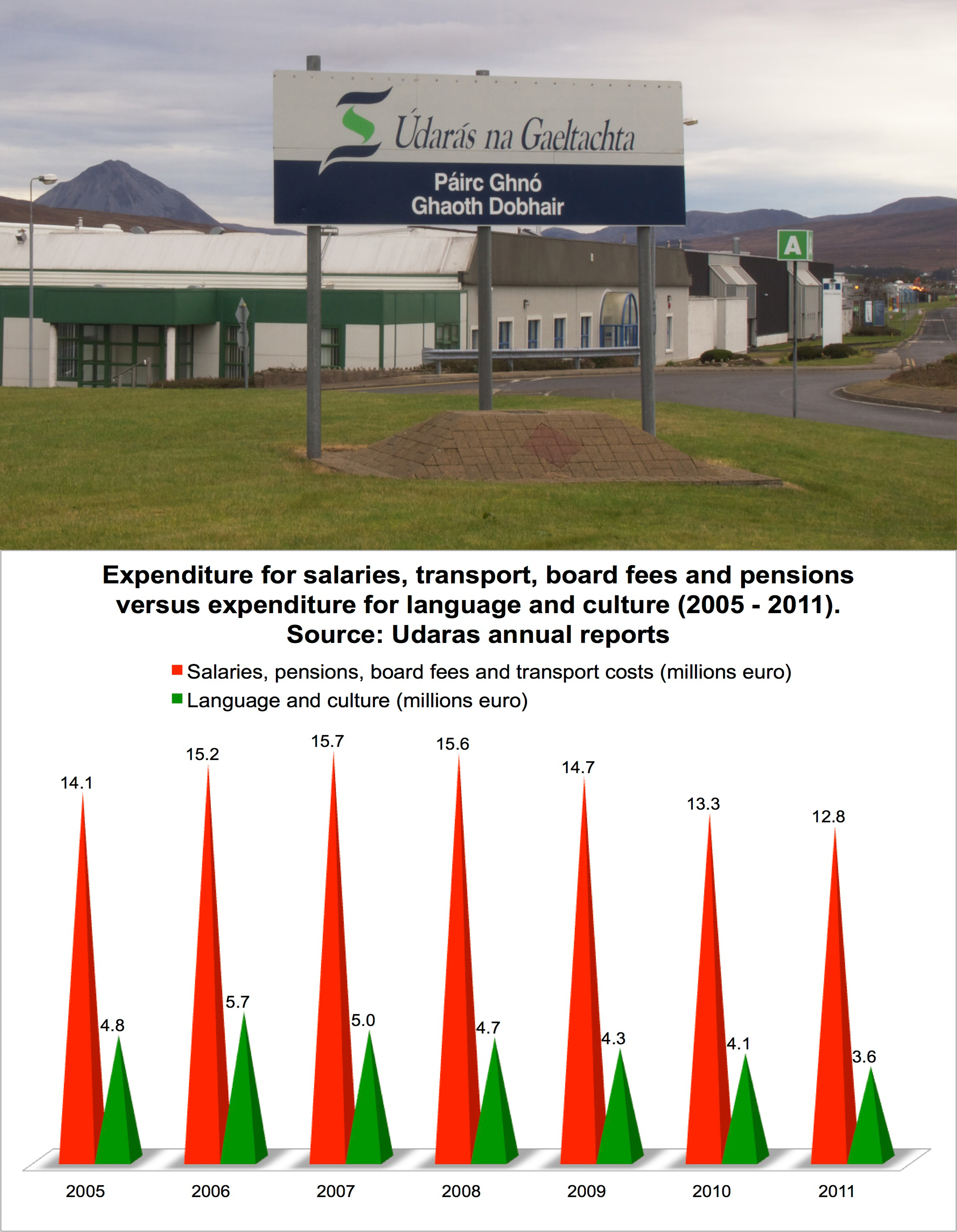
Based on its operational history (see above graph), should we accept as normal that out of its seven million euro budget for this year as announced by Udaras officials, two-thirds go towards salaries, pensions and expenses, and the remaining one-third only to economic and language development?

Is it not long past time this organisation came under closer public scrutiny and thus be made more accountable?

Whale sightings off Donegal coast encourage educational and tourism efforts

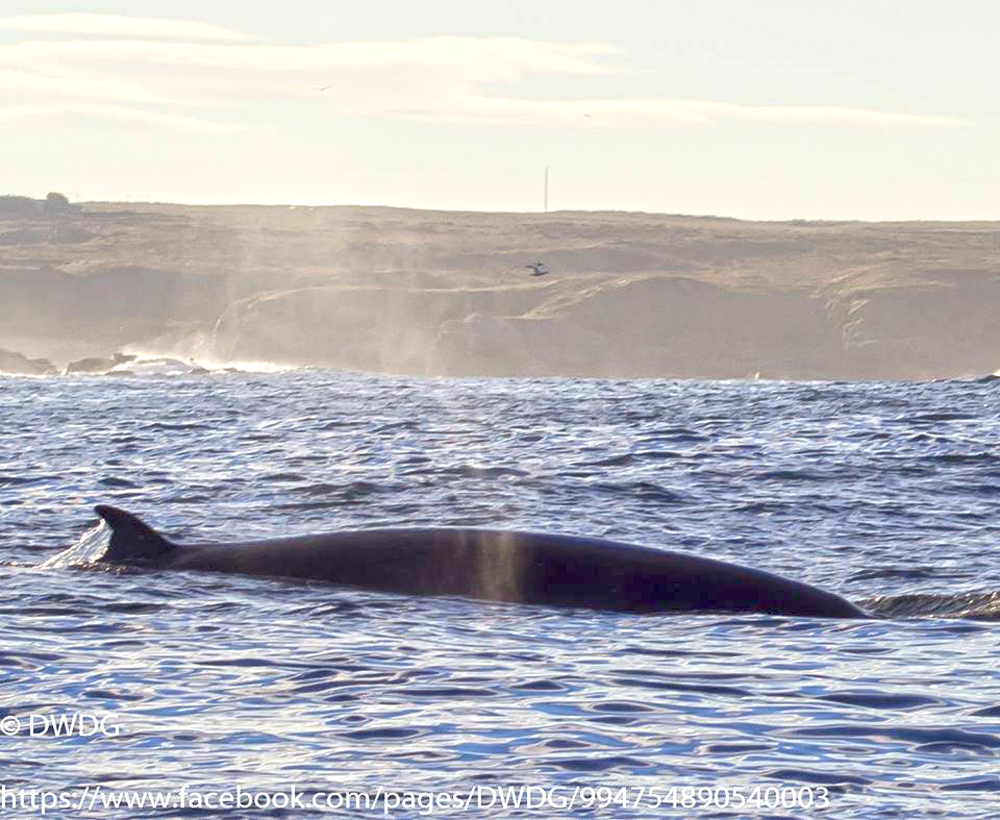
Approaching within 30 feet of a minky whale out on the Atlantic takes courage – but such is his concern for the welfare of local marine life that’s exactly what Gareth Doherty did recently.

With the sighting of so many such baleen whales off the northwest Donegal coast over the last few weeks, Doherty, a skilled seaman (he manages Selkie Sailing in Gaoth Dobhair) and knowledgeable environmentalist, realized it would be a prime opportunity to try to identify them and monitor their movements and thus understand better the thriving whale population off Irish coastal waters.

whales 1

“It is only by recording the twenty-four cetacean species recorded thus far in Irish waters that we can protect them,” he said. “The fact that so many are now visiting us is wonderful news.”

whales 6

Doherty also believes that greater numbers of such healthy marine animals locally means greater opportunities to both educate people about this vital segment of sea-life and strengthen environmental tourism efforts throughout Donegal.

Here is yet another local cultural tourism-cum-educational project worthy of financial support. Udaras na Gaeltachta, the state-sponsored economic support group in the area, has refused to pay for much-needed equipment for Selkie Sailing.

Readers of this blog and of a series of articles I penned for the Donegal News will remember Gareth for the sterling work he and others did to bring important publicity about the plight of a pod of stranded whales at Ballyness beach in Falcarragh earlier this year.

whales 2

Not only did Gareth and colleagues highlight the stark inadequacies, both in equipment and training, of the National Parks and Wildlife Service to deal with such incidents (it has since become known that Donegal wildlife officials didn’t even take sample tissue from any of the dead whales to ascertain what may have stranded them and led to their slow suffocation) but they also banded together to organize marine lifesaving training programs for people that continue even now.

Visiting my Bun na Leaca home recently, Gareth said his intention was also to launch a series of educational visits to local schools to make presentations about the importance of marine life around our shores. It is an excellent idea and there seems no more qualified and enthusiastic a person to host such a program than Gareth.

whales 3

Minke whales grow to about nine meters in length, weigh around 10 tons and can live about 50 years. Their bodies are dark grey to black on the back and lightening to white on the belly and undersides of the flippers. There are often areas of light grey on the flanks, one just above and behind the flippers and the other behind the head. Those in the northern hemisphere usually have a diagonal white band on the upper surface of each flipper. Smallest of the seven great whales, minkes often enter estuaries, bays and inlets and feed around headlands and small islands.

Updates can be checked on Selkie Sailing.

The Irish Whale and Dolphin Group assisted with local training programs.

West Donegal whale protection group formed as threats to human health resurface

Following an often emotional public meeting held at Teac Jack in Glassagh earlier this week, a wildlife protection group has been formed in west Donegal to lobby for government policy changes towards stranded marine animals and to promote specialized training.

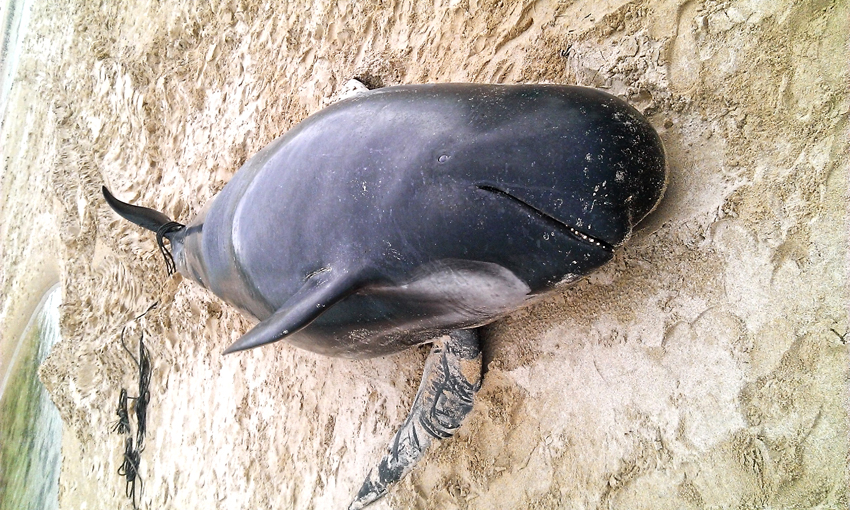
The ‘North West Whale & Dolphin Support Group,’ which was established at the Tuesday evening meeting, follows concerns by many local people about the treatment of a pod of 13 pilot whales that were left stranded on Ballyness beach near Falcarragh, which all died of slow suffocation after five days. It is the 13th such stranding this year in Donegal, including a sperm whale stranded off Machaire Rabhartaigh beach. Around 32 other whales died off Rutland Island two years ago and were cut up and transported to Cavan where they were incinerated.

Meanwhile, concerns have arisen as to what caused the mysterious deaths of all the whales amid a recent rise in the numbers of marine animals being stranded off Donegal’s coast.  And that, whatever it is, may also be a hazard to human health.

whale 2

A stranded pilot whale struggles for life at Ballyness beach near Falcarragh, west Donegal. (Photo by Antonia Leitner).

Chairperson of the meeting, Amanda Doherty, with Selkie Sailing, who has also launched a petition that has attracted more than 230 signatures on the issue, said she was pleased by decisions those attending had made together.

“We want to raise community awareness and have the current policy regarding cetacean strandings in the area reviewed,” she said. “It should be a more flexible policy to allow for the particulars of different situations that occur. This is best practice according international standards and Ireland should follow it.”

Some people at the meeting – many of whom tried their best to save the dying whales – became emotional as they described the traumatic situation at Ballyness beach and the agony of the cetaceans as they slowly died of suffocation in shallow water.

Members of the National Parks and Wildlife Service (NPWS), led by Dave Duggan and Pat Vaughan, decided “to let nature takes its course” rather than try to save the whales or apply euthanasia to reduce the whales’ suffering. They also did not ask the coastguard for assistance to bring the whales out to sea, as has happened in other parts of Ireland. The state-funded Donegal county veterinary office under the leadership of Charles Kealey, chief veterinary officer, has also come under criticism for refusing to get involved in any way to help the whales, including making sure the mammals were dead before they were buried. (In contrast, see photo below of a cetacean (dolphin) being treated more humanely in another part of Ireland, with vets and the coastguard involved).

Strandedwm_shay-fennelly_2007

Westport-based Irish Coastguard assist with a stranded Common Dolphin which could not be refloated. A Mayo vet administered an injection to humanely end its suffering. Photo by Shay Fennelly

Pearse Doherty Sinn Fein TD for west Donegal, who has submitted a number of formal questions over the last week in the Dail to Ministers regarding the treatment of stranded whales and other cetaceans, attended the meeting and gave his advice on the best way forward for the group. Doherty said it was important the new group work with current organisations such as the Irish Whale and Dolphin Group (IWDG) and the National Parks and Wildlife Service (NPWS) and suggested a two-pronged approach – making sure policy at the IWDG matched international standards, and the establishment of  ‘first responders’ in the local area, recognized by the NPWS and IWDG – people who could take the lead in developing situations.

The newly-formed ‘North West Whale & Dolphin Support Group’ decided to hold monthly meetings and invite Simon Berrow, founder of the IWDG, to provide specialized training for members on how to best help stranded whales and other cetaceans and to meet with a small working group on the same day to discuss further action. Clare-based Berrow is a full-time lecturer at the Galway-Mayo Institute of Technology teaching on the Applied Freshwater and Marine degree course and project manager of the Shannon Dolphin and Wildlife Foundation.

After being contacted about the meeting, Berrow told the author of this blog, “We are delighted to hear of the formation of a local group. We look forward to working closely with them to prepare a better response to stranded cetaceans in the future and also to encourage local recording.”

Offshore toxic waste dumping? Military submarine activity?

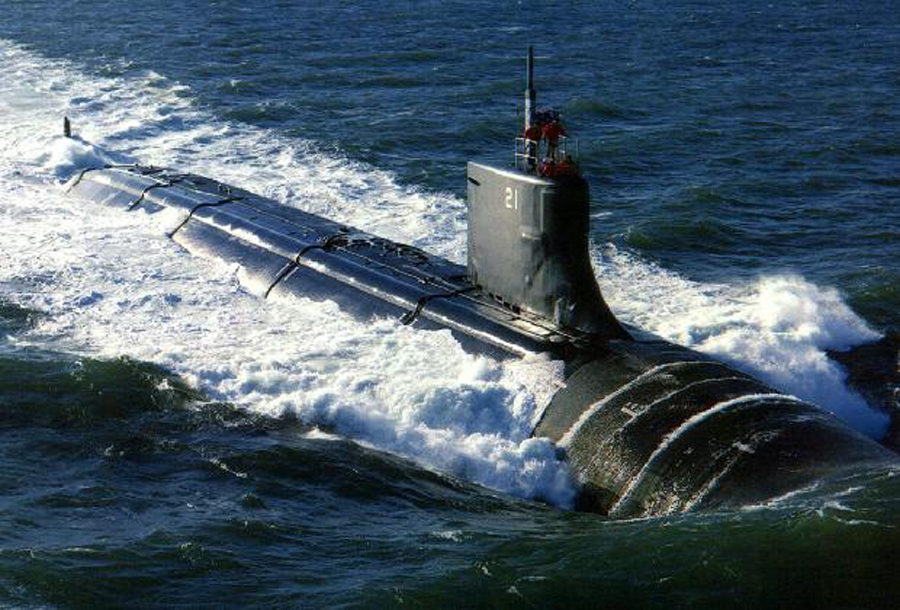
At the same time, concerns regarding the health hazards to human life – as well as marine – from toxic dumping at sea and military submarine activity and experiments that may have caused the strandings have resurfaced locally.

dumping 2

Oceans that become graveyards for poisonous debris that pose dangers to human as well as marine life.

International regulations state that discharges of waste material – often poisonous by nature – should not be made within a certain distance of any landmass, according to the Seas at Risk. But who’s watching? Some major ports have cleaning facilities such as Edinburgh, Belfast and Dublin, but this costs money so some incorrigible corporations say ‘why bother’? As the coast of Donegal is in direct line of most transAtlantic ocean traffic between Europe and the Americas, the amount of waste dumped offshore is probably immense, one respected scientist saying ‘enough to create mountains under the sea.’ Much of this material contains cancer-causing chemicals (carcinogens) such as manganese, benzene, coal-tar, radium, petrolatum, parabens, vinyl chloride lead and zinc. With recent technological developments, many of these chemicals are in the form of deadly nanoparticles (particles less than the size of a human or animal cell) which, airborne, can then penetrate the cells, causing untold damage.

Nanoparticles: Technological and industrial development has outstripped health research into their potential dangers in everyday foods and consumer products.

Nanoparticles: Technological and industrial development has outstripped health research into their potential dangers in everyday foods and consumer products.

Could this be the cause or partial cause of disease in whales and other marine animals? Researchers say they have found large quantities of these chemicals in the whale tissue samples taken and tested. And doctors report larger than normal incidences of human cancer in local people.

In addition, some of the waste is in the form of non-biogradable plastics. Because they don’t dissolve but break up into smaller elements, these plastics have formed what scientists now call ‘plastic islands’ – often the size of countries, one is larger than the US state of Texas, which in itself is 17 times larger than Ireland – that float in our seas, causing disruption to the normal flow of currents. Consequently, the dangers to both human as well as marine animal health is high. For a long time, many people in northwest Donegal have suspected such dumping to have taken place offshore, with menacing results (see further information here).

A special group was established within the last two years at Ionad Naomh Pádraig in Dore by Freddie O’Donnell and Aodán Ó’Gallchoir to examine correlations between high levels of cancer in the Gaeltacht area and dumping of waste in coastal waters nearby. Known as ‘Scaoil Saor ó Ailse’ (Break Free from Cancer’), the group’s public relations officer, Joe Diver, said former local doctor Paddy Delap, said such waste was affecting peoples’ health, particularly cancers of the skin, lung and brain, with an abnormally high level of fatalities. A deep-sea diver then broke his decades-old silence on Raidó na Gaeltachta, describing how he found a large area of the sea bed littered with large black drums with hazardous signage on them in the waters off Tory Island, adding, “We were looking for shipwrecks, went down 40 to 45 metres and came across black drums with green stuff growing on them. There were a few thousand of them. They were heaped in a hill-like structure and had skull and crossbones on them. The diver said the drums would have since disintegrated and their hazardous material dissolved into the ocean off the Gaeltacht coast.”

submarine

Military submarine activity and experiments at sea: what are the hazards for Man, Plant and Animal?

Areas affected could include Gaoth Dobhair, Cloughaneely and The Rosses. Calls for greater funding for a more comprehensive analysis were ignored by the relevant authorities, mainly on the instructions of Dublin, some say for economic and political reasons. Further, fearing such research could stir up waves of protest if the result became known, efforts were made by authorities, mainly Fianna Fail, then in power, to trivialize what little had become known. Politics and money trumped peoples’ health and once again the ‘Forgotten County’ was forced to live up to its unfortunate title.

Damage control became main concern for a certain cadre of elite: the party in power in the Dail and its big-business supporters. “This situation has been going on for far too long,” said one medical practitioner who has treated cancer patients in the area. “It is long past time national funding was made available to investigate this situation thoroughly. If it happened in certain other parts of the country, it probably would already have taken place long ago. Surely the deaths of so many marine animals and the high number of cancers affecting people means the issue should be looked at very closely.  To some extent, it’s in the hands of ordinary people. They should be lobbying their government representatives by e-mail, phone and letter. If not, nothing will be done.”

Several of the whales at Ballyness beach were found to have lesions, blemishes and lumps on its skin, but National Parks and Wildlife Service officials declined to say where any disease may have originated. As whales are highly social creatures that travel in communities, some say healthy whales may have refused to abandon sick or injured pod members and followed them into shallow water. “We can’t say for certain,” said Pat Vaughan, district conservation officer for the NPWS. “What we do know is that whales and other marine animals can have high levels of certain toxic elements in their bodies.”

Donegal Connections – festival of books

For me living in the Gaeltacht region of Gaoth Dobhair in northwestern Ireland, the most surprising thing emerging from the recent, well-organised and stimulating ‘Belfast Book Festival was the number of novels set or inspired by little ol’ Donegal, the so-called ‘Forgotten County.’

Until then, I had been used to reading locally about publication of novels in our native language being funded by the various cultural groups such as Foras na Gaeilge, but hadn’t really thought too much about the diversity of English-language novels set or inspired by the beauty of the county (aside from Brian Friel’s plays), nor the use of phrases ‘as Gaeilge’ in such novels.

I know I’ll be accused of heresy and probably burned under a heather bush on the shadow of Lugh’s Mountain (otherwise known under its Christian name, Errigal) for suggesting this, but with the use of Irish diminishing in everyday conversation, should the various language groups not ease their overly-tight qualification criteria and fund publication of English-language novels that have some Irish phrasing in them?
IMG_1173

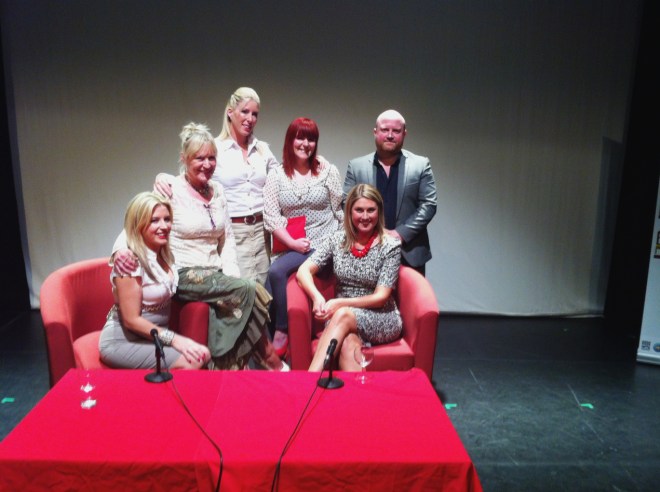
Author Emma Heatherington (seated left) and family, with evening event host, broadcaster, Sarah Travers, (seated right) and festival director, Keith Acheson (back right).

To my mind, it seems like not just a very reasonable suggestion, but a most innovative one that delivers many benefits. Books in Irish, by their nature, are for people who already speak and read our native language. Yet what we desperately need is to encourage non-Irish speaking people to become interested in our language and hunger to learn more. As English is one of the world’s leading languages, are not novels in this language not a perfect place for Irish phrases to be included to help achieve this aim? Will that not help expand use of Irish, both domestically and abroad? Such a linguistic/literary initiative would also help support economic development, especially through tourism, by attracting more visitors to Donegal and other such Gaeltachts. Such areas – while on the whole, providing inspiring land and seascapes – tend to be marginalized, unemployment black spots on the map of Ireland.

The landscape of the Outer Hebrides, with its stark cliffs, ghostly mists and lonely beaches, has become a definitive character of Peter May’s Lewis trilogy entitled ‘Hebrides’ and has helped revitalize tourism in that part of Scotland.

Food for thought.
IMG_1162

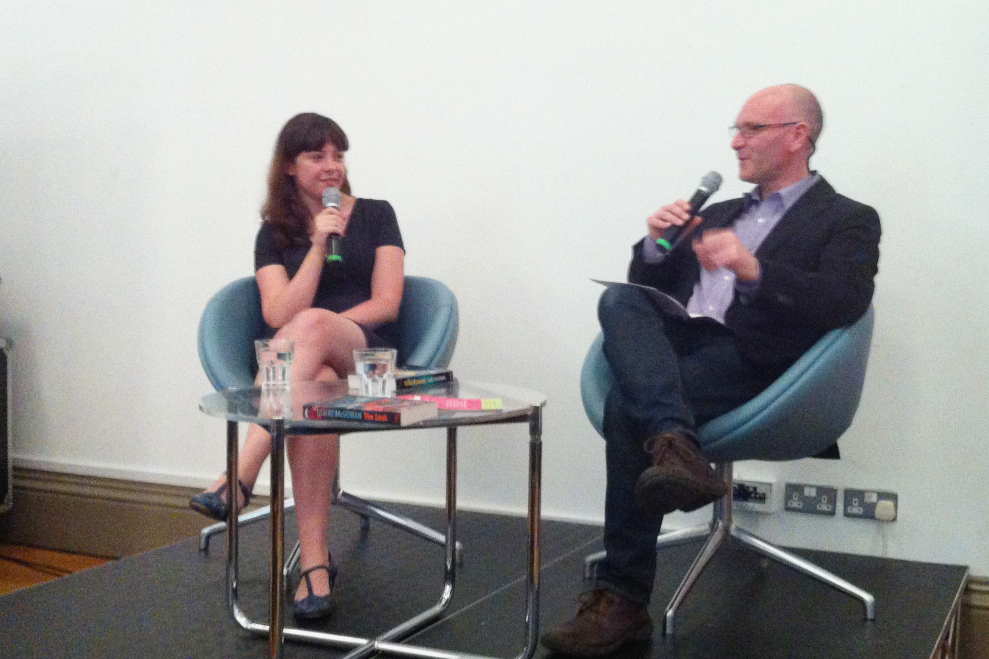
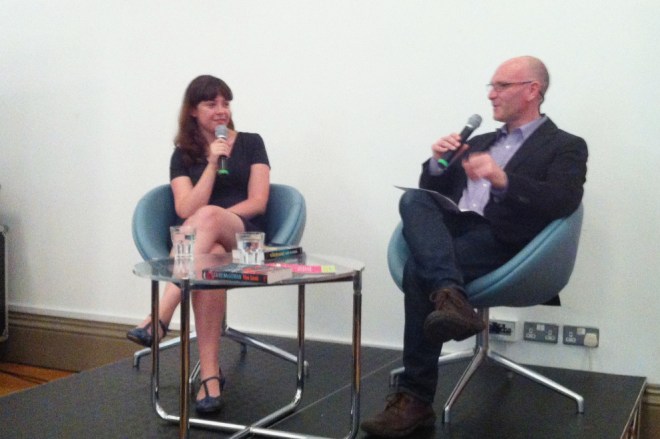
Crime fiction writer, Claire McGowan, with David Torrans of Belfast’s ‘No Alibis’ Bookstore at the Ulster Hall, talking about her genre and her work.

Anyway, back to the most enjoyable ‘Belfast Book Festival’ and novels set in the beautiful countryside of Donegal. Take the delightfully funny writing of Emma Heatherington and her book ‘One Night Only’ about four desperate housewives who take off in a car for an outing to the ‘Forgotten County’ and the hilarious, and poignant, consequences. Emma, who is due to speak next week at Ireland’s newest Writing Retreat in west Donegal is a multi-talented woman whose work ranges from novels to short stories to scripts and screenplays, including ‘Since You’ve Been Gone’ and ‘Playing the Field.’ Her personal ‘growing up’ story of having to become ‘Mum’ to her siblings as a young teenager after her own mother’s untimely death is touching. Aside from her literary output, one can’t help but admire Emma greatly. And she’s a natural, engrossing speaker to boot.

Then there’s Kenneth Gregory, fantasy novelist and mythologist extraordinaire with character names as Gaeilge, perhaps Ireland’s answer to the R.A. Salvatore/ Robert Jordan/ Marion Zimmer Bradley combo. His debut novel ‘The Polaris Whisper,’ the first in a trilogy, was published by Blackstaff Press. He will also speak and teach at Donegal’s ‘Forgotten County, Remembered Wordswriting retreat. Negotiations are now underway for the novel to be turned into a television series with a movie option. His second novel in the series is ‘The Poison of Newgrange.’ ‘Shahryár’s Heir: A Prince among Thieves’ is his first fantasy novel in a re-invention of the Arabian Nights’ stories.

IMG_1188

Blackstaff Press authors Laurence Donaghy and Kenneth Gregory discuss the art of writing, Celtic mythology and fusing fantasy with historical fact with journalist and author, Leona O’Neill at Belfast’s Crescent Arts Centre.

Speaking together, he told me, “It is an honor to speak at such an event as the Ireland Writing Retreat. Northwestern Donegal is an awe-inspiring place, with an intriguing, colorful history packed with legends. So enthralled am I by the area that the third book in my trilogy, a modern-day thriller, has the working title of ‘Brinlack,’ a place beside Bloody Foreland. My best editor, my brother, Mark, lives there and I visit often.”

Then there’s the lady who shares my name, Sophia Hillan, former associate director of Belfast’s Institute of Irish Studies and director of the International Summer School in Irish Studies. During an hour-long interview, Sophia told me about how she came upon a scrap of paper that led her to produce a most fascinating Donegal-based, non-fiction book entitled ‘May, Lou and Cass: Jane Austen’s Nieces in Ireland,’ published by Blackstaff Press in 2011. Her first novel ‘The Friday Tree’ has now just been published by the same publishing group and is set within a stone’s throw of where I grew up and lived for many years in Andersonstown, west Belfast.

IMG_1170

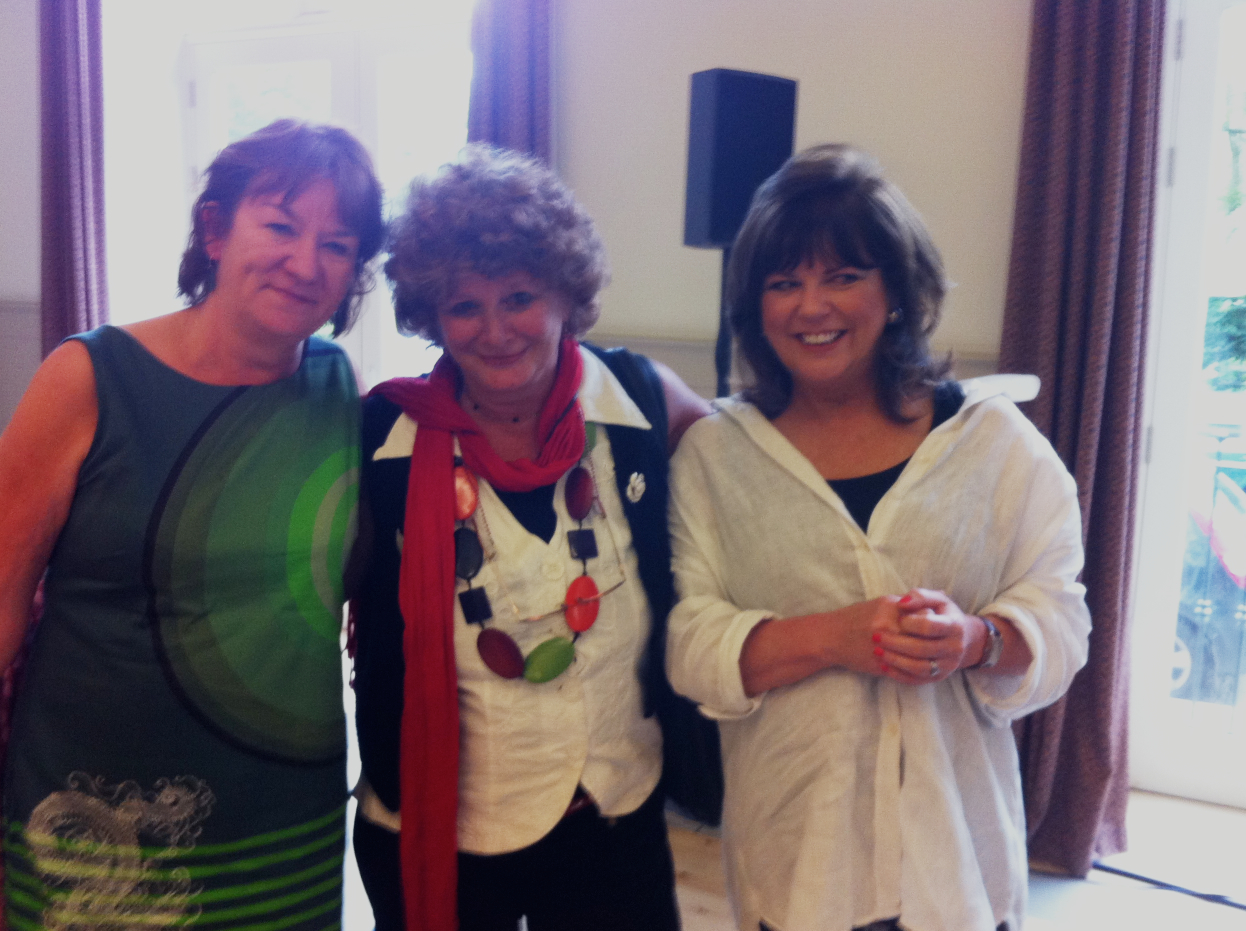
Two intelligent beautiful ladies, leaders in their respective fields – (l to r), author, Emma Heatherington and broadcaster, Sarah Travers.

That’s a lot of Donegal-based writing crossing so many genres, not to mention the many books written about Donegal’s very own mystic monk – Columba – including those by authors Máire Herbert  and Brian Lacey  – more of which will be written about in my next blog.

Of course, not all the authors and books at the ‘Belfast Book Festival’ were linked to Donegal. Head honcho of the Crescent Arts Centre and festival director Keith Acheson and his hardworking team, including marketing director Tracy O’Toole and outreach and education director, Ann Feely, as well as community arts development officer, Jan Carson, (her novel is entitled ‘Malcolm Orange Disappears’) and her colleagues at the Ulster Hall, deserve full praise. They brought together a diverse collection of writers in various genres who spoke on such wide-ranging subjects as ageing and sexual politics (Lynne Segal – ‘Out of Time: The Pleasures and the Perils of Ageing,’ ‘Is the Future Female?,’ ‘Slow Motion: Changing Masculinities, Changing Men,’ and ‘Straight Sex: The Politics of Desire’); murder most foul (Claire McGowan – ‘The Fall,’ ‘The Lost’ and ‘The Dead Ground,’ some of which use phrases ‘as Gaeilge’); matters of the heart and mind (Joseph O’ConnorInishowen,’ ‘Ghost Light,’ ‘The Thrill Of It All’ and ’Star of the Sea’); and guardian angels (Carolyn Jess-Cooke – ‘The Guardian Angel’s Journey’ and ‘The Boy Who Could See Demons’), as well as providing publishing and public speaking advice through guests such as the lovely actress and teacher Rosie Pelan; the inimitable Ian Sansom (Mobile Library Series including ‘The Case of the Missing Books’ and ‘Mr. Dixon Disappears;’ and self-publishing guru, Alison Baverstock (‘Is There A Book in You’ and ‘Marketing Your Book: an author’s guide.’).
IMG_1217

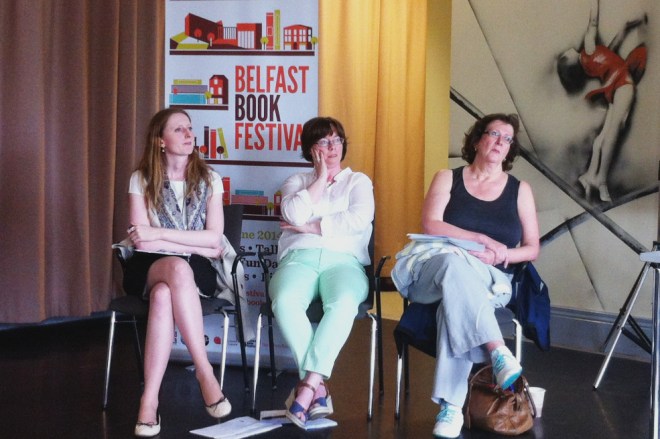
Agents and publishers, including Clare Alexander of Aitken Alexander (r), Patsy Horton (c) and Alice Kate Mullen (l) of Carcanet Press, discuss their roles and responsibilities in the writing field.

In terms of diversity of writer and subjects, the week-long series of events surpassed most such festivals I have attended – and I have been to many, including both the Salon du livre Paris and the London Book Fair. Also – beyond just the world of books – the festival reflects the emergence of Belfast from its enforced dormancy as a dynamic and attractive city with many options for would-be visitors, from cozy, atmospheric cafes, terrific restaurants and avantgarde and traditional theatres such as The MAC and the Lyric.

By the way, other speakers at the Donegal writing retreat which begins formally on Sunday, June 28th between An Bun Beag and Bun an Leaca (on which there are only four places left) include ‘Antony-Cleopatra’ expert Rachael Kelly and award-winning author Anthony Quinn and former detective-cum-writer Martin Ridge who lives near Falcarragh.

IMG_1246

As fiesty and stimulating as ever, author, socialist, feminist and civic leader, Lynne Segal greets her avid admirers.

Rachael, a native of Belfast has become the foremost expert on the age-old romance between Roman leader, Mark Antony, and Egyptian Queen Cleopatra (made famous on-screen by Elizabeth Taylor and Richard Burton) after completing her doctorate in film studies on it. Rachael has also penned the first novel in a trilogy on the two historical figures entitled ‘Queen of the Nile,’ set in 1st-century-BC Alexandria. Rachael’s earlier novel, ‘The Edge of Heaven,’ won the Irish Writers’ Centre Novel Fair Competition 2014, while her short story, Blumelena, was shortlisted for the Bridport Prize 2012. Her ‘Long Anna River’ won the Orange Northern Woman Short Story Award and was later featured in an anthology called ‘The Barefoot Nuns of Barcelona,’ while ‘The Night Sky In November’ was runner-up in the White Tower Publishing Short Story Competition. Her poem, ‘A Five Yard Odyssey,’ won ‘The Battle of the Bards.’

IMG_1227

Alison Baverstock, publisher, trainer and writer, talks about the advantages and pit-falls of self-publishing, accompanied by successful self-publishers at Belfast’s Crescent Arts Centre.

Anthony Quinn was born in 1971 in Tyrone and his short stories have been short-listed twice for a Hennessy/New Irish Writing Award. He was also the runner-up in the Sunday Times New Food Writer competition. ‘Disappeared‘ is the title of his first novel. Published by Otto Penzler’s Mysterious Press in 2012, it was was shortlisted for a Strand Literary Award, as judged by book critics from the LA Times, the Washington Post, the San Francisco Chronicle, CNN and the Guardian. It was also selected by Kirkus Reviews as one of the top ten thrillers of 2012. BORDER ANGELS, the sequel, was published by Mysterious Press last year.

IMG_1233

Actress and teacher, Rosie Pelan, instructs writers how to best speak their words in public.

Martin Ridge, from Galway but living in Donegal for many years, is a retired Garda officer. He almost single-handedly took on the might of the Catholic Church when he investigated rumors – that soon became distressing facts – about the horrific rape and sexual abuse of young boys by members of the clergy in northwest Donegal, in and around the towns of Gortahork and Falcarragh. His brilliantly-written book ‘Breaking the Silence’ tells a tragic story of the carnage such abuse created in the lives of the boys, now men, many still living in the area, and the arrogance of the church towards that abuse in refusing to co-operate with investigations or offer appropriate compensation. This particular rural area now has the ignominy of being the worse area for clerical abuse record in all Ireland. For more information on the Ireland Writing Retreat see http://www.irelandwritingretreat.com/
Cultural tourism – its time is nigh

There are some among us (either through ignorance or greed) who consider Donegal unfit for cultural tourism – but a quick glance at what’s happening right now in the area proves them wrong.

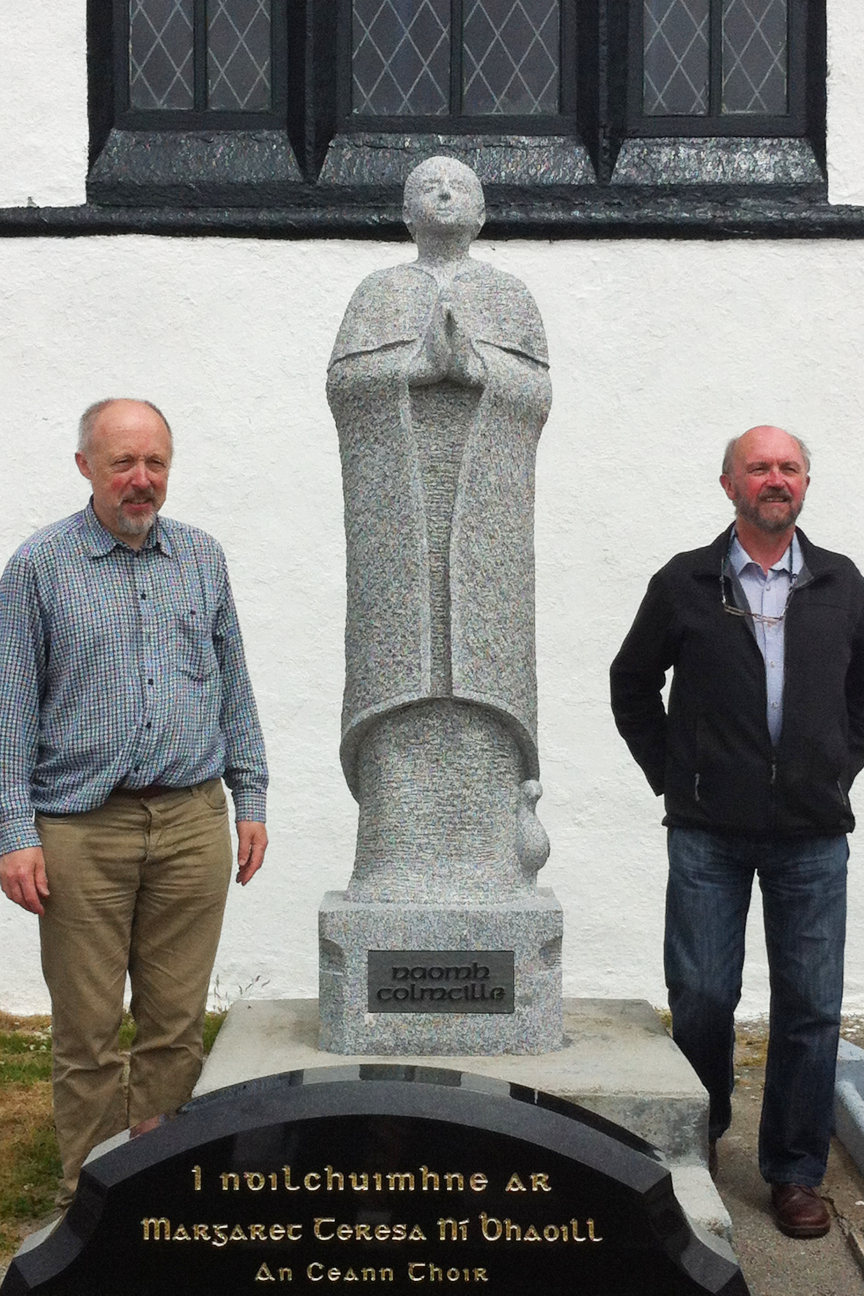
Take, for example, the Slí Cholmcille (Slighe Chaluim Chille) project.

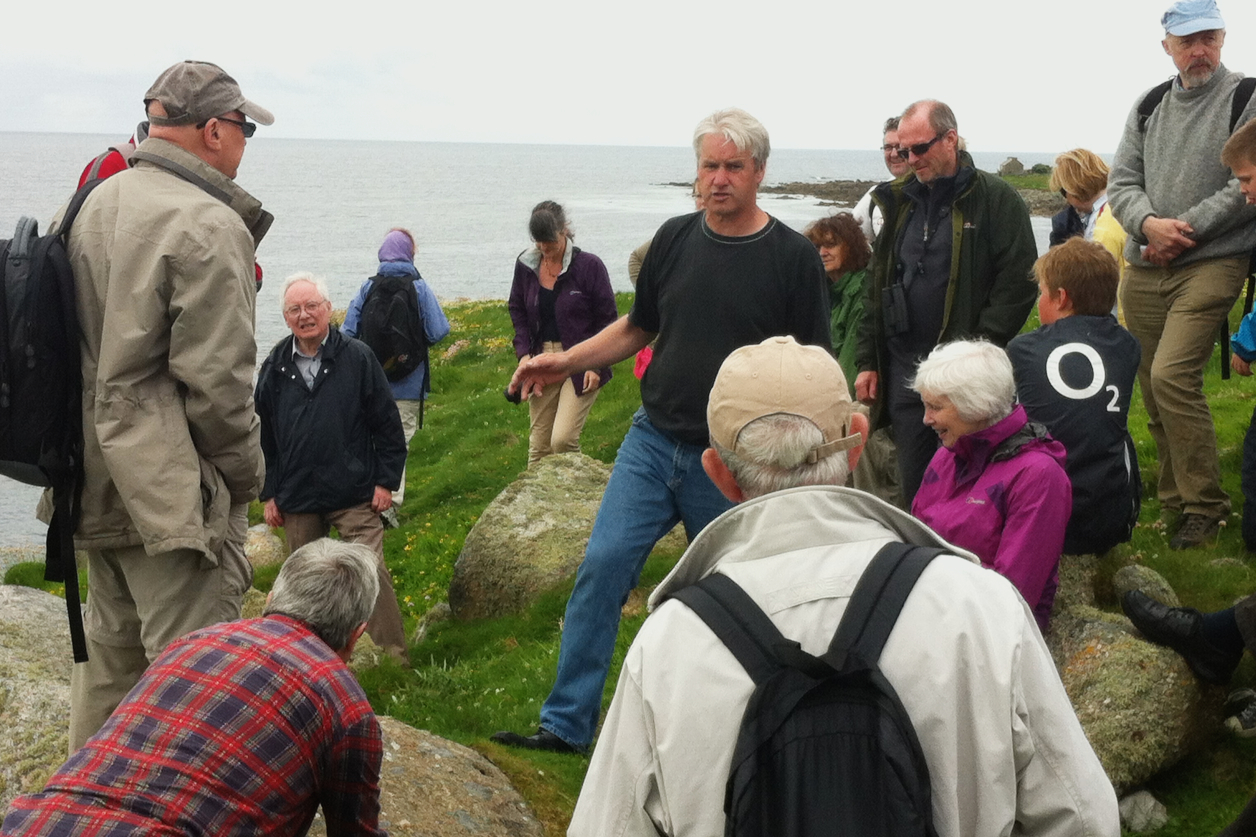
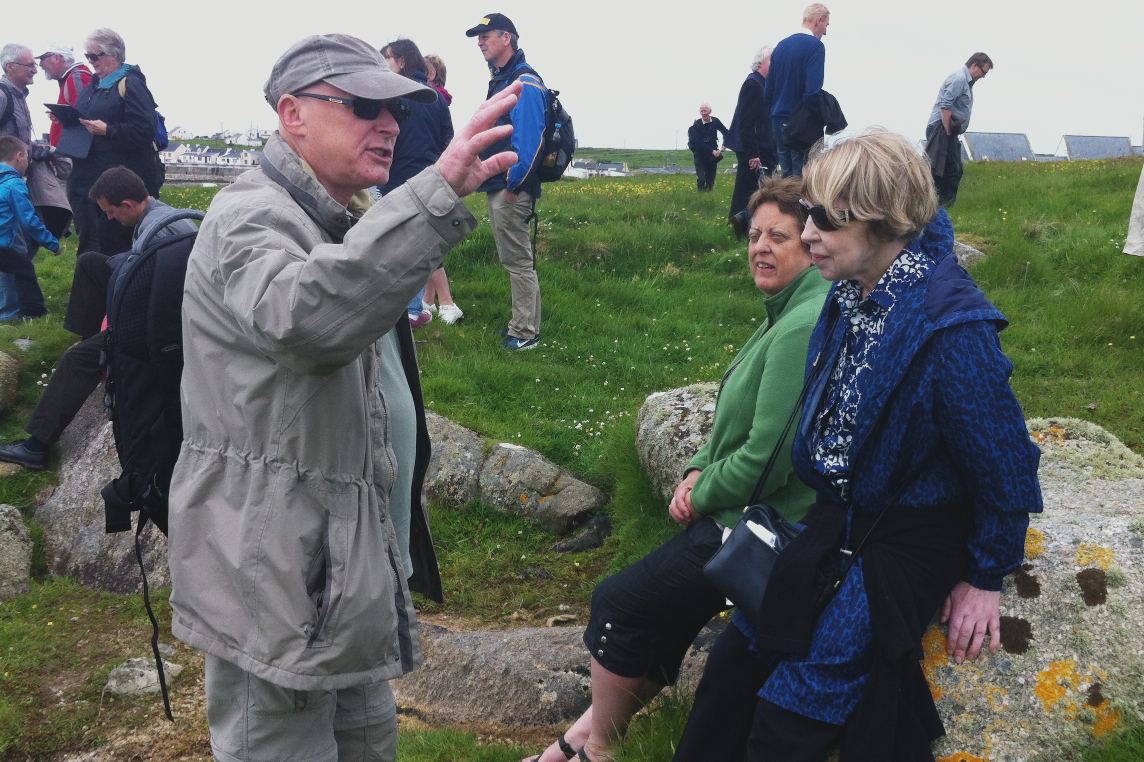
As I started writing this, many people – tourism and community leaders, teachers, retired air-force pilots, sociologists, photographers, authors, solicitors, doctors and academics – were gathered at Óstán Loch Altan, Gortahork, in the scenic northwest of the county, talking enthusiastically about developing Ireland’s very own ‘Santiago Columba’ into a successful cultural tourism pilgrimage project that could attract thousands to both western Scotland and Ireland.

Speakers at the conference air their views as to how the proposed pilgrimage trail could be developed.

Organized by The Islands Book Trust, led by John Randall and ably assisted by the ever-helpful Mairi NicChoinnich, in association with Colmcille Éirinn is Alba and supported by Bòrd na Gàidhlig and Foras na Gaeilge, this three-day conference which ended today (Sunday) aims to develop a heritage trail based on the travels and travails of the Celtic mystic, Columba. Such a project could not only inform Irish and foreign visitors about local history, archaeology, folklore and heritage but also create employment and business for hotels, B&Bs, cafes, restaurants, museums and bars alike in the two regions.

“We have a wonderful opportunity to expand our learning and to attract visitors on a significant historical route from south-west Donegal to the Isle of Lewis in north-west Scotland,” said Randall, chairman of the Islands Book Trust.

This united effort is supported by renown authors-cum-academics such as University College Cork’s Máire Herbert (Iona, Kells, and Derry: The History and Hagiography of the Monastic Familia of Columba) and Brian Lacey (Saint Columba: His Life & Legacy).

Renown University of Cork researcher and author Máire Herbert beside the old stone cross on Tory Island with her groundbreaking book on the mystic monk Columba (Colmcille).

With additional speakers such as University of Galway’s Mícheál Ó Dónaill, Calum MacGilleain, Tristan ap Rheinallt and Aidan O’Hara from Scotland, Noel O’Gallchoir from Gaoth Dobhair, Noleen Ni Cholla, Moira Ni Ghallchoir, Maolcholaim Scott, Liam O’Cuinneagain and even the King of Tory Island himself, Patsy Dan MacRuaidhri, the conference comprehensively analyzed the tantalizing persona of Columba from the sociological, archaeological, historical, religious and mythological perspectives. And, more importantly, how interest in the fellow can be turned into a dollars and cents/euros and pennies booster for local tourism.

Brian Lacey, medieval historian and author, informs guests at the Sli Cholmcille conference about Pagan and druidic practices in and around Errigal and Muckish mountains.

The only drawback to an otherwise excellent symposium of speakers was the often poor technics, the out-of-focus projection of some otherwise well-researched multi-media presentations.

But the development of Sli Cholmcille is just the tip of the iceberg.

A quick glance at the local newspapers – the Donegal News and the Donegal Democrat – this weekend alone, shows a rich vein of cultural tourism – including the weekly music seisúns and this summer’s ‘Gaelturas’ initiative at Teach Hiudai Beag; the year-long programme of music and dance at Teac Jack and Leo’s Tavern; the ‘Goitse Gaoth Dobhair’ events in Bunbeg this coming weekend, which emerged from the ‘Dearg le Fearg’ language equality campaign, as well as ‘Luinneog Lunasa’ in the same area; the ‘Swell Festival’ on Arranmore; and ‘FestiFál’ and ‘Evil Eye Festival’ in Falcarragh to name but a few. Other local diverse activities with strong potential range from rock-climbing, wind-surfing and kayaking with Rock agus Roam; horse and pony riding at the Dunlewey Trekking Centre and elsewhere; the craft demonstrations at Ionad Cois Locha; and the educational Walking Donegal, the hill, coast and lake hikes with informed guide, Seamus Doohan; as well as specialty walks such as the ‘Tullaghbegley Heritage Walking Weekend.’

The list is endless.

And that’s not to mention the many literary tourism opportunities based on the art of creative writing.

Antonia Leitner from Carinthia in Austria is not shy to show her love of books and learning at Magheroarty Beach.

The idyllic landscapes and seascapes of Donegal have been an inspiration to many best-selling novelists and short story authors who have set their plots within or around the county, in genres ranging from sci-fi to literary fiction and fantasy, as well as plays. These writers include Brian Friel, Edna O’Brien, Sophia Hillan, Kenneth Gregory, Emma Heatherington, Michael Harding and Laurence Donaghy, some of whom will speak at Ireland’s newest writing retreat ‘Forgotten County, Remembered Words’ from June 28th to July 4th in Gaoth Dobhair.

With the national initiative ‘The Wild Atlantic Way’ now well underway and Donegal an integral part of it, there’s only one thing stopping the cultural tourism momentum that’s building up – a continued reluctance by Údarás na Gaeltachta, the primary economic development organisation in the Gaeltacht – to fund the many projects with serious money not just the few pennies it has been doling out until now to stave off a rising tide of protest.

‘Acupuncture of the body, acupuncture of the earth’ – author Brian Lacey describes a theory he learned from a Slovenian artist.

As many people are now saying, this organisation must host regular, open, community meetings and really listen to what local people – the very people they are there to serve – want in terms of more innovative community development; provide much greater transparency in its spending of an estimated 1.2 billion euro in public money, than it has to date; and an end to kow-towing to political parties and their funders (first Fianna Fail and now Fine Gael) which has resulted in far too much money going into the pockets of a rich elite of developers/builders who make easy profits from building simplistic, unneeded, industrial estates.

A new direction is required and a Catholic Church-run sex, drugs and alcohol addiction center in Falcarragh, with no guarantee of decent local jobs – especially as such a centre already exists in Donegal and research indicates this is sufficient for need – is hardly the panacea for high unemployment and emigration from the area. Some say real investment in local cultural tourism means shelving the proposed investment of three million euro by Údarás in the addiction centre and putting those euro millions into local tourism projects, the one sector a beautiful region like Donegal can benefit widely from, now and in the long-term (if that three million euro is spent on the proposed addiction centre, it spells the end for any real investment in anything else – no other board members of Údarás in other Gaeltachts will vote for any further significant monies for Donegal).

In this regard, it is quite sad to see how much Tory Island has fallen below its full potential – far behind many other attractive island retreats dotted around Ireland. The dismissive attitude of relevant funding authorities – and perhaps the disunity and lack of concerted lobbying and effort by local people (full burden cannot rest solely on the shoulders of one man, King Patsy Dan) – has meant its tourism income has suffered greatly, with accompanying lack of promotion (not even a regular newsletter on events or significant signage on the mainland and on the island itself).

“I am tired of trying to persuade Udaras na Gaeltachta officials to properly fund projects here on Tory Island, their ears are deaf, they simply don’t understand,” said King Patsy Dan MacRuaidhri. “The people here deserve such support. Our ancient and colourful history calls out for it.”

Befriending Royalty. Modern version of the horse-drawn carriage?

It’s make-or-break time for northwest Donegal.

Let’s put an end to the notion that cultural tourism is an unimportant, peripheral activity, the kind of mind-think that Údarás officials are stuck on, and have been for decades. This specialized sector has the potential to provide immense, long-term economic benefits for this hard-hit, hard-pressed part of the county and country, but it requires serious commitment and financial support.

In a future post I will give specific examples from my extensive sojourns in other parts of the world as an international travel writer where cultural tourism has transformed and enlivened a local and often paralyzed economy.

Meanwhile the next post will focus on what precisely various speakers at the conference said about Columba, this larger-than-life monk who seems to defy description, someone about whose background we know very little, either because documents were destroyed by marauding, book-burning Vikings, or were deftly confiscated by church abbots on a precise propaganda campaign.

To read more of Sean’s work, check these sites:

Digging for Dracula

World Itineraries

Examiner

JustLuxe

Ireland Writing Retreat

Fios Training and Coaching Organization

IMG_1269

IMG_1381

IMG_1320

IMG_1334IMG_1426

IMG_1342

IMG_1359

IMG_1363

IMG_1374

IMG_1379

IMG_1382

IMG_1390

IMG_1417

IMG_1432

IMG_1472IMG_1478

To be or not to be (a Donegal councillor)

Lugh’s top three choices in the Glenties electoral area

What’s termed in America, ‘mid-term elections’ are coming up tomorrow (Friday) – and the results will indicate the future evolution of political parties and individual candidates, the direction country and counties will take and perhaps even leadership changes.

Living in Gaoth Dobhair, here’s Lugh’s take on his local area (from Dunfanaghy to Dungloe) within the Glenties Electoral area –

VOTE FOR:

Marie Therese Gallagher, Sinn Fein

John Sheamuis O’Fearraigh, Sinn Fein

Micheal Cholm MacGiolla Easbuig, Independent

photo 1

Lugh carefully analyses the candidates

Why?

Marie Therese Gallagher

Setting aside for the moment that there are simply not enough women in Irish politics today, thus a major loss to the political system as whole, Marie Therese has performed very well as a sitting council member (while, at the same time – multi-tasking comes so much easier to women than men – nurturing a delightful family). Reflecting Sinn Fein’s consistent stand on principles of fairness and social justice, she and her party colleagues remained firm against the council budget last year due mainly to Irish Water taking over local water services and people having to pay yet another government stealth tax. Fianna Fail, on the other hand, caved in, with Rena Donaghy, presenting a poor excuse for ducking the vote on the night and Independent, John Campbell, swapping sides to that of Fine Gael and Labour at the last minute.

On the issue of women in politics, Ireland remains in the Dark Ages – even more so with regard to women’s rights. Without Mary Robinson and her successor, Mary McAleese, we’d have been left with Fianna Fail’s Padraig Flynn, Charlie Haughey, Brian Lenihan’s claims that women belong in the kitchen peeling potatoes and in the bathroom changing nappies.  Yet, while some progress has indeed been made, still only 17 per cent of council seats across Ireland are currently filled by women, the worst record in Europe.

John Sheamais O’Fearraigh

John, married to Bernadette and father of three children, is a sincere, decent man, who has contributed much to the local community over the years, through his various roles, especially as a youth worker and on a number of local committees. His message is a simple one, a fine prescription for healing the wounds of society, and particularly here in Ireland: each to his abilities, each to his needs.

John spoke eloquently and passionately on national TV (TG4) a few weeks back about the urgent need for transparency and financial accountability from publicly-funded bodies such as Udaras na Gaeltachta (after the corruptive practices at the higher levels of FAS, the Garda Siochana and Rehab surely we’ve had enough of the particular Irish condition known colloquially as ‘cute whorism’). A vote for him is a vote for progress.

Micheal Cholm MacGiolla Easbuig

Micheal is both vocal and passionate about social justice and deserves credit for the way in which he has put his words into actions, including being a member of the ‘Can’t Pay, Won’t Pay’ campaign. He has organized a number of events, several of which I have attended, some of which I have enjoyed immensely. Local editors inform me he is persistent in pushing stories on diverse social issues, including anti-racism, and greater transparency on public issues, although it was bemusing that he declined to go on the air for TG4 recently to talk about spending of between one and three million euro by Udaras na Gaeltachta on a proposed addiction clinic in Falcarragh without proper benefit-investment information being presented for public analysis. Micheal has been described by some as irascible, but then again so has former Mayor and Councillor Frank McBrearty, a man who has brought up some extremely important issues in the council chamber rather than bow to that most common of Irish characteristics – aversion – a strategy that leaves truth as the ultimate casualty. Irascibility may thus be one of the most important qualities required in the chamber if councillors are to successfully fight for their corner, their supporters and their issues.

photo 2

Lugh seeks trusted advice from his elders

Candidates in the Glenties electoral area who disappointed me

 John Curran, Fine Gael

Running as a Fine Gael candidate instead of an independent (as he informed me he had been considering) has, unfortunately, been a mistake for John, making it harder for him to drum up enough votes to get over the line. Let’s be honest, John had no real choice in the matter as the party put him on the board of Udaras na Gaeltachta with an eye on propelling him forward on a rising political career, perhaps even successor to Minister of State, Dinny McGinley. The decision John took to run on a FG ticket – or was taken for him – has both pros and cons.

The cons are Fine Gael’s wretched record over the last three years and its list of broken electoral promises – ‘not another penny’ and ‘those guilty shall pay’ being its twin, pre-election mantra, which has obviously collapsed in a heap of rubble – is a hard sell. The pros – the party machine behind John’s electoral effort: more ad money; more people out canvassing; more and bigger posters.

To my mind, John had a golden opportunity to prove his individual worth – and blew it – over the proposed spending of millions of euro of public money on a church-run addiction clinic in Falcarragh. Instead of following through on the twin issues he promised as a newly-appointed Udaras board member two years ago – being a watchdog over the organization to create greater transparency and accountability on spending as well as promoting tourism based on our rich, native culture as a top priority – he has put loyalty to the organization ahead of loyalty to the people whose money it spends – some say, too wantonly and irresponsibly.

See his quote in a story published in the Donegal News: Everyone is aware of the lack of transparency in Ireland in the past on certain matters and the unfortunate results for the country as a whole. My commitment is that in future Udaras will be completely open in its dealings so that projects – whether in culture, language or economics – are selected on merit and need, not on who certain people know. Cronyism should play no part in its affairs.

For example, John has made little effort to inform ordinary people how much the proposed addiction clinic will cost or detail the specific community benefits to Falcarragh (as it is proposed to be located where he now lives, he could also be accused of pork barrel politics). John’s initial assertion that the clinic would create a magic 45 jobs is a simple case of political flag-waving. Basic business sense says no jobs are guaranteed until an operation is up and running, (not to mention if any, or many, jobs, will be local), so this number is a figment of the imagination.

John dipped his toe into what he thought was the cool waters of local Irish politics and it came out red and roasting. I like John as a person, so much so I gave him my Croker All-Ireland hurling final tickets last year, with no favors asked and none given (I’ve also offered game tickets to other decent people such as the two local former Gardai, Martin Ridge and Seamus Corbett; Timmy Boyle, friendly Bunbeg restaurateur and boatman, and his brother-in-law, Sabba, one of the kindest men I have met hereabouts). John and I have sat down for dinner and coffees together and held long discussions on various subjects. He had my vote, then let it slip from his grasp. With his background, John would be a help to any local community but not as a political party hack. If he’s not his own man, then he’s nobody’s man.

Seamus O’Domhnaill, Fianna Fail

A win for him in west Donegal means once again developers and bankers will celebrate victory with raised champagne glasses.

Regardless that inappropriate lending and fat bonuses for bankers, as well as developers absconding with much of the loans, has led to national economic collapse and continuing austerity, these two sectors – feeding into each other – remain O’Domhnaill’s twin political platforms.

Considering the amount of money Fianna Fail has reaped from both sectors over the years and the fact that the ‘old guard’ of the party still rules the roost, it should come as no surprise that this strategy will continue to be O’Domhnaill’s remit for years to come. If he wins, and with his brother, Brian as a Senator, his supporters within Fianna Fail hope to dominate future proceedings in their local area of Falcarragh and Gortahork. Then again, some say if Fianna Fail put up a donkey in certain parts of Donegal, it would get elected.

In conclusion, my top three choices of electoral candidates are Marie Therese Gallagher, Sinn Fein; John Sheamais O’Fearraigh, Sinn Fein; and Micheal Cholm MacGiolla Easbuig, Independent. I now cordially invite you to join me in voting for them. We missed out on making the kind of radical political changes we should have made three years ago. Let’s not miss out on it now. If we do, we’d never forgive ourselves.