First suspense novel links Donegal ‘Wild Atlantic Way’ with America 

Readers have asked me in reference to my recently-published suspense novel ‘Pretty Ugly’ focusing on deadly cosmetics and political and corporate corruption, linking Ireland with America, how I describe Donegal in the book.

Of course, as an author, I should respond “well, might I suggest you go out and buy the book and the mystery will be revealed.” (‘Pretty Ugly’ can be purchased at Easons Letterkenny, Gallaghers Bunbeg, or direct from Amazon).

But as this is the season of goodwill and the ‘Forgotten County’ plays such a key location role in the unfolding drama of the novel, I’m including two videos of readings from the novel that focus on Donegal that I made recently at a Berlin bookstore .

The context is that Colm Heaney, an investigative reporter, is on a plane over the Atlantic en route to Ireland, chasing after a world exclusive. He’s hoping to find a beauty queen, a former Miss USA, who is hiding from the paparazzi – in, of all places – the hills of the west Donegal Gaeltacht, in the shadow of Cnoc Fola (Bloody Foreland) in Gaoth Dobhair.

Dare I be immodest and say it? Okay, okay, if you think I really should: ‘Pretty Ugly’ makes for a pretty good Christmas gift, with a pretty stunning cover and at a pretty decent price.

Looking forward to your comments and feedback on Facebook, directly on the book’s website or on Amazon.

I wish you and your family and friends a most contented and relaxed holiday season. The perfect time to settle yourself in a comfy armchair with a glass of something strong and an interesting book to delve into.

‘Matchmaker, Matchmaker’ in more ways than one  – ‘Love of Art’ or the ‘Art of Love’?

From what I’ve been told, it was a helluva post-show celebration Saturday night – and rightly so: twenty-five years of providing high-level drama and music to a Donegal, indeed nationwide, nay, international, audiences is well worth commemorating in style.

Led by its loyal leader and chairperson, Pluincead O’Fearraigh, the Letterkenny Music and Drama Group displayed its multi-faceted acting and singing talents at An Grianan before two enthusiastic audiences this weekend, with appreciation demonstrated in lively standing ovations.

Fortunately, I was able to attend the Friday evening performance, warning people on twitter (@HilleanSean and @worlditinerary) that they’d better hurry to buy tickets or they’d have to pay well over the odds on Donegal’s thriving theatrical black market.
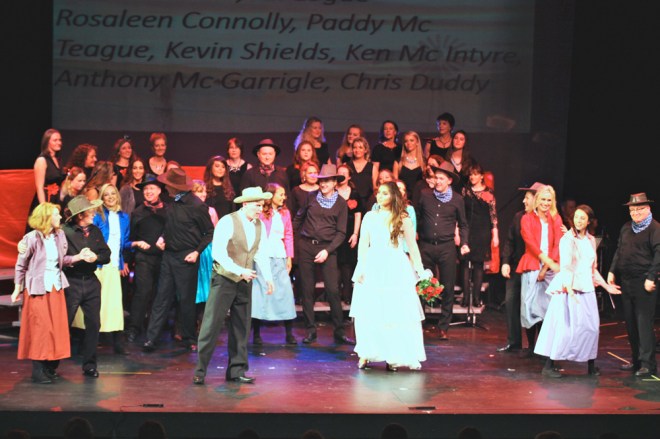
A rousing ‘Oklahoma’ really stirred the audience to life. Photo by permission of LMDG.

I also found out that not only does the group support ‘love of art’ but also ‘the art of love,’ with several happy marriages resulting from – well, let’s just call it ‘performer get-togethers’ over the years, and leave it at that. No wonder the classic song ‘Matchmaker, Matchmaker’ from ‘Fiddler on the Roof’ was part of the group’s select 25th anniversary repertoire this weekend.

The group began its humble origins following the departure of the Letterkenny Vocational Players from the local drama scene in the late 1980s. Pluincead O’Fearraigh picked up the reins and formed a new group, with former members of the LVP joining him. From their debut ‘The Absent Minded Bridegroom’ in the Loreto Convent hall, the group entertained audiences with performances such as ‘Oklahoma’ (1992), ‘Calamity Jane’ (1993), ‘Juno and the Paycock’ (1993) ‘Fiddler on the Roof’ (1994) and ‘The Field’ (1995), performing their musicals in St. Eunan’s College Hall and their plays in Loreto before the opening of An Grianán in 1999 and hosting the very first show there, a ‘Magic of the Musicals’ concert, in October.

Entering the Drama Festival Circuit in 1996, the group has won many group and individual awards, reaching the Confined All-Ireland finals in 1999 and 2000 with ‘Wedding Fever’ and ‘All the King’s Horses’ respectively, with Anthony Delap scooping the All-Ireland Best Supporting Actor accolade in 2000.

In 2012, it brought Ulster and All-Ireland Drama success to Letterkenny for the very first time with their immensely successful production of hit West End show, ‘The 39 Steps,’ with Elaine Gillespie, John Ruddy and Eoghan McGiolla Bhríghde each winning All-Ireland acting awards and Pluincead O’Fearraigh scooping the All-Ireland Best Director award.

In 2013, the group were the recipients of a Civic Reception by the Letterkenny Town Council in recognition of their enduring success.

Here’s what I thought of the group’s weekend performance.

Never have I witnessed such hustle-bustle and buzz of anticipation so long in advance of a show at Donegal’s An Grianan as I did yesterday (Friday) evening.
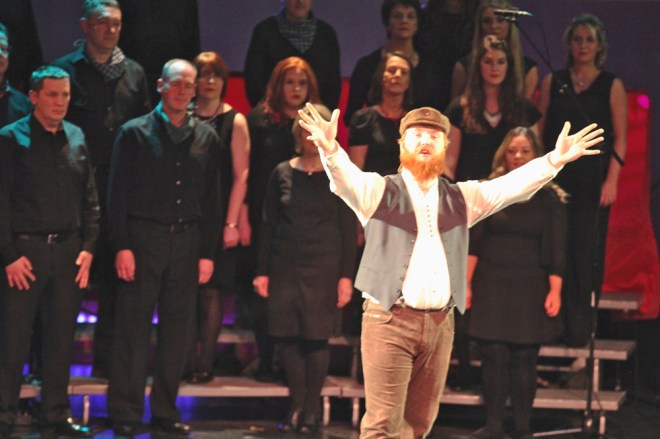
Pluincead O’Fearraigh Donegal, live shows in Donegal

John Ruddy, in character, sings ‘If I Were A Rich Man.’

With more than a half hour to go before curtain-up, the lobby was already choc-a-bloc and lines had already formed at reception, with two friendly ladies dealing with ticket-seekers as best they could. People walking, people in wheelchairs, in couples, in groups, all beaming lively seasonal goodwill.

The reason for the excitement: the opening night of a stupendous ‘grand variety’ style show celebrating the most memorable of performances by the Letterkenny Music and Drama Group since its inception a quarter of a century ago.

And the high level of anticipation was well-matched by the quality of the two-hour plus, multi-faceted performance on stage. Luckily, a second show takes place tonight (Saturday, 8pm) so if you don’t have a ticket grab one. So good is the show, however, if you don’t move fast enough, you may have to buy on the black market – at treble the price.
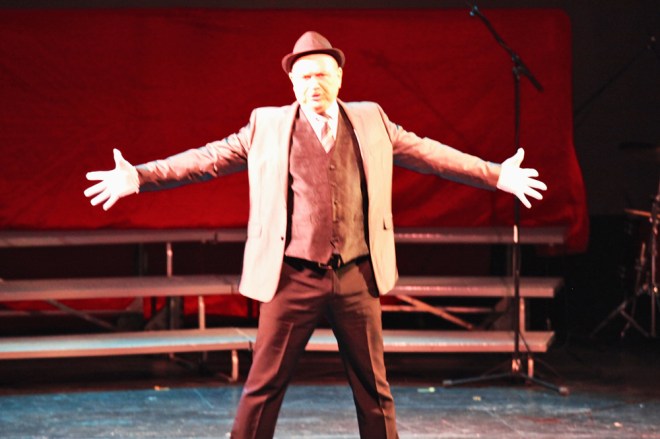
Chris Duddy tugged at heart-strings with his version of ‘Mr. Cellophane.’ Photo used with permission from LMDG

Some people think writing a review of a top-caliber show, whether it be music, theater or opera, is easy. And that writing about a bad show is hard. Not so, not always. To illustrate. One of the main challenges in writing a review of last night’s captivating music and drama group’s offering is that there were so many quite brilliant performances, a review could end up being merely a long shopping list of the good and the mighty. At the same time, it would be bereft of me not to mention at least some of the highlights.

But first an overall impression.

Aside from the overall holiday-like theatrical atmosphere, the on-stage performances – from the opening, and most appropriate, number, ‘There’s No Business Like Show Business,’ the classic Irving Berlin 1946 song written for the musical’ Annie Get Your Gun,’ sung by Rodney McKeague, Ciara Gallagher and ensemble, to the heart-warming carols at the end, were so impressive – I felt at times wondering if I’d stepped into the West End or Broadway by mistake. When I say ‘performances,’ I mean singing, choreography, timing, dancing, costumes, musical support, acting and stage set-up and management.

After viewing on-screen during the interval the other highly-engrossing aspect of the evening – video clips from previous shows by the local music and drama group down through the years – from ‘Calendar Girls’ to ‘Sister Act,’ I definitely thought I had teleported to the Big Apple or London.
Letterkenny Music and Drama Group, live theater in Letterkenny

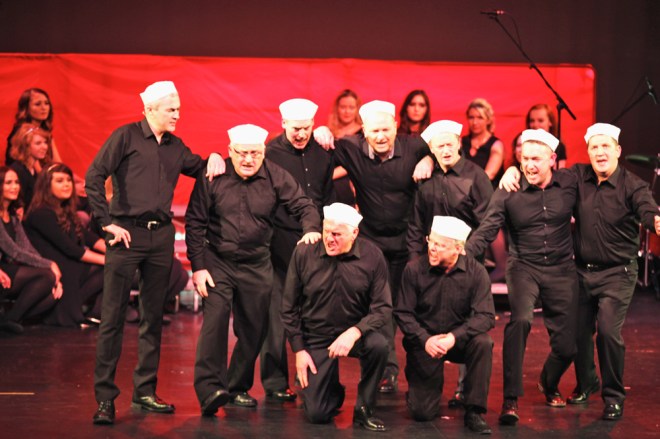
All aboard for ‘South Pacific’ and a singing ode to the beauty of women. Photo used with permission from LMDG

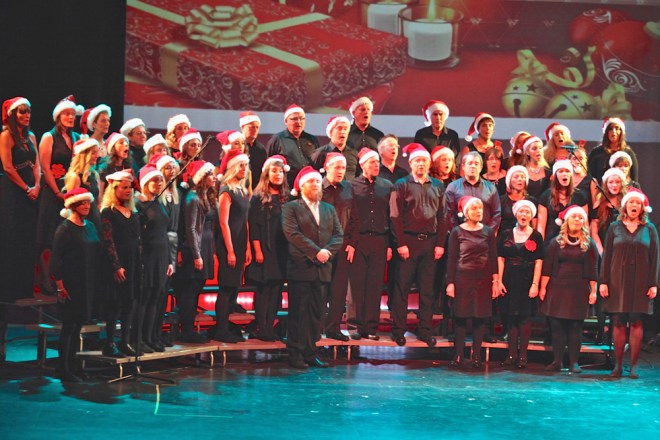
The evening’s quality entertainment wrung the full gamut of emotions from audience members, including my dear wife. At one moment, Columbia was laughing heartily at the ‘train-chase’ excerpt from the drama group’s All-Ireland award-winning adaption of John Buchan’s 1915 melodrama, ‘The 39 Steps,’ performed by Elaine Gillespie, Kieran Kelly, Eoghan Mac Giolla Bhrighde and John Ruddy. Later, I noticed her brushing tears from her eyes at the poignancy of actor Iarla McGowan’s recitation of the 1914 World War One ‘No-Man’s Land’ scene when German and Allied soldiers exchanged gifts and pleasantries during an impromptu Christmas Day ceasefire, which was followed by a wonderful rendition of ‘White Christmas’ by the whole ensemble.
White Christmas Donegal, music in Donegal

Carols light up the theater atmosphere. Photo used with permission from LMDG

Here you’ll have to forgive me. I mentioned already an aversion to long shopping lists in a review but now find myself inclined to make one, though short not long. If I don’t, this review could turn into a thick book of praise. So, succinctly, other highlights included:

  • John Ruddy’s melodious rendition of ‘If I Were A Rich Man’ from ‘Fiddler On The Roof,’ complete with credible accent.
  • Catherine Gaffney, Aoibheann Diver and Andrea Emmet for their combination of captivating acting and singing in the song ‘Matchmaker, Matchmaker’ from the same musical.
  • Using only white gloves as an accessory, Chris Duddy’s heart-string pulling performance of ‘Mr. Cellophane’ from the musical ‘Chicago.’
  • The ensemble’s rousing ‘Oklahoma’ led by Martin Gallen, Rosaleen Connolly and Ali Logue.
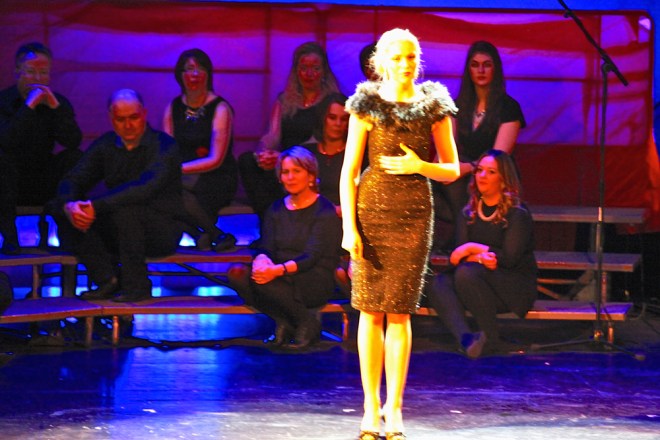
Eavan Hennessey Donegal, Donegal singers

If Eva Perón had looked or sang anything like Eavan Hennessey Argentina would be the most admired nation on Planet Earth. Photo used with permission from LMDG

  • Riana Lynch’s goose-pimple-creating rendition of ‘You’ll Never Walk Alone.’
  • High-octane rock ‘n roll numbers led by Kieran Kelly and ‘Buddy Holly Lookalike’ James Coyle singing ‘Chantilly Lace,’ ‘Oh, Boy’ and ‘Johnny Be Good,’ with gyrating boogying accompaniment by talented dancers.
  • Blonde bombshell Eavan Hennessey, the personification of elegance, singing a soaring version of ‘Don’t Cry For Me Argentina’ from the musical ‘Evita’ created by Andrew Lloyd Webber and Tim Rice. If Eva Perón had looked anything like Eavan, I’d definitely have voted for her.
  • Paddy McTeague and ensemble singing so passionately ‘Take Me To Paradise’ from ‘The Celtic Story,’ especially impressive as the last time Paddy performed with the group was 10 years ago.
  • Dressed in black, Katie Porter’s touching rendition of ‘Maybe This Time’ from ‘Cabaret.
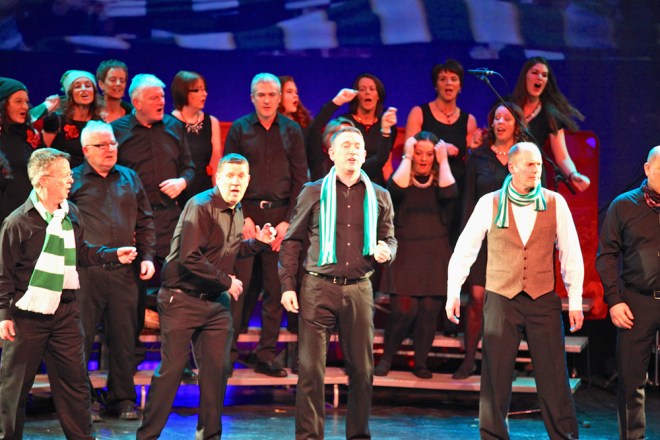
Paddy McTeague Donegal, The Celtic Story

The team may be out of Europe but Paddy McTeague and ensemble still sang passionately ‘Take Me To Paradise’ from ‘The Celtic Story.’ Photo used with permission from LMDG

It was also wonderful to see how some of fellow neighbors from Gaoth Dobhair played such key roles in the overall evening, including, of course, award-winning maestro and group chairperson, Pluincéad Ó Fearraigh, who deserves high praise for his sterling work over the last several decades in creating such consistently high-quality shows – 22 plays and 23 musicals in total, in Donegal and elsewhere.

And a lady I termed in an inscription in my newly-released suspense novel, ‘Pretty Ugly,’ (linking Donegal to America) as ‘the nightingale of west Donegal,’ Jacqui Sharkey, who sang beautifully, ‘Tell Me It’s Not True,’ from the musical, ‘Blood Brothers.’
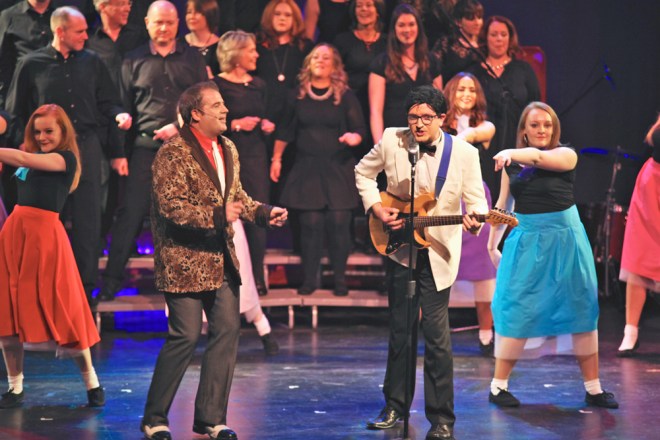
Kieran Kelly, James Coyle, Donegal actors

Led by Kieran Kelly and Buddy Holly lookalike James Coyle, lively music aka ‘Chantilly Lace,’ ‘Oh, Boy’ and ‘Johnny Be Good’ rocked An Grianan. Photo used with permission from LMDG

Of course, none of the songs would have sounded so good if it had not been for the impressive musical backing from The Band, led by Denise Roper and Pat Campbell.

A deserved standing ovation greeted the whole cast at the finale and there was also one for those members of the music and drama group who sadly passed away during the intervening 25 years and whose images were show on the on-stage screen.

The Letterkenny Music and Drama Group’s next production for the festival circuit is American playwright Eugene O’Neill’s ‘Long Day’s Journey Into Night.’ Readers, wish them well.

Visiting Berlin Wall speaks volumes for free thinkers

It was as cold then as it is now, I recalled, thick coat and woolly hat keeping my body and soul together, even though the ‘Cold War’ had just melted away.

Exactly 27 years ago, swaying atop the Berlin Wall, a bottle of champagne in one hand, the other firmly clasping that of someone unknown to me but equally as carefree and excited, both of us wildly celebrating a supreme historic moment.

Sean Hillen speaking in Berlin, Berlin books

Reminiscing: Quiet now but thousands clambered on to it and over it 27 years ago, myself included.

There were tens of thousands of us, stumbling over rubble, banging on the solid concrete with anything we could lay our hands on, hammers, candlesticks, shovels, pitchforks, pieces of metal piping. You name it, we were using it, desperately trying to dislodge pieces to take home with us.

In some ways, it seemed to me we were doing so not just to have a hard-won souvenir to show to friends and family but also because we felt we were facing a frenzied race against time, that we feared men in uniforms, with rifles and growling, muzzled dogs, might suddenly come along and order us down, telling us it was a bad joke, that the powers that be had changed their minds, that the exhilarating glimpse of freedom was over.

Sean Hillen author, books by Sean Hillen

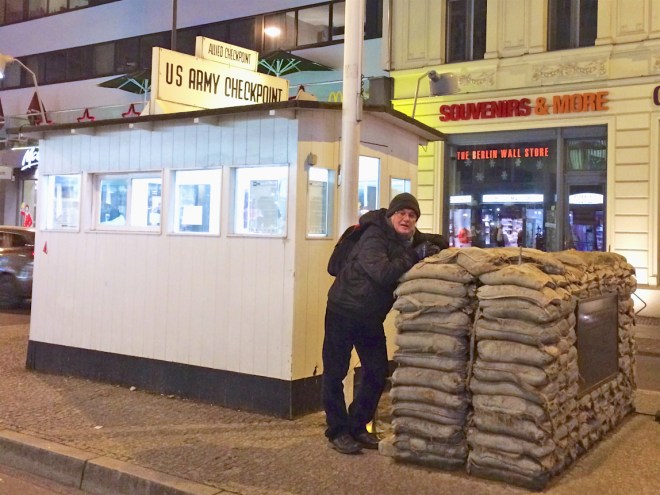
Checkpoint Charlie: Tourist attraction now but filled with drama when I first visited it in the mid-1980s during the Cold War.

We were all of the same thought: the wall had to come down and it had to come down now before someone powerful somewhere changed their mind. After all, it had gone up fast, so down it must come – equally as fast. And boy, were we ever doing a helluva demolition job. With a capital ‘D.’

That’s why it was a delight to be there again last week standing beside the few remaining remnants of the wall, much of it covered by colorful graffiti, reliving those exuberant moments from years before. And an even greater delight to be talking not only about my experiences as a foreign correspondent covering the dramatic fall of Communism, then rushing by train to Bucharest, to the Romanian revolution, but also about my first novel, ‘Pretty Ugly,’ which deals with many of the same universal themes, freedom of thought and action.

Gazing around me as I walked to the Berlin Book Nook bookstore in the Neukoelin district, the American sector after World War Two, I was astonished to see how much Berlin had changed. Changed? Transformed would be a better description. Bright lights, lively pubs and cafes, the conversational buzz of shoppers filling the streets. Open-air markets like the Gendarmenmarkt packed with people drinking gluhwein and chowing down on currywurst, and carolers singing sweetly about hope and love.

Author talks Berlin, Berlin book shops

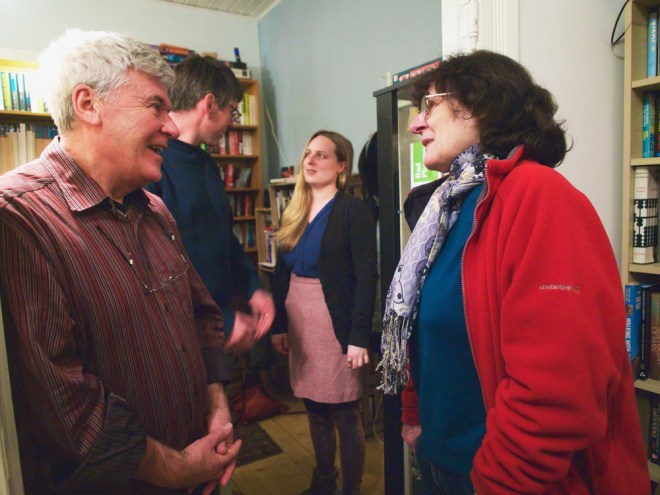
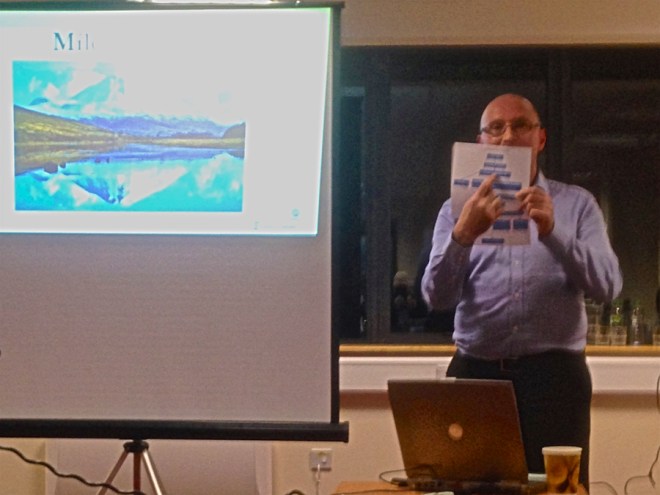
Enjoying a chat at the Berlin Book Nook about literature, art, travel and the German capital’s ever-changing face.

The overriding sense of togetherness and positivity was a vivid reminder to me of that same collective sense of well-being I felt all those years ago along the crumbling wall, the grim edifice that symbolized the very opposite of all that is good in Mankind.

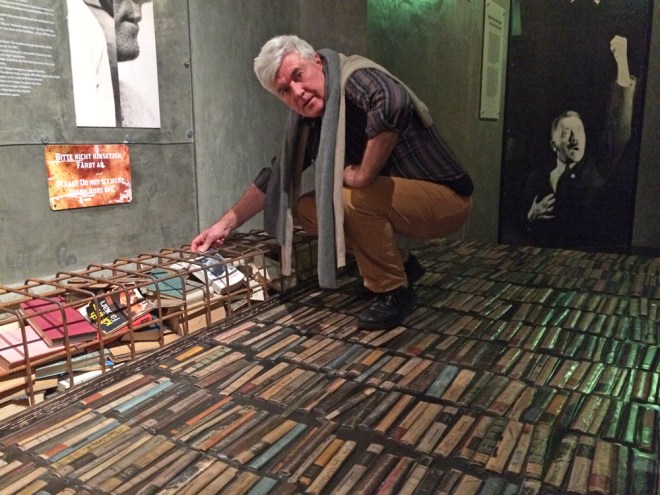
As for my author’s talk, when is it not thoroughly enjoyable to speak to book-lovers about books? Even more satisfying as I had earlier that very day visited ‘The Story of Berlin’ museum where a pile of books tossed randomly along the floor was a sad reminder of the tragic ‘burning of books’ episode instigated by Hitler and his racist Nazi cronies intent on destroying any semblance of free thinking.

Sean Hillen author in Berlin, Pretty Ugly a novel

Books underfoot at ‘The Story of Berlin’ museum symbolizing the despicable Nazi ‘burning of books’ episode in 1933.

Talking about the inspiring land and seascapes of Donegal’s ‘Wild Atlantic Way’ (no wonder the county recently topped the National Geographic Traveller magazine’s ‘Cool List 2017’) where much of the dramatic action in ‘Pretty Ugly’ takes place and about how my main characters, both in Ireland and America, strive for justice in face of overwhelming odds, I felt like I was staging my own private revenge against the Fuhrer and his violent mob of senseless bullies.

Pretty Ugly book, Irish writers

Pretty nice to see ‘Pretty Ugly’ on the shelves of a popular Berlin bookstore.

I hope you feel the same, especially at this time of year when we think more of family and friends and how fortunate we are compared to others much worse off.

Have a most contented winter holiday season. I very much look forward to hearing your feedback after reading my novel.

Here’s where you can order your copy of Pretty Ugly.

‘Pretty Ugly,’ suspense-filled medical novel set on Donegal’s ‘Wild Atlantic Way’

Over the last 40 years or so in media I’ve covered police, education, city hall, the rise, and fall, of Mayors, Prime Ministers and Presidents, I’ve been a medical writer, a war correspondent, a columnist, a travel writer, a publisher, a creative writing teacher…

…I’ve written about heart transplants, airplane crashes, wars (Iraq, former Yugoslavia and Romania, not to mention my very own native northern Ireland), I’ve survived earthquakes and tropical storms and a few other catastrophes (some of my very own making)… but completing my first novel, ‘Pretty Ugly,’ recently linking Ireland (Belfast and Donegal) and the US (Kansas City, Boston, New York and Washington) beats them all for sheer challenge.

Pretty Ugly novel, Sean Hillen author

Pretty Ugly’ has been a few years in the writing, and I wish I could say it was all plain sailing, but as probably most first-time novelists will tell you, “It wasn’t.”

I crashed into some plot rocks, found myself diverted by a few wayward literary waves and was even capsized mid-story and tossed into the opaque waters of writers’ block without a literary lifebelt. And if that wasn’t enough, I then had to throw a lot of ballast overboard in a desperate attempt to save the whole kit and caboodle from going under (100,000 words in total), with only myself on the poop deck waving a sad farewell.

The GOOD news, however, is that it’s DONE! And boy, am I PROUD – not about ‘Pretty Ugly’ being a success. That decision I leave to others more astute and objective than I, which includes you. But about finishing it, just the way I wanted.

Christmas gifts, new booksNow all I need is appreciative book-lovers to read what I’ve written. In fact, as many such readers as I can possibly muster. More than that, some of those fine people to kindly, generously, selflessly, write a short comment on the Amazon page below. Around 50 words is enough. I’ll even settle for 10. Even one, preferably ‘Great.’

I know it’s a lot to ask. In today’s fast-moving world, there seems barely enough time for even the ‘must-do’ things in daily life than to pen a few words to help an aspiring author. But following the timeworn advice, ‘if you don’t ask, you don’t get,’ I’m asking. Not quite with cap in hand, but with one knee slightly bent (lopsided, probably from playing too much football as a young man).

So, here goes…

PRETTY UGLY in print

PRETTY UGLY in kindle

Far be it from me to say, ‘Pretty Ugly’ would make an excellent Thanksgiving, Christmas, New Year or birthday gift for book-reading friends and family, but think of it this way. It has a pretty cover, it’s a pretty good read and it’s a pretty size so it’s bound to look extremely pretty wrapped up with nice colorful paper or inside a seasonal red stocking. What about the ugly bit, you ask? Always keep in mind, ‘Beauty is in the mind of the beholder.’

Who knows, maybe the land and seascape descriptions and dramatic action in ‘Pretty Ugly’ that take place in west Donegal including Gola and Tory Islands, Dunlewey, the Poisoned Glen, Gaoth Dobhair, Cnoc Fola (Bloody Foreland), Bunbeg, Teac Jack, Teac Hiudái Beag’s and many other places, will kick-start literary tourism here in the northwest.

new medical novels, wild atlantic way novelsIf it could but emulate a fraction of what Nathaniel Hawthorne’s ‘The House of the Seven Gables’ and ‘The Crucible’ by Arthur Miller did for Salem, Massachusetts; Anne Rice’s ‘Interview With A Vampire’ did for New Orleans, Lousiana; John Berendt’s ‘Midnight in the Garden of Good and Evil’ for Savannah, Georgia; an even George R. R. Martin’s fantasy novel ‘A Song of Ice and Fire,’ more popularly known as ‘Game of Thrones,’ did for northern Irish tourism, then the rewards would be rich. A flood of international visitors would come to the area creating stronger business for local cafes, restaurants, pubs, B&Bs’ and hotels, as well as greater support for community and cultural activities.

Why, ‘Pretty Ugly,’ even contains words and phrases as Gaeilge, therefore supporting development of the Irish language and scenes involving traditional Irish music seisiún and that most ancient of skin rejuvenation treatments – bog turf.

Anyway, please take a look and see what you think. Then leave a one-word or ten-word review on Amazon. I’d be much obliged.

Go raibh maith agat. Is mise le meas mor.

Youthful Irish spirit and creativity generate success

Entrepreneurial spirit often starts early in life – perhaps it’s embedded in DNA – and that certainly seems to be the case with teenage brothers, Rónán & Conor McGarvey, who are enjoying their successful venture, ‘Donegal Pens.’

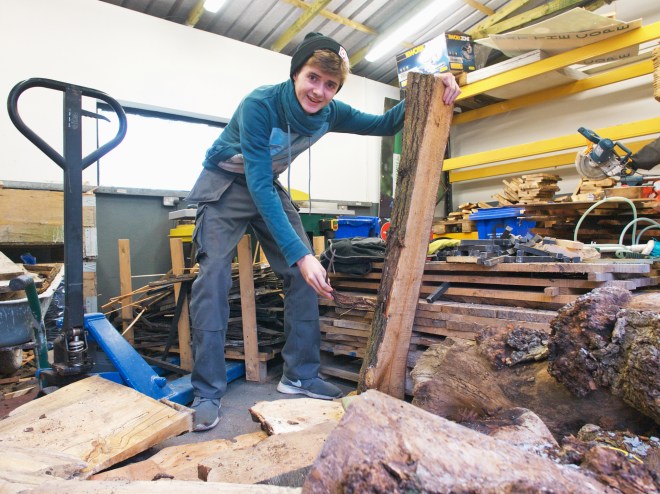
Started in a makeshift garden shed at their parents’ (Eoin and Marie) home in the charming village of Loughanure in the Irish-speaking Gaeltacht in Ireland’s most inspiring and northerly county, where their father is a local postman, their company has flourished. The siblings showed a true spirit of endeavor by developing their fledgling idea of using leftover wood from local carpenters and sawmills to create stylish, elegant pens, some of which have inbuilt styluses with a special touch application for use on IPhones.

Donegal pens, Christmas gifts

Rónán & Conor McGarvey

‘We’ve worked hard at building up our wee business but we’re used to the six and seven day weeks by now,” said 19-year-old Rónán, who with 16-year-old, Conor, started ‘Donegal Pens’ when they were only 14 and 11 years old respectively, when they were both students at Rosses Community School and after first trying their hand at making pens from wood at a craft-fair in Antrim. “We’ve sold several thousand pens so far, with the most popular being from bog oak, trees that can lie deep in the bogs for thousands of years.”

Ireland Writing Retreat, what to buy for Christmas

Conor McGarvey

Their pens, from trees as diverse as bog oak, yew, ash, elm, beech, ebony, olive, beech, cherry, laburnum, purple heart, oak, jatoba, maple, pear, walnut, spalted beech and red cedar, are individually turned and polished. Interestingly, the equivalent of their hometown ‘Loughanure’ in Irish is ‘Loch na Luire,’ meaning ‘island of the yew trees.’

Donegal pens, hand made pens

Conor McGarvey

Not only are their pens sold in 50 stores throughout Ireland but also internationally, with three shops in Germany and two in the United States – Carrick Mór, a gift shop specializing in the best of Ireland and Irish culture, run by Kristin and Michael McGowan in Glenrock, New Jersey and Sarah Maguire’s Cottage Scents & Gifts run by Arlene & Ann Maguire in New Milford, Connecticut, who named the store after their great grandmother.

Donegal made pens, Wild Atlantic Way crafts

Rónán McGarvey

With the growing success of ‘Donegal Pens,’ the two brothers have developed their business premises from their modest shed to a second garage where they store the wood and also a small office. Having taken classes in wood-turning in Downpatrick in northern Ireland, they also now create designs on a special computer which are then ‘burned’ on to the wood of the pens. All pens are put together painstakingly by hand, not by machine.

Irish made pens, Christmas gifts

Rónán & Conor McGarvey

Ireland Writing Retreat’ is delighted to partner with the two creative young west Donegal pen-making brothers, Ronan and Conor, from the ‘Island of the Yew Tree’ for a ‘Winter Season Special Gifts.’ To find out how you can win a unique Irish Gift, your perfect inspirational writing companion, become a Friend of ‘Ireland Writing Retreat’ before December 31st.

Ramelton basks in cosmopolitan manouche music festival

Artistic and organizational daring-do recently transported the pretty coastal town of Ramelton (Ráth Mealtain in Irish means ‘Fort of Mealtain’) in east Donegal, Ireland back to the charming musical nostalgia of pre-World War Two, reminiscent of ‘Midnight in Paris,’ the recent movie directed by Woody Allen.

Marting McGinley jazz festival, Donegal manouche

Raphoe-born, Donegal fiddler and journalist Martin McGinley (on left) listens to an informal group music session at the traditional Conway’s Bar, Ramelton on Friday evening just before the gypsy jazz festival kicked-off.

Billed as ‘Django sur Lennon,’ the inaugural weekend festival focused on a genre of music known as either gypsy jazz or manouche, with one of the foremost pioneers being Jean ‘Django’ Reinhardt, a Belgian-born French guitarist and composer of Romani ethnicity.

With international musicians from countries such as Italy, Spain, Holland and Slovakia playing, the tiny Irish town alongside the River Lennon became a cosmopolitan hub of melodies with a definite positive vibe, both in formal concert-hall settings and informally in many of the town’s pubs and cafes, and even in a ‘mystery venue’ – a 17th century mansion.

Kicking off the festival was a quartet in the Town Hall, complete with an elegant, colorful stage canvas backdrop of chandeliers, bay window and ornate Doric pillars and a choice of either table-side or cinema-style seating.

Skilled guitarist, Romane from Paris, was joined by Dublin-based, pony-tailed José Anselmo on double bass, Rudo Bado on violin and Belfast-based Nicolas Deschatrettes on rhythm guitar. They played classics such as Reindhart’s ‘Swing 48’ and Romane’s original creations such as an enchanting tune he composed for his wife and first practiced with the violinist a mere hour before the show. Among their other musical renditions during the unbroken 90-minute set were ‘Pour Parler’ and ‘After You’ve Gone.’

Romane guitarist, Rudolf Bado manouche

Romano and Bado produced delightful, flirtatious musical interludes.

It was delightful to listen to Romane’s guitar and Rudo’s violin intimately, affectionately, effortlessly wrapping around each other, flirting like old familiar lovers knowing the simple caresses that turned each other on, a pure musical joy to listen to.

A second enjoyable quartet at the town later, was led by Amsterdam-born singer-guitarist Irene Ypenburg. Their diverse musical offering included a tune which originated out of a Norwegian folk song, then was re-interpreted by a Greek composer before Django transformed it manouche-style. Another tune, ‘Django’s Tiger,’ was a playful, flirty tune, almost naughty in style if lyrics had been put to it. Ypenburg, who is also a Reiki master and a talented artist, also sang a gypsy ballad penned by Schnuckenack Reinhardt, a relative of Django, about what defines ‘richness’ – material well-being or simple contentment.

Other tunes included the lively ‘My Brother,’ the song ‘Chavo’ meaning ‘Man’ or ‘Lad’ and the well- known Yiddish song ‘ Bei Mir Bistu Shein,’ more popularly known as ‘My Dear Mr. Shane’ a former hit by the Andrews Sisters, as well as ‘The Sheik of Araby’ and the romantic classic ‘Autumn Leaves,’ sung by Irene in both French and in English.

Later during the festival at Ramelton Town Hall, another concert featured three guitarists, the Dario Napoli Trio, who opened with the tune ‘Within,’ composed by the Italian-born Napoli, with the composer-guitarist explaining that his genre of music was not “pure Django but a modern fusion.” If Olympic gold medals were doled out for the fastest fingers running up and down guitar frets, Napoli would be Usain Bolt. Immensely talented, he and his two supporting musicians shifted seamlessly from one tune to another, fast, sometimes furious, producing intricate three-way sets of string harmony, never, ever harsh.

Master of his instrument, it seemed at times as if the guitar was a natural physical extension of Napoli’s arms. His rendition of his composition ‘My Favorite Spot,’ created last year while on a music coaching camp in Tuscany, ended with a flourish of flowering notes, the visual version of petals opening under a speed camera. ‘Unsaid,’ a song he composed about relationship break-ups and avoiding important truths, was melancholic and sad with a sense of inevitability and a touch of ‘c’est la vie’ hard realism to it. In contrast, the band’s interpretation of the age-old ‘Tiger Rag,’ made famous by the Mills Brothers in the 1932 comedy movie ‘The Big Broadcast,’ was bubbly and uplifting. And if deft guitar playing isn’t enough, Napoli also sings, and pretty darn well too.

In addition to the five concerts over a weekend, there were also workshops in guitar and violin.

Dario Napoli, gypsy jazz

Dario Napoli from Cortona swept his listeners into an enthusiastic standing ovation with his fast-fingered guitar skills.

Full credit goes to festival organizers – Donough Cleary, Donal Casey, John Kinsella, Damian Doherty, Martin McGinley, Aisling Cleary, Ann Casey, Mary Kinsella, Violet Buchanan and Simon McCafferty. Cleary and his colleagues were obviously content with the festival’s success. “Django Sur Lennon has exceeded all our expectations,” said Cleary. “We had some truly exceptional musical performances over the weekend, big crowds at the concerts and a fantastic atmosphere for the pub gigs. Our workshops were also well supported. It’s all going to drive the development of gypsy jazz in Donegal. Watch this space!”

Festival sponsors included principal funders, Sir Gerry and Lady Heather Robinson of Oakfield Park in Raphoe and Peter Nolan, also from the same town. Sponsorships also included financial consultants Fintan Moloney and Company Limited while Donegal Music Education Partnership sponsored the violin workshops.

Traditional Tennessee music comes to northwest Ireland

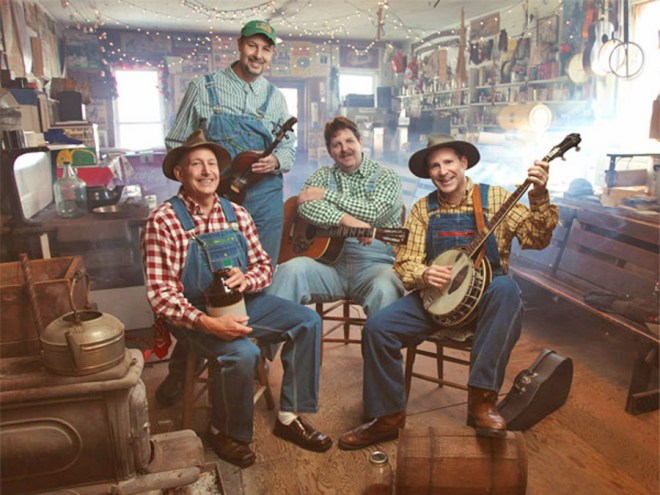
Dressed in checked shirts, caps and denim dungarees with big colorful handkerchiefs sticking out of back pockets, American musicians at Letterkenny’s Regional Cultural Center (RCC) this week looked as ready for harvesting corn (or producing moonshine from it) as hosting a concert.

Fortunately, it was the latter and what a knee-slapping hoedown the evening turned out to be courtesy of the Tennessee Mafia Jug Band, combining a mix of musical talent and fine stagemanship with good humor, including some zany ‘instruments.’

With an impressive number of CDs behind them, the five-member group are so at ease on stage, they often decide at the last minute which song they’ll play next, which lends their concerts a delightful sense of spontaneity, such as when they ended this week’s show with a lively rendering of that all-time Irish classic, ‘It’s a Long Way to Tipperary.’

As evidenced Wednesday evening at the RCC, their inventory of songs and tunes is diverse, ranging from romantic ballads to spine-chilling ghost stories to comical tales of ‘tooth picking time in false-tooth valley’ and revengeful chickens as in ‘Ghost Chickens In The Sky.’

Add to the mix, the well-honed skills of Dan Kelly on fiddle; smiling Ernie Sykes on bass and voice; bald-pated, nimble-fingered John Tomlin on mandolin and voice; versatile band leader Troy Boswell, known professionally as Leroy Troy, playing claw hammer-style banjo, harmonica and washboard and voice, as well as Mike Armistead on guitar and voice.

Concert-goers were also treated to the amusing sight of Troy teasing a tune out of a plastic milk jug and a water bottle and Sykes producing the same from closed hands on the song, ‘Sick, Sober and Sorry,’ and then later hilariously miming a chicken.

Among the song highlights of the evening were a touching ballad entitled ‘These Hands’ and the carefree ‘Chug-a-Lug,’ about aforesaid moonshine, written and recorded by American country artist Roger Miller, both sung by Sykes; the ghostly tale and bluegrass classic, ‘Bringing Mary Home’ written by Chaw Mank, Joe Kingston and John Duffey and sung by Tomlin; as well as ‘Miller’s Cave,’ a Don Williams melody and the hilarious and probably most confusing song yet written, for which a family diagram is required, ‘I’m My Own Grandpa,’ both sung by Troy. Instrumentally, Troy’s prowess on the scrub board on ‘They Cut Down The Old Pine Tree’ was a delight, as was the group’s interpretation of the Hank Williams song ‘A Mansion On The Hill.’

The evening’s concert was ably opened by singer-guitarist Nashville-born George Harper, who sang a variety of songs from his ‘I’ll Be Back’ and ‘No Smokin In Here’ albums including the lively ‘Overland Express’ and a traditional folk song with the amusing kick-line ‘sugar tit a mile wide and six feet long.’ Northwest Ireland wasn’t left out of his repertoire either, with ‘Why Do I Go To Sligo,’ a song about the pretty girls of that particular town, written after a previous gig there. His voice and Tomlin’s mandolin playing on the love ballad, ‘A Stone’s Throw Away’ made for a perfect combination.

Considering Letterkenny lies in the peripheral end of Ireland, about three-hours away from Dublin where music groups often congregate, great credit goes to RCC director, Shaun Hannigan and his colleagues there, as well as Donegal County Council Arts Officer, Traolach O’Fionnain, for bringing so many diverse bands to play. Last week I enjoyed a marvelous performance by ‘Hot Club of Cowtown’ and the series of US country concerts ends next Friday (Nov. 11) with singer-songwriter-musician, Maine-born Jude Johnston performing alongside Linley Hamilton and Dave Keary. After that it’s something different – a Swiss jazz trio, Vein, with New York saxophonist, Greg Osby, on Thursday Nov. 17, and acoustic guitarist Pierre Bensusan from France, the very next day, Fri. 18.

The concerts are presented in association with Earagail Arts Festival, Donegal Music Education Partnership and Music Network.

Grassroots initiative promotes men’s health and well-being

Few things deserve greater praise than a community-led initiative that helps increase the quality of life of its members – thus the Men’s Sheds concept.

Started only five years ago, the idea has enjoyed phenomenal growth with more than 350 such sheds throughout Ireland already with an amazing 10,000 people attending activities every week, and a growth rate of 1.5 sheds per week. Donegal alone has 10 sheds.

What’s the aim? A simple, yet admirable one – improving members’ mental and physical health through diverse activities.

See article below I wrote for this week’s edition of the ‘Donegal News.’ It contains a couple of Donegal contacts for those interested in finding out more.

Making Lives Better in the Shed

Many men throughout Donegal travelled to Belfast this past weekend for the biggest international gathering of ‘Men’s Shed’ members with the goal of developing diverse activities and closer links with each other to help improve members’ physical and mental health.

Embracing the traditional concept that the garden shed has long served as a sanctuary for men, a place where they ease the everyday stresses of life, ‘Men’s Sheds’ are spaces where men meet and work together on diverse projects. Community-based and non-profit, they are open to all men who want to enjoy a safe, friendly and inclusive environment.

Sheds without Borders, Gaobh Dobhair Men’s Shed

Members of Gaobh Dobhair Men’s Shed (Scioból na bFhear), Liam Ó Gógáin, Paul Treacy, Michael Coll, Dónal Clancy and Austin O’Donnell, at Belfast international ‘Sheds without Borders’ conference.

Founded just five years ago, the Irish Men’s Sheds Association (IMSA) organized the Belfast event, entitled ‘Sheds without Borders,’ which was attended by several hundred people from countries such as Scotland, Wales, Australia and Ireland. The association has experienced phenomenal growth and now represents sheds both here and across the border with a rapidly-increasing membership of 350, with around 10,000 ‘shedders’ attending weekly. It is growing at a rate of 1.5 sheds per week. Membership is also expanding in Northern Ireland, with 44 sheds and around 1,000 attending weekly. Donegal now has about 10 sheds county-wide.

Reflecting on their growing popularity, Liam O’Gogain, a member of Gaobh Dobhair shed (Scioból na bFhear) in the local industrial estate who went to Belfast with several colleagues, said, “Worldwide, sheds have a proven positive mental health dividend for members countering feelings of isolation with a relaxed, community spirit and an opportunity to share your skills and learn new ones.” He said “increasing public awareness” about them was key, with the shed he attends meeting every Monday and Thursday evening 7-10 pm. Anyone interested can contact sciobolgaothdobhair@gmail.com or call Liam on Mobile 087 254 3997 for details.

Liam Ó Gógáin Donegal, Men's Sheds

Shedders enjoy a joke while converting a disused room into a tea-room using bits and pieces.

Enthused by the Belfast conference, O’Gogain said he heard, “endless stories from men of all ages about how their shed has transformed their lives, through friendship, conversation and simply having fun with projects,” which, he added, “creates effusive, natural companionship.”

Asked why Men’s Sheds’ are particularly important in Donegal, he added, “With the loss of the manufacturing jobs base here, Scioból na Bfhear, like other such sheds, provides a welcoming environment for men from every background from their mid-30s to their 80s, any age, to gather and work together through craic and collaboration.” As to the benefits of last weekend’s international event at Belfast City Hall, he said, “We made friends and contacts with other sheds in Donegal and throughout the country who offered information, ideas and support to fledgling sheds. Interesting talks ranged from mental health to adult learning.”

Back from Belfast and speaking about inclusiveness and easing social isolation, Gerry Connolly, chairperson of the Ballybofey-Stranorlar shed established last year, now with 30 members, said, “We started, in part, because may men here in the area suddenly became unemployed either out of illness or redundancy when the crash happened but we also have many retirees.” Members completely renovated and rewired a Portacabin for meetings, which is also used by other community groups, and will make ‘buddy benches’ for schools with the help of a skilled woodturner. Those wishing to know more can contact Gerry at Mobile 086 825 0550.

Shed activities nationwide range from boat-building to making ornamental crafts from wood such as candle-holders and toolboxes to simply playing pool or table-tennis and creating choral groups.

Soap-opera style farce diminishes Údarás promotion of EU LEADER scheme

For a well-paid state official to sit down in a childlike huff in an open public meeting and refuse to speak because someone is recording information on a key issue – funding under the EU LEADER scheme for community and entrepreneurial projects for Donegal – borders on ‘Coronation Street’ soap-opera style farce.

That’s exactly what happened at Áislann Ghaoth Dobhair this past week when Gearóid Ó Smoláin, a staff member of Údarás na Gaeltachta, refused to continue speaking to local people on how they could best access money under the EU rural development programme – one for which the local office of Údarás is entitled to a whopping 600,000 euro out of a project budget of 2.3 million for the Donegal Gaeltacht alone, as regional manager, Mícheál Mac Giolla Easbuig, told me in private when asked.

Not only, but while the meeting was billed as a bilingual one, Mac Giolla Easbuig spoke only in Irish until I asked if he would also please speak in English as there were some people in the room who were not fluent ‘as Gaeilge’ and would not understand what he was saying.

Initially, when asked to do so, Mac Giolla Easbuig declined, saying words to the effect of ‘well, we’ll just go on and see how things go.’ When I reminded him that EU regulations indicate such meetings should be conducted so that everyone understood (and indeed, reading later, that Article 8 of the Irish Constitution states both Irish and English as official languages of Ireland), he relented and nodded to his colleague, Ó Smoláin, to do so.

Such attitudes can easily lead to accusations of discrimination and racism by language.

Udaras Donegal Leader program

On the issue of recording (I was taping on my mobile phone some of the more pertinent information), Mac Giolla Easbuig supported Ó Smoláin’s rather ill-tempered ‘not speaking’ huff and also asked me to stop. Instead of relenting when reminded that this was billed by Údarás itself in its promotions as an open public “information meeting” and also that EU regulations permitted recording of it, he turned to the audience and asked for their opinion.

As someone put it to me afterwards, “it was like offering Jesus or Barabbas to the crowd.”

Saying I acknowledged his preference but that I would continue to exercise my civil right and record key elements of the information being imparted, Mac Giolla Easbuig finally had a whispered word with Ó Smoláin and the latter stood up and continued where he’d left off – bilingually.

Ironically, it is interesting to note that Ó Smoláin complained to the ‘Donegal Daily that he was misreported by me in an earlier story related to an alleged Catholic Church operated pedophile treatment and drug addiction center funded by Údarás being established in Falcarragh. In that case, Stephen Maguire, the news website’s co-owner, informed me that Ó Smoláin told him an official recording showed I had misreported what he had said. When I contacted the Scottish organizer of that event held at An Chuirt hotel, I was informed by e-mail that no such official recording existed, indeed that the meeting was not recorded at all. Based on that alone, one would think Ó Smoláin, of all people, would have welcomed an actual recording by me last week, rather than the reaction he displays below.

What is most disappointing, indeed sad, about what happened last week at Áislann Ghaoth Dobhair, aside from my own discomfort as a member of the local community at being subjected to such ill-treatment, was that this kind of socially embarrassing situation – which some might say is tantamount to linguicism (racism by language) and racial profiling, and thus contravening EU rules and regulations – could have, and should have, been easily avoided. That is if indeed the main aim of Údarás was to provide relevant information, as opposed to just ticking the EU ‘public meeting’ box to qualify for its generous administrative ‘handling fee.’

Earlier that day, interested in contributing to community development, I had called the Údarás office and had been informed the meeting would be bilingual. Thus my surprise when Mac Giolla Easbuig spoke only in Irish. In today’s convenient age of technology, providing simultaneous translation should be mandatory, especially on such a key issue and as the LEADER ‘handling fee’ is so high so it can easily be afforded. I believe such translations ‘as Gaeilge’ should also be conducted for all meetings taking place here in English. This would help those not fluent in Irish to improve their language skills.

More important than potential accusations of xenophobia – meaning hundreds of non-Irish speaking people living in the Donegal Gaeltacht from other countries including EU-members such as Holland, France and Italy and other parts of Ireland might be facing linguistic discrimination by Údarás when applying for funding – such social exclusion could be a tragic loss to the struggling economy of the Donegal Gaeltacht with one of the highest unemployment rates in the nation.

Údarás’s role is to strengthen the Gaeltacht’s economy and keep our proud native language alive. Well-funded – staff at Údarás have the highest salaries of any organization under the The Department of Arts, Heritage, Regional, Rural and Gaeltacht Affairs – it is expected to perform its duties in many ways, including job creation. Speaking only ‘as Gaeilge’ and not bilingually, Mac Giolla Easbuig and Ó Smoláin would, in effect, have prevented non-fluent Irish speakers in the Donegal Gaeltacht community from participating fully in the meeting. Worse, some non-Irish speaking members of the audience might well have excellent project ideas that could provide gainful employment to needy local people, people with families who wish to stay in the Donegal Gaeltacht and speak our native language on a daily basis.

Wanting to align our business ethics with those of global mainstream thinking, it would have been better for both men to remember one of the principles of the recently-signed ‘Conscious Business Declaration’ being presented to the United Nations – ‘Business must behave as a positive and proactive member of the local and global communities in which it operates.’

If last week’s meeting was any example, then Údarás na Gaeltachta – with its obvious inherent bias – perhaps should not have been given the EU LEADER programme to administer, for which it will receive the whopping ‘handling fee’ as mentioned above. Keep in mind, Údarás also receives millions of euro annually from the Irish public pocket.

Gearoid O’Smaolain Udaras, Leader program

Gearoid O’Smolain, staff member in the Donegal office of Udaras na Gaeltachta, speaks during last week’s meeting.

No mature analyst doubts the challenges facing Údarás in attracting major companies to such a peripheral rural area with substandard road infrastructure as the Donegal Gaeltacht – but that still does not excuse the organization from doing simple things well. This lack of attention to detail may be one of the main reasons why there is consistently high unemployment in the Donegal Gaeltacht, which in itself indicates the organization is not doing its job properly and needs experienced entrepreneurs with know-how, technocrats and public relations specialists on its staff.

I had already raised the issue regarding the potentially positive economic contributions non Irish-speaking people could make within the Gaeltacht here with Donegal-based Michael Heaney, Údarás national director of enterprise & investment with, at an international ‘TransAtlantic Connections’ conference organized by the Institute of Study Abroad Ireland and Drew University, New Jersey earlier this year. I then sent a follow-up e-mail directly to him to meet and discuss how such a strategy could be developed. As yet, in the intervening six months, I have not received a single invitation to meet and discuss. That sort of attitude does not bode well for the future.

Isn’t it better for the common good of the community to work together in an inclusive, transparent manner, rather than in an exclusive and opaque one? My hope is that this blog encourages open, mature debate on a thorny dilemma and also helps prevent cronyism, the same ‘inner circle’ elites accessing LEADER funds while ‘blow-ins’ and ordinary local people lacking ‘the right connections’ being left empty-handed. That only results in emptier pubs, cafes and restaurants and a depletion of our Gaelic sports teams as more families board emigration planes for far-off places.

It is also worth questioning whether Údarás na Gaeltachta contravened strict EU regulations last Tuesday evening by strongly promoting a single financial lender, Clann Credo, a Catholic Church run entity, to the exclusion of other national and international lenders. This was done both through printed materials (a color brochure in the EU LEADER information package) and by its main on-stage speaker, Ó Smoláin. The inevitable question must be asked: Was this a paid promotional advertisement and did the Donegal chapter of Údarás or the national Galway-based headquarter receive the payment?

All comments welcome.

Alpha male tycoon Versus political grande dame

Donald Trump and Hilary Clinton face-off in the ring

The dust having settled on the first of three public debates between Donald Trump, business tycoon and alpha male, and Hilary Clinton, a 69-grandmother and grande dame of American politics, both vying for what many consider is the most powerful position in the world – below are two short analyses as to who won.

The first by my good self was for Donegal’s Highland Radio, the largest regional radio station in Ireland, in conversation with the station’s most popular host and former managing director, Shaun Doherty.

The second is a former journalist colleague of mine in the US, Stephen Farnsworth, now political science professor and founder of the Center for Leadership and Media Studies, University of Mary Washington, multi-book author and national commentator with The Washington Post, Reuters, The Chicago Tribune and MSNBC.

With two months still to go until election day and two more public debates, there is still time for a change of fortunes