Whale sightings off Donegal coast encourage educational and tourism efforts

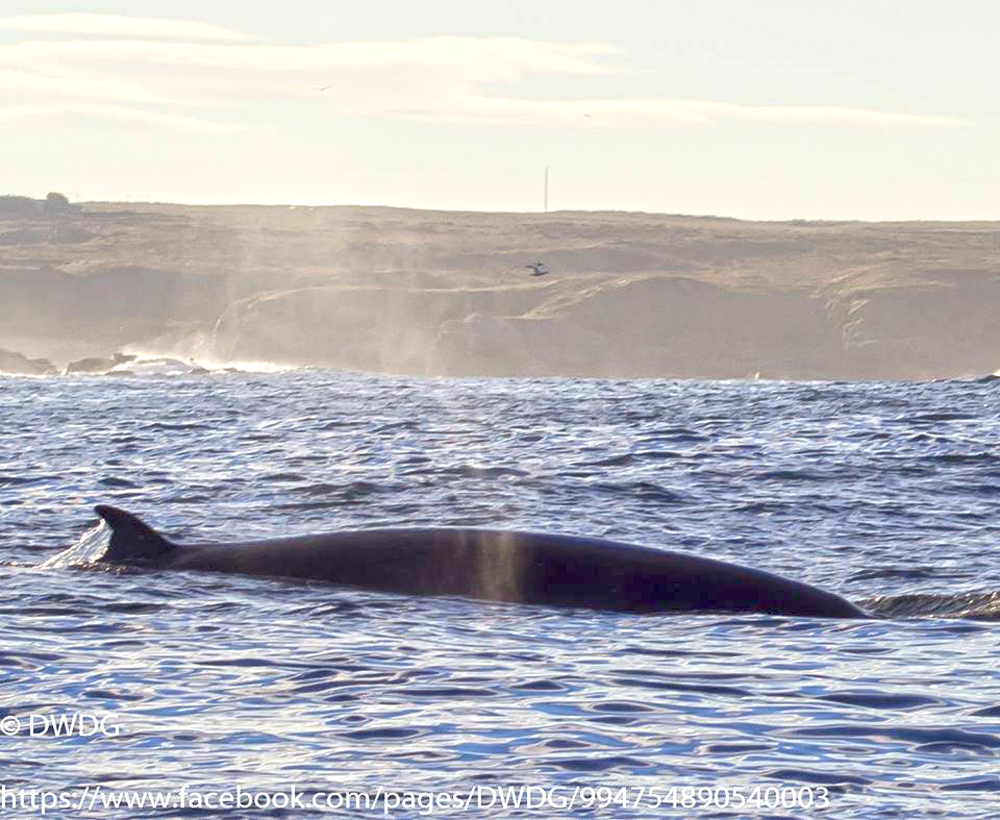
Approaching within 30 feet of a minky whale out on the Atlantic takes courage – but such is his concern for the welfare of local marine life that’s exactly what Gareth Doherty did recently.

With the sighting of so many such baleen whales off the northwest Donegal coast over the last few weeks, Doherty, a skilled seaman (he manages Selkie Sailing in Gaoth Dobhair) and knowledgeable environmentalist, realized it would be a prime opportunity to try to identify them and monitor their movements and thus understand better the thriving whale population off Irish coastal waters.

whales 1

“It is only by recording the twenty-four cetacean species recorded thus far in Irish waters that we can protect them,” he said. “The fact that so many are now visiting us is wonderful news.”

whales 6

Doherty also believes that greater numbers of such healthy marine animals locally means greater opportunities to both educate people about this vital segment of sea-life and strengthen environmental tourism efforts throughout Donegal.

Here is yet another local cultural tourism-cum-educational project worthy of financial support. Udaras na Gaeltachta, the state-sponsored economic support group in the area, has refused to pay for much-needed equipment for Selkie Sailing.

Readers of this blog and of a series of articles I penned for the Donegal News will remember Gareth for the sterling work he and others did to bring important publicity about the plight of a pod of stranded whales at Ballyness beach in Falcarragh earlier this year.

whales 2

Not only did Gareth and colleagues highlight the stark inadequacies, both in equipment and training, of the National Parks and Wildlife Service to deal with such incidents (it has since become known that Donegal wildlife officials didn’t even take sample tissue from any of the dead whales to ascertain what may have stranded them and led to their slow suffocation) but they also banded together to organize marine lifesaving training programs for people that continue even now.

Visiting my Bun na Leaca home recently, Gareth said his intention was also to launch a series of educational visits to local schools to make presentations about the importance of marine life around our shores. It is an excellent idea and there seems no more qualified and enthusiastic a person to host such a program than Gareth.

whales 3

Minke whales grow to about nine meters in length, weigh around 10 tons and can live about 50 years. Their bodies are dark grey to black on the back and lightening to white on the belly and undersides of the flippers. There are often areas of light grey on the flanks, one just above and behind the flippers and the other behind the head. Those in the northern hemisphere usually have a diagonal white band on the upper surface of each flipper. Smallest of the seven great whales, minkes often enter estuaries, bays and inlets and feed around headlands and small islands.

Updates can be checked on Selkie Sailing.

The Irish Whale and Dolphin Group assisted with local training programs.

Celtic or Hibernian: which is rightful heir to the Irish tradition in Scotland?

As a Donegal blow-in, I’ve just completed what some here in Ireland’s ‘Forgotten County’ call a key ‘rite de passage.’

photo copy 5

‘Wee Jimmy’ – a winger with panache and a Celtic footballing hero.

On the invitation of Celtic Football Club management, I made my first-ever visit recently not only to the historic city of Glasgow – where half the people in Donegal seem to have originated, and vice-versa  – but also to the venerable stadium known as Parkhead, home of the Hoops, an illustrious team that has become nothing less than a cultural icon for many generations.

So, on a crisp, dry Saturday afternoon, two hours before kick-off against third-placed Inverness Caley Thistle, I found myself walking along a long inner corridor on the upper tier of the stadium lined with the framed autographed shirts of former players including Ireland’s captain, Robbie Keane, Honduran Emilio Izaguirre, Swede Henrik Larsson, Charlie Mulgrew and Kris Commons.

photo copy 4

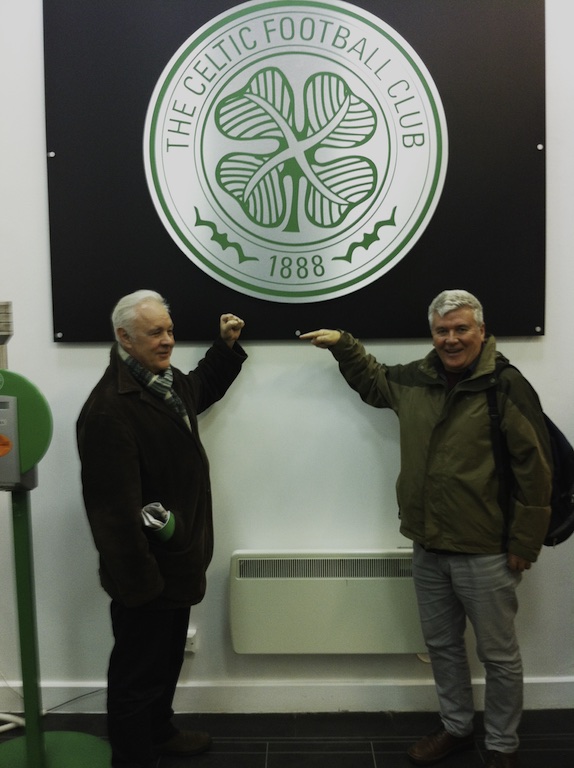
Two gray-haired Celts – Professor Pia (l), footballing expert – ahead of game time.

Within minutes, I was seated in the warm comfort of Café 1888 (the year the club was formed) enjoying a tasty lunch rapidly replenished with alcoholic beverage learning about the trials and tribulations not only of Celtic but of Scottish football in general.

And according to the man sitting opposite me – and no better person to grant illuminating insights than someone who has penned not one but three excellent books on Scottish football (‘The Quiet Man’, ‘Scotland’s For Me’ and ‘Sunshine on Leith’) – footie across the water is not in a healthy state.

Not withstanding that my companion, Simon Pia, long-time journalist and now professor at leading universities in both Edinburgh and Glasgow, has been a ‘Hibbies’ (those persons, who for reasons most bemusing to many Celtic supporters, support Hibernian FC) and that his team now lingers in the shadows of the second division, his insights into the sport in his native land were thoughtful and well considered.

photo copy 7

With Scotland battling Ireland this Friday in the Euro Championships, captain Robbie could be a deciding factor.

With money in short supply – at least compared to the massive amounts enjoyed by teams in the English league – Simon’s view is that Scottish football will remain mediocre and largely uncompetitive for the foreseeable future. And with Celtic’s arch Glaswegian rival, Rangers, declaring bankruptcy and being dumped unceremoniously into the second division more than a year ago, even that spark of zesty competition has been extinguished (though the two teams will face off in the League Cup semi-final soon – the first time they’ve met each other for two years).

Setting patriotism aside, or indeed lauding it, Pia – a product of Italian sperm that migrated to Edinburgh many years ago and who was my close pal at London journalism college a world ago – believes top teams such as Celtic would do better playing in the premier league down south.

photo

Hibbies gracefully acknowledging illustrious history of the Hoops.

“Facing the likes of Manchester United, Chelsea and Arsenal would certainly draw in the big crowds again and probably help other Scottish teams do better in domestic competitions and thus compete on the European stage more often, which would help improve the quality of the game here,” he said.

As for the match itself that day, real excitement was in short supply. The Hoops, under manager Ronnie Deila, struggled to break down a resilient Inverness defense. In the end, a single second-half goal by star forward John Guidetti allowed them to leap over their opposition and into third place, though two late goalmouth scrambles almost sent the visitors home to the banks of Loch Ness in triumph.

Whether good or bad for Scottish football, there are few saying Celtic, the richest team in the league, will not end up winning the premiership for the fourth successive year – especially after leaping to the top with a last-minute winner against Aberdeen on Sunday.

However, after talking to Simon, learning his team was founded by Irish immigrants (thus the nickname ‘Cabbage and Ribs’ and the harp symbol on the shirt) and listening to one of its wonderful musical anthems ‘Sunshine on Leith’ by The Proclaimers, I’m more interested in seeing the Greens promoted than what’s happening in the top division.

But please don’t tell anyone from west Donegal. I’m due to get my residency permit any day.

QUIZ

photo copy 3

Crowds start to gather before kick-off at Parkhead.

Checking your knowledge of Celtic, here are three questions from that day’s match program:

  1. Which two former Celtic captains are this season managing teams in the Championship in England?
  2. Which four clubs did Charlie Mulgrew play for between his two spells at Celtic?
  3. Which two current Celts have in their careers also played in Spanish football?

If you cannot answer these questions, you probably should watch this video Sunshine On leith CIS Final – BBC and listen to the song. I’ll see you at Easter Road.

photo-4 copy

Hoopy the Huddle Hound, Celtic’s lovable mascot (in foreground), supervises the team line-ups.

Halloween surprises and other encounters in the company of Dracula

Meeting someone who travels the world investigating fairytales and a Gothic expert who specialises in all things spooky and supernatural as well as seeing a vampire killing kit – these were among highlights of my pre-Halloween sojourn this past week in Dublin.

Asked to give a lecture separating historical fact from literary fiction associated with Irish author, Bram Stoker, his arch character, Dracula, and medieval warlord, Vlad the Impaler, I was delighted to stand Saturday afternoon before a capacity audience in the Mansion House, the Lord Mayor’s official residence, relating my adventures researching ‘Digging for Dracula.’

photo 1

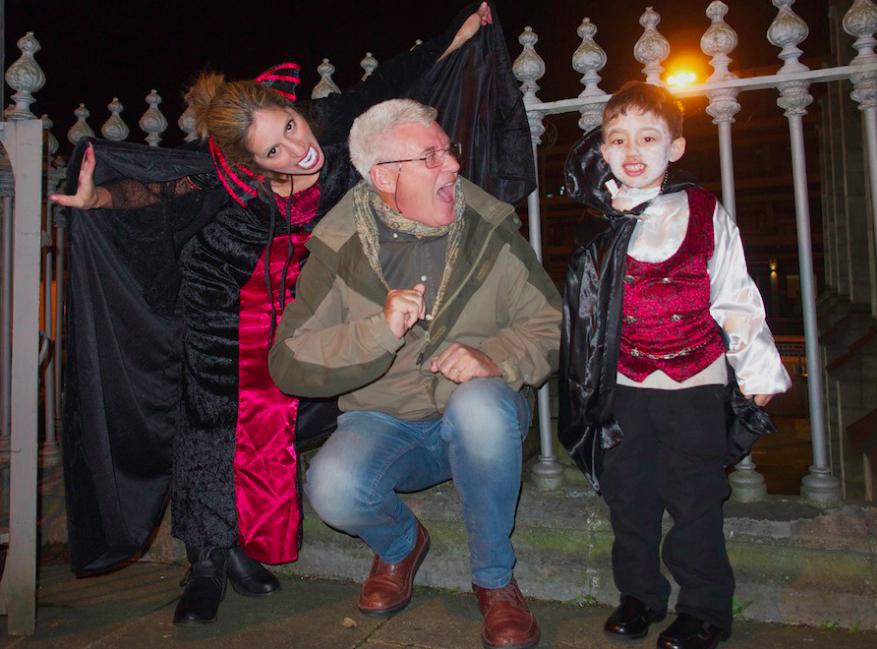
Imagine my surprise when confronted by Dracula Junior and his mother in the ghostly grounds of Dublin Castle last Friday night.

Now an annual event, the Bram Stoker Festival took place at various suitably atmospheric venues including the eerie, shadowy Chapel Royale inside the grounds of Dublin Castle and the Samuel Beckett Theatre deep within the cobbled-confines of Trinity College, where Ireland’s 19th century best-selling novelist was once a humble student.

photo 2

(l to r) Enjoying the company of Vanessa Fox O’Loughlin founder of the Inkwell Group and organiser of the festival’s literary programme; Professor Bill Hughes, Bath Spa University; and Angela Dinu, an authentic Transylvanian from Brasov.

Such is the fascination with Stoker’s immortal long-toothed Transylvanian Count, the festival events earlier this week attracted hundreds of people, both speakers and participants. Before and after my talk I was approached by people from places as diverse as Rome, Warsaw and Las Vegas, all keen to discuss ‘beyond-the-grave’ mysteries.

Christa Thompson, from Florida, travels throughout the world investigating and writing about folk stories, while Ed Mooney, from Kildare, combines his passion for photography with his deep interest in history, ancient sites, folklore and mythology. Much of Edwards’ free time is now spent traveling around the Irish countryside in search of his next adventure, which he fondly refers to as ‘ruin-hunting.

photo 3

(l to r) In the delightful company of Intrepid folklore investigators from Ireland and the US.

Lara Musto, a highly-qualified librarian and researcher, originally from Rome was among the participants. She said she had been fascinated by Bram Stoker’s work ever since she was a child, “Believe it or not, my father used to read me vampire stories at bed-time, and they helped me sleep. So you can imagine, I’ve really enjoyed the talks I’ve attended here in Dublin during the festival.”

Asked the inevitably question whether I believed in the infamous nocturnal blood-sucking creatures (known as ‘strigoi’ in Romanian folklore), I answered, both evasively and diplomatically, I must admit: “Just because something is written about doesn’t mean it’s true. But then again, just because we don’t see something doesn’t mean it’s not.” What else could I say? Not having seen either Donegal fairies or Transylvanian vampires, I remain doubtful but very much open-minded.

Credit must go to the Bram Stoker Festival organisers who provided a plethora of delightful activities for everyone. These ranged from walks with experienced guide, Pat Liddy who brought to life spine-chilling tales such as Stoker’s ‘Dracula;’ Irish Gothic writer Sheridan Le Faanu’s ‘Carmilla’ and Oscar Wilde’s ‘The Picture of Dorian Gray;’ book readings and a cosy Q&A with authors Lynne Truss  and Joanna Briscoe who penned ghostly tales for Hammer Classics, an imprint of Random House; and lively music every night. Light-hearted humor was the hallmark of a funky ‘Literary Death March’ at Smock Alley Theatre, where writers such as Lynn Shepherd read their work and competed with others before a panel of judges, with audience participation in a rousing literary quiz finale.

photo 4

Flying witches, goblins and vampires – all part of the Bram Stoker Festival in the Oak Room of the Mansion House in Dublin.

The festival – sponsored by Failte Ireland and Dublin City Council – also featured a tantalising discussion entitled ‘Madness and Sexuality’ at which Paul Murray, a former cultural attaché at the Irish Embassy in London and a Stoker biographer, and two doctors, one a psychiatrist, discussed Stoker’s state of sanity when he penned his macabre bestseller.

Much to my surprise, the ‘vampire killing kit’ was among strange artefacts at a special exhibit entitled ‘BLOOD’ at the Science Gallery beside Trinity College, hosted to coincide with the Stoker festival. The ‘kit’ was neatly arranged inside a glass case and included a gun with silver bullets and a hammer and wooden stake (best, I suppose, to be prepared for all eventualities).

photo 5

Gun with silver bullets, a crucifix and a hammer with wooden stakes of various sizes – all elements in a vampire killing kit.

Vampire season approacheth

A strange invitation popped into my mailbox this week – and it being October, with Halloween approaching fast – perhaps I shouldn’t have been too surprised whom it came from: that most infamous of blood-thirsty vampires, Dracula.

Or at least from some people close to him, those at Fáilte Ireland and on Dublin City Council who together next week are organizing a special international Bram Stoker Festival in honor of the Long-Toothed Count and his maker, Dublin author Bram Stoker.

Quite right too: after all, ‘Dracula’ is believed to be the most printed book after the Bible, making Bram Ireland’s all-time, best-selling author.

Ever since I penned a tongue-in-cheek (note I didn’t say teeth-in-neck) travel book entitled “Digging for Dracula” almost 20 years ago while a foreign correspondent in eastern Europe, I’ve receive periodic invitations to speak at events focusing on Man’s fascination with blood-sucking immortals (‘strigoi’ as they’re known in the deepest, darkest Carpathians).

OLYMPUS DIGITAL CAMERA

But the invitation that popped into my mailbox this time was stranger than most – to speak next Saturday at no less prestigious a residence than the Mansion House, official home of the Lord Mayor of Dublin.

Why there – no idea? Your guess is as good as mine. But it’s certainly a sign from on high that we’ve long passed the era when a classic novel such as this was not even acknowledged as part of our literary heritage nor studied in school, for fear it might make us feel a little  too erotic, Catholic and all, as we are.

who is dracula

But go I will and enjoy a nostalgic journey back in time – to Bram Stoker at the turn of the 19th century, a time when a general obsession about a shadowy, little-known region of eastern Europe called Transylvania and gory, bloody deaths (Jack the Ripper was alive and well and doing his stuff in Whitechapel) combined to focus peoples’ minds on all things dark and macabre.

Thus, Bram, then manager of prominent actor Henry Irving’s London theater, the Lyceum (having earlier eloped with Oscar Wilde’s former girlfriend – yes, Oscar was bisexual once), dusted up his research at the British Library (Bram never actually went to Transylvania) and penned his blood-riddled masterpiece. While his tale has been made into a zillion movies (the first being the German-made ‘Nosferatu’) and lots of TV series, poor old Bram barely made a penny from his work. When he died, his obituaries barely mentioned he was even a novelist.

After his death, the German company tried to avoid paying copyright by changing Dracula’s name to Count Orlok. Bram’s widow, Florence, sued, the court ordered all copies of the movie burned but one copy had already been distributed around the world and this was duplicated, making it an example of an early cult film.

big screen

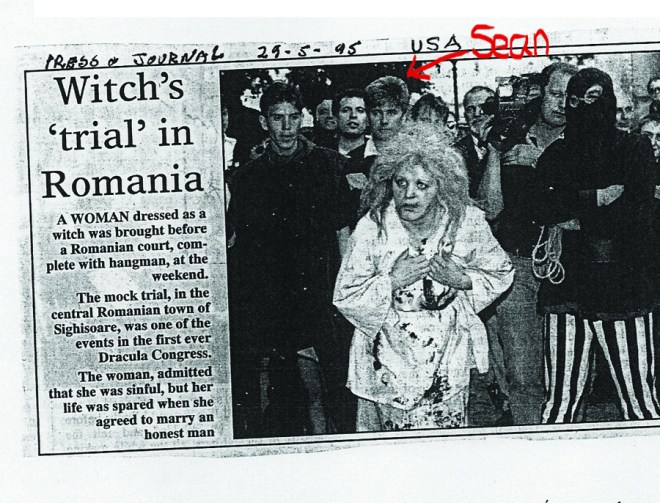
For me, writing ‘Digging for Dracula’ was a quirky idea that emerged from an even quirkier fax received one morning at my Bucharest apartment from The Times foreign news desk in London asking me to cover a rather bizarre event – the ‘First-Ever World Congress of Dracula’ in Romania. Initially I thought it a joke (foreign newsroom editors have a black sense of humor akin to those in hospital emergency rooms, it helps in dealing with everyday catastrophes).

whitch trial

A much younger version of yours-truly stepped forward chivalrously (or, more likely, was pushed from behind) and ever since has been bound in wedlock to a woman from Transylvania for all eternity.

With hundreds of participants attending from many different countries including Japan, the US, England, France and Germany (strangely, aside from myself, none from Ireland, home of the author) and many different professions – doctors, nurses, academics, writers, psychologists, teachers – the week-long affair proved to be quite an eye-opener. Some people admitted to having coffins in their living rooms and slept soundly there when the notion took them; others had paid a hefty sum to their dentists to have their teeth sharpened.

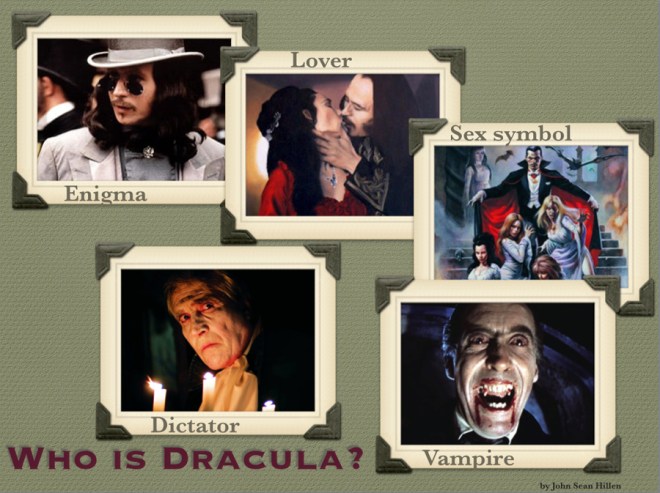
Many of the speakers at the conference proved interesting, ranging from a psychologist’s view on what he termed ‘energy vampires, ’ those people whose company we sometimes share who leave us drained of energy; to a colorful history of the medieval warlord (‘voivod’ in Romanian), Vlad the Impaler, who some say was the model for Bram’s lead character.

vlad

While mysterious places in Romania such as Snagov Island and the Transylvanian village of Arefu, the ancient site of Vlad’s castle, proved intriguing for me to visit on my travels for the book, so did the mummies of Saint Michan’s in Dublin and Whitby (where Dracula’s ship arrives in a storm) – all major influences on Bram, the dramatic storyteller.

But seeing crooner Bing Crosby of ‘White Christmas’ fame laid out alongside the world’s most famous vampire in a Los Angeles graveyard proved more than anything that fact can indeed be stranger than fiction.

Fangs for stopping by and, in the words of the Count, “Come freely, go safely and leave some of the happiness you bring.”

Brewing up a storm

A wheelbarrow and a pair of boots painted proudly in Donegal GAA colors perched atop a house roof in Falcarragh.

IMG_2148

A sexy, full-size female mannequin dressed in nifty sporting gear posing roadside in Glassagh, Gaoth Dobhair.

IMG_2181

And goodness knows how many rusted carcasses of cars suddenly transformed into brightly-colored, eye-catching street decorations.

photo

Sporting success has brought out the best in Donegal creativity – both on and off the field.

With less than seven days to go before ‘the Grande Finale’ at Croke Park, the county is awash with an artistic spirit that Jimmy, Declan and their respective teams have inspired.

Wouldn’t it be wonderful if such genuine outpouring of community solidarity could be harnessed into sustained cultural tourism projects that would provide much needed long-term employment and economic benefits?

If some of the recently erected ‘altars’ to the success of Donegal GAA are anything to go by, there is no shortage of ideas, but funding is sadly missing. Not because the money isn’t there, it is. But because those holding the purse strings don’t have the confidence that proposed projects are anything more than short-term hobbies. Consequently, those with excellent cultural tourism ideas continue to live a hand-to-mouth existence, spending much of their brilliant creativity, not on artistic endeavor, but on scrounging for pennies, with long-term sustainability a mere pipe-dream.

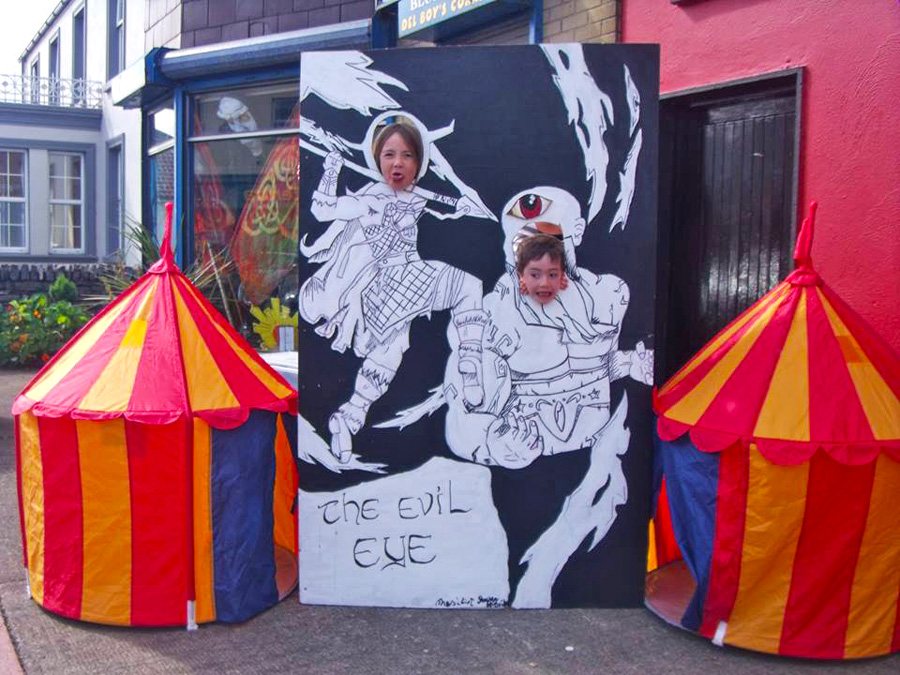
An earlier post cited Udaras’ rejection of funding this year for the excellent ‘Evil Eye’ festival in Falcarragh. Now, a recent report shows a paltry 48,250 euro has been shoe-horned for 17 festivals throughout the county by Failte Ireland. Work out the math. It doesn’t amount to a hill of beans.

Meanwhile, there is a peculiar notion out there that beer will be consumed in considerable quantities in the county if Donegal ride victorious over the Holy Ground this weekend.

The bad news is that beverage choice for such a celebration in the county is among the most limited in the nation. Seemingly, more publicans in Donegal have kowtowed to multinationals such as the British-owned company, Guinness, and Heineken because they offer their products wholesale for as little as 50 cents a pint rather than offer their customers a wider choice of beers and ales to imbibe as is happening in other parts of Ireland.

Attending the Irish Craft Beer and Cider Festival a week ago at the RDS in Dublin, I was delighted to see how many micro-breweries had been launched nationwide – Galway Bay Brewery, The White Hag in Sligo and 9 White Deer in Cork to name but a few. While Ireland is still well behind England and the US in terms of micro-beer choice, mainly due to consumer acquiescence, Donegal is well behind other counties.

OLYMPUS DIGITAL CAMERA

Only Kinnegar Brewing and Muckish Mountain Brewery keep Donegal from being bottom of the national micro-brewery league table. The latter is named after nearby Kinnegar Beach 
just north of Rathmullan and produces around 4,000 liters per week with funky brands such as Limeburner, Scraggy Bay, Rustbucket, Devil’s Backbone and Yannaroddy. The latter, based in Creeslough, produces Miner’s Red Ale made with dark crystal malt.

OLYMPUS DIGITAL CAMERA

It is the same narrative when it comes to cider. Check any pub in Donegal and the likelihood is the label says ‘Bulmers.’ For the record, most of what goes into this particular drink is concentrate, usually brought in from Poland by the truckload. Every day they’re lined up at the plant waiting to unload. ‘Tree slurry,’ as as one cider aficionado quipped less than affectionately. In contrast, Irish apples represent a tiny percentage, less than five percent of content, insiders say. That’s why information on bottles and cans is so vague and limited. Yet, there’s choice aplenty – if we push publicans to provide it – with scores of other Irish cider producers that use freshly-squeezed apples, such as ‘Tempted? outside Lisburn, the ‘Armagh Cider Company’ and ‘Craigies Irish Cider’ in Wicklow. But most Donegal pubs ignore them – for the sake of greater profit.

Good news is that a crop with a long tradition in Donegal but one long forgotten is again being planted – something that gives a faint glimmer of hope to real beer drinkers. Hops are now growing in Conwal outside Letterkenny near the site of an old monastic settlement, whose caped inhabitants once prided themselves on their beer-making skills (those monks had their priorities right).

So when you rush to the bar this Sunday evening celebrating the latest Ryan McHugh goal, forgo the usual sulphite-laden, chemical-ridden liquids and ask for a local brew. Then watch closely the bemused expression on the barman’s face (as per below).

OLYMPUS DIGITAL CAMERA

Donegal Creameries and Kerry Group to lock horns at Croke Park

I bought a lottery ticket a few weeks ago at a community festival in the tiny village of Limenaria on the Greek island of Thassos.

And promptly won.

A goat.

Clover – a fond hello, a fond farewell

Friendly, a bit shy, Clover – as I chose to call her – gazed up at me out of big gentle eyes filled with an innocent curiosity about the world around her.

Unfortunately, as in the classic tales of summer romances, our time together was short-lived. Due to the labyrinth of EU regulations about the movement of animals across borders, I had to bid Clover a sad farewell and we parted company with a promise to see each other next year.

I was reminded of her while wandering leisurely along the dusty streets of Doi Mai, a rustic Romanian Black Sea coastal village Sunday evening while basking in the memory of Donegal’s glorious win over Dublin just an hour before.

That’s when I felt a soft nudge at my back.

OLYMPUS DIGITAL CAMERA

What’s happenin’ bro?

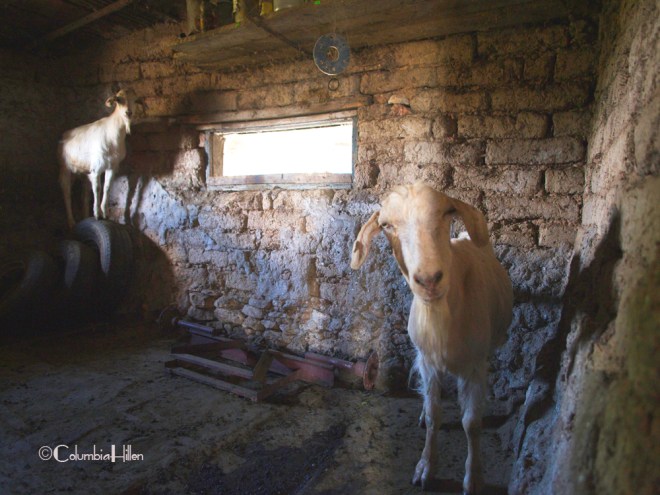
Turning, I looked down to see a pair of familiar eyes fixed upon me. At first, I thought, through sheer primordial instinct, Clover had managed to evade armed Greek, Bulgarian and Romanian border guards and leaped to freedom. Unfortunately, it was not so, but the eyes were just as inquisitive nonetheless. And behind the fellow before me were many more of his four-legged compatriots, all out for a leisurely afternoon stroll just like me. They seemed so content, easy-going and full of spirit I felt like exhorting them into a ‘Goats Don’t Shave’ rendition of ‘Jimmy’s Winning Matches’ in honour of the day’s stunning victory.

Then it dawned on me. Where are all the goats that used to roam the length and breadth of Donegal? There’s hardly any to be seen now even though historical records indicate there used to be literally thousands of them. Aside from singer Pat Gallagher and his wonderful group, we don’t seem to celebrate the many wonderful facets of this delightful creature anymore. Indeed, we seem to be downright biased against them – with no particular reason for being so.

OLYMPUS DIGITAL CAMERA

Shy but curious.

Even though grass is greener in Donegal than Romania’s or Greece’s scorched summer earth; even though rain is much more plentiful; even though, with the same amount of food, a goat gives around four litres of milk, four times more than a sheep; and even though ample medical evidence shows its milk and meat to be healthier in so many ways than that of both cow or sheep, we seem to be definitively an ‘anti-goat’ species. It’s tantamount to animal racism.

What can these innocent creatures possibly have done to us to merit such stark hostility? Is it linked to some warped religious notion about Satan and his horns? About Baphomet, the enigmatic, goat-headed figure linked to occultism and witchcraft? Looking down the sunlit street into the gentle, innocent eyes of those around me, so filled with undisguised curiosity, it was hard to imagine anything devilish about them at all.

In fact, rather than posing a threat to our moral or physical well-being, goats are our greatest asset, the list of their attributes being impressively substantial. For example, goat’s milk boasts a variety of health benefits, ranging from blood vessel support to cancer prevention. It eases the pain of migraines and premenstrual syndrome and reduces the chances of breast cancer.

OLYMPUS DIGITAL CAMERA

Hello, may we help you?

The ‘World’s Healthiest Foods’ website suggests people with lactose intolerance may have less trouble drinking goat’s milk, partly because it boosts copper and iron metabolism. This quality may also make goat’s milk useful against mineral absorption problems. ‘The Journal of Nutrition’ says goat’s milk can ease conditions such as bowel inflammation and arthritis and that the high level of potassium may also reduce the risk of high blood pressure and atherosclerosis.

Now, as goat’s milk has a higher concentration of calcium than cow’s milk which helps prevent bone loss and that there will be no shortage of bone-crunching tackles in three weeks time at the Croke Park finale, would it not be a good idea for someone with initiative to collect a few dozen litres of this fine liquid and start delivering them forthwith to the training camp of McGuinness, Murphy & Co? Also, it must be added, the he-goat is the epitome of masculine virility and creative energy,

With the Sam at stake and a confident Kerry as the opposition, every little helps. Donegal Creameries, are you listening? Get in there before the Kerry Group does.

OLYMPUS DIGITAL CAMERA

Waiting for a high ball

Donegal Gaeltacht community spirit rises: but where’s the money?

Some years ago, displaying immense creativity and skill, a local team of hard-working people in Galway created ‘Macnas,’ an organisation that produces a series of exciting, colourful outdoor parades and indoor shows filled with magnificent costumes and performers.
With generous funding from the Arts Council, Údarás na Gaeltachta, Culture Ireland and Galway Council, the company expanded rapidly; exciting and inspiring audiences worldwide with performances as diverse as U2’s Zooropa Tour; the Millennium parade in New York City; WOMADelaide, South Australia; Chaoyang Spring Carnival, Beijing; the President’s Garden Party, Áras an Uachtaráin; and in a host of festivals, towns and cities throughout Ireland and across Europe.

macnas 1

Macnas, Galway – an estimated 40,000 euro cost per festival show. (photo courtesy Macnas)

This weekend in the west Donegal town of Falcarragh, a similar group of local hard-working people, under the leadership of festival director, Kathleen Gallagher, and Sean Fitzgerald, will recreate a similar dazzlingly entertaining costume and culture filled show entitled ‘Evil Eye’ (Féile na Súile Nimhe). Featuring large-scale puppet characters, a samba band with Formorian soldiers (ancient sea-farers) and stilt walkers, it will highlight unforgettable Celtic legendary characters such as Balor of the Evil Eye and Lugh, the Sun God (thus ‘Lugh’s Mountain’ now known as Errigal) and the history of the Cloch Cheann Fhaola area.

balor 3 good

‘Evil Eye’ Festival Falcarragh, Donegal – organised on a budget of around 4,000 euro. A whopping ten times less than Galway’s Macnas (photo courtesy Eddie McFadden).

But there’s one major difference between the two festivals: while the Galway team hosts its show with pockets bulging with euro (an estimated 40,000 euro per festival, according to national news reports) – the Falcarragh one has a few pennies. And most of that was raised through its own activities, including determined people who tackled their first adventure race – the 23-kilometer combined run, kayak and cycling Mulroy Bay competition– and, later, the even more challenging 44-kilometer ‘Gael Force’ race.
So how does Údarás na Gaeltachta, the Arts Council and Donegal County Council view this admirable cultural tourism project?
Representatives of the above organisations came to enjoy the Falcarragh festival last year, full of praise for the creators of the extravaganza, a highlight in the west Donegal social calendar. But when asked for money, they all suddenly shied away. While more than 500,000 euro has been given to Macnas in Galway, the Arts Council finally granted a paltry 600 euro for ‘Evil Eye’ and around 1,250 euro is supposed to be donated from the council’s ‘The Gathering’ fund (money not received as of blog posting – two day before event begins).
In its turn, Údarás Donegal contacted the organisers earlier this year, but not to offer financial support. Instead, it called only to inform the team that the application deadline had passed (would it not have been more constructive to have contacted them before, not after, the deadline, especially has it had moved the date forward?).
Later, when approached for some space in one of its industrial estates in which to construct the festival’s giant puppets and store equipment and costumes, Udaras demanded 50 per cent of the commercial rate, which obviously – on such a tiny budget – the community group could not afford. Ironically, Údarás has thousands of square meters of space lying empty and unused in its industrial estates throughout the Gaeltacht for which it is already paying utilities, spaces that are supposed to be used for ‘community development.’ In the end, it was the generosity of local Falcarragh man, John ‘the Rake’ McFadden, that helped save the annual ‘Evil Eye’ festival. He donated his large agricultural shed to organisers.

balor 1

‘Evil Eye’ festival combines entertainment with education on Celtic history for both adults and children.

Faced with a severe lack of funding assistance, the hardworking festival team were forced to borrow and beg – costumes from the Northwest Carnival Initiative in Derry for 30 members of the Cloughaneely Marching Band who will act as seahorses in the historical re-enactment and other costumes from the Inishowen Carnival Group for 12 volunteer samba dancers. They also had to rely on the efforts of organisers of a childrens’ summer camp in Ballina Resource Centre at which local kids made shields and swords, 10 of whom will march in the festival. Nine members of the Curragh Club of Magheraroarty, as well as local plasterers, who will walk on stilts, are also helping out.
If this kind of creativity and community spirit had been displayed in other countries such as the US or Australia, it would probably be recognized immediately as such and funding made readily available (as indeed it is in other Irish counties such as Galway).
Yet Údarás in Donegal, with Fine Gael national board member, John Curran, living nearby, continue to ignore such culture tourism projects, projects with the potential for economic development through tourism, while at the same time wasting public money on generous expenses and junkets for its staff members (including a large delegation who traveled, with their spouses, on an all-expenses paid trip to Las Vegas – to meet officials of Dublin-based Enterprise Ireland).

balor 2

Údarás Donegal refused to give ‘Evil Eye’ organisers free space in its empty industrial estates for the construction and storage of giant puppets.

In a telephone interview yesterday, Gallagher voiced her frustration: “It seems to me that Údarás either has no interest whatsoever in tourism development or simply doesn’t understand its potential,” she said. “The tourism officer for Údarás, Gearoid O’Smaolain who lives in Falcarragh, has never even approached us to see if we needed help of any kind. He doesn’t belong on any of the local community committees or attend meetings to find out what is happening on the ground.”
She added, “I carried out comprehensive research into possible funding from Údarás and on which individual staff members I should approach, something that is not very clear from its materials. Many of their job descriptions certainly include the word ‘community,’ such as ‘community enterprise’ and ‘community development and marketing’ yet strangely, there doesn’t seem to be much community development going on at all.”
As multi award-winning actor Diarmuid de Faoite said of the festival: “The ‘Evil Eye’ is our ancient past and living present in all its wild beauty.”
It’s a shame the Arts Council, Donegal County Council and Údarás na Gaeltachta don’t seem to agree.

While misguided policies, cronyism and wastage of public money has been an unfortunate hallmark of Údarás almost since its inception, the good news in this instance is that due to the sterling efforts of Falcarragh volunteers, the ‘Evil Eye’ festival is going ahead.
So why not treat yourself, family and friends to a wonderful spectacle of colour, culture and heritage and pop along to Falcarragh between August 22nd and 24th.
A festival highlight will be a medieval banquet in St Ann’s Church Killult, the 1900’s structure providing an excellent setting for a magical evening of song, dance and drama. The festival will also pay tribute to the history of Muckish Mountain’s mining legacy with guided walks on the old Miners Path and disused railway tracks. It will also feature birds of prey and weaponry displays, complete with a pig on a spit in a ‘medieval field’ while skills of strength and agility will be tested in a range of quest games to find one of the story’s main characters, Lugh Lámhfhada.
For further information, see Evil Eye Festival site.

Shipwrecks, puppets and mechanical creatures – opportunities for cultural tourism

An earlier post – Cultural tourism: its time is nigh – highlighted the immense potential for cultural tourism in the Donegal Gaeltacht to help fill the vacuum left by failed government policies, mainly by Údarás na Gaeltachta, to provide jobs and prevent the departure of our dynamic young to foreign shores.

With the pursuit of major manufacturing companies a lost cause mainly due to difficult and expensive transport logistics and call centres being a short-term band-aid, cultural tourism has been an underused weapon in the battle against rising unemployment and severe economic decline in the Gaeltacht.

While some say a minority of people such as language-based entrepreneur Liam Cunningham in Glencolmcille have become tourism millionaires, mainly based on national and international grants with Cunningham perhaps reaping the benefits of his chairmanship of Údarás for over a decade (whether questionable or not, meaning within ethical parameters, is a topic for future discussion), the depth of funding to other local cultural tourism entrepreneurs has been sparse.

The reason, according to Udaras officials, is that cultural tourism doesn’t create long-term jobs. Asked why, officials are at a loss to explain, so what this long-held and somewhat irrational attitude is based on is a matter of pure conjecture, with some critics saying the real reason is unrelated to accepted principles of economic development but rather linked to cronyism, influence peddling and continued support, financial and otherwise, to Fianna Fail, a party that ruled the roost for so long and put certain people in key executive positions.

While the accuracy of this allegation requires further investigation, what is important to note is what other parts of Ireland and beyond have done – and are doing – to reap healthy benefits from committed policies to cultural tourism development and analyze whether the Donegal Gaeltacht has – to put it succinctly – ‘got what it takes.’

At a largely EU-funded conference earlier this year under the auspices of CeangalG and with the catchphrase ‘Selling Our Story,’ speaker after speaker talked about interesting cultural tourism ideas that have produced positive measurable results, including increased job creation. Many of the speakers agreed that key components for such success include ‘identity,’ ‘authenticity’ and ‘memorability.’

In my opinion, the Latin term ‘genius loci’ (spirit of place) best describes what the central element is – the specific nuances of any given place that separate it from the rest of the world.

So, does the Donegal Gaeltacht have what it takes?

In a word, yes!

Cherishing an ancient language that proudly holds its place among the oldest in the known world; with the singing tradition of sean-nós, whose ornamented, rhythmic intimations are an inspirational reminder of the primordial beginnings of Man; and with the area’s unique traditional dance and music, disparate elements of ‘genius loci’ are plentiful. Not to mention the intriguing Celtic legends such as those related to Balor and Lugh, thus the Mount of Lugh (now called Errigal) named after the ancient Sun God.

Having had the privilege over the last 30 years of travelling as a journalist on assignment to many parts of the world, I considered some of the places I’ve visited and successful cultural tourism projects there, projects that have not only strengthened the economic vitality of deprived areas but also uplifted the innate spirit and pride of the local population.

Here are a few, some which might just provide models of excellence for the Donegal Gaeltacht.

elephant

Creative engineering in Nantes, France, has led to economic revival based on cultural tourism.

Nantes, France – Earlier this year, I travelled to this western town in the Pays Loire region to see such a project. Faced with empty industrial estates, local officials had decided to invest in cultural tourism to create jobs using the existing space and infrastructure.

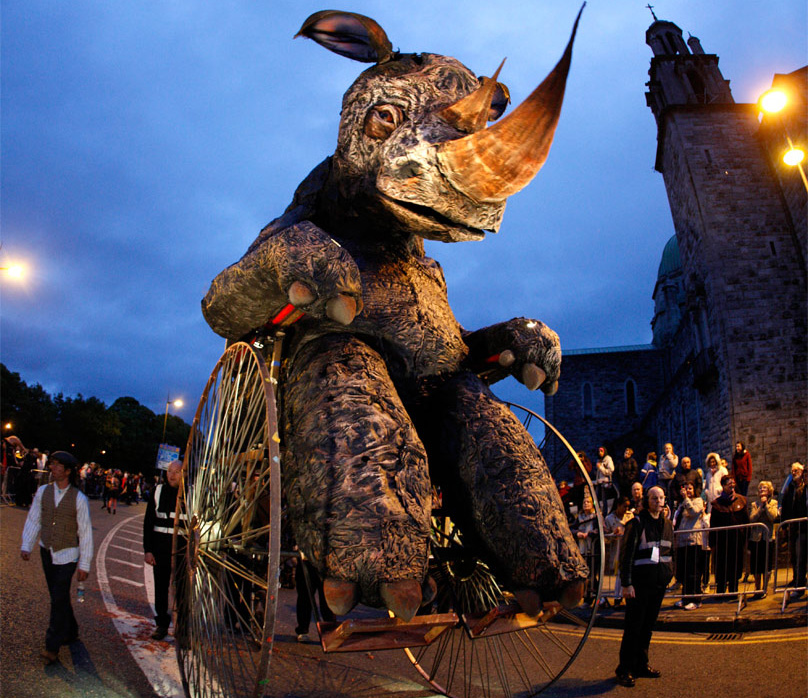
Realizing how watching ships return to this riverside port with exotic cargo from around the world inspired a young Jules Verne to later write science-fiction classics as ‘Twenty Thousand Leagues Under the Sea’ and ‘Journey to the Centre of the Earth,’ the officials embarked on a project that now attracts tens of thousands of visitors annually. Entitled Les Machines de L’Ileand opened in 2007, it is a 21st-century mechanical wonderland consisting of monumental structures including the, ‘Grand Elephant,’ ‘Mantra Ray,’ ‘Sea Snake,’ ‘Heron Tree,’ and ‘World Carousel’ in what is known as the ‘Gallery of Machines’ upon which visitors enjoy adventure rides and experiences. Last year alone, almost 100,000 people rode on the Grand Elephant; 190,000 people visited the gallery and 250,000 the ‘World Carousel.’ Total investment – in various stages – was 17.7 million euro, a sum that was recouped within a few years. In comparison, according to Údarás, Largo Foods received around seven million euro in funding and left the area earlier this year.

Not only did the project increase business revenues, it also created permanent, long-term new jobs in central workshops employing such tradespeople as plumbers, carpenters and engineers. Could a project like this – using local legendary Celtic figures as central subjects – not help deal with the empty industrial spaces throughout west Donegal, while attracting more tourists to the area?

OLYMPUS DIGITAL CAMERA

Puppetry, an age-old tradition in Sicily, attracts tourists and locals alike, providing both entertainment and cultural education.

Palermo, Sicily – Like west Donegal, this rocky island at the toe of Italy has generally been ignored by the central government in Rome. Faced with worsening employment, local officials took matters into their own hands. Seizing on a peculiar and unique vein of cultural heritage dating back hundreds of years to the time of Socrates – puppetry – they created a flourishing tourism attraction that has boosted business and employment.

Opera dei pui’ (puppet theater) has a long tradition in Sicily, reaching its peak around 100 years ago on the island. With support from the Association for Conservation of Popular Traditions, visitors to the downtown Palermo puppet museum can now see hundreds of beautifully designed puppets, their masters’ equipment (mestiere), as well as other memorabilia, and regularly-staged shows involving cultural characters and chivalrous heroes such as Orlando, Rinaldo and Gano di Maganza. So strong has been the resurgence of interest in this long-held tradition, puppet theatre performances – that also play an important educational role in highlighting the island’s history –take place in other parts of Sicily. Again, using local legendary figures and stories, can the Donegal Gaeltacht not avail of a similar cultural tourism initiative? A creative team under the guidance of Kathleen Gallagher has already shown the level of know-how required for such a project.

shipwreck

Donegal flag flies high over one of the area’s most well-known shipwrecks opposite Ostan Gaoth Dobhair. Many others lie offshore, spanning centuries of history.

Key West, Florida – before it became a hotspot for tourism, this area on the tip of the peninsula was a backward, forgotten place in the 1800s where local fishermen and their families led difficult hand-to-mouth existences. Only when the phrase ‘Wreck Ashore!’ rang out did hope for better things arise. ‘Unloading’ the many ships that ran into difficulty was a chore, but a most rewarding one.

Seizing upon this colourful aspect of the area’s history, local officials decided to create an attraction that would be both entertaining, as well as educational. Thus, the ‘Key West Shipwreck Museum,’ where visitors step back in time to discover Key West’s unique maritime heritage. The museum combines actors, video and actual artefacts from the rediscovery of wrecked vessels such as the Isaac Allerton, which sank in 1856 on the treacherous Florida Keys reef.

Narrator and master wrecker, Asa Tift, and his wrecking crew tell the story of how this unusual industry created livelihoods for the early pioneers of Key West. Visitors can even climb a 65-foot lookout tower in search of wrecks.

West Donegal, with its rich maritime heritage and its record of shipwrecks, including the sinking of Spanish Armada galleons off Tory and Gola Islands plus other vessels, both military from the two world wars and commercial, offers a similar historical backdrop to Key West. What’s to prevent officials funding such a project – except, of course, narrow-minded thinking and lack of specialised business acumen?

Columba: saint, soldier or New Age Pagan?

Columba, considered saintly by some, charismatic by others, was a bit of a ‘cute whore,’ a caustic and cantankerous character, a male chauvinist, thrifty to the point of miserliness and perhaps a non-entity who did diddly squat except be a pawn for powerful war lords vying over territory in early Ireland.

Such are the colorful views of some leading historians, archaeologists and writers gathered recently in what is considered the Celtic mystic’s ‘home place’ of west Donegal to deconstruct aspects of the legendary fellow’s life. The three-day conference at Loch Altan Hotel, Gortahork, was organized by The Islands Book Trust, led by John Randall, ably assisted by the ever-helpful Mairi NicChoinnich, in association with Colmcille Éirinn is Alba.

Photo by Alan Sproull

Rural west Donegal – the area is considered the ‘home place’ of the legendary Columba. Photo by Alan Sproull

So who then was responsible for some of the magnanimous stories about this larger-than-life character and his supposedly ‘unEarthly’ powers and their ultimate adoption as mainstream belief? A new, ambitious group hell-bent on making sure it rose to the top of the ‘Champions League of Religions’ table, that’s who. Not an easy task, mind you, for developing Christianity faced well-established teams of equally high calibre, many with loyal fan bases, catchy club anthems, ambient arenas and good-looking kits – all well-suited to the emotional needs and superstitions of Irish people around 2,000 years ago.

To compete with the Red Devils, Gunners, Barças, Reals, Inters and Juves of the religious world, Christianity had to go on the transfer market to strengthen its position. And it didn’t much waste time about doing so either, quickly transferring a bunch of Pagan symbols – wells, crosses, incense, wreaths, bells, chants, ceremonies – even wedding rings – under its spreading angelic wings.

But that wasn’t enough. With solid defensive work and fine attacking play, opposing teams held out well against them.

Then leaders of the new movement put their collective heads together and in an illuminated moment of intellectual brilliance (in lingo religiosa ‘the Holy Spirit came upon them’) realized the one vital ingredient missing from their strategy – the persuasive power of an ancient, as well as modern, condition known commonly as ‘celebratitis.’

picts

Using Pagan symbols such as the cross, Columba may have persuaded tribes-people to a different way of thinking.

So, as one does when one has rising aspirations of political greatness, they created a sub-committee. A subcommittee with the sole purpose of weaving together stories on selected individuals, stories so grandiose and wondrous they’d make celebrities out of any plain Peter, Paul and Mary, alive or dead. In fact, their preferred choice was the latter, for among all the beliefs abounding – then and now – there’s one you can be pretty damn sure of –- it’s difficult to argue with a corpse.

Thus was born the legend of Columba – about whom, conveniently for his ‘handlers,’ conjecture heavily outweighs fact.

Hell-bent on their mission, monks of the newly-fashioned Christian organization created a carefully-crafted chronology of the fellow’s life that they entitled ‘Chronicles of Iona’ but while others mention a library in Kilmacrennan where it might have been housed, no-one has found a single shred of evidence of it (or such evidence, for reasons of strategy, has been craftily shifted to location unknown). A censored part of it is in the ‘Annals of Ulster.’ In it is included details of what they purport to be miracles (seemingly the head gaffer put around a memo to his fellow brethren asking for submissions as they were a bit short on anecdotes) and other material supporting their cause, including their anti-woman crusade (all contributions welcome as to the origin of this particular stance). For example, Columba is supposed to have banished all women from Iona, warning others to be wary of them, not to give them too much power, or – interestingly – too much water, one conference speaker claimed.

As for his alleged saintliness, historians indicate Columba – like many other monks of the time – often believed the secular to be more sacred than the spiritual and were mere ciphers for rival, warring factions, at a time when churches were placed on territorial borders as symbolic deterrents or markers. It is believed Dai Riada, the king of the area associated with Columba, might have wanted to expand his holdings and used our fellow solely for that reason.

Fired up by his missionary zeal, Columba also supposedly skedaddled hither and thither all over Europe. But, just as in the case of saints’ relics, he’d have to have been cloned to be in all the places he is supposed to have been, doing the things he is supposed to have been doing. Some believers, for example, say he was not only involved in discovering the holy wells of Derry but was the actual founder of that particular northern Irish city. There’s little contemporary evidence of this. Due to the gap of years between his death (around 593) and the city’s founding, he’d have to have been a time-travelling vampire to have accomplished the task. Another monk, Augustine, is more central to Derry, having established a church there since the 600s AD. At best, Columba’s favorite Uncle Fiachra was Derry’s founder but again evidence even of this is severely lacking.

According to Christian slant, Columba is also thought to have brought back the so-called Gospel of Martin from Tours in France. Please don’t ask me to accept this on ‘blind faith.’ That’s like the blind leading the blind, and there’s no easier way to go astray than that. More likely, with spelling in those days being less than precise and Tory Island known in documents as Toraigh, Toirinis and Tourensis, it was a case of geographical misplacement (or story enhancement).

iona

Iona – a windswept Scottish island that reflects the heritage of the legendary Celtic mystic.

Even the much talked about Battle of Cúl Dreimne near Ben Bulben in Sligo – allegedly fought over Columba’s illegal copying of a book (‘to every cow its calf and to every book its copy’) and his banishment to Iona – this may simply have been the workings of an over-imaginative scribe in a cloistered scriptorium. Instead, the battle may have been over the killing of man, who was under Columba’s protection, by Diarmait mac Cerbaill, High King of Tara. Some say the leader of a monastic settlement in Inismurray Island, Sligo, then told Columba bluntly it would be‘better’ to high-tail it out of town and across the water (others say he may have left out of guilt at causing so much bloodshed).

Regardless, what seems to be true is that there was no love lost between Columba and Diarmait. Diarmait, the last High King to worship in the Pagan manner and who celebrated the Feast of Tara, the pagan inauguration ceremony, was not keen on this new Christian doctrine, seeing it as an opportunistic usurper. The Irish annals include a reference to him even building druid fences on the battlefield.

As for Columba being caustic and cantankerous, word has it that he’d simply curse people he didn’t like. One man who pretended he was asleep to avoid talking to him ended up snoozing for a year and a day. Poked in the eye by a reed while tying his shoe, Columba cursed all reeds, thus the reason they’re brown and no longer sharp. After slipping on a salmon…… well, I’ll let you conjure up for yourself what curse Columba might have bestowed upon those innocent little creatures.

Amidst all the fact, fiction and propaganda, what emerges is that Pagan leaders and Christian monks and their supportive warring chieftains battled each other for territorial advantage and the spoils of victory that came with it.

Whether you believe Columba was your average Joe Blow or a saint, a term open to so many interpretations (one speaker at the Gortahork conference referred to him as “a bit of a James Bond character”), the cult that grew around him makes for fascinating anthropological and sociological discussion.

That is why the Slí Cholmcille (Slighe Chaluim Chille) project, a partnership between Foras na Gaeilge and Bòrd na Gàidhlig, could be a boon for cultural tourism. After hundreds of years, wouldn’t it be nice for communities, and not only the church, to benefit from such a legendary figure? Developing Ireland’s very own ‘Santiago Columba’ into a successful pilgrimage project could attract thousands to both western Scotland and Ireland.

For further information, see the book by University College Cork’s Máire Herbert (Iona, Kells, and Derry: The History and Hagiography of the Monastic Familia of Columba) and Brian Lacey’s (Saint Columba: His Life & Legacy).

A note of caution: when reading about Columba and his exploits it is probably helpful to keep in mind the old adage – History is written by the victors.

A poem attributed to Columba is also worth musing upon –

“If poet’s verses be but fables

So be food and garments fables

So is all the world a fable

So is man of dust a fable.”

West Donegal whale protection group formed as threats to human health resurface

Following an often emotional public meeting held at Teac Jack in Glassagh earlier this week, a wildlife protection group has been formed in west Donegal to lobby for government policy changes towards stranded marine animals and to promote specialized training.

The ‘North West Whale & Dolphin Support Group,’ which was established at the Tuesday evening meeting, follows concerns by many local people about the treatment of a pod of 13 pilot whales that were left stranded on Ballyness beach near Falcarragh, which all died of slow suffocation after five days. It is the 13th such stranding this year in Donegal, including a sperm whale stranded off Machaire Rabhartaigh beach. Around 32 other whales died off Rutland Island two years ago and were cut up and transported to Cavan where they were incinerated.

Meanwhile, concerns have arisen as to what caused the mysterious deaths of all the whales amid a recent rise in the numbers of marine animals being stranded off Donegal’s coast.  And that, whatever it is, may also be a hazard to human health.

whale 2

A stranded pilot whale struggles for life at Ballyness beach near Falcarragh, west Donegal. (Photo by Antonia Leitner).

Chairperson of the meeting, Amanda Doherty, with Selkie Sailing, who has also launched a petition that has attracted more than 230 signatures on the issue, said she was pleased by decisions those attending had made together.

“We want to raise community awareness and have the current policy regarding cetacean strandings in the area reviewed,” she said. “It should be a more flexible policy to allow for the particulars of different situations that occur. This is best practice according international standards and Ireland should follow it.”

Some people at the meeting – many of whom tried their best to save the dying whales – became emotional as they described the traumatic situation at Ballyness beach and the agony of the cetaceans as they slowly died of suffocation in shallow water.

Members of the National Parks and Wildlife Service (NPWS), led by Dave Duggan and Pat Vaughan, decided “to let nature takes its course” rather than try to save the whales or apply euthanasia to reduce the whales’ suffering. They also did not ask the coastguard for assistance to bring the whales out to sea, as has happened in other parts of Ireland. The state-funded Donegal county veterinary office under the leadership of Charles Kealey, chief veterinary officer, has also come under criticism for refusing to get involved in any way to help the whales, including making sure the mammals were dead before they were buried. (In contrast, see photo below of a cetacean (dolphin) being treated more humanely in another part of Ireland, with vets and the coastguard involved).

Strandedwm_shay-fennelly_2007

Westport-based Irish Coastguard assist with a stranded Common Dolphin which could not be refloated. A Mayo vet administered an injection to humanely end its suffering. Photo by Shay Fennelly

Pearse Doherty Sinn Fein TD for west Donegal, who has submitted a number of formal questions over the last week in the Dail to Ministers regarding the treatment of stranded whales and other cetaceans, attended the meeting and gave his advice on the best way forward for the group. Doherty said it was important the new group work with current organisations such as the Irish Whale and Dolphin Group (IWDG) and the National Parks and Wildlife Service (NPWS) and suggested a two-pronged approach – making sure policy at the IWDG matched international standards, and the establishment of  ‘first responders’ in the local area, recognized by the NPWS and IWDG – people who could take the lead in developing situations.

The newly-formed ‘North West Whale & Dolphin Support Group’ decided to hold monthly meetings and invite Simon Berrow, founder of the IWDG, to provide specialized training for members on how to best help stranded whales and other cetaceans and to meet with a small working group on the same day to discuss further action. Clare-based Berrow is a full-time lecturer at the Galway-Mayo Institute of Technology teaching on the Applied Freshwater and Marine degree course and project manager of the Shannon Dolphin and Wildlife Foundation.

After being contacted about the meeting, Berrow told the author of this blog, “We are delighted to hear of the formation of a local group. We look forward to working closely with them to prepare a better response to stranded cetaceans in the future and also to encourage local recording.”

Offshore toxic waste dumping? Military submarine activity?

At the same time, concerns regarding the health hazards to human life – as well as marine – from toxic dumping at sea and military submarine activity and experiments that may have caused the strandings have resurfaced locally.

dumping 2

Oceans that become graveyards for poisonous debris that pose dangers to human as well as marine life.

International regulations state that discharges of waste material – often poisonous by nature – should not be made within a certain distance of any landmass, according to the Seas at Risk. But who’s watching? Some major ports have cleaning facilities such as Edinburgh, Belfast and Dublin, but this costs money so some incorrigible corporations say ‘why bother’? As the coast of Donegal is in direct line of most transAtlantic ocean traffic between Europe and the Americas, the amount of waste dumped offshore is probably immense, one respected scientist saying ‘enough to create mountains under the sea.’ Much of this material contains cancer-causing chemicals (carcinogens) such as manganese, benzene, coal-tar, radium, petrolatum, parabens, vinyl chloride lead and zinc. With recent technological developments, many of these chemicals are in the form of deadly nanoparticles (particles less than the size of a human or animal cell) which, airborne, can then penetrate the cells, causing untold damage.

Nanoparticles: Technological and industrial development has outstripped health research into their potential dangers in everyday foods and consumer products.

Nanoparticles: Technological and industrial development has outstripped health research into their potential dangers in everyday foods and consumer products.

Could this be the cause or partial cause of disease in whales and other marine animals? Researchers say they have found large quantities of these chemicals in the whale tissue samples taken and tested. And doctors report larger than normal incidences of human cancer in local people.

In addition, some of the waste is in the form of non-biogradable plastics. Because they don’t dissolve but break up into smaller elements, these plastics have formed what scientists now call ‘plastic islands’ – often the size of countries, one is larger than the US state of Texas, which in itself is 17 times larger than Ireland – that float in our seas, causing disruption to the normal flow of currents. Consequently, the dangers to both human as well as marine animal health is high. For a long time, many people in northwest Donegal have suspected such dumping to have taken place offshore, with menacing results (see further information here).

A special group was established within the last two years at Ionad Naomh Pádraig in Dore by Freddie O’Donnell and Aodán Ó’Gallchoir to examine correlations between high levels of cancer in the Gaeltacht area and dumping of waste in coastal waters nearby. Known as ‘Scaoil Saor ó Ailse’ (Break Free from Cancer’), the group’s public relations officer, Joe Diver, said former local doctor Paddy Delap, said such waste was affecting peoples’ health, particularly cancers of the skin, lung and brain, with an abnormally high level of fatalities. A deep-sea diver then broke his decades-old silence on Raidó na Gaeltachta, describing how he found a large area of the sea bed littered with large black drums with hazardous signage on them in the waters off Tory Island, adding, “We were looking for shipwrecks, went down 40 to 45 metres and came across black drums with green stuff growing on them. There were a few thousand of them. They were heaped in a hill-like structure and had skull and crossbones on them. The diver said the drums would have since disintegrated and their hazardous material dissolved into the ocean off the Gaeltacht coast.”

submarine

Military submarine activity and experiments at sea: what are the hazards for Man, Plant and Animal?

Areas affected could include Gaoth Dobhair, Cloughaneely and The Rosses. Calls for greater funding for a more comprehensive analysis were ignored by the relevant authorities, mainly on the instructions of Dublin, some say for economic and political reasons. Further, fearing such research could stir up waves of protest if the result became known, efforts were made by authorities, mainly Fianna Fail, then in power, to trivialize what little had become known. Politics and money trumped peoples’ health and once again the ‘Forgotten County’ was forced to live up to its unfortunate title.

Damage control became main concern for a certain cadre of elite: the party in power in the Dail and its big-business supporters. “This situation has been going on for far too long,” said one medical practitioner who has treated cancer patients in the area. “It is long past time national funding was made available to investigate this situation thoroughly. If it happened in certain other parts of the country, it probably would already have taken place long ago. Surely the deaths of so many marine animals and the high number of cancers affecting people means the issue should be looked at very closely.  To some extent, it’s in the hands of ordinary people. They should be lobbying their government representatives by e-mail, phone and letter. If not, nothing will be done.”

Several of the whales at Ballyness beach were found to have lesions, blemishes and lumps on its skin, but National Parks and Wildlife Service officials declined to say where any disease may have originated. As whales are highly social creatures that travel in communities, some say healthy whales may have refused to abandon sick or injured pod members and followed them into shallow water. “We can’t say for certain,” said Pat Vaughan, district conservation officer for the NPWS. “What we do know is that whales and other marine animals can have high levels of certain toxic elements in their bodies.”