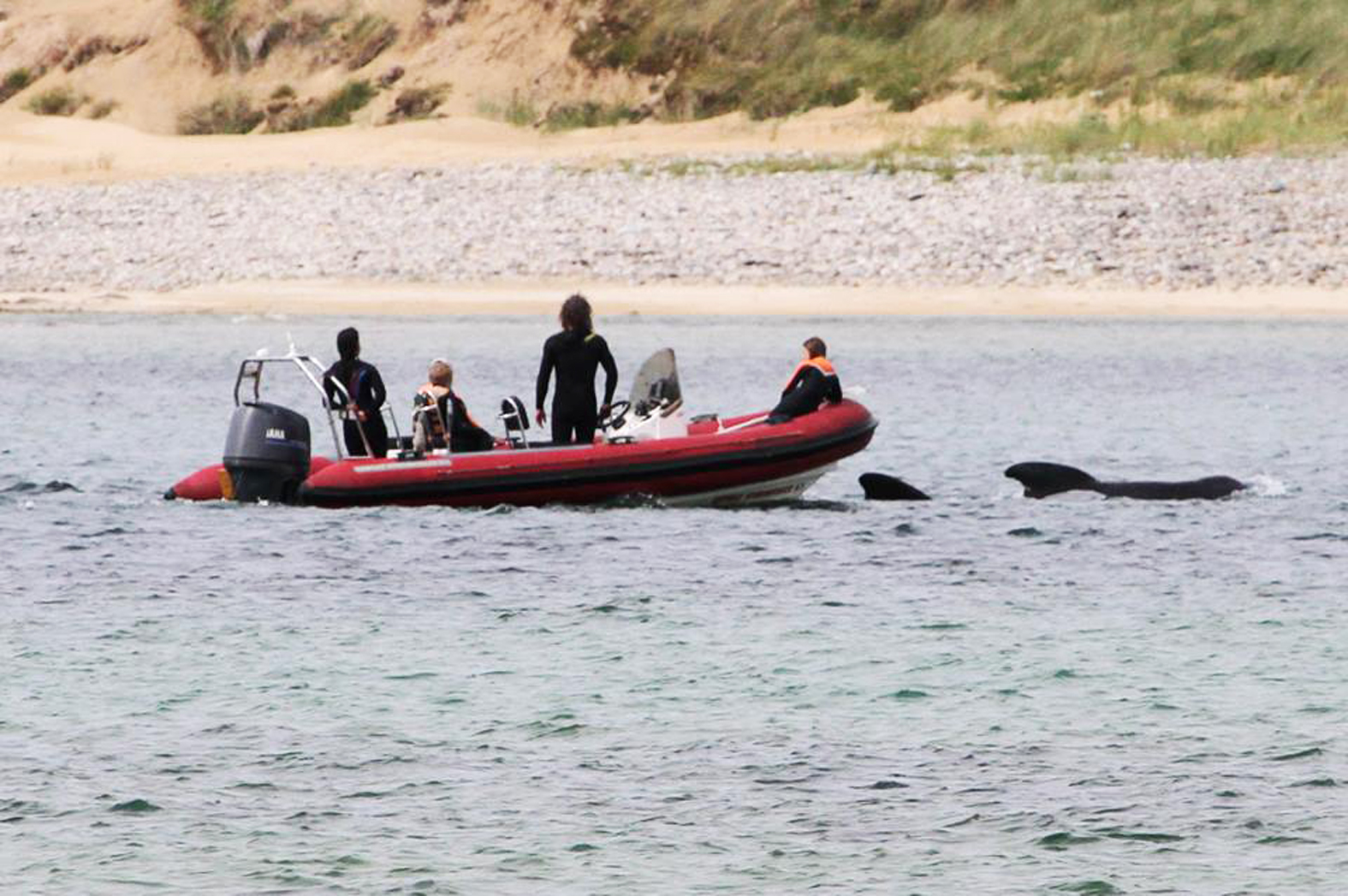
Whale sightings off Donegal coast encourage educational and tourism efforts

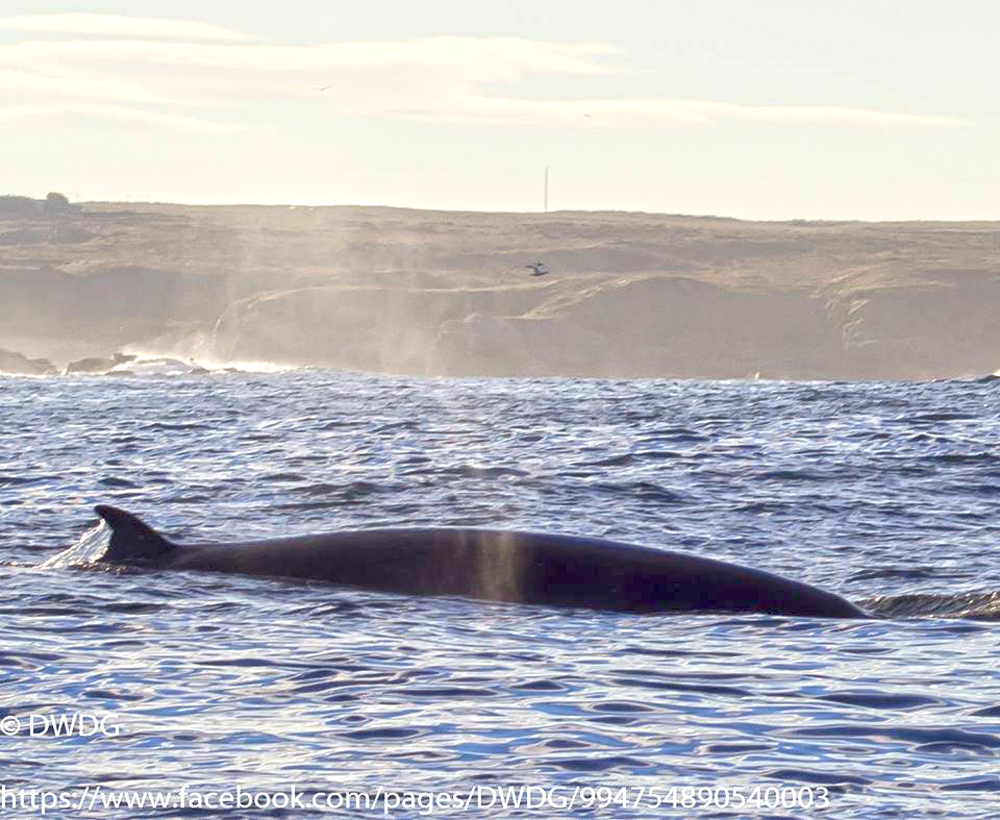
Approaching within 30 feet of a minky whale out on the Atlantic takes courage – but such is his concern for the welfare of local marine life that’s exactly what Gareth Doherty did recently.

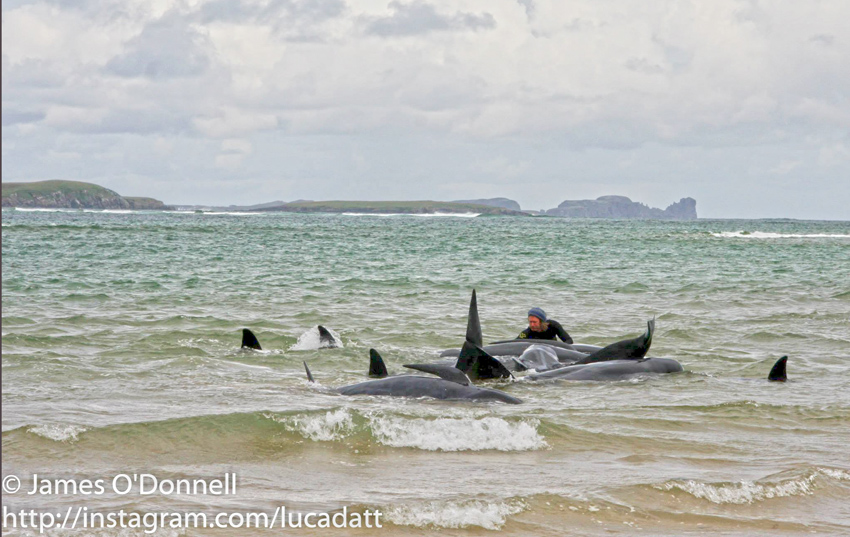
With the sighting of so many such baleen whales off the northwest Donegal coast over the last few weeks, Doherty, a skilled seaman (he manages Selkie Sailing in Gaoth Dobhair) and knowledgeable environmentalist, realized it would be a prime opportunity to try to identify them and monitor their movements and thus understand better the thriving whale population off Irish coastal waters.

whales 1

“It is only by recording the twenty-four cetacean species recorded thus far in Irish waters that we can protect them,” he said. “The fact that so many are now visiting us is wonderful news.”

whales 6

Doherty also believes that greater numbers of such healthy marine animals locally means greater opportunities to both educate people about this vital segment of sea-life and strengthen environmental tourism efforts throughout Donegal.

Here is yet another local cultural tourism-cum-educational project worthy of financial support. Udaras na Gaeltachta, the state-sponsored economic support group in the area, has refused to pay for much-needed equipment for Selkie Sailing.

Readers of this blog and of a series of articles I penned for the Donegal News will remember Gareth for the sterling work he and others did to bring important publicity about the plight of a pod of stranded whales at Ballyness beach in Falcarragh earlier this year.

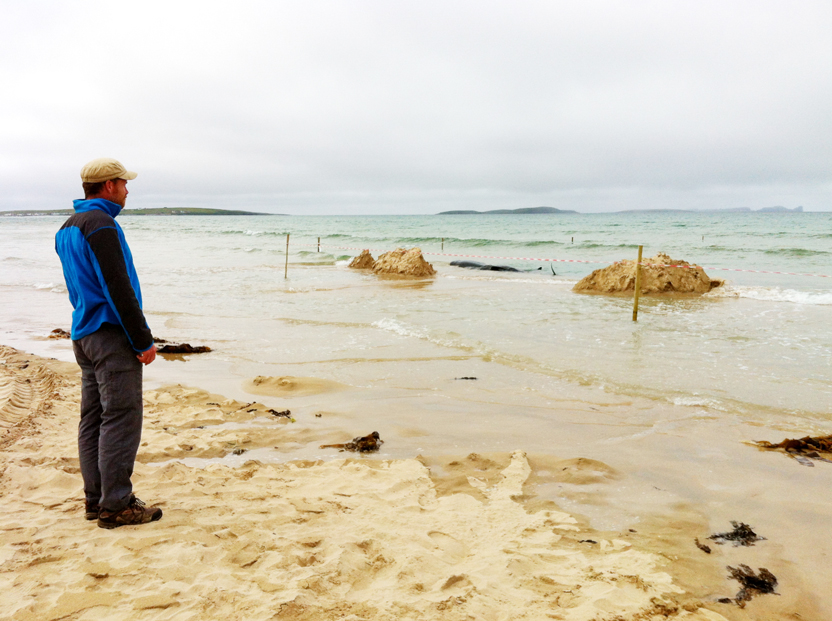
whales 2

Not only did Gareth and colleagues highlight the stark inadequacies, both in equipment and training, of the National Parks and Wildlife Service to deal with such incidents (it has since become known that Donegal wildlife officials didn’t even take sample tissue from any of the dead whales to ascertain what may have stranded them and led to their slow suffocation) but they also banded together to organize marine lifesaving training programs for people that continue even now.

Visiting my Bun na Leaca home recently, Gareth said his intention was also to launch a series of educational visits to local schools to make presentations about the importance of marine life around our shores. It is an excellent idea and there seems no more qualified and enthusiastic a person to host such a program than Gareth.

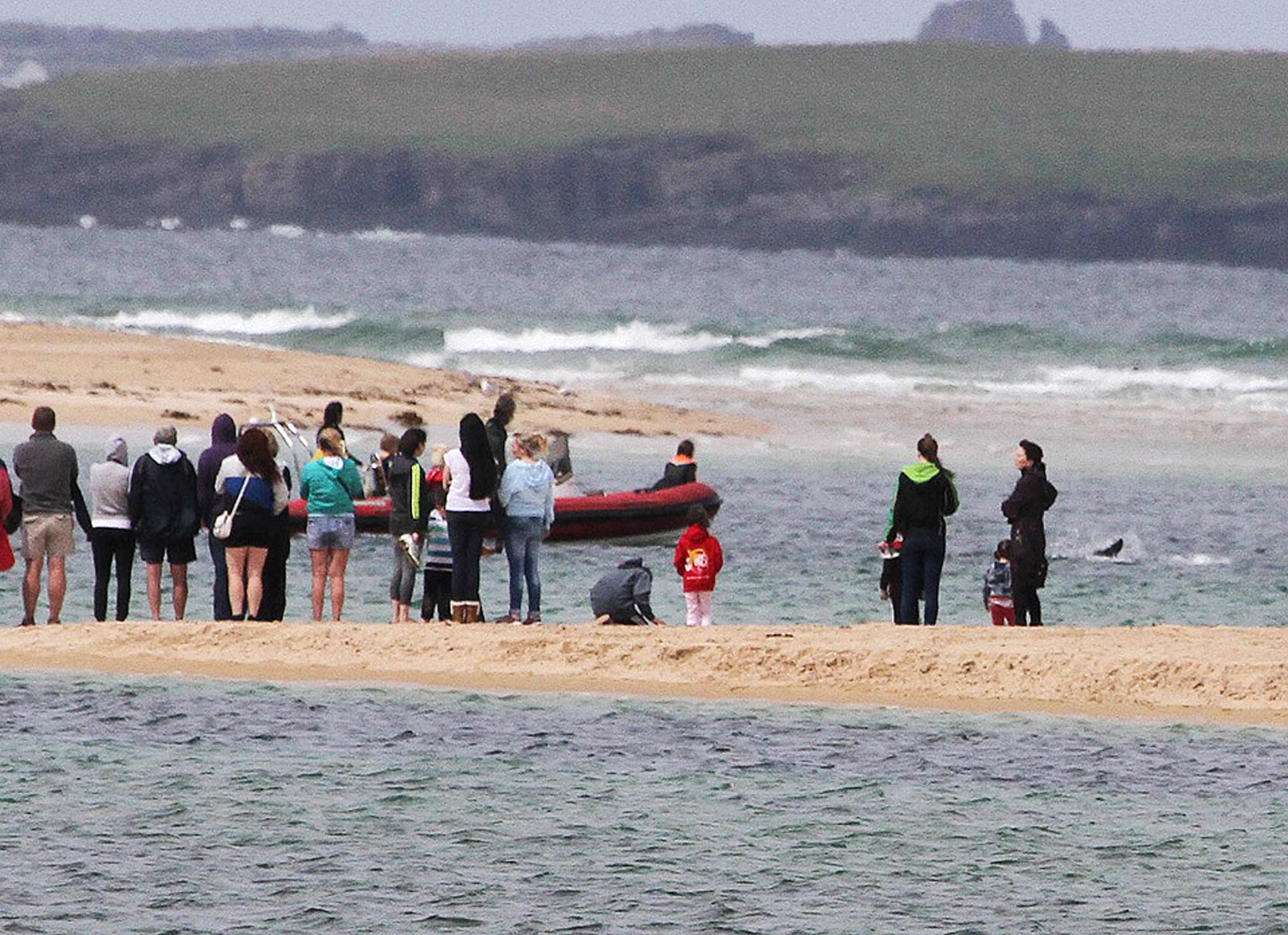
whales 3

Minke whales grow to about nine meters in length, weigh around 10 tons and can live about 50 years. Their bodies are dark grey to black on the back and lightening to white on the belly and undersides of the flippers. There are often areas of light grey on the flanks, one just above and behind the flippers and the other behind the head. Those in the northern hemisphere usually have a diagonal white band on the upper surface of each flipper. Smallest of the seven great whales, minkes often enter estuaries, bays and inlets and feed around headlands and small islands.

Updates can be checked on Selkie Sailing.

The Irish Whale and Dolphin Group assisted with local training programs.

Yet another Irish political fiasco

I was shocked to read in a leading Donegal newspaper editorial over the last few days that John McNulty had behaved ‘with dignity’ over his recent Fine Gael botched Senate nomination.

Let’s call a spade a spade.

The last thing Mr. McNulty behaved with was dignity. He condoned the onward march of cronyism and ‘stroke politics’ thus giving his full support to this age-old blight on Irish society.

John McNulty – guilty as charged, complicity to hoodwink. Photo courtesy Independent Newspaper.

Selling Mars bars at a Mace grocery shop in Stranorlar hardly qualifies Mr. McNulty to contribute much, if anything, to the development of the Irish Museum of Modern Art (IMMA) (unless his business is merely a front for a secret network of art collectors storing priceless Van Gogh’s under the petrol pumps). There are many throughout the country with decades of high-level experience in the arts sector and thus much more qualified than he.

Yet when Fine Gael spin-doctors whispered in his ear they’d pull a few strings and shove him on the (already full) board, thus giving him an easier ride into the Senate, he leapt like a deer in heat, omitting to point out the simple fact that he was completely unqualified for such a key position.

In doing so, the 37-year-old Kilcar man is as guilty as those people – mainly under Fianna Fail’s governing stewardship – who greedily grabbed places on other boards such as FAS and the Central Remedial Clinic and proceeded to claim hefty payments and generous expenses on the backs of struggling tax-payers. (Fianna Fail actually rushed 182 of their members on to public boards in the dying days of its last reign).

It must also be remembered that, far from being a credible Senate nominee, Mr. McNulty failed to even get elected to Donegal County Council having won just over 800 votes in May, less than half of the quota required for the six-seat electoral area. In fact, he finished the race at the rear of the pack at a distant 10th place.

Choosing him shows just how desperate Fine Gael are to shore up its political representation in Donegal, especially with the additional failure of John Curran, its choice for the Udaras board, to get elected to the local council (in great part over his willingness to hand over more than a million euro of tax-payers money to the Catholic nuns to run an addiction center in Falcarragh when there’s already one in Donegal, and after the dead babies scandal in Tuam). With Donegal South-West deputy Dinny McGinley due to retire at the next election, Curran’s failure and now McNulty’s means there’s nobody in place as a successor.

John Curran – until recent local elections, was being groomed as potential successor to TD Dinny McGinley?

Public boards or private clubs?

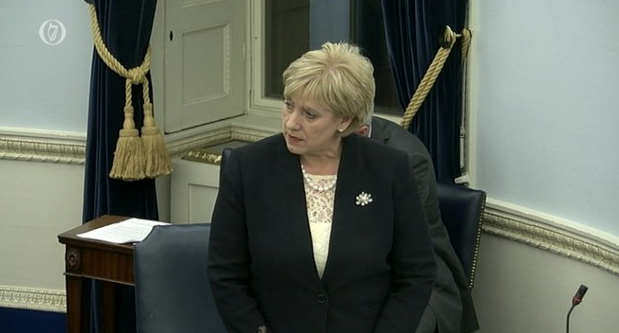
In a bizarre twist to the tale, Fine Gael Arts Minister Heather Humphreys said in the Dail this week that Mr. McNulty was appointed to the board of IMMA “on the balance of talent and experience.” That’s a joke. The minister then added that she and her party were committed “to using the public appointments procedure in line with the guidelines.” That’s an even bigger joke. It recently emerged that at least two of the six appointees to the Board of the Heritage Council last year were made by her colleague Minister Jimmy Deenihan in contravention of that very same formal application process.

Further, a 2012 report by the Institute of Directors In Ireland on state boards showed concern at the lack of transparency around the appointment process and the lack of consideration given to the skills required to fill them. Since then, board positions have featured on Government department websites and advertised via the Public Appointments Service but some describe this as ‘pure window-dressing’. The McNulty situation, and perhaps the Curran one too, are cases in point.

Plain-speaking (maybe too plain) Minister for Health Leo Varadkar said election to the parliament of a candidate who has withdrawn – as McNulty has done to avoid further embarrassment – would not be good thing for the political process. Duh, really?

Obviously, the only way forward is to make the recruitment process entirely transparent, minimise government involvement in choosing appointees, and actively engage individuals with the appropriate skill set to fulfill these positions.

Fine Gael’s Arts Minister Heather Humphreys in the Dail struggling to deflect accusations of cronyism and stroke politics. Photo courtesy RTE News

No crying over spilled milk

Ultimately, however, we have only ourselves to blame.

Most of those who voted for Fine Gael over Fianna Fail three years ago knew deep in their hearts exactly what they were doing. Being conservative, as we Irish are by virtue of our Catholic upbringing, we voted for one party knowing full well deep down it was little different to the other. Then we deigned to pat ourselves on the back for ‘taking a bold stand.’

What baloney! Ours was nothing less than a cowardly act.

To make matters worse, when we had the chance to regain some degree of pride and do away with a Senate that is, and always has been since the foundation of the state, a complete and utter waste of public money, we declined to follow our instincts and put pen to paper. How could any of us vote for such an anachronistic and discriminatory institution highlighted by the fact that with so many worthy universities and colleges throughout Ireland, only two – Trinity College Dublin and the National University of Ireland – are permitted to have Senators? Not to mention that 11 Senators are simply appointed on the whim of the Taoiseach. No elections, no vote.

Padding expenses? Investigations well underway on shenanigans of Fianna Fail’s Brian O’Domhnaill: Handsome salary as Senator not enough?

Today the Irish Senate, unlike the American one, stands as a perfect model of cronyism and stroke politics, with even appointed party members such as Donegal’s very own Fianna Fáil Senator Brian Ó Domhnaill under investigation for milking the system by duplicating expenses.

We tossed away the opportunity to fling the Senate into the bin of history where it firmly belongs. Let’s not now cry over spilled milk. Like McNulty’s reluctance to apologise publicly for his complicity in attempting to hoodwink us ordinary folk, it’s so undignified.


Brewing up a storm

A wheelbarrow and a pair of boots painted proudly in Donegal GAA colors perched atop a house roof in Falcarragh.

IMG_2148

A sexy, full-size female mannequin dressed in nifty sporting gear posing roadside in Glassagh, Gaoth Dobhair.

IMG_2181

And goodness knows how many rusted carcasses of cars suddenly transformed into brightly-colored, eye-catching street decorations.

photo

Sporting success has brought out the best in Donegal creativity – both on and off the field.

With less than seven days to go before ‘the Grande Finale’ at Croke Park, the county is awash with an artistic spirit that Jimmy, Declan and their respective teams have inspired.

Wouldn’t it be wonderful if such genuine outpouring of community solidarity could be harnessed into sustained cultural tourism projects that would provide much needed long-term employment and economic benefits?

If some of the recently erected ‘altars’ to the success of Donegal GAA are anything to go by, there is no shortage of ideas, but funding is sadly missing. Not because the money isn’t there, it is. But because those holding the purse strings don’t have the confidence that proposed projects are anything more than short-term hobbies. Consequently, those with excellent cultural tourism ideas continue to live a hand-to-mouth existence, spending much of their brilliant creativity, not on artistic endeavor, but on scrounging for pennies, with long-term sustainability a mere pipe-dream.

An earlier post cited Udaras’ rejection of funding this year for the excellent ‘Evil Eye’ festival in Falcarragh. Now, a recent report shows a paltry 48,250 euro has been shoe-horned for 17 festivals throughout the county by Failte Ireland. Work out the math. It doesn’t amount to a hill of beans.

Meanwhile, there is a peculiar notion out there that beer will be consumed in considerable quantities in the county if Donegal ride victorious over the Holy Ground this weekend.

The bad news is that beverage choice for such a celebration in the county is among the most limited in the nation. Seemingly, more publicans in Donegal have kowtowed to multinationals such as the British-owned company, Guinness, and Heineken because they offer their products wholesale for as little as 50 cents a pint rather than offer their customers a wider choice of beers and ales to imbibe as is happening in other parts of Ireland.

Attending the Irish Craft Beer and Cider Festival a week ago at the RDS in Dublin, I was delighted to see how many micro-breweries had been launched nationwide – Galway Bay Brewery, The White Hag in Sligo and 9 White Deer in Cork to name but a few. While Ireland is still well behind England and the US in terms of micro-beer choice, mainly due to consumer acquiescence, Donegal is well behind other counties.

OLYMPUS DIGITAL CAMERA

Only Kinnegar Brewing and Muckish Mountain Brewery keep Donegal from being bottom of the national micro-brewery league table. The latter is named after nearby Kinnegar Beach 
just north of Rathmullan and produces around 4,000 liters per week with funky brands such as Limeburner, Scraggy Bay, Rustbucket, Devil’s Backbone and Yannaroddy. The latter, based in Creeslough, produces Miner’s Red Ale made with dark crystal malt.

OLYMPUS DIGITAL CAMERA

It is the same narrative when it comes to cider. Check any pub in Donegal and the likelihood is the label says ‘Bulmers.’ For the record, most of what goes into this particular drink is concentrate, usually brought in from Poland by the truckload. Every day they’re lined up at the plant waiting to unload. ‘Tree slurry,’ as as one cider aficionado quipped less than affectionately. In contrast, Irish apples represent a tiny percentage, less than five percent of content, insiders say. That’s why information on bottles and cans is so vague and limited. Yet, there’s choice aplenty – if we push publicans to provide it – with scores of other Irish cider producers that use freshly-squeezed apples, such as ‘Tempted? outside Lisburn, the ‘Armagh Cider Company’ and ‘Craigies Irish Cider’ in Wicklow. But most Donegal pubs ignore them – for the sake of greater profit.

Good news is that a crop with a long tradition in Donegal but one long forgotten is again being planted – something that gives a faint glimmer of hope to real beer drinkers. Hops are now growing in Conwal outside Letterkenny near the site of an old monastic settlement, whose caped inhabitants once prided themselves on their beer-making skills (those monks had their priorities right).

So when you rush to the bar this Sunday evening celebrating the latest Ryan McHugh goal, forgo the usual sulphite-laden, chemical-ridden liquids and ask for a local brew. Then watch closely the bemused expression on the barman’s face (as per below).

OLYMPUS DIGITAL CAMERA

Donegal Gaeltacht community spirit rises: but where’s the money?

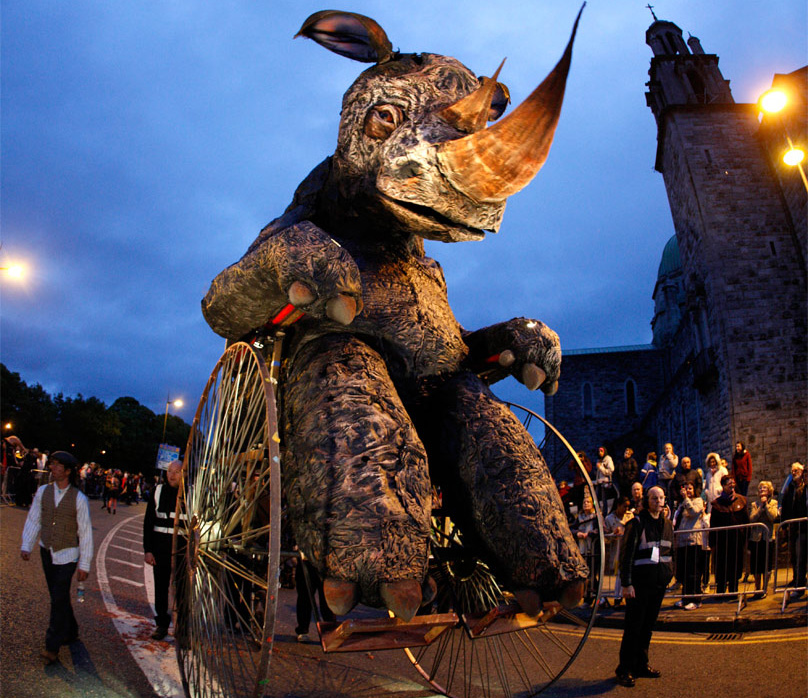
Some years ago, displaying immense creativity and skill, a local team of hard-working people in Galway created ‘Macnas,’ an organisation that produces a series of exciting, colourful outdoor parades and indoor shows filled with magnificent costumes and performers.
With generous funding from the Arts Council, Údarás na Gaeltachta, Culture Ireland and Galway Council, the company expanded rapidly; exciting and inspiring audiences worldwide with performances as diverse as U2’s Zooropa Tour; the Millennium parade in New York City; WOMADelaide, South Australia; Chaoyang Spring Carnival, Beijing; the President’s Garden Party, Áras an Uachtaráin; and in a host of festivals, towns and cities throughout Ireland and across Europe.

macnas 1

Macnas, Galway – an estimated 40,000 euro cost per festival show. (photo courtesy Macnas)

This weekend in the west Donegal town of Falcarragh, a similar group of local hard-working people, under the leadership of festival director, Kathleen Gallagher, and Sean Fitzgerald, will recreate a similar dazzlingly entertaining costume and culture filled show entitled ‘Evil Eye’ (Féile na Súile Nimhe). Featuring large-scale puppet characters, a samba band with Formorian soldiers (ancient sea-farers) and stilt walkers, it will highlight unforgettable Celtic legendary characters such as Balor of the Evil Eye and Lugh, the Sun God (thus ‘Lugh’s Mountain’ now known as Errigal) and the history of the Cloch Cheann Fhaola area.

balor 3 good

‘Evil Eye’ Festival Falcarragh, Donegal – organised on a budget of around 4,000 euro. A whopping ten times less than Galway’s Macnas (photo courtesy Eddie McFadden).

But there’s one major difference between the two festivals: while the Galway team hosts its show with pockets bulging with euro (an estimated 40,000 euro per festival, according to national news reports) – the Falcarragh one has a few pennies. And most of that was raised through its own activities, including determined people who tackled their first adventure race – the 23-kilometer combined run, kayak and cycling Mulroy Bay competition– and, later, the even more challenging 44-kilometer ‘Gael Force’ race.
So how does Údarás na Gaeltachta, the Arts Council and Donegal County Council view this admirable cultural tourism project?
Representatives of the above organisations came to enjoy the Falcarragh festival last year, full of praise for the creators of the extravaganza, a highlight in the west Donegal social calendar. But when asked for money, they all suddenly shied away. While more than 500,000 euro has been given to Macnas in Galway, the Arts Council finally granted a paltry 600 euro for ‘Evil Eye’ and around 1,250 euro is supposed to be donated from the council’s ‘The Gathering’ fund (money not received as of blog posting – two day before event begins).
In its turn, Údarás Donegal contacted the organisers earlier this year, but not to offer financial support. Instead, it called only to inform the team that the application deadline had passed (would it not have been more constructive to have contacted them before, not after, the deadline, especially has it had moved the date forward?).
Later, when approached for some space in one of its industrial estates in which to construct the festival’s giant puppets and store equipment and costumes, Udaras demanded 50 per cent of the commercial rate, which obviously – on such a tiny budget – the community group could not afford. Ironically, Údarás has thousands of square meters of space lying empty and unused in its industrial estates throughout the Gaeltacht for which it is already paying utilities, spaces that are supposed to be used for ‘community development.’ In the end, it was the generosity of local Falcarragh man, John ‘the Rake’ McFadden, that helped save the annual ‘Evil Eye’ festival. He donated his large agricultural shed to organisers.

balor 1

‘Evil Eye’ festival combines entertainment with education on Celtic history for both adults and children.

Faced with a severe lack of funding assistance, the hardworking festival team were forced to borrow and beg – costumes from the Northwest Carnival Initiative in Derry for 30 members of the Cloughaneely Marching Band who will act as seahorses in the historical re-enactment and other costumes from the Inishowen Carnival Group for 12 volunteer samba dancers. They also had to rely on the efforts of organisers of a childrens’ summer camp in Ballina Resource Centre at which local kids made shields and swords, 10 of whom will march in the festival. Nine members of the Curragh Club of Magheraroarty, as well as local plasterers, who will walk on stilts, are also helping out.
If this kind of creativity and community spirit had been displayed in other countries such as the US or Australia, it would probably be recognized immediately as such and funding made readily available (as indeed it is in other Irish counties such as Galway).
Yet Údarás in Donegal, with Fine Gael national board member, John Curran, living nearby, continue to ignore such culture tourism projects, projects with the potential for economic development through tourism, while at the same time wasting public money on generous expenses and junkets for its staff members (including a large delegation who traveled, with their spouses, on an all-expenses paid trip to Las Vegas – to meet officials of Dublin-based Enterprise Ireland).

balor 2

Údarás Donegal refused to give ‘Evil Eye’ organisers free space in its empty industrial estates for the construction and storage of giant puppets.

In a telephone interview yesterday, Gallagher voiced her frustration: “It seems to me that Údarás either has no interest whatsoever in tourism development or simply doesn’t understand its potential,” she said. “The tourism officer for Údarás, Gearoid O’Smaolain who lives in Falcarragh, has never even approached us to see if we needed help of any kind. He doesn’t belong on any of the local community committees or attend meetings to find out what is happening on the ground.”
She added, “I carried out comprehensive research into possible funding from Údarás and on which individual staff members I should approach, something that is not very clear from its materials. Many of their job descriptions certainly include the word ‘community,’ such as ‘community enterprise’ and ‘community development and marketing’ yet strangely, there doesn’t seem to be much community development going on at all.”
As multi award-winning actor Diarmuid de Faoite said of the festival: “The ‘Evil Eye’ is our ancient past and living present in all its wild beauty.”
It’s a shame the Arts Council, Donegal County Council and Údarás na Gaeltachta don’t seem to agree.

While misguided policies, cronyism and wastage of public money has been an unfortunate hallmark of Údarás almost since its inception, the good news in this instance is that due to the sterling efforts of Falcarragh volunteers, the ‘Evil Eye’ festival is going ahead.
So why not treat yourself, family and friends to a wonderful spectacle of colour, culture and heritage and pop along to Falcarragh between August 22nd and 24th.
A festival highlight will be a medieval banquet in St Ann’s Church Killult, the 1900’s structure providing an excellent setting for a magical evening of song, dance and drama. The festival will also pay tribute to the history of Muckish Mountain’s mining legacy with guided walks on the old Miners Path and disused railway tracks. It will also feature birds of prey and weaponry displays, complete with a pig on a spit in a ‘medieval field’ while skills of strength and agility will be tested in a range of quest games to find one of the story’s main characters, Lugh Lámhfhada.
For further information, see Evil Eye Festival site.

West Donegal whale protection group formed as threats to human health resurface

Following an often emotional public meeting held at Teac Jack in Glassagh earlier this week, a wildlife protection group has been formed in west Donegal to lobby for government policy changes towards stranded marine animals and to promote specialized training.

The ‘North West Whale & Dolphin Support Group,’ which was established at the Tuesday evening meeting, follows concerns by many local people about the treatment of a pod of 13 pilot whales that were left stranded on Ballyness beach near Falcarragh, which all died of slow suffocation after five days. It is the 13th such stranding this year in Donegal, including a sperm whale stranded off Machaire Rabhartaigh beach. Around 32 other whales died off Rutland Island two years ago and were cut up and transported to Cavan where they were incinerated.

Meanwhile, concerns have arisen as to what caused the mysterious deaths of all the whales amid a recent rise in the numbers of marine animals being stranded off Donegal’s coast.  And that, whatever it is, may also be a hazard to human health.

whale 2

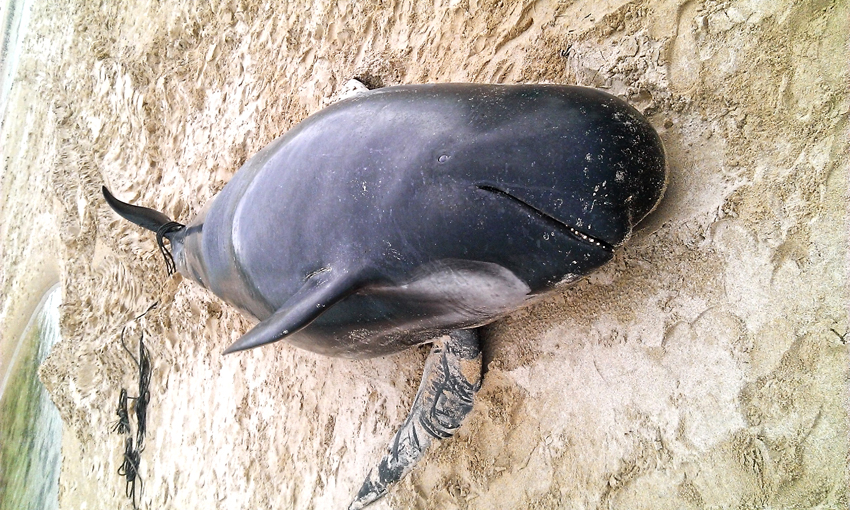
A stranded pilot whale struggles for life at Ballyness beach near Falcarragh, west Donegal. (Photo by Antonia Leitner).

Chairperson of the meeting, Amanda Doherty, with Selkie Sailing, who has also launched a petition that has attracted more than 230 signatures on the issue, said she was pleased by decisions those attending had made together.

“We want to raise community awareness and have the current policy regarding cetacean strandings in the area reviewed,” she said. “It should be a more flexible policy to allow for the particulars of different situations that occur. This is best practice according international standards and Ireland should follow it.”

Some people at the meeting – many of whom tried their best to save the dying whales – became emotional as they described the traumatic situation at Ballyness beach and the agony of the cetaceans as they slowly died of suffocation in shallow water.

Members of the National Parks and Wildlife Service (NPWS), led by Dave Duggan and Pat Vaughan, decided “to let nature takes its course” rather than try to save the whales or apply euthanasia to reduce the whales’ suffering. They also did not ask the coastguard for assistance to bring the whales out to sea, as has happened in other parts of Ireland. The state-funded Donegal county veterinary office under the leadership of Charles Kealey, chief veterinary officer, has also come under criticism for refusing to get involved in any way to help the whales, including making sure the mammals were dead before they were buried. (In contrast, see photo below of a cetacean (dolphin) being treated more humanely in another part of Ireland, with vets and the coastguard involved).

Strandedwm_shay-fennelly_2007

Westport-based Irish Coastguard assist with a stranded Common Dolphin which could not be refloated. A Mayo vet administered an injection to humanely end its suffering. Photo by Shay Fennelly

Pearse Doherty Sinn Fein TD for west Donegal, who has submitted a number of formal questions over the last week in the Dail to Ministers regarding the treatment of stranded whales and other cetaceans, attended the meeting and gave his advice on the best way forward for the group. Doherty said it was important the new group work with current organisations such as the Irish Whale and Dolphin Group (IWDG) and the National Parks and Wildlife Service (NPWS) and suggested a two-pronged approach – making sure policy at the IWDG matched international standards, and the establishment of  ‘first responders’ in the local area, recognized by the NPWS and IWDG – people who could take the lead in developing situations.

The newly-formed ‘North West Whale & Dolphin Support Group’ decided to hold monthly meetings and invite Simon Berrow, founder of the IWDG, to provide specialized training for members on how to best help stranded whales and other cetaceans and to meet with a small working group on the same day to discuss further action. Clare-based Berrow is a full-time lecturer at the Galway-Mayo Institute of Technology teaching on the Applied Freshwater and Marine degree course and project manager of the Shannon Dolphin and Wildlife Foundation.

After being contacted about the meeting, Berrow told the author of this blog, “We are delighted to hear of the formation of a local group. We look forward to working closely with them to prepare a better response to stranded cetaceans in the future and also to encourage local recording.”

Offshore toxic waste dumping? Military submarine activity?

At the same time, concerns regarding the health hazards to human life – as well as marine – from toxic dumping at sea and military submarine activity and experiments that may have caused the strandings have resurfaced locally.

dumping 2

Oceans that become graveyards for poisonous debris that pose dangers to human as well as marine life.

International regulations state that discharges of waste material – often poisonous by nature – should not be made within a certain distance of any landmass, according to the Seas at Risk. But who’s watching? Some major ports have cleaning facilities such as Edinburgh, Belfast and Dublin, but this costs money so some incorrigible corporations say ‘why bother’? As the coast of Donegal is in direct line of most transAtlantic ocean traffic between Europe and the Americas, the amount of waste dumped offshore is probably immense, one respected scientist saying ‘enough to create mountains under the sea.’ Much of this material contains cancer-causing chemicals (carcinogens) such as manganese, benzene, coal-tar, radium, petrolatum, parabens, vinyl chloride lead and zinc. With recent technological developments, many of these chemicals are in the form of deadly nanoparticles (particles less than the size of a human or animal cell) which, airborne, can then penetrate the cells, causing untold damage.

Nanoparticles: Technological and industrial development has outstripped health research into their potential dangers in everyday foods and consumer products.

Nanoparticles: Technological and industrial development has outstripped health research into their potential dangers in everyday foods and consumer products.

Could this be the cause or partial cause of disease in whales and other marine animals? Researchers say they have found large quantities of these chemicals in the whale tissue samples taken and tested. And doctors report larger than normal incidences of human cancer in local people.

In addition, some of the waste is in the form of non-biogradable plastics. Because they don’t dissolve but break up into smaller elements, these plastics have formed what scientists now call ‘plastic islands’ – often the size of countries, one is larger than the US state of Texas, which in itself is 17 times larger than Ireland – that float in our seas, causing disruption to the normal flow of currents. Consequently, the dangers to both human as well as marine animal health is high. For a long time, many people in northwest Donegal have suspected such dumping to have taken place offshore, with menacing results (see further information here).

A special group was established within the last two years at Ionad Naomh Pádraig in Dore by Freddie O’Donnell and Aodán Ó’Gallchoir to examine correlations between high levels of cancer in the Gaeltacht area and dumping of waste in coastal waters nearby. Known as ‘Scaoil Saor ó Ailse’ (Break Free from Cancer’), the group’s public relations officer, Joe Diver, said former local doctor Paddy Delap, said such waste was affecting peoples’ health, particularly cancers of the skin, lung and brain, with an abnormally high level of fatalities. A deep-sea diver then broke his decades-old silence on Raidó na Gaeltachta, describing how he found a large area of the sea bed littered with large black drums with hazardous signage on them in the waters off Tory Island, adding, “We were looking for shipwrecks, went down 40 to 45 metres and came across black drums with green stuff growing on them. There were a few thousand of them. They were heaped in a hill-like structure and had skull and crossbones on them. The diver said the drums would have since disintegrated and their hazardous material dissolved into the ocean off the Gaeltacht coast.”

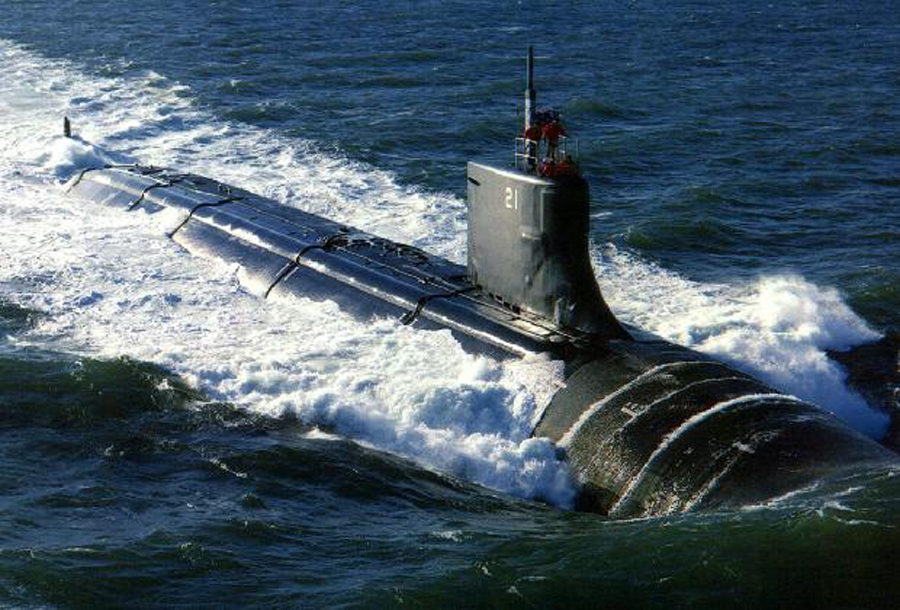
submarine

Military submarine activity and experiments at sea: what are the hazards for Man, Plant and Animal?

Areas affected could include Gaoth Dobhair, Cloughaneely and The Rosses. Calls for greater funding for a more comprehensive analysis were ignored by the relevant authorities, mainly on the instructions of Dublin, some say for economic and political reasons. Further, fearing such research could stir up waves of protest if the result became known, efforts were made by authorities, mainly Fianna Fail, then in power, to trivialize what little had become known. Politics and money trumped peoples’ health and once again the ‘Forgotten County’ was forced to live up to its unfortunate title.

Damage control became main concern for a certain cadre of elite: the party in power in the Dail and its big-business supporters. “This situation has been going on for far too long,” said one medical practitioner who has treated cancer patients in the area. “It is long past time national funding was made available to investigate this situation thoroughly. If it happened in certain other parts of the country, it probably would already have taken place long ago. Surely the deaths of so many marine animals and the high number of cancers affecting people means the issue should be looked at very closely.  To some extent, it’s in the hands of ordinary people. They should be lobbying their government representatives by e-mail, phone and letter. If not, nothing will be done.”

Several of the whales at Ballyness beach were found to have lesions, blemishes and lumps on its skin, but National Parks and Wildlife Service officials declined to say where any disease may have originated. As whales are highly social creatures that travel in communities, some say healthy whales may have refused to abandon sick or injured pod members and followed them into shallow water. “We can’t say for certain,” said Pat Vaughan, district conservation officer for the NPWS. “What we do know is that whales and other marine animals can have high levels of certain toxic elements in their bodies.”

Whale-protection group offers complimentary specialized one-day training in west Donegal

Meeting to take place at Teac Jack, Glassagh, this Tuesday (July 22) at 8pm

Officials with the Irish Whale and Dolphin Group (IWDG) have offered to host a complimentary one-day whale life-saving course in Falcarragh, Donegal over the next month for those interested in helping any struggling mammals that become stranded on the county’s beaches.

To avail of this offer, please contact directly Simon Berrow, founder of IWDG at coordinator (at) iwdg.ie

In addition, as part of a larger lobbying campaign for changes to the government’s policy on cetacean strandings, a meeting is being organised at Teac Jack in Glassagh, Donegal, under the auspices of Selkie Sailing and Gareth Doherty, environmentalist and wildlife enthusiast. The meeting is due to take place this Tuesday (July 22) at 8pm.

The generous offer of training from the IWDG comes as the well-respected organization denied vehemently that any call was received from the National Parks and Wildlife Service (NPWS) for help in dealing with the 12 stranded pilot whales that died at a west Donegal beach last week.

Berrow, who will visit west Donegal this weekend, said, “In contrast, it was someone from our group, Brendan Quinn, who called one of our senior members, Mick O’Connell, who in turn called the wildlife service in Glenveigh and got no response. Mick then called David McNamara, a wildlife service ranger, who went to the scene at Ballyness beach and observed the situation from a nearby hill with hundreds of people gathered around the beached whales. He then waited for them to leave the scene.”
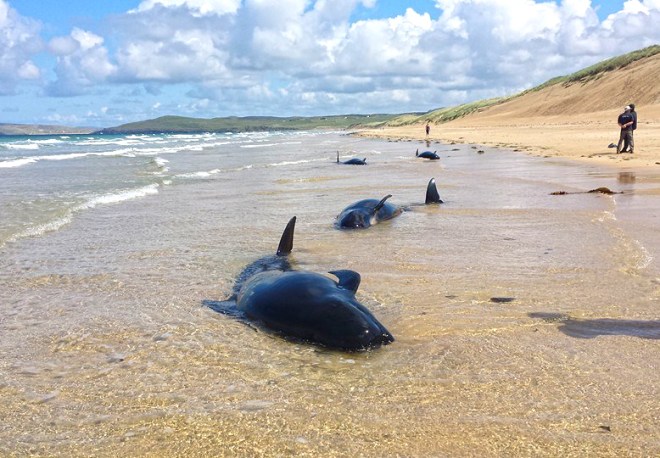
Members of the family of pilot whales stranded off Ballyness beach, Falcarragh, Donegal, last week.

Members of the family of pilot whales stranded off Ballyness beach, Falcarragh, Donegal, last week. Photo courtesy of Selkie Sailing

Voicing his disappointment that Dave Duggan, the acting NPWS regional manager in Donegal, nor Pat Vaughan, a NPWS conservation officer, requested help from the IWDG, Berrow said, “No call was ever received by us asking for our assistance. We would have come up – or at the very least have given advice on the phone. We also have detailed guidance on our website about how to handle a stranded whale situation, which could have been easily accessed and followed. We could have saved some of these whales.”

He also said a statement by Vaughan that nothing could be done for the dying whales but “let nature takes its course” and let the 12 whales die from slow suffocation over five days is ”pure rubbish.”

Another pertinent question to be asked: Where was the state-funded Donegal county veterinary office, run by Charles Kealey, chief veterinary officer, and his staff in all of this? With the local and national media attention the situation received, they would have to have been deaf, dumb and blind not to have heard of the tragedy, and if concerned in any way, should have been at the scene pronto to assist. And definitely, to make sure whales were not buried alive, which expert sources say – without veterinary expertise – could well have happened.

In Berrow’s view, “Everything went pear-shaped because nobody, no group, took ownership of the situation. The wildlife service won’t take responsibility for stranded whales. The IWDG is a small NGO, manned mainly by volunteers but we help where we can. Lack of responsibility at Ballyness, Falcarragh, meant that well-meaning members of the public had to step in. Unfortunately, most of them did not have the proper expertise or training. People like Amanda and Gareth Doherty deserve great credit for what they did, and are still doing, to help protect our marine wildlife.”
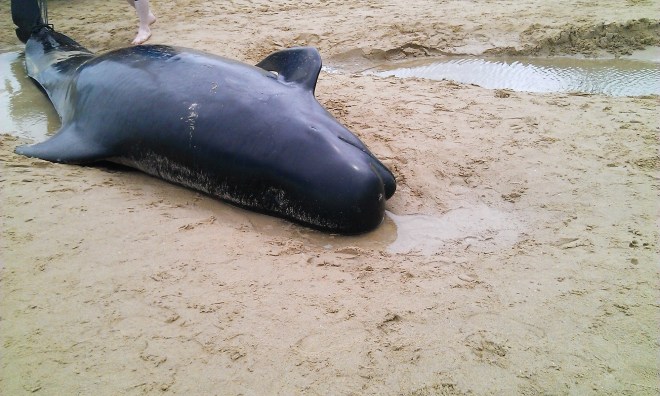
Photo by Antonia Leitner

Stranded pilot whale at Ballyness beach, Falcarragh, west Donegal (Photo by Antonia Leitner)

Berrow said the IWDG offers training in both identification of cetaceans (mainly whales, dolphins and porpoises), as well as one-day courses on effective methods for dealing with stranded whales “but no-one in Donegal has asked us to do such training. We could bring the equipment, we even have a life-size, inflatable pilot whale that we use for simulating saving techniques. All we need is for someone to organise a venue and a place to stay overnight for trainers.” He said trained IWDG volunteers “are thin on the ground in Donegal.”

Berrow also said the Donegal wildlife service’s contention that there were no vets with sufficient expertise about whales and that no adequate drugs in the county to euthanize the 12 whales was also misleading. “I’d be shocked if there is not enough Pentabarbitone in Donegal. Anyway, they could have contacted us or the Dublin Zoo which uses the drugs on large animals such as giraffes or even Tony Patterson, the relevant officer across the border in Northern Ireland who I’m sure would have gladly helped.”

In the Republic of Ireland, Pentabarbitone is administered by “a 14 gage needle, the longest one possible, preferably over six inches.” Around 60 to 80 milligrammes are used per kilo of animal. Pilot whales are on average between 1,000 and 1,800 kilo.

Regarding the alternative option for euthanasia, Berrow said, “The wildlife service at Glenveigh Park – due mainly to the deer population – have several persons well-trained in gun and rifle use. Using a .303 calibre rifle with solid bullets fired through the blowhole into the heart chamber, the unfortunate whales could have been put out of their misery within two minutes, instead of them having to suffer for five whole days with blisters on their skin the size of footballs.”

An international petition launched last week calling for more humane treatment of stranded whales in Ireland has already attracted more than 200 signatures (see petition here)
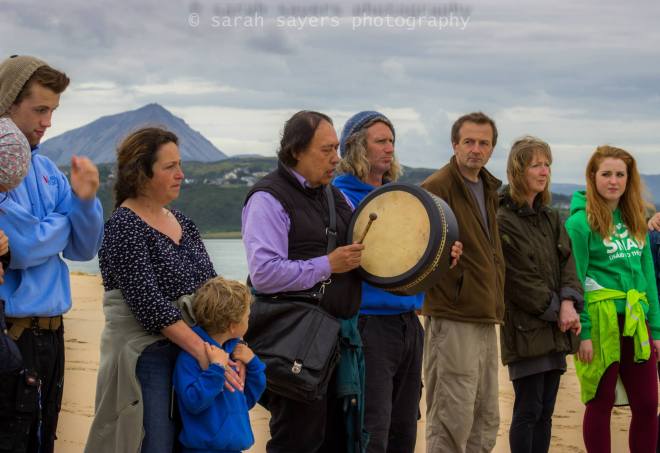
Local people gather with Native American Indian Gary (White Deer) for special prayers and a blessing of family of whales that died at Ballyness beach, Falcarragh, Donegal (photo courtesy of Sarah Sayers).

Local people gather with Native American Indian Gary (White Deer) for special prayers and a blessing of family of whales that died at Ballyness beach, Falcarragh, Donegal (photo courtesy of Sarah Sayers).

Berrow said a small government grant was awarded to the IWDG for 2011-13 to run a stranded whale scheme but only to monitor the mammals and handle data on them. There has been no funding for training courses.  This year the contract went out to tender, then withdrawn in May. “With the increase in sightings of whales and dolphins off Ireland’s coast, it is crucial to have protocols and funding in place now,” he said.

He added that there is no national policy on taking tissue samples or conducting post-mortems on the mammals to find out what caused them to strand. “We have an agreement with the National History Museum and take samples wherever possible and place them there in a freezer,” he said. “But there should be a more concerted, organized effort by the relevant government authority.”

Meanwhile, Donegal Sinn Fein TD Pearse Doherty said, “I have huge concerns regarding the policy enacted by the National Parks and Wildlife Service when the pilot whales were beached in Falcarragh recently.” He added, “It is my belief that locals with knowledge in this area should have been assisted in their further attempts to rescue the whales and I commend them for their heroic efforts. I support the petition calling for this review of this policy and I have submitted a number of Questions to the Minister calling for this review, which are due to be taken tomorrow.”

Doherty has submitted several formal written questions to the Dail, including one viz-a-viz, “if there is an official policy in place within his Department which outlines the procedure for the rescue efforts of beached whales; if this policy is circulated to the various stakeholders such as Local Government and the NPWS and if the Minister will make a statement on the matter?”
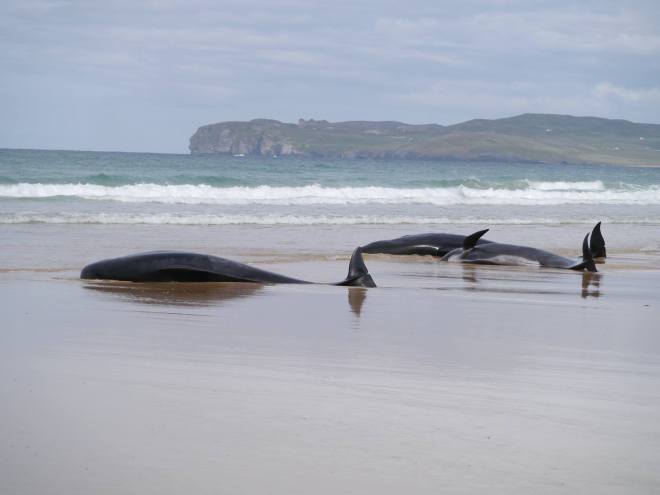
Formal protocols and increased government funding are necessary to save the Irish whale population (Photo courtesy of Selkie Sailing)

Formal protocols and increased government funding are necessary to save the Irish whale population (Photo courtesy of Selkie Sailing)

A second question asks, “if it is best practice to allow beached whales to perish without any intervention in order to ease the suffering of the animal; if it is standard practice to prohibit volunteers from making rescue efforts ; if the Minister intends to review this policy in the near future in light of the distress of the whales beached in Falcarragh, Donegal recently and if the Minister will make a statement on the matter?”

A third question deals with lack of equipment, in which he asks for “the reasons why the necessary equipment was not available to the NPWS in Donegal to allow them to humanely put the beached whales in Donegal to death by chemical injection and if the Minister will make a statement on the matter?”

The worldwide organisation, the Whale and Dolphin Conservation group, active in over 25 countries globally, has also waded into the controversy, officials from its headquarters in the UK stating, “It’s a real shame that there is not a strandings network in Ireland as there is in for example the UK. Here there is an incredibly well set-up and coordinated network of volunteers (BDMLR) that are trained in what to do in the event of a stranding and are first responders to any live (and sometimes dead) stranding.”

It continued, “By having these volunteers in place around the country any whales and dolphins that strand have the best possible chance of being refloated and surviving the ordeal. In a nutshell, what needs to happen is a) Interested Irish citizens need to come together and try to recreate what has been achieved in the UK via BDMLR, and b) the Irish Government need to commit to providing funds to set-up a programme similar to the Cetacean Strandings Investigation Programme (CSIP) here in the UK.” (see HERE example of how strong organisation and proper protocols can save some members of the whale population).
Stranded pilot whales buried alive?

Below is a more extensive story to the one I wrote for the front page of yesterday’s (Monday) ‘Donegal News’ on the seeming lack of co-ordination, expertise and simple know-how that led to the tragic deaths of a pod of 12 young and adult pilot whales from slow suffocation at Ballyness beach near Falcarragh last week.

Following public outcry over how 12 pilot whales were left by conservation officials to suffocate over the last week at a west Donegal beach, talks have been initiated between the Irish Whale and Dolphin Group (IWDG) and the National Parks and Wildlife Service (NWPS) over alleged mistreatment.

In a message from the founder and executive officer of IWDG, Professor Simon Berrow voicing concerns over the handling of some of the stranded whales at Ballyness beach near Falcarragh and the need for an immediate meeting with the NWPS.

IMG_1721

Wildlife service and Donegal county officials on whale death watch

One wildlife service official, who declined to be named out of fear his job would be in jeopardy, acknowledged “it was a disgusting situation, terrible decisions were made,” adding “management heads at the service should roll over this debacle.” The official added, however, that calls were made to the IWDG seeking guidance and were not returned. “Where were the experts when we desperately needed them?” the official added. “We could have done with that, a simple phone call back to talk us through what we should do. Even a picture, a video on a smart phone would have helped.”

It is believed internal reports – mainly critical of the overall operation at Ballyness beach – are to be submitted within the next few days to higher levels of national management within the wildlife service. “We have so many lessons to learn for this mess,” one official said.

Referring to two stranded pilot whales – highly-intelligent members of the dolphin family – that were helped back into the water by Gareth Doherty, local environmentalist and wildlife enthusiast with Selkie Sailing in Derrybeg, Berrow wrote: “Gareth, well done with all your efforts on the beach. These whales should have been euthanized after they re-stranded. It is not that difficult. Pentabarbitone or shooting would have been effective. The Irish Whale and Dolphin Group are seeking a meeting with NPWS to try and establish who is legally responsible for managing these live stranding events. IWDG think it is NPWS. It is simply not good enough to say there was nothing that could be done.”

whale 2

Tortured whale draws its last breath.

In contrast, Pat Vaughan, a local district conservation officer for the National Parks and Wildlife Service in charge of the stranded whale operation at Ballyness, said during the week that ‘mercy killing’ could not be used as “it is hard to find the drug and no vet has been trained locally to administer it as it requires special skill.” Vaughan acknowledged that no vet was consulted before the decision was made to allow “nature to take its course” and the whales to suffocate. “No vets are trained for this kind of thing here in Donegal,” he said. “No local vets want to be involved in situations like this.”

The Donegal county vet nor any of his associates offered to help deal with the tragic situation. This being the case, with no expert advice on hand, wildlife and environmental officials say it is quite likely some whales were buried alive. “Without the proper training and because the mammals are so large, knowing when they have died is not easy,” one official said. “What might have happened doesn’t bear thinking about. Their agony must have been excruciating.”

The message on the Selkie Facebook left by Berrow – a national expert on marine life who is a full-time lecturer at the Galway-Mayo Institute of Technology and has worked with the British Antarctic Survey and the International Whaling Commission – reflects confusion surrounding the handling of the situation at Ballyness beach. His communication highlights the lack of clear policy on such incidents in Ireland, not only with regard to which organization should be in charge but how to conduct a proper assessment about how the whales should be treated. After founding the IWDG in 1990, Berrow also helped establish the Irish Basking Shark Study Group in 2009.

whales 2.1

Environmentalist and wildlife lover, Gareth Doherty, tries to assist struggling whales at Ballyness beach.

A clear SOP (standard operating procedure) for dealing with whale strandings has become ever more important in Donegal as the ‘Ballyness tragedy’ is the 13th such incident in the county this year, not to mention the pod of 32 whales that died in Rutland Island two years ago that were cut up and transported to Cavan for incineration. A minke whale’s body was discovered off Bloody Foreland and left there on the rocks below a cliff to rot for two months and sperm whale was washed up on Magheraroarty beach and died.

“Statutory bodies – health, county officials, the Gardai, the coastguard, the whale and dolphin, wildlife services – we all need to sit down and work out what should be done and by whom in such situations,” said Vaughan, who added, “Our (the wildlife service) remit is just to measure the whales, identify the species and take blood and tissue samples.”

In a further development, the international Whale and Dolphin Conservation (WDC) group, active in over 25 countries globally, said after being contacted that it had provided the IWDG with a formal protocol procedure for cetacean (whales, dolphins, and porpoises) strandings. That policy clearly states, “IWDG will normally only consider reflotation after looking at individual circumstances (eg coastal or offshore species, body condition, location etc) and recommends consultation with an experienced veterinarian.”

IMG_1739

Outdated protocol? Wildlife service official watches on while whales die slowly from suffocation.

In addition, those in charge at Ballyness could have availed of one the IWDG’s ‘live stranding kits.’  These kits are located in three strategic places around the country and “are designed to cater for animals up to 4m long and contain air mattresses, tarpaulins, veterinary equipment, torches, buckets etc. The pontoons are used for reflotation of larger animals, to about 6m in length, and if necessary, the smaller kits may be used to stabilize these animals while waiting for the pontoons to arrive.” Reports indicate that no such equipment was brought to Ballyness beach nor concerted efforts made to transport the whales back to deeper water. None of these three locations is in Donegal, even though so many whale strandings take place here every year.

Also, while in other parts of Ireland, the coastguard service is used to bring stranded whales out to sea to try to save them, in Donegal last week, the service was not asked to do this. “We follow best practise but bringing them out to sea is a futile exercise,” said Vaughan. “Rules are rules. We have to follow protocol.”

While in other parts of the world people assist in saving stranded whales, (see video of a humpback whale successfully rescued after being beached for 38 hours in Australia), at Ballyness beach wildlife authorities in charge deliberately discouraged people from helping, with one woman who was bathing a dying whale’s eye in saltwater to comfort the mammal was told to leave the scene or she’d be forced to do so.

Meanwhile, hundreds of people who arrived at the scene of the carnage at Ballyness, many of whom came there to help, were left disgusted at what they witnessed, as reflected in letters to the editor printed in local newspapers and on-air radio and television comments. Their concern for better co-ordination and more humane treatment of the mammals, including euthanasia where necessary, is being harnessed in a special petition that has been launched HERE. It is a petition well worth signing.

In a future blog: Toxic waste dumped at sea off Donegal’s coast – hazard to human as well as marine animal health? The inside story.

Wailing for the death of majestic whales

Nothing is worse in life than waiting for death.

Especially if that death is an excruciatingly slow and painful one.

That’s why it was so heart-wrenching to watch a pod of 13 beautiful adult long-finned male and female pilot whales and their children suffocate slowly – over five horrific days – at Ballyness beach near Falcarragh this week.

Photo by Antonia Leitner

One of the stranded pilot whales, a highly-intelligent member of the dolphin family, lies struggling for breath on Ballyness Beach, Falcarragh, west Donegal.

Heart-wrenching because there must be – and is – another, more humane, way to deal, with such a tragic situation. And the Irish authorities, in their usual bumbling, bureaucratic manner, haven’t cottoned on to it.

In other countries, including those in Europe as well as Australia and New Zealand, people are encouraged to come with buckets of water and towels when whales become stranded ashore, to help them survive, to prevent their sensitive skin from being burned up, until efforts can be made to return them to the waters from which they came. At Ballyness, there were reports of the authorities actually turning people back from doing so, including a young woman who was bringing glasses of saltwater to pour over the eye of a dying whale.

Photo by Joe Boland

Local people look on helpless as a pod of pilot whales struggle to re-enter deep waters. Photo by Joe Boland

How ironic. After all, it is usually us, humans, that cause such tragic situations in the first place. Pilot whales, 16 to 20 feet in length and highly-intelligent members of the dolphin family, usually live offshore, following and feeding at a depth of between 2,000 and 10,000 feet along the corridor of the Continental Shelf, which lies around 50 miles off Tory Island, according to local environmentalist, Gareth Doherty. If you see them near shore something is badly wrong. Through the dumping of toxic waste in the ocean and from tolerating – often unauthorized – military submarine activity, both of which interfere with marine animals’ natural sonar systems, we force vulnerable whales, as well as dolphin and other species, into shallow water where they become trapped and struggle for breath. Think of yourself drowning – very, very slowly. Think of a plastic bag being pulled tight over your face and you trying to breathe, realizing the next breath might be your last. That gives you some idea of the torture our close cousin, the whales – mammals just like us – went through this week at Ballyness beach, west Donegal.

That’s tragedy in itself. Worse is that what happened this week could have been prevented. Or at least dealt with in a less cruel fashion.

whales 6

Coastguard Joe Curran (in orange) and Gareth Doherty talk to Austrian Antonia Leitner about whale activity in the area.

Unlike many countries, Ireland doesn’t even have a formal, official SOP (Standard Operating Procedure) in place so that the various organisations – Gardai, health authorities, Dongal County Council, National Parks and Wildlife, the Irish Whale and Dolphin Group – know exactly what to do in a difficult situation like the one this week at Ballyness. Consequently, delays occur, and delays are crucial in such situations, literally the difference between life and death. Some authorities were telling people not to go near the whales, others were letting them do so. When asked about this, the inevitable response from wildlife and parks officials – most of which have a passion for animal safety – was that marine animals are protected in the wild in Ireland. However, stranded whales by the nature of the situation are obviously not ‘in the wild.’ Their response to this: ‘rules are rules, we have to follow protocol.’

In some countries, a task force has been set up and vets specially trained to deal with such large mammals in such distress, even to administer opiates as a mean of ‘mercy killing’ to put the unfortunate animals out of their misery. Not in Ireland, even though such a task force has been ‘under discussion’ for quite some time.

Photo by Joe Boland

Efforts underway by local environmentalists to try to save some of the struggling pilot whales. Photo by Joe Boland

Remember, the stranding and deaths of the 13 whales at Ballyness is not the only example. There have been 13 such whale strandings over the last year in Donegal. Not to mention the 32 whales on Rutland Island two years ago, all left to die, then cut up and transported to Cavan where they were burned in an incinerator. Have you any idea how much that whole operation cost? Tens of thousands of euro in hard-earned public money wasted by Donegal county council – money for the hire of JCB diggers and their drivers simply to be on stand-by – just waiting for the whales to die; costly overtime for Gardai and personnel of the National Parks and Wildlife – just waiting for the whales to die; transport trucks; butchers for the cut-up of the bodies; fees for incineration. That money could have been better used for proper equipment to try to push the whales back into the water – some would survive, others might not, but we’ve got to try. That money could have been used to purchase the opiates; for training of vets; for sending blubber samples to laboratories – as they do in many other countries – to find out what is causing the strandings in the first place.

It’s no wonder we Irish are the laughing stock of Europe, and beyond. It’s long past time Irish authorities faced up to their responsibilities in the proper manner. Whether it’s caring for our precious wildlife; dealing with crooked bankers; or organizing a bloody country-and-western music concert, we just seem to cock things up.

Photo by Joe Boland

Gareth Doherty, environmentalist and wildlife enthusiast with Selkie Sailing, Derrybeg, and colleagues, observe the efforts of pilot whales as they try to make their way back out to sea. Photo by Joe Boland

And we will continue to cock things up – until Irish people wake up, realize they’re being made a fool of and use their voices and their feet to put an end to it.

Instead of letting children bounce up and down on the backs of dying whales, as some parents did at Ballyness this week, or carving their names on their backs, what about people setting up a petition table at Falcarragh crossroads (and/or one online, I can help someone set this up)? Is there a better time to start than today, Friday, market day, and for the next few weeks, calling for changes in regulations to prevent toxic dumping, restrict military submarine activity and allow for more humane care of marine animals dying around our coast?


LATEST NEWS (FRIDAY 2 PM)

Search-and-rescue missions will continue this weekend as further sightings of beached whales and other species reach local coastguard stations. Bunbeg Coastguard Joe Curran and Gareth Doherty, with Selkie Sailing in Derrybeg, spent hours sweeping in and around the inlets of Gola, Owey, Inis Oirthir and Inis Meain islands seeking evidence of whales in difficulty to save them.

“They are wonderful species and deserve whatever help we can provide, like us, they’re of Nature,” said Curran, as he sped from fishing boats to sailing crafts enquiring whether anyone had seen unusual activity (see photo above).

Added Doherty, who managed with others, to push two of the dying whales back into the water for safety, “This tragedy highlights the need for all of us to be extra careful in how we treat the environment around us, whether that be land or sea. Some of the workings of Mother Nature are best left alone, but we can make our environment safer. Keeping our water, our beaches, clean of toxin poisons is key.”

Beached whales associated with sonar show evidence of physical trauma, including bleeding in their brains, ears and internal tissues, often symptoms that in humans seem a severe case of decompression sickness, or ‘the bends.’ Sonar may affect whales’ dive patterns, said Andrew Speer, conservation officer and volunteer with the Irish Whale and Dolphin group. Causes of death can also include weather conditions; diseases (viruses, brain lesions, ear or sinus parasites); underwater seismic activity (seaquakes); magnetic field anomalies; or unfamiliar underwater topography, according to Pat Vaughan, district conservation officer with the National Parks and Wildlife Service.


Emperor’s clothes – convenient concealment

John Curran seems to have some of the attributes of an upstanding local county council member – so why is it the Falcarragh man failed to win one of the positions in last months’ elections in Donegal?

Especially as anyone with a snippet of local knowledge knows that at least one other candidate – Terence Slowey – by virtue of being found guilty of ‘double dipping’ on expenses, may be less deserving of a seat.

Could it be that John’s failure reflects the ordinary person’s displeasure with the lack of transparency by public bodies in Ireland and manipulation of public money to benefit the already well-to-do?

John Curran

John is a married man and father, a qualified solicitor and has experience within the county council, as well as in the voluntary sector – indeed he is now director of Donegal Volunteer Centre. More than that – he avows to be deeply interested in community affairs.

Okay, John has deep political ambitions but, hey, what’s wrong with that?  I would hope all of the candidates – the successful and the less so – had this in abundance. Otherwise they’re not worth voting for.

So what went wrong?

How is it others, with – in my view – much less integrity – won out over John? To some readers of this blog, these words may come as a surprise. After all, John lambasted me personally over the last month or so in the print media, on the Highland Radio airwaves (see A Better-Informed Donegal is a Better Donegal) and in his own Facebook, for daring to call for greater transparency on the proposed three million euro spending on an addiction clinic in John’s hometown.

Ironically, that was John’s big mistake.

Did John feel – as a government candidate, with money and party behind him, as well as being a board member of Údarás  na Gaeltachta – that he’d be a shoe-in? Perhaps. I’m not sure. What I am sure about, however, is what he didn’t realize – that people – young and old alike – in this rural area of northwest Ireland are, as one native-born Donegal man put it so poetically, ‘cute hoors.’ In more diplomatic language – they know a maverick when they see one. As Gaeilge, ‘amadáin’ they’re certainly not. Not a one of ‘em.

Running on a Fine Gael ticket probably didn’t help (John could have run as an Independent but, offered a chance to speak at the party’s pre-election Ard Fheis, he decided not to). But his failure to win a council seat amounted to much more than that. After all, Fine Gael candidate, Jimmy Kavanagh, was elected.

By heeding the advice of the golden circle who support him in the Donegal Gaeltacht and who are making big money off the public purse in northwest Donegal, mainly through the goings-on at Údarás, and by attempting to turn a simple call for greater transparency – which in other democratic societies would be considered a normal request (in fact, one that should have been led by John himself) – into a ‘personal’ issue, he – with unfortunate consequences for himself – overstepped the mark.

People in the Donegal Gaeltacht may sometimes be blindsided, but they’re not blind. They may be silent sometimes in face of authority (it’s inherent in our Irish nature, conditioned over generations) but they aren’t voiceless.

And at the recent elections they made their voices heard.

Though only a brave few – among them, Owen Curran, Theresa and Caroline Woods, Mary Bridget Sharkey; Mary Attenborough; Moire McCarry; R.J. McLean; James Woods; Gerard Gallagher and Martin McEhlinny – take to the streets regularly in northwest Donegal to protest injustices – deep down (maybe not so deep), many people are upset. They saw that somebody, some people, some institutions  – including the Catholic Church and Údarás  – were trying to pull the wool over their eyes over the addiction center. They noticed clearly that not enough open discussion was taking place over a major proposal that not only would cost the public around three million euro, but would leave very little, perhaps nothing, for other projects in Falcarragh and other areas of the Donegal Gaeltacht (do you really think other Gaeltachts in Ireland are going to readily vote even more money for Donegal over the three million euro, and from a dwindling public purse?….please).

So what exactly is it that is so sensitive about this proposed addiction centre that it needs be kept so tightly under wraps?

Ballyconnell House

With no answers forthcoming from Údarás na Gaeltachta itself about costs and benefits (see Openness and transparency required: Udaras still has questions to answer), I offered the opportunity directly to Cuan Mhuire – the Catholic Church group of nuns that badly wants this public money for the centre (the second such one in Donegal, a very unusual situation for a county with such a small population). The questions were sent to it before the news broke nationally and internationally about the dumping the bodies of around 800 dead infants in and around a septic tank in Tuam by nuns.

An interpretation of this organisation’s response, or lack thereof, indicates the clinic may focus on sex addiction treatments for convicted clergy, as well as for abusers of drugs and alcohol and that Cuan Mhuire may indeed – as earlier media reports suggest – be guilty of allowing convicted paedophile priests to conduct religious services inside its other addiction clinics in Ireland. And may do so again in Falcarragh if the proposal goes through. And perhaps it’s quite convenient for it to do so – treat convicted clerics, both nuns and priests, for sex addiction and have them conduct religious services inside the centre – in the northwest corner of Donegal. Such nefariousness would thus be far from the glare of the national media.

If Cuan Mhuire were a responsible organization, with nothing to hide, it would have answered, perhaps not every question, perhaps not in the detail that would be reasonably expected, but answer it would. If a responsible organization with the concerns of the local community at heart, it would have realized how sensitive this addiction centre proposal is and deal with the concerns in an open manner.

Instead, Cuan Mhuire, a fully-controlled arm of the Catholic Church, acts as if it’s above the societal norms we others must adhere to – and therein lies a great danger. In the past, and still now – while ordinary people, ordinary community groups, follow rules and regulations that make for a stable, secure world – the church considers itself above the law. That is a frightening path.

In conclusion, if John Curran really wants to be considered a serious candidate for future public office (remember, he was appointed to the board of Údarás by the Government, not elected by the people), he cannot be simply a toadie for a political party or an institution such as the Catholic Church or Údarás. He must do what any decent board member is supposed to do – something, unfortunately, we have NOT seen successive board members at Údarás and most other Irish institutions from FAS to the Central Remedial Clinic do: take his responsibilities seriously and both oversee public spending and the overall health of the community properly.

Owen Curran: well-respected Donegal community activist speaks out

Names his choices for local elections in the Glenties

Watching as stone cottages in England were leveled to make way for a nuclear power plant and seeing protestors trying to stop it being mistreated by police was the beginning of Owen Curran’s political awakening.

I was nineteen, living in England, but that planted a seed in me,” the 51-year-old explains simply during a recent two-hour interview at Lough Altan Hotel in Gortahork.

Owen, first from the left, looking at camera, displays his solidarity with protestors seeking greater equality and social justice.

In the intervening thirty-two years, that seed has grown into a sturdy tree, its branches used in the protection of basic civil and community rights and furtherance of a more equitable society. That’s why Curran, who was born in Glasgow but who grew up in Ray, west Donegal, and has lived the last 12 years in nearby Derryconnor, came to be one of the canvassers for a then aspiring Dublin political leader named Joe Higgins in the 1990s. That’s how he also ended up in the vanguard of the Cloughaneely ‘Can’t Pay, Won’t Pay’ campaign against the household and water taxes; among 15,000 people protesting outside the Fine Gael Ard Fheis two years ago in Dublin; and one of a small group of people behind the emergence of ‘May Day’ celebrations earlier this month in Falcarragh.

I suppose you could say I’ve always been involved in fighting for peoples’ rights and social fairness,” says the well-read, quiet-spoken Donegal county council employee. “These rights were hard-fought to get and keeping them is even more difficult, especially in times of economic crisis.

With the local elections but a few weeks away, Owen, who like many Irishmen before him has travelled to many places seeking work, including Neasden, Edinburgh, Bermondsey, Dunbar, Haddington and Port Seton, is eyeing the candidates with that view very much in mind. “I’m looking for people with genuine beliefs about social justice, the kind who get involved and don’t waver when things get tough, people like Pearse Doherty of Sinn Fein, the best politician we’ve ever had in Donegal,” he says, before adding philosophically, “democracy is a living, breathing, thing and should be borne out to its fullest. We’ve been told there is an economic upturn, but we don’t see it. Most of our working people have emigrated or are simply unemployed. How can we talk about rural Ireland if we don’t put people back to work? We need to get back to basics, back to looking at agriculture, tourism, the environment. We need open public forums where people can have the right to their say in how the community in which they live should move forward. We’re not going to come out of this crisis automatically. That requires serious, long-term spending.

So why hasn’t that happened already? Why has there been so little protest from Irish people who have undergone such dire difficulties over the last five years?

There are many reasons,” he explains. “With our colonial past, including landlordism, there has been a ‘do-what-you-have-to’ attitude to survive. Also, the Catholic Church, while it has done much good, has left us over-deferential to authority. Further, emigration has always been Ireland’s safety valve. It lets pressure off. Those who would traditionally stand up are gone away.

Owen also believes history went amiss for the people of Ireland. “After the so-called revolution here, the wrong people grasped power, not the people who did most of the fighting, but larger farmers and those who were better off. Some people like to make a devil out of Éamon de Valera but he wasn’t alone. Some of what he and others beside him did was progressive but there has been an absence of social change. Ireland is a Republic in name only and even though the phrase annoys me, we are a ‘class conscious’ nation. In a country in which we felt we were in it together, resisting the might of the British Empire, we found we were no better, no worse, than them. The green flag is still waiting to be raised. There are still things to do.

That includes, according to Owen, “all people being given choices.” “People are not given their rightful place. Minorities should be able to voice their opinion. That is vitally important. Cutting them off is dangerous and we have to be ever vigilant that does not happen. We also need to relearn a lot of stuff, things we knew in the past, like solidarity and standing up for each other. Irish people like to say they didn’t like Margaret Thatcher yet we’ve taken many of her policies and applied them, thus the Celtic Tiger and the Charlie McCreevy’s of this world. Unions ‘in partnership’ with government? What does that mean? We cannot sit on both sides of the fence. It’s as if we are delighted to be allowed to ‘join the club,’ join the ruling classes. We have become so deferential to authority we let off those clearly guilty of white-collar crime. It has just become too easy for them.

Locally, Owen is passionate about the unfortunate situation at Largo Foods in Gaoth Dobhair. “This is a case where skills were honed over forty years, yet now, it’s all gone. Crocodile tears were shed by many politicians, but it took eleven days for Udaras na Gaeltachta to host a first meeting on the factory’s closure. It should have organized a special task force back in the 1980s when manufacturing was going down. I mean, has there ever been an audit of skills in the Gaeltacht community, not to mention a series of public meetings to find job-creation ideas or special training seminars on how to apply properly for funding? Udaras has spent hundreds of millions of euro of public money over the years and much of it has been wasted. It is long past time for greater transparency and much more public scrutiny of the way this organisation operates.

To whom does Owen owe such thoughtful and mature political thinking? “In Ireland, the lives and writings of people like James Connolly and Jim Larkin, and, of course, Joe Higgins, which is why I canvassed for him all those years ago, but others outside Ireland who were very influential during their time,” he says. Among these, Owen adds, are James Cannon in the United States, whom he sees as “an early stalwart of American socialism in the 1930s and who wrote ‘Socialism on Trial,’ which Owen considers “a masterful explanation of the ‘red scare,’ and even the writer, Jack London, who wrote ‘The Iron Heel,’ about the strength of the individual and the collective. Owen also greatly admires Barack Obama, who, he says, “has made a tremendous difference.”

With local elections up ahead, how does the local activist – with two brothers and two sisters and now married to Sheila – feel about the future?

I remain optimistic. I believe in people, in the human spirit. But we need to build peoples’ confidence, to encourage them to get involved in making their communities better. They will find they are well able but it’s a long process. However, it can work. There is not simply dark and light. There’s rarely an outright victory. The ‘Can’t Pay, Won’t Pay’ campaign, for example, made a number of people active. We all learned how to debate issues. In many ways, it was a model for local democracy within a group. I saw people who were too shy to speak, get up and chair a public meeting.

Regarding the ‘Can’t Pay, Won’t Pay’ campaign, Curran gives great credit to a number of people who he says “have been pioneers in the struggle for greater equality as well as anti-austerity stalwarts, including Theresa and Caroline Woods, founders of the group; Mary Bridget Sharkey; Mary Attenborough; Moire McCarry; R.J. McLean; James Woods;  Gerard Gallagher; and Martin McEhlinny.”

He continues, “Back to the issue of deference – some people on the left wasted an opportunity this economic crisis presented. They disengaged over spurious reasons. The landscape changed but they didn’t take advantage of the opportunity it presented. Forcing Fine Gael and Fianna Fail together would have made way for a stronger Left alliance….. but maybe it’s not too late.

Owen’s choices in the upcoming local elections for the Glenties area are –

  1. Michael McClafferty – “a decent, hardworking person who got involved in this election because he believes change can only come about if people go into politics and fight for it.”
  2. Cllr. Marie Therese Gallagher and John Sheamais O’Fearraigh of Sinn Fein “because that party has shown consistent loyalty to its principles, as well as strong discipline, especially at last year’s council budget meeting.”
  3. Seamus Rogers – “a genuine community activist, and a decent man.”