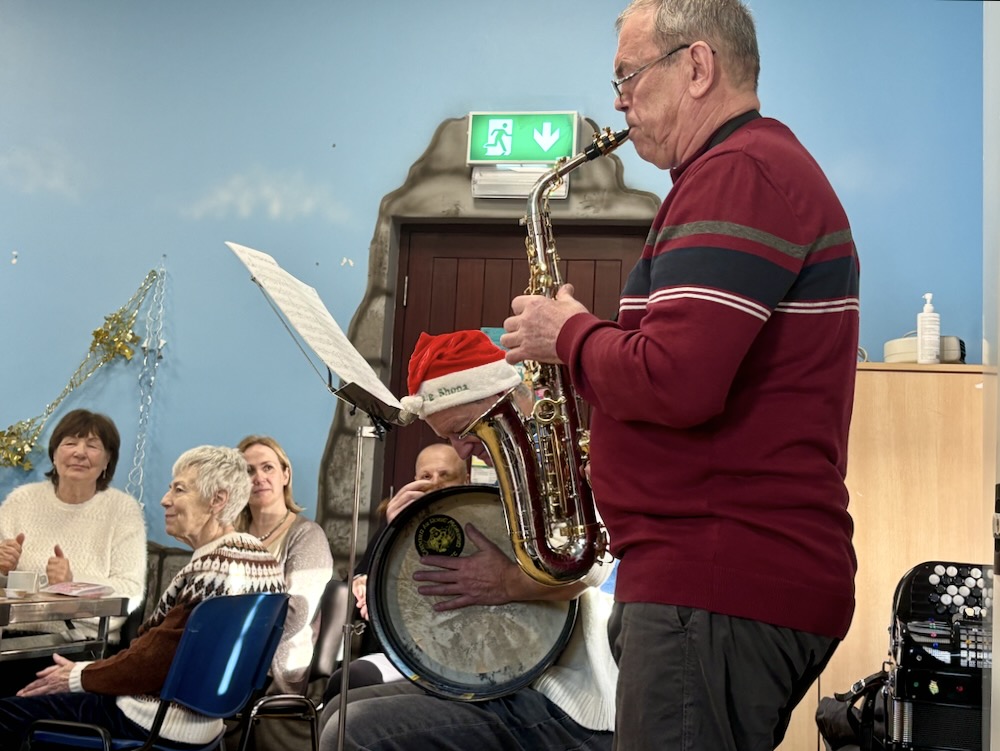
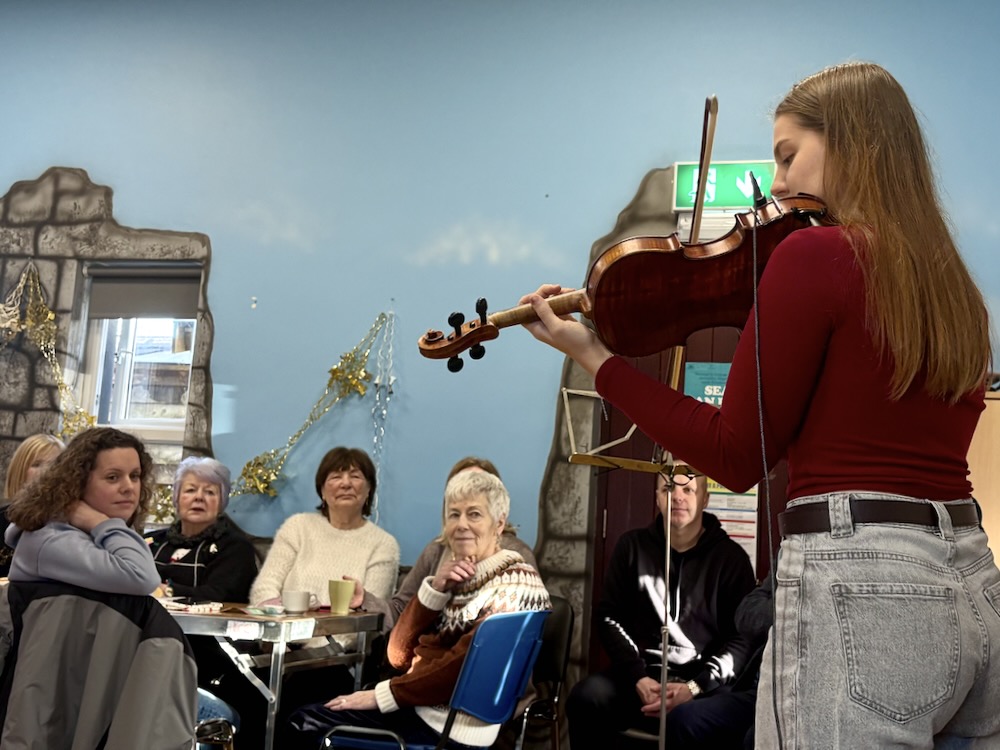
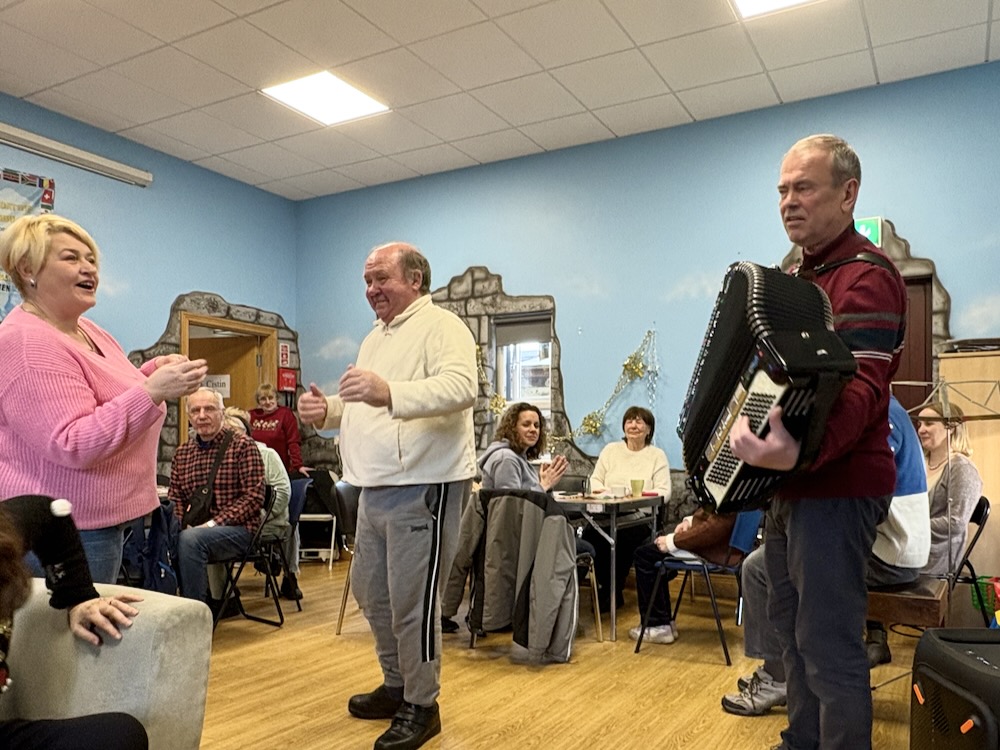
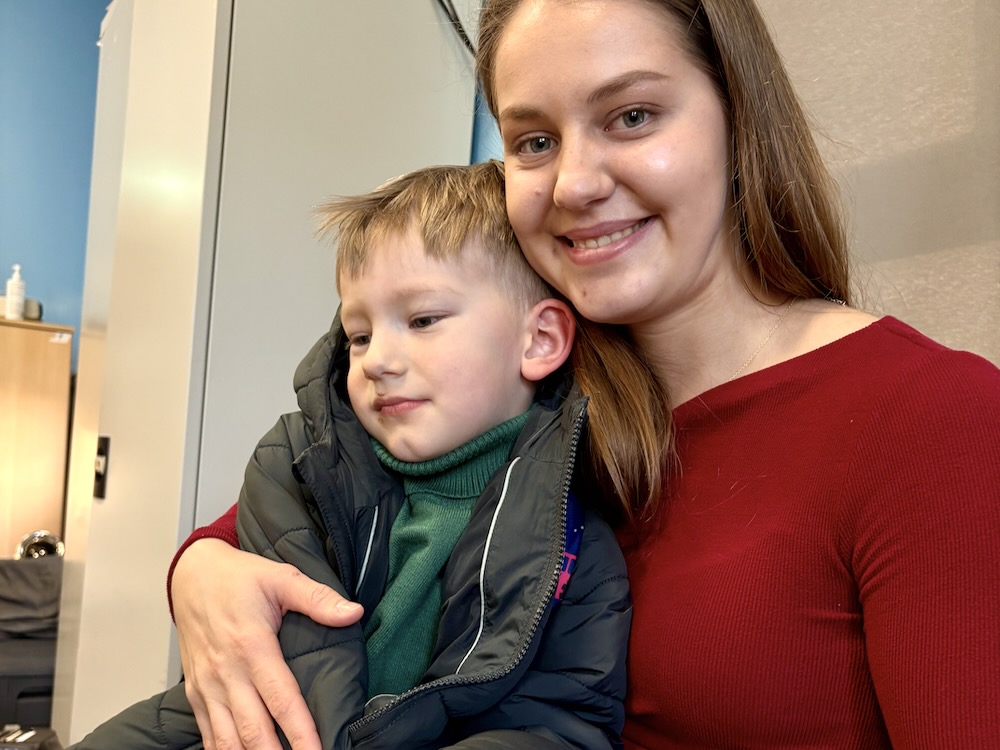
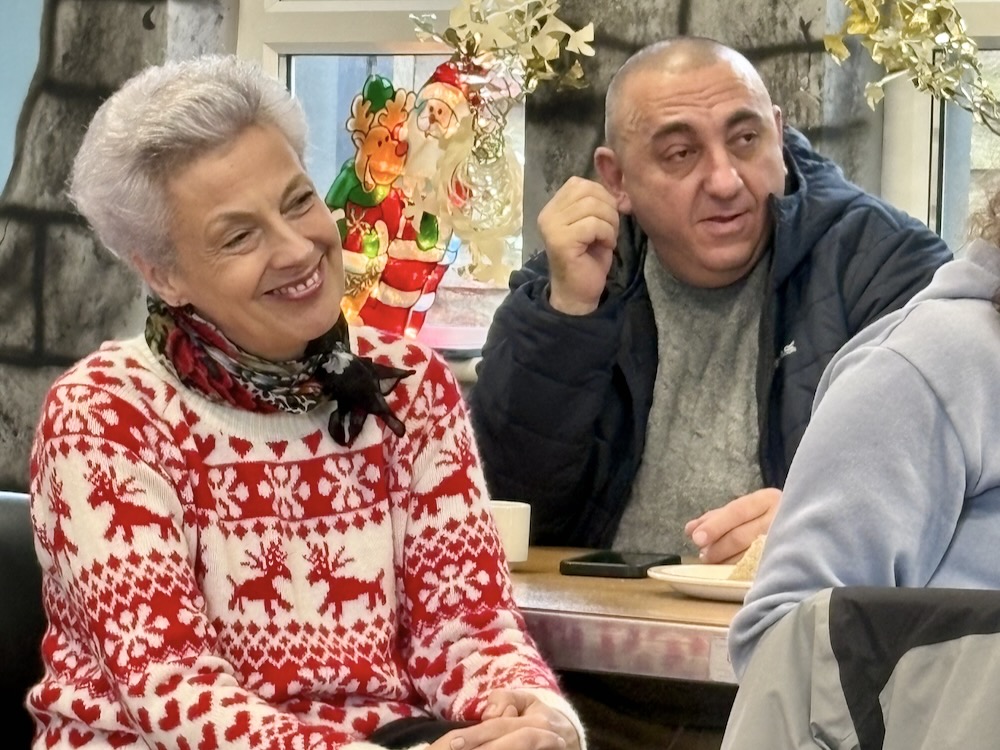
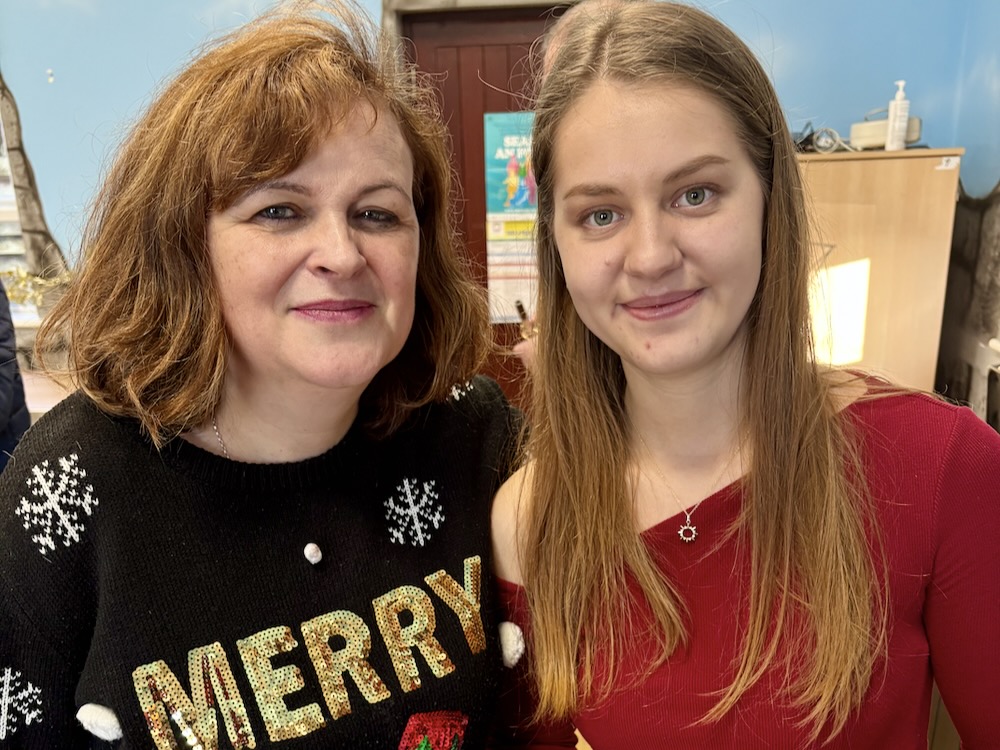
Probably never in the annals of musical history has a Ukrainian saxophonist-cum-accordionist, a classical violinist and an Irish bodhrán player come together as a highly-entertaining trio.
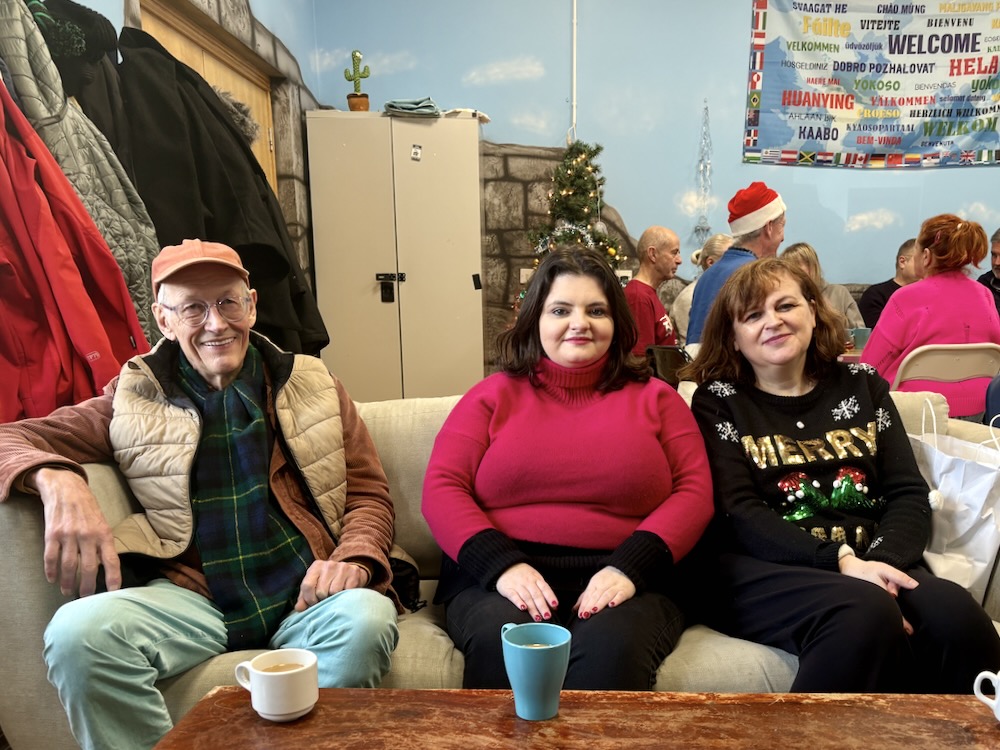
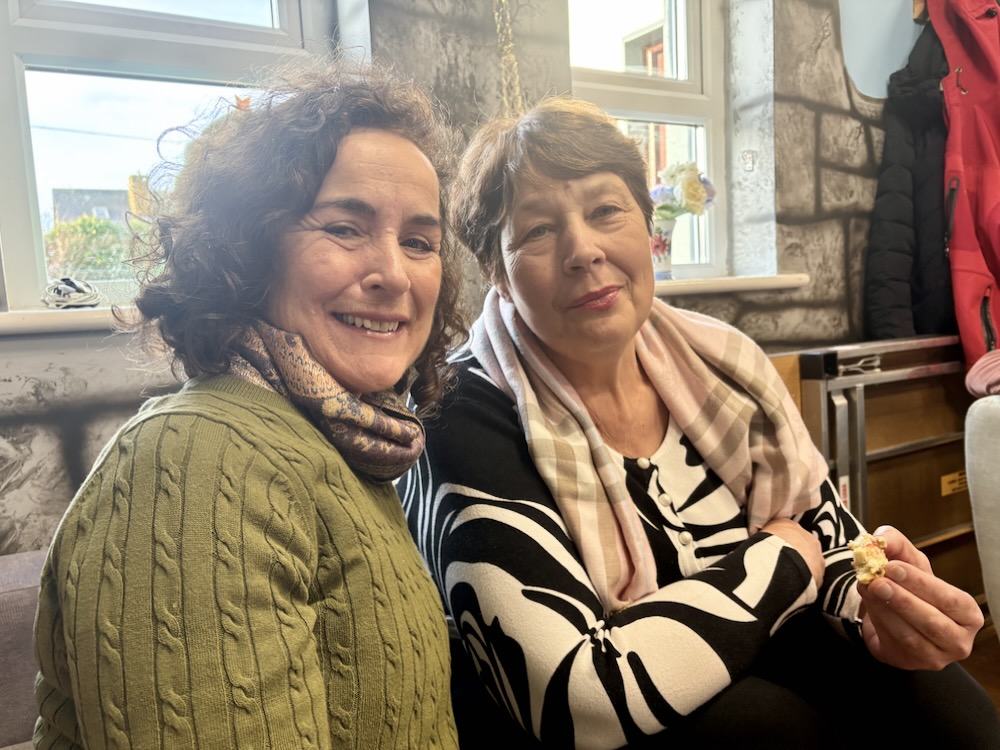
But they did this week at a celebratory Yuletide event at Garradh Colmcille in Falcarragh attended by women, men and children representing diverse nationalities including Canadian, South African, American, Irish, Ukrainian and English.
This unique occasion featured musicians, Reuben O’Conluain, Irish-language professor and cultural enthusiast, multi-instrumentalist Yuriii Hryhoriev and talented Olena Korotka, a classically-trained orchestral violinist from the now militarised region of Kherson in southern Ukraine.
The proceedings ranged from delightful musical renderings including traditional Irish tunes as well as Ukrainian folk songs such as ‘Chervona Ruta’ and ‘Cheremshyna,’ to contemporary ballads such as Leonard Cohen’s ‘Hallelujah,’ and ‘Until I Found You’ by Stephen Sanchez, with a few festive seasonal songs including ‘Jingle Bell Rock’ and ‘It’s Beginning To Look a Lot Like Christmas‘ tossed in for good measure.
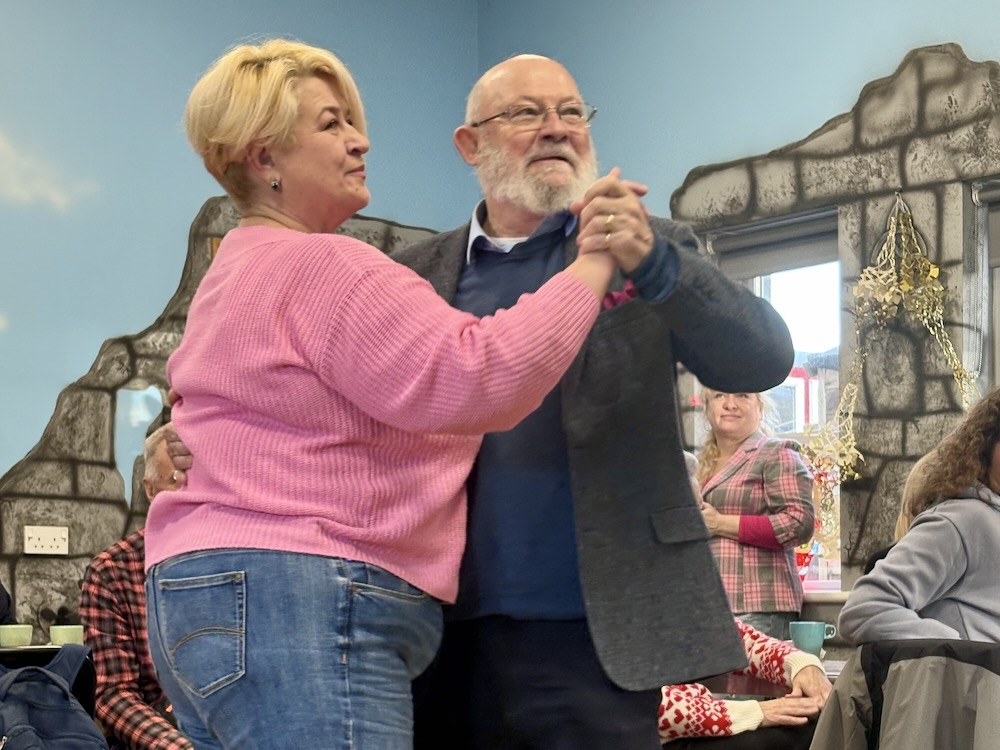
Nimble dancers also took to the floor, shaking their booties in carefree abandon to the lively rhythms of the instruments played so wonderfully.
Many congratulations to Armen Galstyan, a refugee from Odessa, for organising the musicians, and local community activist at Pobal le Chéile, Rosemary Grain, and her enthusiastic support team for hosting the event so well.
For me, and I’m sure for many others attending, the event highlighted the interconnectedness of people across borders illustrating how humanity, regardless of language, skin colour, religion or nationality, is one and the same entity, each element dependent upon the other for peace, progress and prosperity.
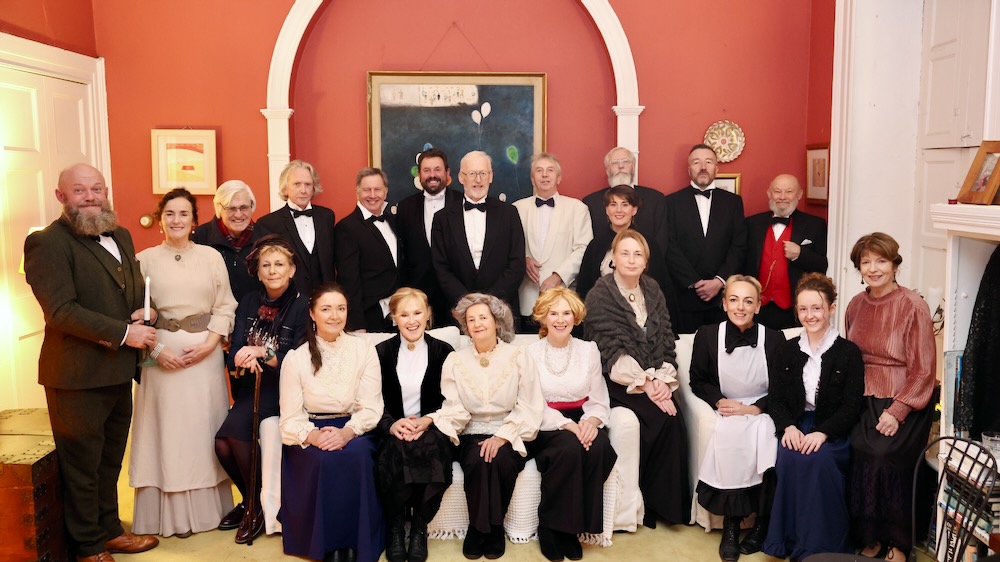
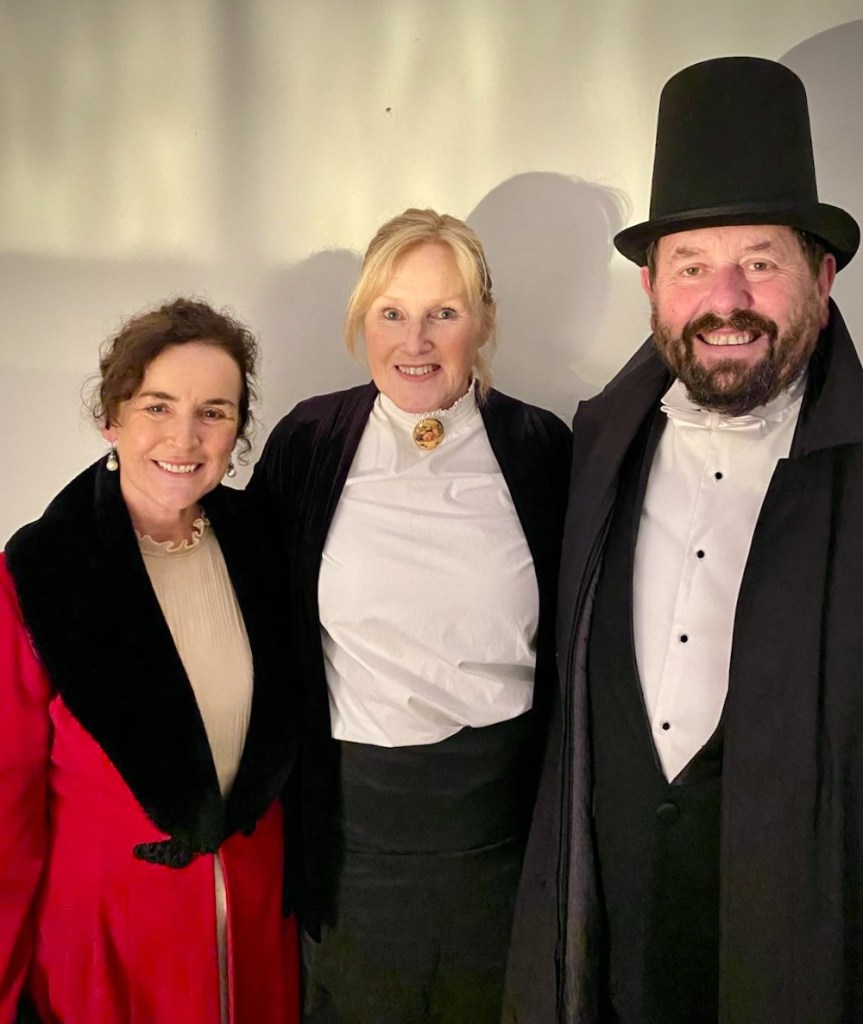
What a theatrical triumph this past weekend for local amateur drama company, The Cloughaneely Players, who meet close to my home here in the scenic northwest corner of Donegal.
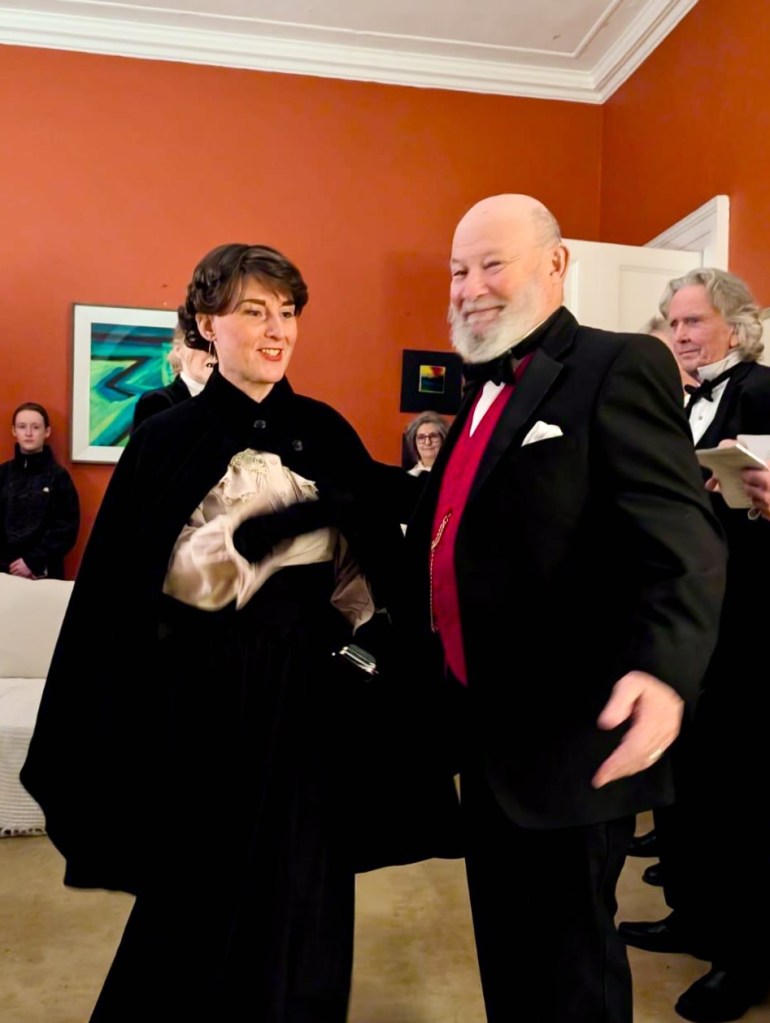
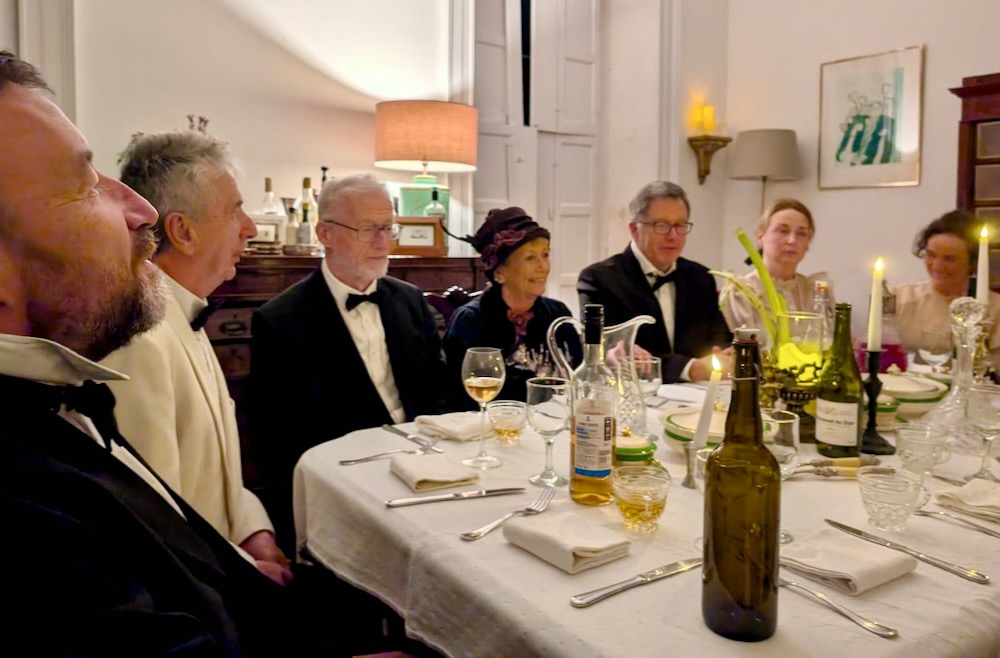
Not only did they host a superb re-enactment, complete with costumes and wigs, of James Joyce’s classic short story ‘The Dead’ set in 1904 in a most enjoyable manner, but they transformed a rural Donegal house into a 19th century multi-stage setting using most of the rooms in the house, both upstairs and downstairs, for various scenes.
Many congratulations to director Carmel MacGill, consultant director Murray Learmont, choreographer Caroline McGee, and more than twenty talented local amateur actors and musicians for a superb show.
And keep in mind, we’re not talking about well-paid West End or Broadway professional performers (though you might be mistaken that they were). We’re talking about a local bartender, a teacher, a nurse, a doctor or two, a real estate broker, a hypno-therapist, even a retired revenue sheriff, and many others, all of whom bring sheer enthusiasm and passion into treading the boards.
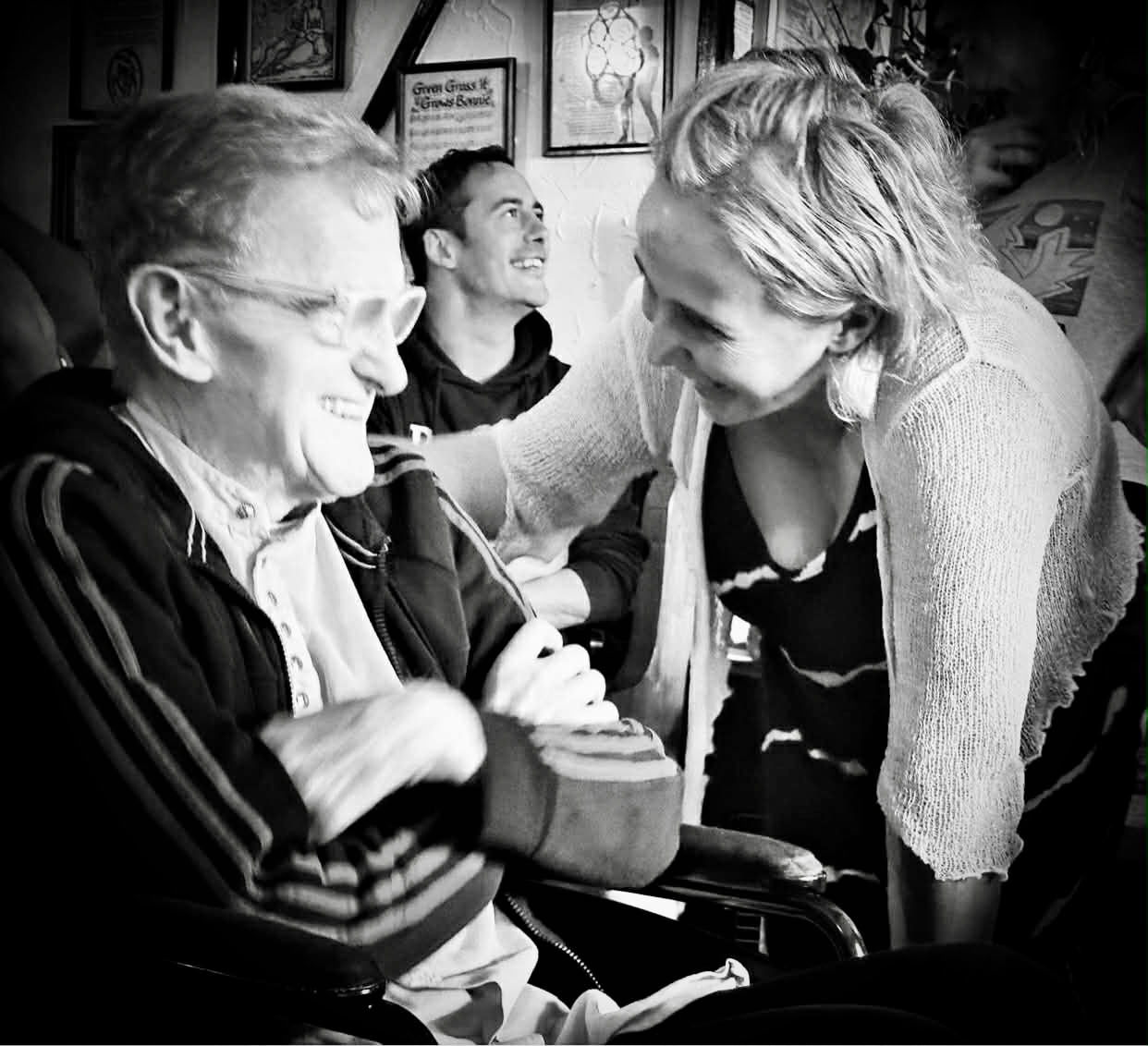
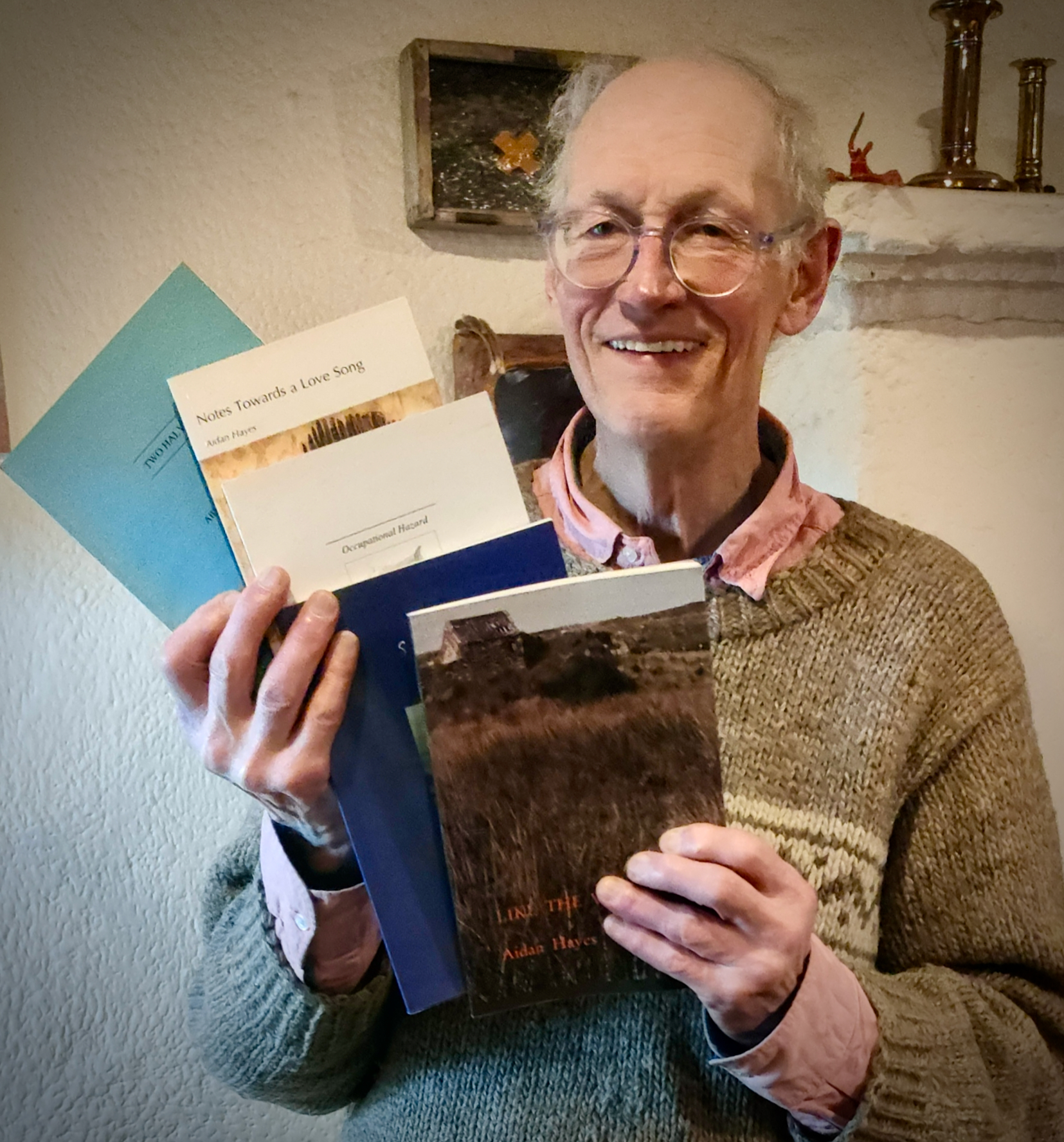
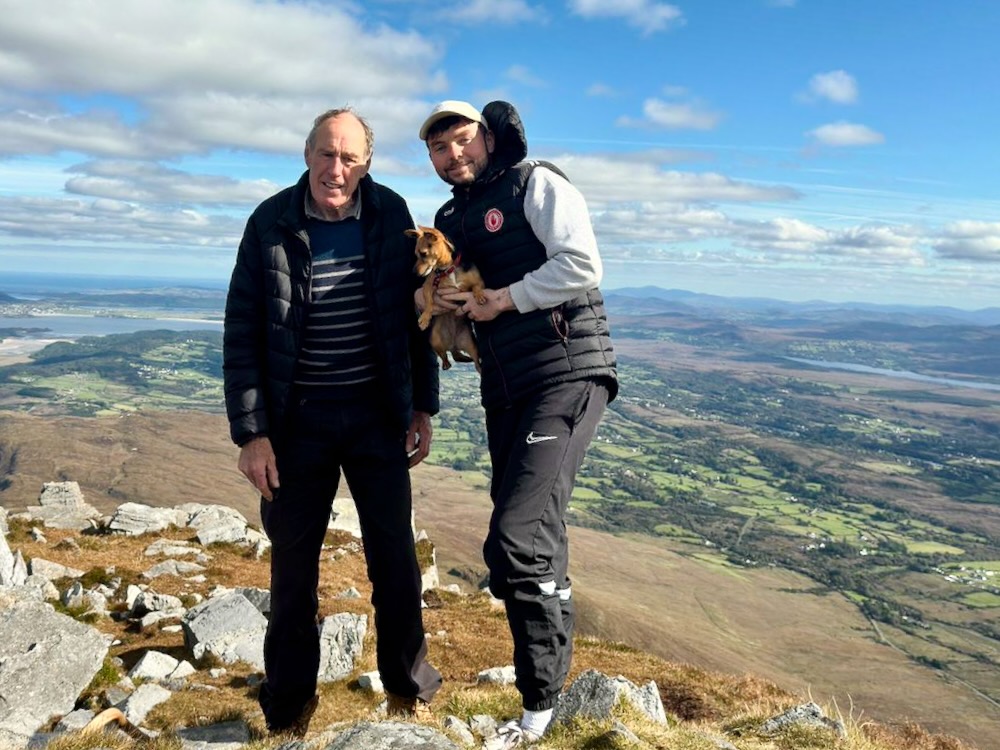
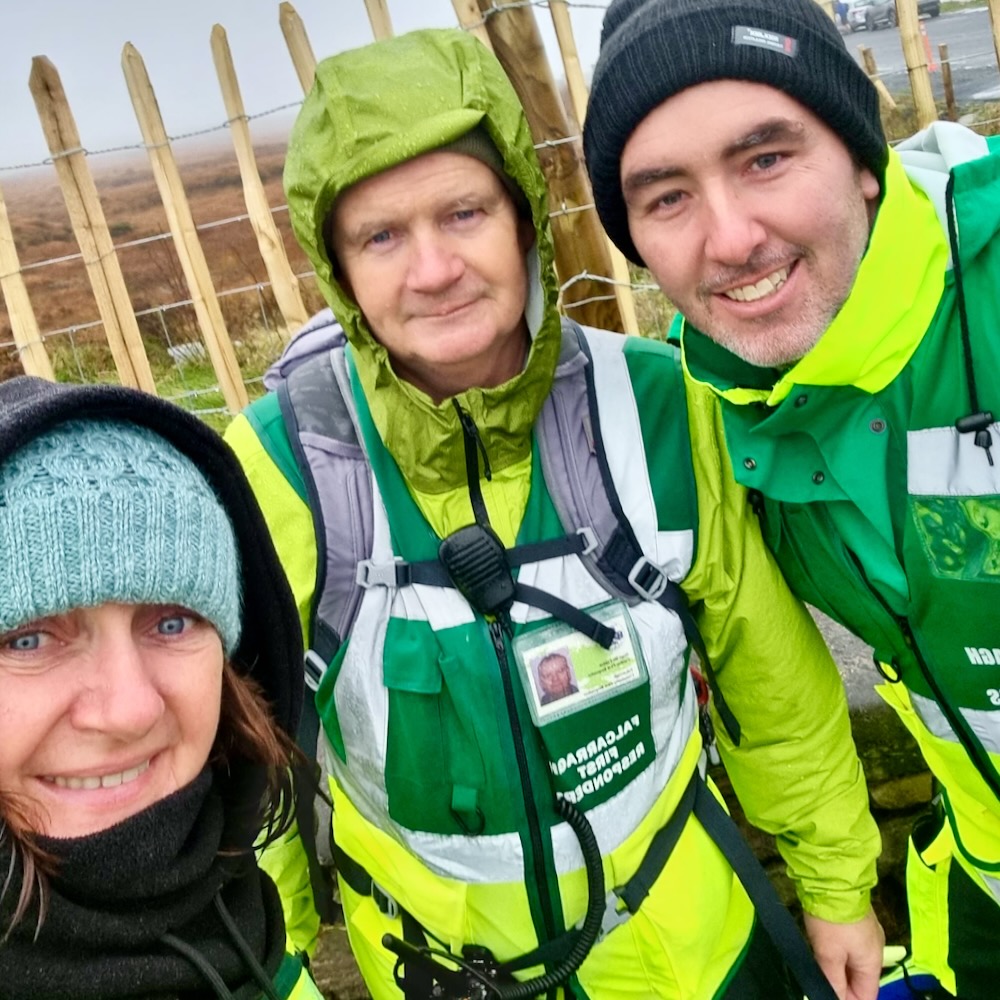
Here’s a few photographs to illustrate the weekend’s entertainment.
I’ve written a much more comprehensive article in tribute to these delightful women and men for this Thursday’s edition of the Donegal News on the Digest page so pick up a copy and have a read and rejoice we have such talented artists among us.
And don’t miss out on their next production. The tickets will be red hot, so buy early. No doubt they’ll be sold for high prices on the international black market.
Thank you to Catriona Kelly, Jake Campbell McLaughlin and Maggie McKinney for photographs.
Thankfully, mercy of mercies, the Irish Presidential election is almost over.
In a few hours, people throughout the Emerald Isle can breathe a sigh of relief. And get on with everyday things, knowing full well that the winning candidate will have barely a whisper of an effect on their day-to-day lives.
They may, however, be a wee bit miffed that election of a person in office for the next seven years with no power to affect their lives will cost them over 35 million euro, over five million a year in salaries and expenses.
That’s over 13,000 euro for every single day.
Put another way, it’s over 1,600 euro per hour based on an 8-hour working day.
That could pay salaries for a helluva lot of nurses and doctors to help strengthen Ireland’s woeful health system. Not to mention what it could do for struggling schools and community centres.
It begs the question – Is it worth it?
Sadly, this presidential contest, if one can dignify it with this word, is also probably the most boring in living memory, aside from a single mini-drama when one of only three candidates dropped out, no doubt realising being so far behind in the opinion polls, he’d probably come in fourth.
It’s also sad that as the two candidates in the race have been well-established party supported national political figures for many years, real refreshing innovative change is obviously not on the Irish agenda for the foreseeable future. Something that’s probably welcome to some of Ireland’s politicians as their salaries and expenses are quite lucrative. Certainly compared to other countries.
This Presidential election has turned out to be the predictable cliche, Left Versus Right scenario, a pretty straightforward political party battle, with Catherine Connolly, who simply left the Labour Party because she wasn’t picked as an election candidate, head and shoulders intellectually above her rival, Heather Humphreys, former Minister for the Fine Gael coalition government partner. A lady who started her campaign with a fixed butter-wouldn’t melt-in-my-mouth regal smile until, seeing herself well behind her rival, suddenly grew fangs. Much too late.
What’s most depressing about this whole Presidential affair is that the leading parties in Ireland turned this election into ‘them-versus-us’ party political battle, thus making sure the next President of Ireland, the only position based on a national vote, would not be handed to a truly Independent candidate with experience on both the left and right of centre, someone from a working-class background but successful in business, someone with fresh new ideas, vision and comprehensive international experience, something sadly neither candidate possesses.
Is Sinn Fein’s decision this weekend to support Independent candidate, Catherine Connolly, in November’s Irish Presidential elections a case of the tail wagging the dog?
It certainly seems so.
After much dithering and delay, Ireland’s third ranked political party – which not so long ago could have topped the polls nationwide and emerged as the nation’s leading party if they’d only put forward more candidates – could not even decide on its own Presidential candidate, party member or not.
Instead, it meekly followed in the wake of other smaller Left-leaning parties who have been supporting Connolly for many months.
Catherine Connolly – established Irish politician.
If that’s not the tail wagging the dog, what is?
No matter how well the story is spun – and sadly Sinn Fein party leader Mary Lou MacDonald offered an ‘over-the-top’ act to do so a few days ago, uttering the superlative cliché ‘game-changer’ – this non-decision decision may come back to bite her and her colleagues.
While they won’t say it publicly, the other Left wing parties in Ireland are now frothing at the mouth at the possibility of stealing parliament seats from Sinn Fein at the next election.
Unfortunately, Mary Lou made the situation even worse this weekend when she tried vainly to justify choosing Connolly by saying recent Irish presidents had been elected “from outside the political establishment” and that Connolly was following in that tradition.
What a load of nonsense.
Catherine Connolly has been an ‘established’ politician for the last quarter of a century, beginning as local councillor in Galway, then rising to Mayor five years later, then becoming a TD ten years ago. For goodness sake, she was even chairperson of Ireland’s national parliament for a full four years.
If that’s not ‘established’, what is?
Even the present President of Ireland Michael D. Higgins, elected not once but twice over the last 14 years, was a ‘classic established politician.’ For almost half a century including stints as Labour Party president, Senator, TD (Member of Parliament) and even as a Minister.
One has to ask oneself ‘Who the hell is writing Mary Lou’s scripts. And who’s conducting her research?”
I’ve always been Left of center in my political outlook, and would like Sinn Fein to be in Government and shake up the meagre mediocrity of Irish politics. But with poor decisions like this one over the Presidency, I fear that’s not going to happen any time soon.
Sinn Fein has shown itself in many instances to be a no-risk party, including its electoral management strategy in Donegal where I now live. In order for it to justify its claim as a leading party, it needs to take risks. But time and time again, it has shown itself to be very much risk averse.
My humble view is that Irish people are desperate for a fresh face in Áras an Uachtaráin, the official residence of the President of Ireland, someone truly not involved in Irish politics. Someone with the international experience necessary to conduct the role of Presidency in a strong diplomatic manner. They simply don’t want the Presidential race to be based along worn, age-old political party lines.
That’s why someone like Gareth Sheridan – a man whose US-based company has accumulated losses of 40 million dollars and who has himself already been fined for misleading people about his business and whose main business partner is said to have links with Russian oligarchs – has managed to get two county councils in Ireland to nominate him as a Presidential candidate.
That’s how desperate Irish people are to find someone new.
Mary Lou went half way by talking about the need for someone new.
But then she went right ahead and selected someone straight from the old political establishment. And to make matters worse, someone other parties had already selected a long time ago.
It seems Sinn Fein may have just bought the ruling coalition of Fianna Fail and Fine Gael an early Christmas present.
Sinn Fein’s President Mary Lou McDonald today described on national airwaves that her political party’s long-awaited, soon-to-be-named Irish Presidential candidate would be a ‘game changer.’
Sinn Féin leader Mary Lou McDonald has said that the party’s participation in the Presidential Election campaign will be a “game-changer”. Sinn Féin has been mulling over its approach to the race for Áras an Úachtaráin, with two options at its disposal – either run its own candidate or back Independent Catherine Connolly’s campaign. Speaking at the National Ploughing Championships in Screggan, Co Offaly, Ms McDonald said she already knew the proposal she would be bringing to the party, but that it would not be made public until Saturday. Go to link in bio for more #rtenews#ireland#presidentialelection#sinnfein
Having used this grandiose, hifalutin phrase, that’s exactly what supporters and would-be supporters of Sinn Fein will be expecting that person to be – a unique choice who will shock and surprise everyone.
The kind of individual a disillusioned electorate are hungry for. Someone whose name and background will light a fire under what has already become – albeit in its early stages – a timid, banal, utterly predictable and lukewarm election campaign.
To use such a superlative phrase as ’game-changer’ and not deliver an individual with the immense passion, innovative vision and creativity the term demands will be considered by most people to be a dismal failure. And show Sinn Fein to be a ‘has-been, once-was’ party, one whose rise in recent years has incontrovertibly stalled.
To come up with something less – such as merely supporting Independent Catherine Connolly – will help damn the party into endless Opposition. It will signal to a triumphant Fianna Fail-Fine Gael coalition Government that it has nothing to worry about from Ireland’s third-ranked party. That Sinn Fein is all bark and bluster. But no real bite.
Regardless of the spin about Left wing unity, Sinn Fein supporting Connolly will be seen as nothing less than inherent party weakness. That of a political party seeking to lead the country that cannot even find a suitable candidate for the most universally elected political position in the nation.
That’s not leadership. That’s impotence.
Supporting Connolly, Sinn Fein at this stage will also be seen as being led by the other Left wing parties who decided on her months ago. And they risk losing key votes at the next election as a result, probably leading to an inevitable decline in its parliamentary seats. A major, perhaps irrecoverable, blow to the party’s hardworking grassroots members.
Thus it’s all-important, not just for future success but for sheer survival, that Mary Lou and her colleagues in the upper ranks of Sinn Fein deliver what they’ve promise so confidently. Nothing less will do.
In doing so, hopefully, they’ll also make this rather boring Irish Presidential battle a bit more interesting than it is right now, raising it from its low-level drab ordinariness.
If they don’t, Sinn Fein may pay a heavy price at the next election. And possibly never recover from the fall.
For a party that is admirably ethical and honest in its dealings, with a central mission of equality and justice for all, they need to find the courage to take risk, something the party is not particularly known for, as not running a second candidate in the Gweedore-Cloughaneely area in the last election showed, with Pearse Doherty’s massive surplus votes going nowhere instead of towards electing a record third TD in Donegal.
This Presidential campaign is Sinn Fein’s Rubicon moment. It’ll be intriguing to see if they manage to cross over. Or drown in the effort.
Is it not reprehensible – the height of hypocrisy in fact – that Simon Harris the leader of the Irish Government – has the audacity to accuse Sinn Féin in recent weeks of ‘duping’ people when it expelled several party members for substandard social behaviour?
Simon Harris – the Dishonourable Duke of Duping.
The Cambridge dictionary definition of dupe is ‘to deceive’ and if anyone is guilty of deception, it is Harris and his colleagues in the coalition Government of Fine Gael, Fianna Fail and the Green Party.
Over the last four years since being in power – and for many years before that – these parties have been nothing less than ‘repeat offenders,’ constantly deceiving the ordinary hardworking people of Ireland with false promises of a quality lifestyle as befitting a nation that is one of the earliest members of the European Union, then called the European Economic Community, or EEC for short, back in 1973.
Instead, however, we have one of the most disastrous health systems on the continent, with people waiting years for life-saving surgeries, often dying before they receive it; we are awash in homelessness and poverty, with an estimated people 30,000 living on the streets, including thousands of young children and infants; we have a forsaken, forgotten, forlorn State where retirees and newlyweds alike are unable to afford the rent of a simple home, never mind the financial resources to even remotely consider buying one to end or begin their lives together in a modicum of comfort.
Not only does the Dishonourable Duke of Duping continue to deceive people that after all these years he’ll one day consider putting a roof over our heads, but he himself basks in the lap of luxury in one of the most expensive and elitist places in Ireland, the scenic coastal town of Greystones in county Wicklow, where he was born, where he lives and where houses cost up to two million euro, and more.
But is it not somewhat harsh of us to criticise the Dishonourable Duke of Duping for his lack of common decency? Is it not unfair to ask a man of such Royal blood living in such a high falutin’ environment to understand the plight of so many desperate Irish people? Is that not akin to asking King Charles of England to make his own cupán tae once in a while?
Shamefully, while the wealthy in Ireland (many of whom are the Dishonourable Duke of Duping’s closest neighbours) while away their days in decadent lifestyles with fancy homes in fancy places or travel in environmentally-damaging private jets (which the Dishonourable Duke of Duping does frequently) and indulge their whims in ostentatious holiday homes abroad (which the Dishonourable Duke of Duping often does), modern Ireland suffers the worst housing shortage in its entire 100-year history.
Studies show less than a third of 30-year-olds own their home. Over half of all newly-built homes in greater Dublin alone were bought or developed by global vulture investor funds, thus locking countless people out of ever attempting to buy one. These ‘vampire funds’ don’t buy homes to sell, they buy them to extract high rents in perpetuity. In other words, they suck the lifeblood out of decent Irish society.
And to make matters worse, the Dishonourable Duke of Duping and his cadre of Government lackeys allowed a temporary no-fault eviction ban in Ireland to lapse last March, thus opening the floodgates for more than 15,000 notices of termination to be issued last year, making the number of evictions higher than it was during the Famine in the mid-1800s.
For centuries, gutless, greedy, often absentee, landlords, have been the scourge of Ireland, rich, ruthless people who with the click of a finger, a scribbled signature on a sheet of paper, thoughtlessly tossed hungry families out into the ditches.
Now it seems the same is happening all over again in modern Ireland, this time under the dictatorial rule of the Dishonourable Duke of Duping and his ignoble entourage.
Instead of urgently dealing with these major social and health issues that are making the lives of so many Irish people intolerable, Harris and his well-to-do cohorts, including Government coalition leaders, Micheál Martin of Fianna Fail and Roderic O’Gorman of the Green Party, are pointing their grubby finger at Sinn Féin, an oft-used political ploy to distract popular attention away from the real issues, and their own failings on them.
In doing so, however, these ‘I’m-better-than-you’ leaders fail to realise something important. While the bitter winds of winter howl at our doors, while Storm Ashley batters the coast this weekend, Irish people are not bears. They are not hibernating. They are wide awake. And fearful. And hungry. And cold. And they remember the empty promises made to them from on high four years ago, and for many years before that.
Maybe, just maybe, we should ask Sinn Féin leader Mary Lou McDonald to re-tell the story of these empty promises once more, to remind us how easily we were taken for fools. And in doing so, help us make sure the Dishonourable Duke of Duping and his Royal patrons don’t sneak back into power through the back door and make jesters of us for another four years in their Court of Failure.
Maybe, just maybe, we’ve learned our lesson and are wide awake enough to elect Sinn Féin, the ‘Party of Change’ and improve things for the better. For each and everyone of us, our parents, our children and the generations who come after.
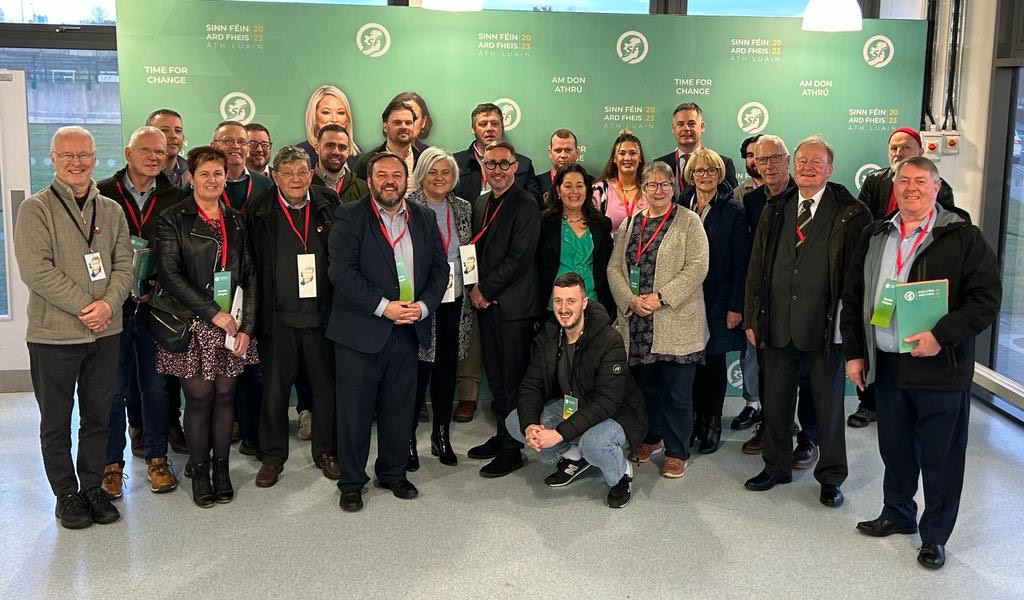
ATHLONE, WESTMEATH – A resounding ‘YES’ was the answer that rang out loud and clear all around me from around 1,500 enthusiastic and committed members, young and old, men and women, some teenagers, some retirees, gathered for the party’s annual Ard Fheis in Athlone, Westmeath several weeks ago.
A large Donegal delegation, the county where I live in northwest Ireland, attended the Ard Fheis.
I know from past experience in both Europe and the US that political party conferences can be full of hype and promise but I sensed something special in the air at this one. Positivity, definitely. Excitement, plenty. Anticipation, yes. Expectation, ditto. Even a little apprehension. Natural, considering it’s been 100 years since Sinn Fein last walked through the corridors of power as the undisputed political leader of Ireland.
Attending this annual meeting, I was extremely impressed with the overwhelming enthusiasm shown by members, their readiness to be in Government and make meaningful changes in Ireland for a better future for all and by the large number of women present, many of whom spoke incisively from the stage as delegates on a range of issues, from education to health, the high cost of living to homelessness.
With local and EU elections, and perhaps national ones as well, occurring next year, it seemed appropriate that a party that continues to rise in national popularity was holding its annual party meeting in Athlone, a town considered the geographical center of Ireland, with Sinn Féin hoping its influence radiates from there nationwide in all directions.
Led by two women, Mary Lou McDonald, the party’s president and TD for Dublin Central, and Michelle O’Neill, party vice-president and First Minister Elect in Northern Ireland, with TDs nationwide, would-be Ministers-in-waiting, including TDs Pearse Doherty and Pádraig MacLochlainn from Donegal where I now live and with whom I spoke during breaks in the formal proceedings, all aired their views on key issues such as the cost of living crisis, plight of the health system, mounting housing problems, and many more.
We want to build a new Ireland,” said McDonald in her keynote address after receiving a rousing reception. “A nation home for all. A unified nation of confidence and compassion, talent and ingenuity, claiming our future, our rightful place among the nations of the world. A new Ireland. The Orange and Green reconciled. No place for racism, Islamophobia, Antisemitism, sexism, homophobia, transphobia, or sectarianism.”
O’Neill spoke about the urgent need to kick-start the Stormont Assembly, the national parliament in Belfast, which has been boycotted by the Democratic Unionist Party (DUP), the main Unionist opposition, for the past year. “My message is one of positivity, one about the future, about building a better society for us all to live side by side,” she said. “My message to the DUP is that they need to be in the Executive with the rest of us, making politics work, making this a better place for everybody who lives here.”
Pearse Doherty, the party’s spokesperson on finance, thanked his fellow party members, saying, “You are the engine room of our organisation. Your work, your energy, your ideas, make Sinn Féin what it is – the only viable vehicle for the ordinary people of Ireland to achieve change in our country, and the only viable vehicle to achieve the unity of our country. We are focused on one thing – delivery for workers and family the length and breadth of our island. We are on the countdown to the general election, and we are setting out the type of change that a Sinn Féin government will deliver if the people give us that opportunity. We are setting out our plans to build a better, fairer country for all, for positive change and transformation.”
Pearse Doherty listens closely as Mary Lou McDonald gives her keynote address.
Paul Hayes, from Carrigart, Sinn Féin regional secretary in Donegal, was delighted with the weekend’s success, telling me that the Ard Fheis had brought together over 1,400 people, with more than 200 speakers over 300 issues voted on. “It’s a great success, I’m very happy,” he told me, smiling. Sitting beside me in the auditorium stalwart Pat Doherty, former Sinn Féin vice-president, wore a quiet, thoughtful – one might even say, contented – expression on his face. And no wonder. After many years of personal struggle and hard work towards the goal of a United Ireland Socialist Republic, the idea – once remote – of his party leading Government both in the north and south of of the nation seems rapidly becoming a reality.
(left to right) Paul Hayes, Sinn Féin regional secretary in Donegal, with Pat Doherty, the party’s former vice-president.Both were happy with the strong attendance and content at the Ard Fheis.
Thanking me for exclusive information I provided to Sinn Féin on RTE expenses, MacLochlainn, the party’s chief whip and spokesperson on fisheries and the marine, added, “We are mindful that this Sinn Féin Ard Fheis could be the last one before the next general election and the formation of a new government. We are confident, we are ready.”
Pádraig MacLochlainn, TD, is confident. “Sinn Féin is ready for Government,” he said.
Among the many motions passed was one affecting many people in Donegal. This pertains to an ongoing scandal – houses that are crumbling due to mica and pyrite in concrete. “Sinn Féin are determined to lead the next government so it is important to renew our commitment to one hundred percent redress and to spell out how we would implement that policy, if we get that chance,” said Sinn Féin housing spokesperson, Eoin Ó Broin. “We believe the Enhanced Defective Concrete Block Grant Scheme is another scheme that will deny redress to most affected homeowners.”
Aside from domestic issues, Sinn Féin also debated foreign policy issues with loud cheers of support and a prolonged standing ovation given to Dr. Jilan Wahba Abdalmajid, Ambassador of Palestine to Ireland, a VIP guest speaker.
Sinn Féin initially abstained at local council and national level from calling for the expulsion of the Israeli Ambassador to Ireland but in face of horrific stories of death and life-threatening injuries, including thousands of young children, and the wholesale destruction of home and hearth in Gaza, changed tack and formally backed those calls, as well as calling for Israel to be referred to the International Criminal Court by Ireland and the Irish government to formally recognise the State of Palestine.
“We call for an immediate ceasefire and stand firmly behind Palestine in its hopes and aspirations for its own homeland recognised by all international bodies and a long and lasting peace with all its neighbours,” said Matt Carthy, the party’s spokesperson on foreign affairs, who also thanked me for a proposal I made on a possible long-term solution to the Palestine question.
Young members of Sinn Féin show their support for Palestine.
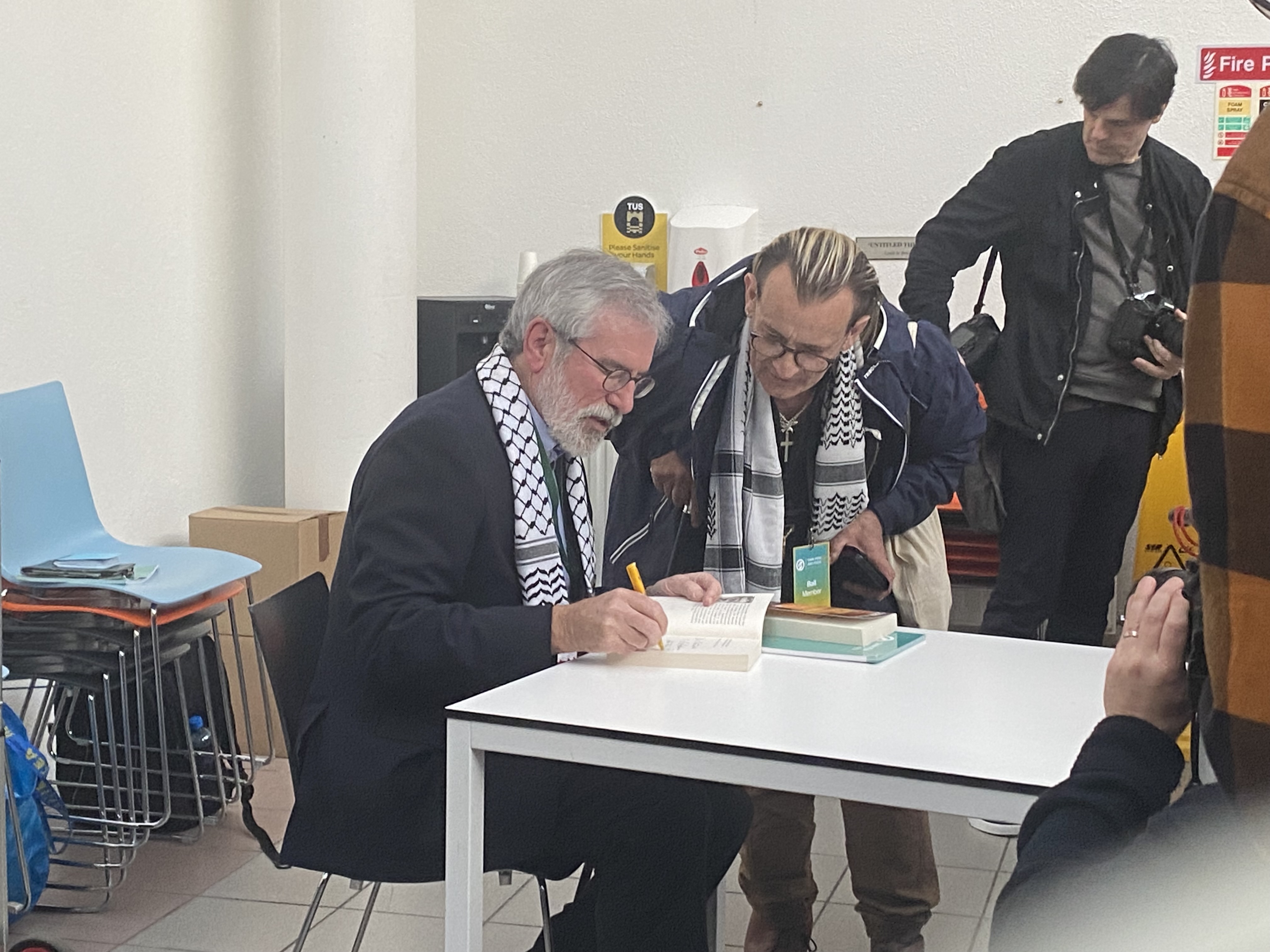
Elsewhere at the Ard Fheis, former Sinn Féin president, Gerry Adams, cheerfully met with a long line of well-wishers as he signed copies of his latest book, Black Mountain and Other Stories. Gerry has authored a number of books including Before the Dawn: An Autobiography; Cage Eleven: Writings From Prison;The Street And Other Stories; Falls Memories; and A Farther Shore: Ireland’s Long Road.
I am proud to say that Gerry’s Donegal holiday house lies less than 10 kilometers from my own home and that his mother and mine were very close friends as teenagers, working side-by-side in west Belfast and stayed together in the Donegal Gaeltacht on several occasions (with their interest in boys vying closely with their interest in the Irish language and culture, I am reliably informed).
Former Sinn Féin president, Gerry Adams, signs copies of his books.
Thousands of euro of public money are pouring into diverse celebrations this year throughout Ireland to celebrate the life of a 6th century Celtic monk called Columba (or Colmcille) – a strange and elusive man we know almost nothing about.
Even though schools, community centres, Christian churches, local councils and other groups celebrate the 1,500th year of the mystical monk’s birth, no-one knows exactly when he was born. Nor do we know exactly where. We think it was Donegal but we don’t know for sure what part. We know he left Ireland for the Scottish island of Iona where he spent a good part of his life. But we don’t know the real reasons why.
Sitting on the Torr an Aba (Hill of the Abbott) in front of Iona Abbey where it is said Columba did most of his meditating.
We don’t even know for sure if Columba had a mistress, a wife, children, or indeed whether he was gay or bisexual like many of the monks of his time. (Celibacy was not compulsory then, monks/priests could marry and have families and homosexuality was not denigrated as it is today by the Catholic Church).
Nor do we know where Columba is buried. It was thought his bones (or at least the smaller ones) were wrapped up inside a wooden casket covered with silver and copper-alloy designs known as a reliquary and carried by Scottish soldiers at the Battle of Bannockburn where they famously defeated the English. But we now learn there was nothing in the box, which now sits behind a glass case wired to a sophisticated security alarm system in the National Museum of Scotland in Edinburgh and labelled as the ‘Monymusk Reliquary.’
Make no bones about it – Columba’s relics are not in the ‘Monymusk Reliquary.’
The reason we know so little about Columba is that while he and his followers attracted a worldwide reputation for penning and illustrating magnificent books of all kinds including the famous Book of Kells, there are no records whatsoever of Columba’s own personal writing, not even a simple diary.
So, how is it then we’re spending so much public money celebrating a man we know nothing about, indeed a man who was never even declared a saint, though most people think he was. Why would the Vatican canonise him anyhow? After all, the Celtic Christian church Columba represented stood firmly against the Roman version, battling tooth and nail for ultimate supremacy, that issue being eventually settled at the Synod of Whitby in 664 with Rome being the victor.
Who knows, perhaps Columba, a lover of herbs, specially St. John’s Wort, followed too many Pagan practices, maybe even believing in faeries, and his writings were wilfully destroyed by the powers that be in Rome.
This brings me to another man, a man of our time.
Dr. Brian Lacey relaxes at his rural west Donegal home in the shadow of Errigal mountain.
Lively septuagenarian, author, archaeologist and historian, Brian Laceyis an exceptional dinner guest. A fine raconteur with quirky views of the world, he’s a man at ease with laughter and story-telling.
And he has just penned his latest book, on a spin-doctor called Adomnán (or Eunan) who single-handedly raised Columba’s name to ‘the High Heavens’ by inventing a series of mostly fictional or at the very least, highly-exaggerated, stories about the founder of Iona Monastery and the ‘miracles’ he supposedly performed.
Rather than it being a selfless literary endeavour, Adomnán’s reasons for writing his book were directly linked to both politics and money. In raising the profile of Columba, he also raised the public profile of the community of monks on Iona that he presided over 100 years after its founder had passed on, thus no doubt encouraging new recruits to sign up and more money donated to the monastery’s coffers.
Meeting the man himself, academic celebrity par excellence.
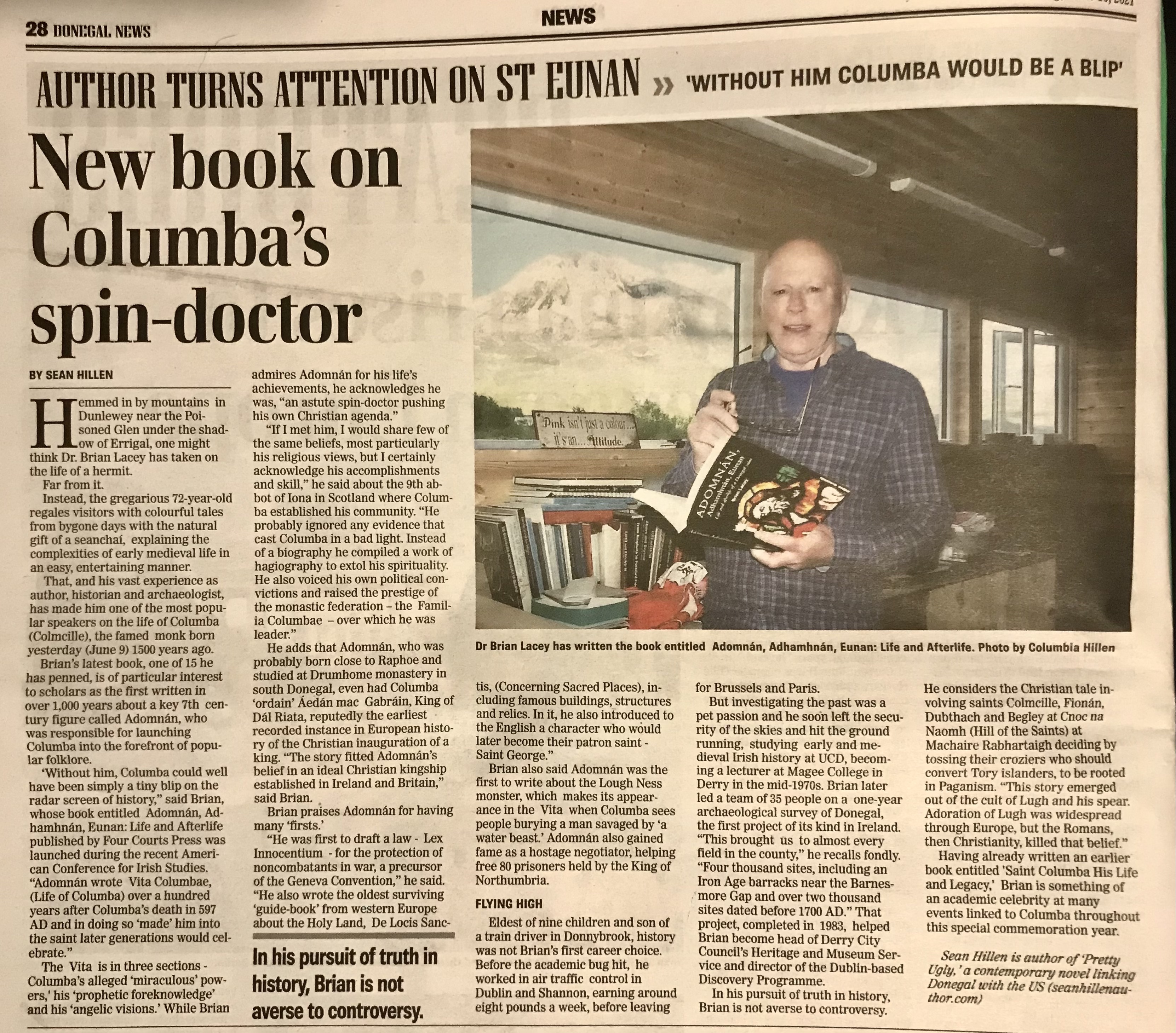
Some in Ireland might use local slang and call Adomnán ‘a cute hoor,’ loosely translated as ‘a shrewd scoundrel, especially in business or politics.’ Probably he was, but he also achieved much more, as you can see from the article below I wrote for the ‘Donegal News’ recently.
New Book On Columba’s Spin-doctor
By Sean Hillen
Hemmed in by mountains in Dunlewey near the Poisoned Glen under the shadow of Errigal, one might think Dr. Brian Lacey has taken on the life of a hermit.
Far from it.
Instead, the gregarious 72-year-old regales visitors with colourful tales from bygone days with the natural gift of a seanchaí, explaining the complexities of early medieval life in an easy, entertaining manner.
That, and his vast experience as author, historian and archaeologist, has made him one of the most popular speakers on the life of Columba (Colmcille), the famed monk born yesterday (June 9) 1500 years ago.
Brian’s latest book, one of 15 he has penned, is of particular interest to scholars as the first written in over 1,000 years about a key 7th century figure called Adomnán, who was responsible for launching Columba into the forefront of popular folklore.
‘Without him, Columba could well have been simply a tiny blip on the radar screen of history,” said Brian, whose book entitled Adomnán, Adhamhnán, Eunan: Life and Afterlife published by Four Courts Press was launched during the recent American Conference for Irish Studies. “Adomnán wrote Vita Columbae, (Life of Columba) over a hundred years after Columba’s death in 597 AD and in doing so ‘made’ him into the saint later generations would celebrate.”
The Vita is in three sections – Columba’s alleged ‘miraculous’ powers,’ his ‘prophetic foreknowledge’ and his ‘angelic visions.’ While Brian admires Adomnán for his life’s achievements, he acknowledges he was, “an astute spin-doctor pushing his own Christian agenda.”
“If I met him, I would share few of the same beliefs, most particularly his religious views, but I certainly acknowledge his accomplishments and skill,” he said about the 9th abbot of Iona in Scotland where Columba established his community. “He probably ignored any evidence that cast Columba in a bad light. Instead of a biography he compiled a work of hagiography to extol his spirituality. He also voiced his own political convictions and raised the prestige of the monastic federation – the Familia Columbae – over which he was leader.”
He adds that Adomnán, who was probably born close to Raphoe and studied at Drumhome monastery in south Donegal, even had Columba ‘ordain’ Áedán mac Gabráin, King of Dál Riata, reputedly the earliest recorded instance in European history of the Christian inauguration of a king. “The story fitted Adomnán’s belief in an ideal Christian kingship established in Ireland and Britain,” said Brian.
Brian praises Adomnán for having many ‘firsts.’
“He was first to draft a law – Lex Innocentium – for the protection of noncombatants in war, a precursor of the Geneva Convention,” he said. “He also wrote the oldest surviving ‘guide-book’ from western Europe about the Holy Land, De Locis Sanctis, (Concerning Sacred Places), including famous buildings, structures and relics. In it, he also introduced to the English a character who would later become their patron saint – Saint George.”
Brian also said Adomnán was the first to write about the Lough Ness monster, which makes its appearance in the Vita when Columba sees people burying a man savaged by ‘a water beast.’ Adomnán also gained fame as a hostage negotiator, helping free 80 prisoners held by the King of Northumbria.
Flying high
Eldest of nine children and son of a train driver in Donnybrook, history was not Brian’s first career choice. Before the academic bug hit, he worked in air traffic control in Dublin and Shannon, earning around eight pounds a week, before leaving for Brussels and Paris.
But investigating the past was a pet passion and he soon left the security of the skies and hit the ground running, studying early and medieval Irish history at UCD, becoming a lecturer at Magee College in Derry in the mid-1970s. Brian later led a team of 35 people on a one-year archaeological survey of Donegal, the first project of its kind in Ireland. “This brought us to almost every field in the county,” he recalls fondly. “Four thousand sites, including an Iron Age barracks near the Barnesmore Gap and over two thousand sites dated before 1700 AD.” That project, completed in 1983, helped Brian become head of Derry City Council’s Heritage and Museum Service and director of the Dublin-based Discovery Programme.
In his pursuit of truth in history, Brian is not averse to controversy. He considers the Christian tale involving saints Colmcille, Fionán, Dubthach and Begley at Cnoc na Naomh (Hill of the Saints) at Machaire Rabhartaigh deciding by tossing their croziers who should convert Tory islanders, to be rooted in Paganism. “This story emerged out of the cult of Lugh and his spear. Adoration of Lugh was widespread through Europe, but the Romans, then Christianity, killed that belief.”
Having already written an earlier book entitled ‘Saint Columba His Life and Legacy,’ Brian is something of an academic celebrity at many events linked to Columba throughout this special commemoration year.
Published in the ‘Donegal News’
If you want to know more about skulduggery disguised as religion and furious political struggles between Celtic Christians and their Roman counterparts, read the excellent series of Sister Fidelma novels by Peter Tremayne (pseudonym for Peter Berresford Ellis, historian, literary biographer and novelist).
Fidelma is a ‘dálaigh’ or judge in ancient Ireland, a sexy red-haired female version of Sherlock Holmes in a habit.
Intrigued by the reputation of this early Irish mystic monk known as Columba, I decided as a travel writer to head for Iona, the Scottish island where he established his community of like-minded people. Here’s what I found after landing on a little stony pier after taking the ferry from Mull last autumn, a massive, treacherous sea crossing that took all of five minutes.
If you like writing, please take note – a new competition in northwestern Ireland offers around 3,000 euro worth of awards, for just 500 words.
With the coronavirus outbreak forcing many of us to stay home, Donegal-based ‘Ireland Writing Retreat,’ at which I am co-founder and tutor, decided this was a good time to launch its first-ever competition, with key prizes for winners.
Welcome to the inaugural ‘Wild Atlantic Writing Awards’ (WAWA), a competition that we hope will provide challenge, diversion and enjoyment for you as a wordsmith in the strange times we live in right now.
After much brainstorming, it was decided the competition should reflect the nature of ‘Ireland Writing Retreat’ itself and what it has focused on over the last five years of operation.
The conclusion: not one, but two, separate competitions: fiction and creative nonfiction.
The fiction writing competition is open to all genres – sci-fi, crime, romance, horror, humor, thriller, mystery, whatever tickles you and your Muse’s fancy. And it is in the form of flash fiction, a field growing rapidly in popularity.
To add spice to the idea, there is a single theme.
After many hours of debate, we realised the perfect one was staring us right in the face.
Writing itself.
In other words, upon reading competition entries, judges are left in no doubt that a key element in your story is linked in some way to writing itself. For example, one of the characters, human or non-human, could be a writer. Or a piece of writing could play a key role in the story. Let your imagination be your guide.
All you have to do is pen a flash fiction story in any style or genre focusing on the act of writing, in any way, shape or form, up to a maximum of 500 words.
PRIZE
The winning entry will receive 500 euro in cash.
And more.
An added bonus of 990 euro in value in the form of free participation* – including all excursions, by land and sea, food and drinks tastings, concerts and dance performances, and all writing workshops and author talks – at one of our retreats of your choice, either this autumn in either Paris or Donegal, or one of our retreats next year.
In effect, a total prize equal to almost 1,500 euro.
Plus, with the writer’s permission, the winning entry will be published on the ‘Ireland Writing Retreat’ website, with short bio and photograph. The writer retains all copyright to her or his work.
As for our creative nonfiction competition, we offer you a similar challenge.
To write a story of not more than 500 words on any subject – whether it be in the form of memoir, profile, literary journalism, personal essay, travel (and remember, award-winning travel articles don’t have to be about exotic destinations, it could be about your own hometown), food, or any creative nonfiction category you prefer.
PRIZE
The winner will receive 500 euro in cash.
And more.
An added bonus of 990 euro in value in the form of free participation* – including all excursions, by land and sea, food and drinks tastings, concerts and dance performances, and all writing workshops and author talks – at one of our retreats of your choice, either this autumn in either Paris or Donegal, or one of our retreats next year.
In effect, a total prize equal to almost 1,500 euro.
Again, with the writer’s permission, the winning entry will be published on the ‘Ireland Writing Retreat’ website, with short bio and photograph. The writer retains all copyrights to her or his work.
Grab this golden opportunity to unleash your creative abilities during this period of restrictive ‘social distancing’ and emerge a happy winner.
Getting kissing techniques just right for on-stage credibility, takes practice.
Ask director-cum-teacher Máire Ioannidis.
She’s taught loads of people how to do it, her latest challenge being in the recent production of the musical ‘Hairspray’ by students at Pobalscoil Chloich Cheann Fhaola at Amharclann theatre in Bunbeg recently.
“Where do you put your hands, your arms,” she explained to me during a conversation after the Donegal Gaeltacht’s school’s triumphant, four-show run attended by more than a thousand people. “What side do turn your head to kiss, if you both turn the same way heads, noses may bump together, hardly an authentic and romantic sight to behold.”
That was only one of many challenges facing Máire and her team in the ambitious production. Capacity crowds and standing ovations are testament to the fact that they got them all right, including directing sixty-six teenagers.
Tickets for all productions were like gold-dust, with friendly Amharclann general manager, Manus O’Domhnaill, saying the shows provided a record attendance for the historic theatre, which was established in 1961 and reopened after major renovation more than a year ago.
Speaking about ‘Hairspray,’ Máire said proudly, “This particular musical holds a special place in my heart, a story about an amazing opportunity that turns a vision into reality. And I thoroughly enjoyed working with our talented students who showed commitment, energy and enthusiasm throughout. Unlocking their confidence, seeing them grow and perform on stage each night along with watching their joyous celebrations and a shared team attitude of ‘we did it!’ at the end of each show made this whole experience very worthwhile.”
‘Hairspray’ is an American musical with score by Marc Shaiman and lyrics by Scott Wittman based on John Waters’ 1988 film. Winner of eight Tony Awards, including best musical, it focuses on efforts by a dance-loving teenager to bring racial integration to a popular TV show in 1960s Baltimore.
Having gone to watch several productions of ‘Hairspray,’ in other theaters, Máire and her team then created several unique extras to their production. These included performers surprising audiences by entering from different doorways at Amharclann and a scene in which a chorus of singers walk through the aisles holding candles singing, then sitting on the floor among the audience.
Set changes were accomplished professionally with the aid of lighting, for example, from an ordinary living-room scene complete with ironing-board and TV to that of a prison cell, in which the lead performer, Róisín Doogan, playing Tracy Turnblad, has been incarcerated.
From the get-go, the opening song and dance routine ‘Good Morning Baltimore,’ this production leaped along in vibrant bounds with other complex choreography and songs including a powerful renditions of ‘Big, Blond and Beautiful,’‘Mama, I’m A Big Girl Now’ and ‘It Takes Two’ spiced with comedy and sentiment.
“PCC’s production of ‘Hairspray’ was full of energy from beginning to end,” saidEoghan Mac Giolla Bhrighde, a well-known actor who was in charge of lighting for this show. “Their singing was lively and it was excellently choreographed. It was well cast and they all portrayed their character effortlessly. Their drive and enthusiasm was palpable, students and teachers alike. “
Máire herself is no stranger to the arts, being a member of local acting group, Aisteori Ghaoth Dobhair, and an accomplished flute player. She also directed a school production of ‘Grease’ for two consecutive years. Of Gweedorean-Greek parentage, Máire has worked at Pobalscoil Chloich Cheann Fhaola for the last four years teaching a mix of Irish language, IT and business.
Aside from the versatile student actors and singers, full credit goes to crew, some of whom were also students, and senior production members including producer Donna Coll; choral director, Siún McDermott-Lyng; choreographer, Maureen Byrne; audio Noel Boylan; set construction, Joe Coll, Christopher Symth and Manus Gallagher; costumes, Mairead Harkin McGee and Siobhan Doogan. School principal, Maeve Sweeney and her deputy, Donna McFadden, said they were “over the moon about the show’s success.” Profits went towards various school expenses.
Coming up soon at Amharclann is its annual pantomime, this one entitled, ‘Leipreachán an Phota Mhóir.’ With Eoghan Mac Giolla Bhrighde involved, both on and off-stage, it’s bound to be a beauty. Don’t miss it! January 24-26 and January 30 to February 1.
The Amharclann and student actors and production crew at Pobalscoil Chloich Cheann Fhaola are only the tip of the iceberg of creativity throughout the Donegal Gaeltacht. Throw a stone and you’re likely to hit a painter, a musician, a sculptor, a yoga teacher, a hypnotherapist, a novelist, a poet, a psychotherapist on the head.
Consider the wondrous wealth of talent coming up beginning tomorrow at the Scoil Gheimhridh Ghaoth Dobhair, the Gweedore Winter School beginning tomorrow (Friday) – http://scoilgheimhridh.com/
Also, please read previous blog on this site on an issue vitally important for everyone living in Donegal.