Dead poet’s society

Sometimes a person walks into life or into the fabric of a town  and leaves an indelible mark, a lasting legacy if you will – that seems to sum up Aidan Hayes in Falcarragh.

Taking his last breath last week at the age of 78, Aidan led a fascinating and colorful life, one in which he was by degrees, father, poet, translator, singer, and teacher in schools and prisons in Ireland and France.

“What a lovely man,” said Ger De Róiste (Gerardine Roche), a talented singer, songwriter and multi-instrumental musician who co-hosts a very popular Sunday seisiún in The Shamrock bar in Falcarragh with her friend, Tara, also a talented singer-songwriter-musician. “He spent a joyful time in Falcarragh and we were all lucky to have met him and enjoyed a poetry night in the Shamrock. A father, a poet, a teacher, a singer, a friend to many, Aidan was a joy to spend time with.”
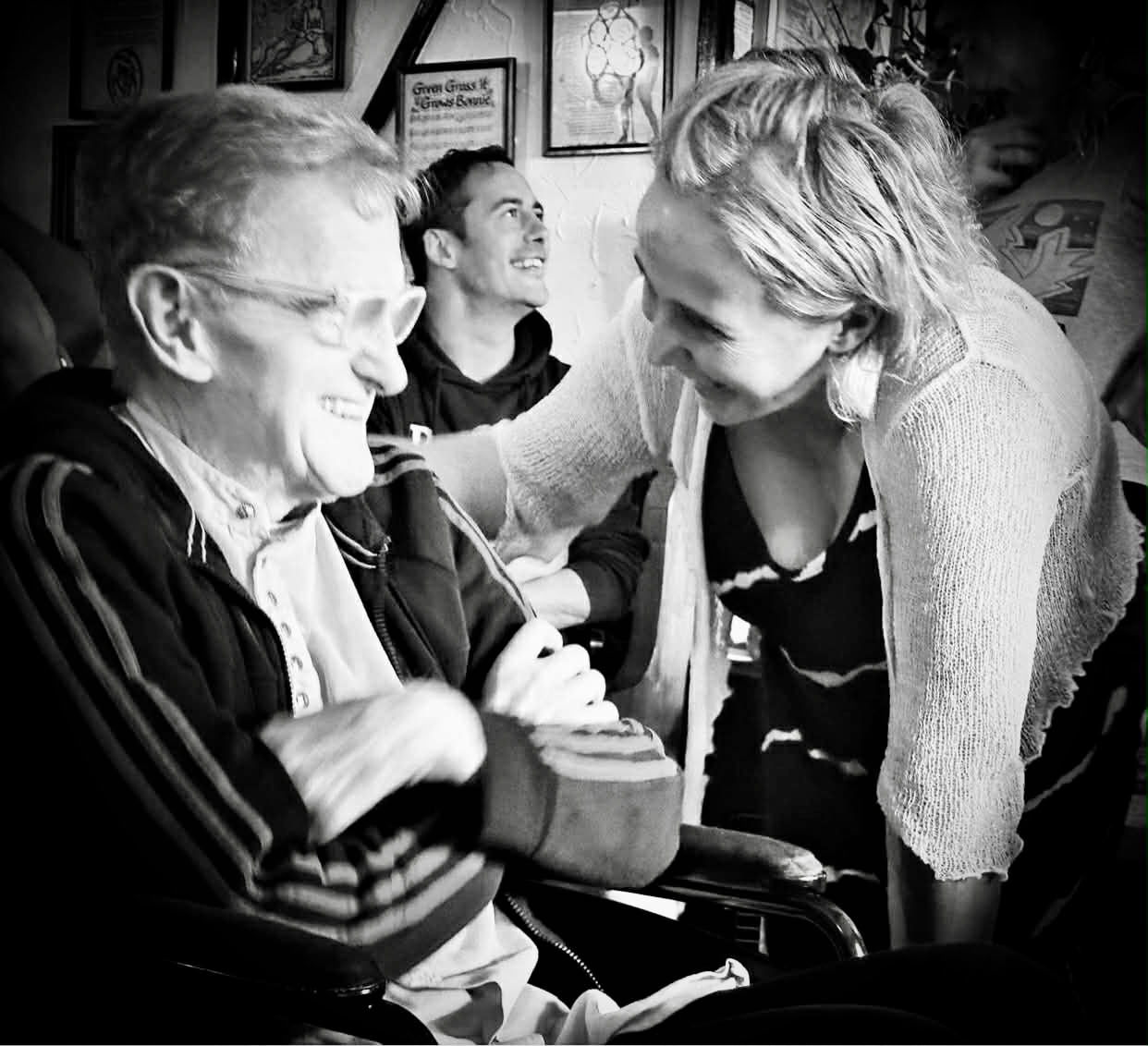
Musician-songwriter, singer Ger De Róiste and Aidan Hayes enjoy a warm moment of joy.

Originally from Cork as was Ger, she met him first in Donegal, “He brought a lot of laughter and could be completely himself without any worry about what others thought of him. He worked with many people helping them with their writing and poetry. He never judged. He was rich in kindness. He completely adored his family, his children and grandchildren he was extremely proud of and spoke fondly of them always. He was fluent in French and had a passion for that language as well as the Irish language. He spoke fondly of the Poets House here in Falcarragh and the wonderful Irish poets he admired.”

Ger was one of many people admiring the quality life Aidan led.  “He was a delightfully lively, flamboyant, creative addition to the Falcarragh community from his arrival at the Poets House in 2001,” said Ian Gordon, an artist from England, who left frantic urban London for the rural idylls of Dunlewey more than four decades ago. “I was fortunate to attend his monthly poetry sessions at the Shamrock for about ten years, where he spread his knowledge and humour copiously. Unfailingly generous with his time he launched two of my art exhibitions with wise and welcoming words.”
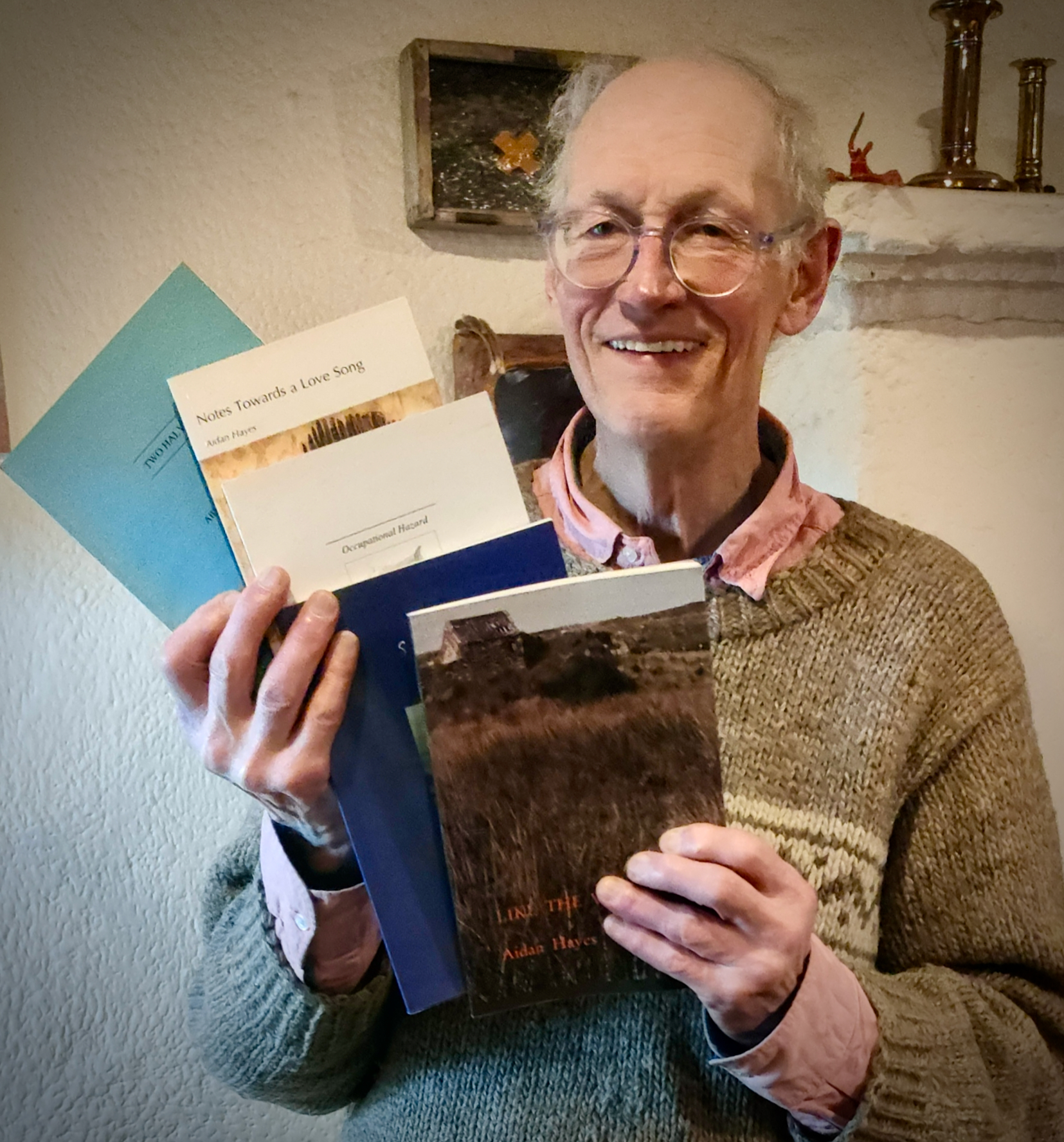
Talented artist Ian Gordan holds aloft books of poetry written by Aidan Hayes.

In 2014 and 2017, Ian published, through Ashlemon Press, volumes of Aidan’s poetry, such as ‘Like the Winter’ and ‘Staccato.’  “I believe poetry is about saying profound and beautiful things using a small number of words,” said Ian. “I said to him at one point, ‘Aidan! Surely it’s sensible, as a poet, to not write a poem every single day? But, happily he completely ignored this. From his shoes to his hat and his non-stop utterances, he was the complete poet. And we all loved him.” 

Andrew Roddy, musician-actor-songwriter and close friend of Aidan’s, said, “My fondest memory of Aidan is when I called in to Brenda Hewitt’s shop, ’The Mermaid’s Purse’ in Falcarragh about fifteen years ago, and I had my dog in the car and my dog was dying, and I had finally got around to realising that I couldn’t just sit and watch the animal suffering, I had to do something about it, and I’d made an arrangement to go to the vet in Ramelton to have him put down, and I was heart-broken, completely heart broken,”  recalled Andrew. “And I don’t know what I was in talking to Brenda about, it was just I was just distressed about the whole situation and as I was chatting to her Aidan came into the shop carrying two bags of shopping and he stood there silently picking up on what I was sharing with Brenda. He didn’t say anything, but when there was a lull in the conversation, he stepped forward and he put the two bags of shopping on the counter and said, ‘Here Brenda, will ye take care of those.’ Then he turned to me, and said, ‘Okay, Andrew, let’s go.’ He then accompanied me and metaphorically held my hand through something that was essentially painful and would have been much lonelier without his company. What really impressed me was the spontaneity of his kindness. I have a very clear memory of our journey together and the drive back.”

Aidan Hayes was laid to rest Sunday in the grounds of the charming St. Anne’s Church in Killult overlooking the Atlantic Ocean not far from his ‘sleeping’ poet friend, Joe Kane. His children, grandchildren, brothers and sister, nieces and nephew, family and friends miss him very much.
Festive Story – Charlie and The Kindness Factory

It was a wet and stormy night in Gortahork, Donegal when Charlie Cannon died.

For eight minutes.

Before he came to life again.

Shocked and amazed, people around him wondered –  had they just witnessed a miracle?

But before answering that question, let me take a step back in time.

The Loch Altan Hotel on the main street of Gortahork, a charming little town in northwestern, was lively with people on the fateful evening Charlie Cannon died.

It was a holiday weekend and the hotel was packed with revellers enjoying a few leisurely days of freedom. Well-deserved time away from noisy alarm clocks, traffic and work in offices, schools, building sites and other places.

These same revellers included Charlie who was enjoying a friend’s 60th wedding anniversary celebration in the hotel’s main restaurant.

Nearby, in the bar area, members of the Tulleybegley Walking Club including old friends Mickey McHugh and Eddie Curran were also enjoying themselves, having a few well-deserved drinks after finishing a 20 km cross-country trek known as ‘the pilgrimage walk,’ named after a century-old burial tradition whereby eight-men shifts carried coffins up and down hills from surrounding areas to the nearest graveyard that distance away.

Charlie himself wasn’t drinking that night. He had a job to do. He’d volunteered to drive a couple of friends home after the celebration dinner, one of whom had an injured leg and could only walk with the help of a cane.

Being wet and stormy outside, Charlie decided, in his selfless way, to walk to the car park across the road and drive his car to the front entrance of the hotel. Thus saving his friends from getting soaked in the rain.

Having done this, Charlie then went back inside the hotel and brought his two friends to the car. Then opened the passenger door to help his friend with the bad leg get inside.

That’s when it happened. 

“Sudden terrible pain, then I simply dropped to the ground,” he recalled vaguely, not actually remembering anything until two days later in hospital.

Meanwhile elsewhere in the hotel, Mickey and Eddie had moved into the lobby to chat. Hearing a commotion they looked up and saw Charlie‘s body flat on the ground. They rushed over and with the help of others lifted Charlie’s body and brought him further into the lobby, laying him down on the carpeted floor.

Their quick-thinking worked wonders.

Though trained in basic emergency medical skills as members of a local volunteer group known as ‘First Responders,’ they knew a much more experienced person was in the bar area.

Pushing their way through the doors, they found their fellow hiking colleague Hugo McFadden, 60, an Instructor Safety Diver at Effective Offshore, training officer with Sheephaven Diving Club and one of the founding members of the Falcarragh ‘First Responder’ group ten years ago, with two others, Shaun Boylan and Maureen Gallagher.

Together, Shaun, Mickey and Eddie rushed out of the bar to the hotel lobby where a large crowd had now gathered around Charlie’s inert ‘dead’ body.

I use the term ‘dead’ because when he knelt down beside him, Hugo couldn’t find a pulse. Charlie’s heart had stopped.

In ordinary circumstances, that should have been the end of this story. Charlie’s body would’ve been moved to a morgue somewhere, probably in a hospital. Then later, buried. 

But these weren’t ordinary circumstances.

Well-trained in emergency medicine, Hugo shouted for someone to find him a defibrillator, or Automated External Defibrillator (AED), as they are formally known. Blank stares indicated most people didn’t know if there was one. Or if so, where it might be. Fortunately, Orla the hotel receptionist then, did. Snatched from the wall where it hung, it was rushed to Hugo, still kneeling beside the motionless body of Charlie.

Recalling that frantic scene, some people told me the eight minutes that followed seemed like eight hours.

Hugo started chest compression. No pulse. Moving people around him further away, he placed the paddles on Charlie‘s chest, sending an electric shock through him to kick-start his heart. Still no pulse.

He tried again. Chest compression, electric shock. Still no sign of life. It was then he heard a voice in the crowd around him saying they’d heard a cracking sound, the sound of ribs breaking. 

Luckily, it wasn’t. But even if it were…

“Our motto at ‘First Responders‘ is ‘life over limb,’ said Hugo, telling me what happened. “A cracked rib is worth less than a saved life. I’d crack a few ribs if it saved someone from death. And I wouldn’t have stopped trying for Charlie. No way.”
Unwilling to give up, Hugo tried a third time. Chest compression, electric shock. He felt again for a pulse. This time he found one. Faint, yes, but it was definitely there.

Here, deep in the heart of rural Donegal, northwest Ireland, a region known as the Gaeltacht as the first language spoken here is Irish, emergency ambulances can take around 30 to 45 minutes to get to Gortahork from the more urban areas of Letterkenny and Dungloe. Thus the crucial role played by ‘First Responders’ such as Hugo, Mickey and Eddie in saving lives.

When the ambulance carrying paramedics finally arrived at the Loch Altan Hotel, Hugo had already conducted the most crucial of life-saving interventions. 

Without Hugo‘s help and that of Margarite Meehan who kept feeling for a pulse as Hugo performed chest compressions and administered electric shocks, the 73-year-old former school bus driver and mechanic would be long buried, his loss mourned by family and friends. 

Instead, Charlie is alive and well, spending the festive holidays with his 92-year-old Aunt Una in Mayo, a place he drove to a few days ago. 

“If I was back in Donegal, sure I’d be climbing to the top of Errigal with my son, John Paul,” he hold me in a telephone conversation earlier this week.

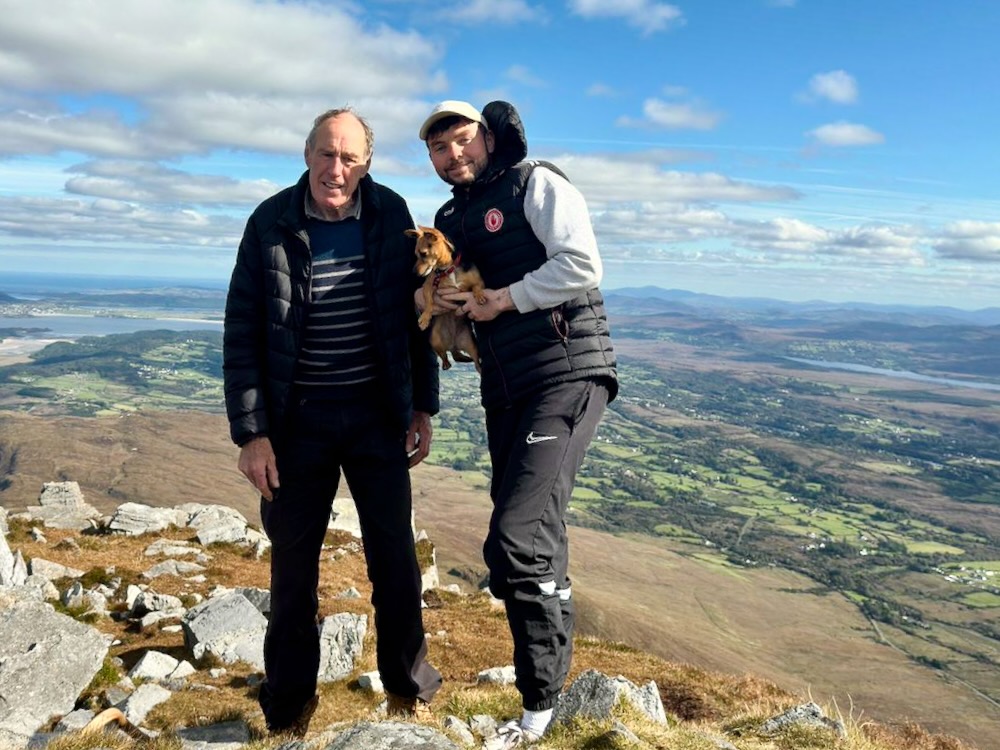
A daily walker, usually in the company of his little terrier dog, aptly named Tiny, Charlie, now 73, is also an avid cyclist and an expert restorer of vintage 19th-century bikes nicknamed ‘High Nellies,’ the name referring to its tall riding position with a very large front wheel and a much smaller rear one. More commonly known as ’penny-farthings,’ Charlie sometimes jaunts around on one in the area where he lives in the townland of Stroughan. So fit is he, six weeks ago, with his nephew, Patrick Darcy, he climbed Muckish Mountain. No easy task for anyone, never mind a man who, Lazarus-like, rose from the dead. Sadly, Charlie lost his wife of 47 years, Kathleen, to cancer. But he tries to keep his head up.

“Hugo’s my hero,” he said, a catch in his voice. “And the others too, the ‘First Responders’ who saved my life. If it weren’t  for them, I wouldn’t be talking to you. I wouldn’t have seen another Christmas, another New Year. Instead here I am, enjoying life. There’s not enough words to thank them for what they did for me.”

As I sip my spiced brandy on this frosty winter evening, I ponder…why wait for the festive Christmas and New Year season to celebrate unsung heroes like Hugo, Margarite, Mickey, Shaun, Maureen and Eddie, and all those ‘First Responders.’ Such selfless people are all around us, every single day, especially in close-knit rural communities, quietly helping their fellow Man along the path of Life, without fear or favour. 

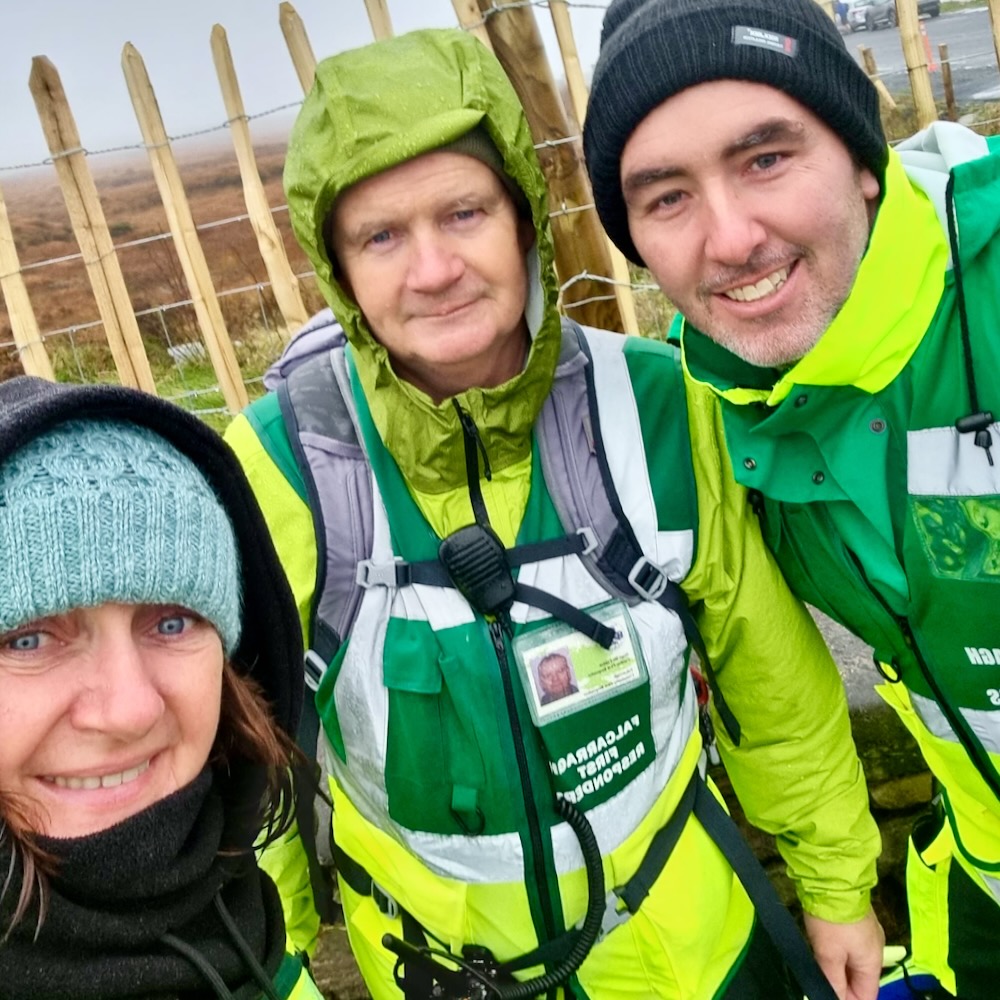
‘First Responders’ a purely voluntary group of local people who help fellow citizens in emergency health situations, are seeking new members. Do you want to help your community? Perhaps save someone’s life? If so, then contact falcarraghdefib@gmail.com or Mobile 0861013304. You could make a big difference. And feel tremendous satisfaction doing so.

Music crosses all borders, links people as One

by Sean Hillen 

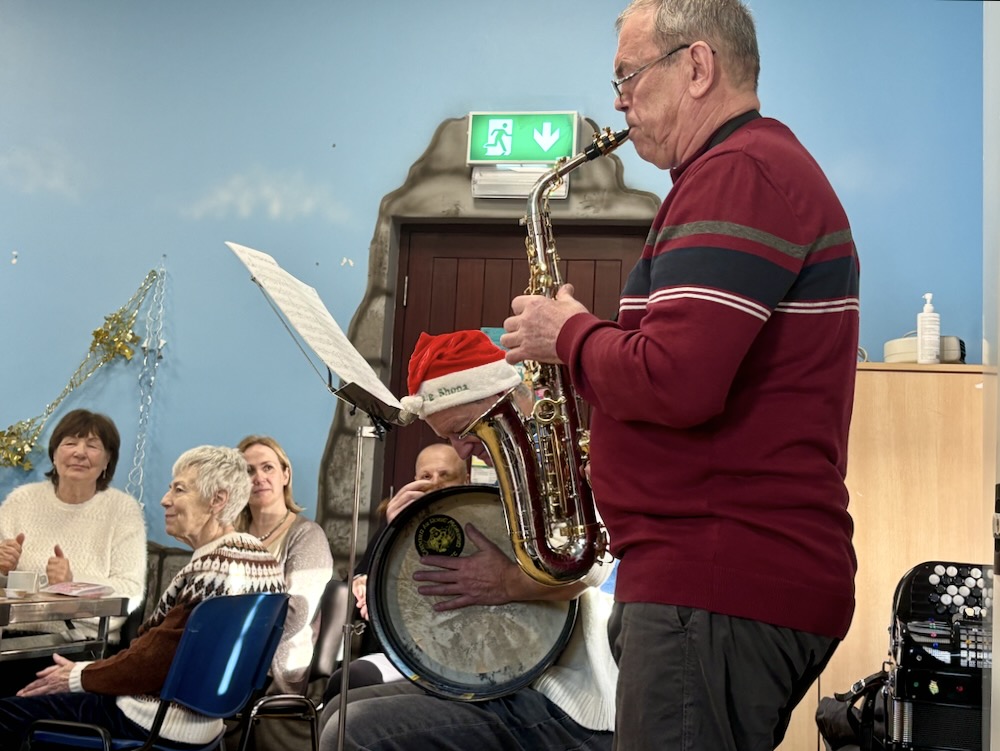
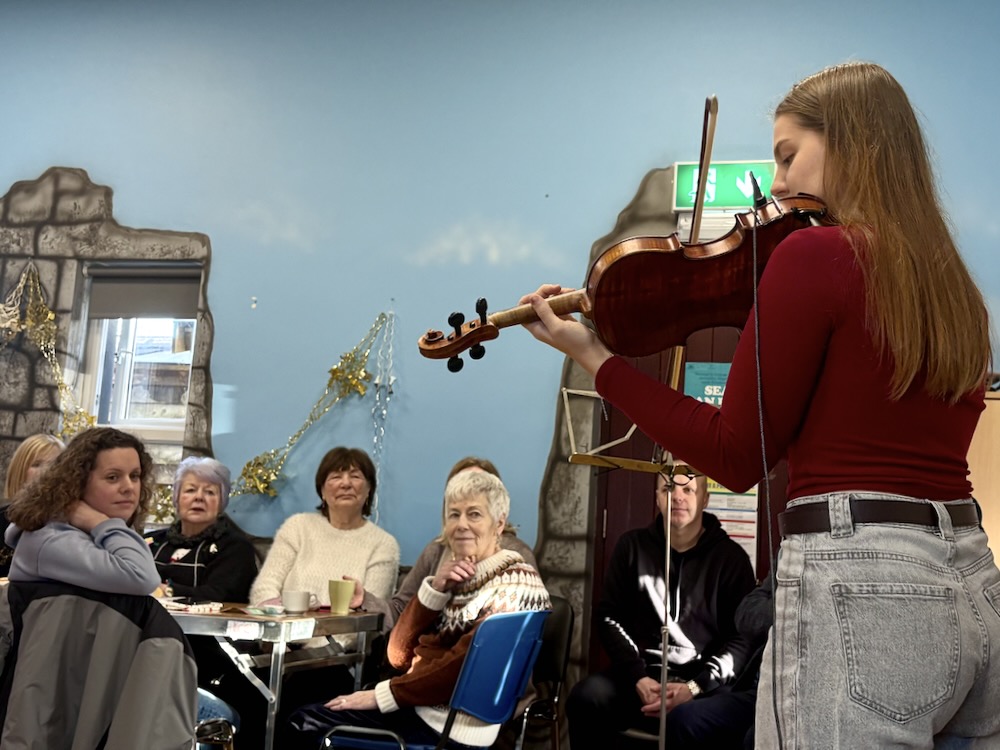
Probably never in the annals of musical history has a Ukrainian saxophonist-cum-accordionist, a classical violinist and an Irish bodhrán player come together as a highly-entertaining trio.

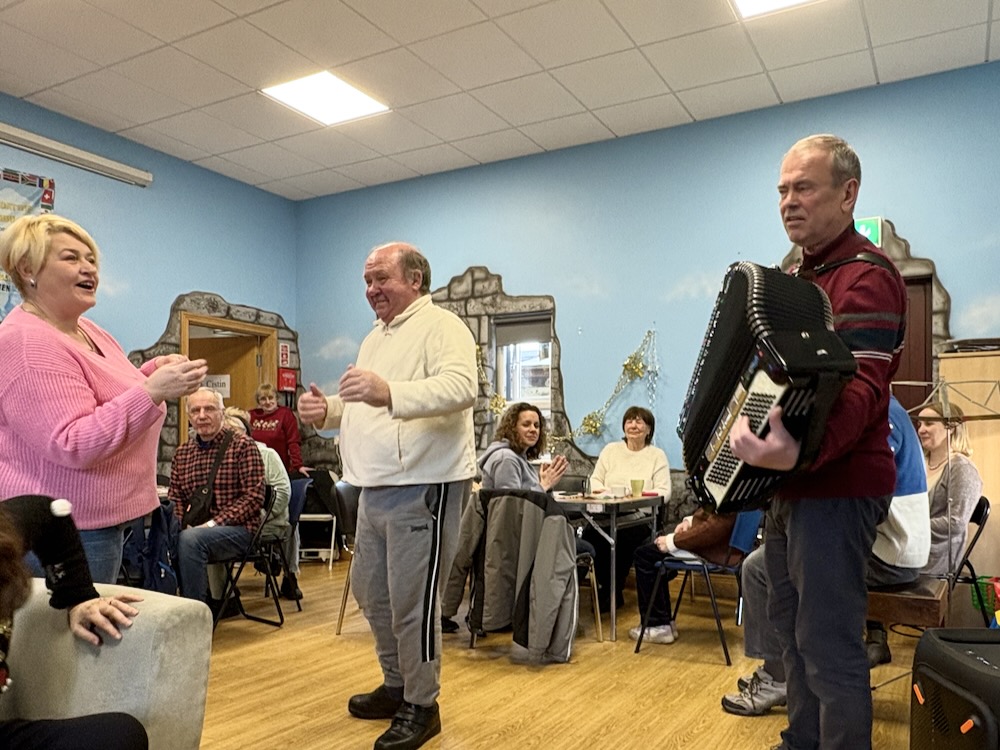
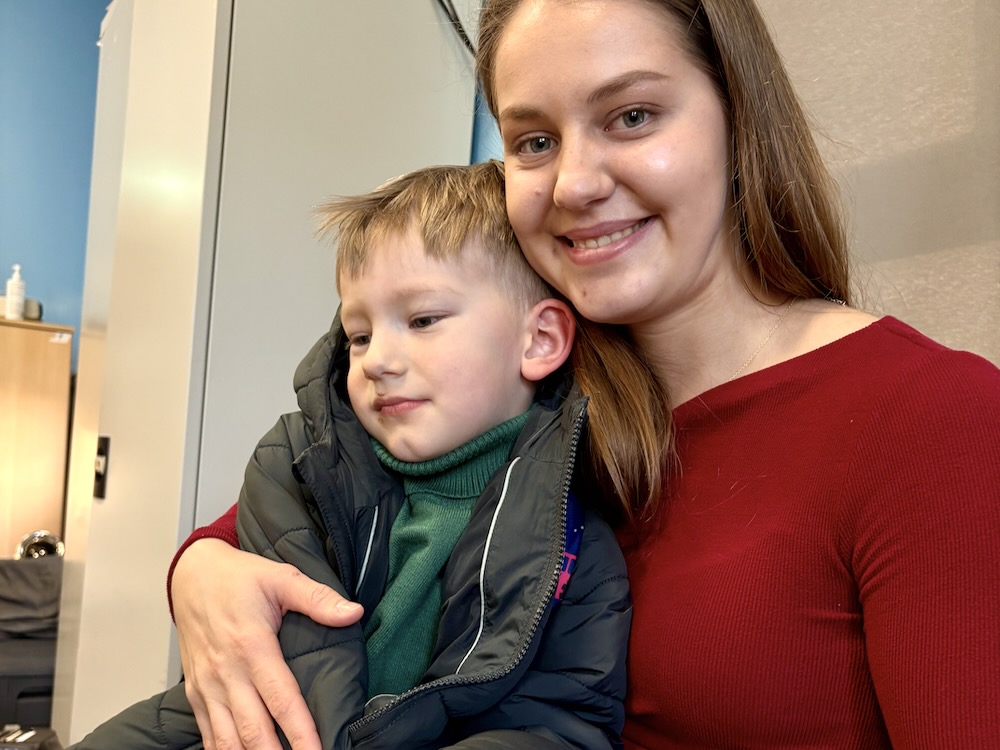
But they did this week at a celebratory Yuletide event at Garradh Colmcille in Falcarragh attended by women, men and children representing diverse nationalities including Canadian, South African, American, Irish, Ukrainian and English.

This unique occasion featured musicians, Reuben O’Conluain, Irish-language professor and cultural enthusiast, multi-instrumentalist Yuriii Hryhoriev and talented Olena Korotka, a classically-trained orchestral violinist from the now militarised region of Kherson in southern Ukraine. 

The proceedings ranged from delightful musical renderings including traditional Irish tunes as well as Ukrainian folk songs such as ‘Chervona Ruta’ and ‘Cheremshyna,’ to contemporary ballads such as Leonard Cohen’s ‘Hallelujah,’ and ‘Until I Found You’ by Stephen Sanchez, with a few festive seasonal songs including ‘Jingle Bell Rock’ and ‘It’s Beginning To Look a Lot Like Christmastossed in for good measure.

Nimble dancers also took to the floor, shaking their booties in carefree abandon to the lively rhythms of the instruments played so wonderfully.

Many congratulations to Armen Galstyan, a refugee from Odessa, for organising the musicians, and local community activist at Pobal le Chéile, Rosemary Grain, and her enthusiastic support team for hosting the event so well.

For me, and I’m sure for many others attending, the event highlighted the interconnectedness of people across borders illustrating how humanity, regardless of language, skin colour, religion or nationality, is one and the same entity, each element dependent upon the other for peace, progress and prosperity.

Theatrical triumph for the talented Cloughaneely Players in Donegal

What a theatrical triumph this past weekend for local amateur drama company, The Cloughaneely Players, who meet close to my home here in the scenic northwest corner of Donegal.

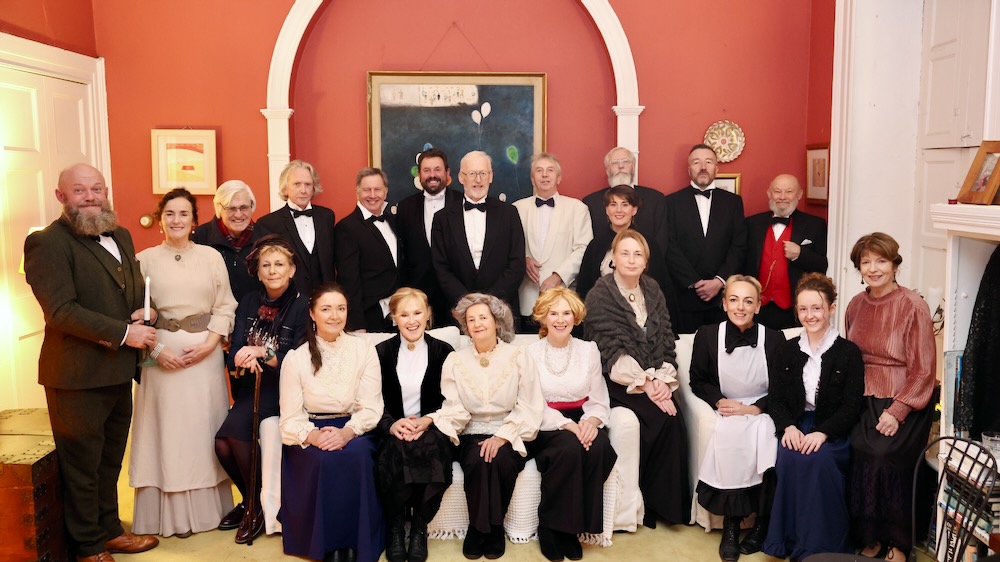
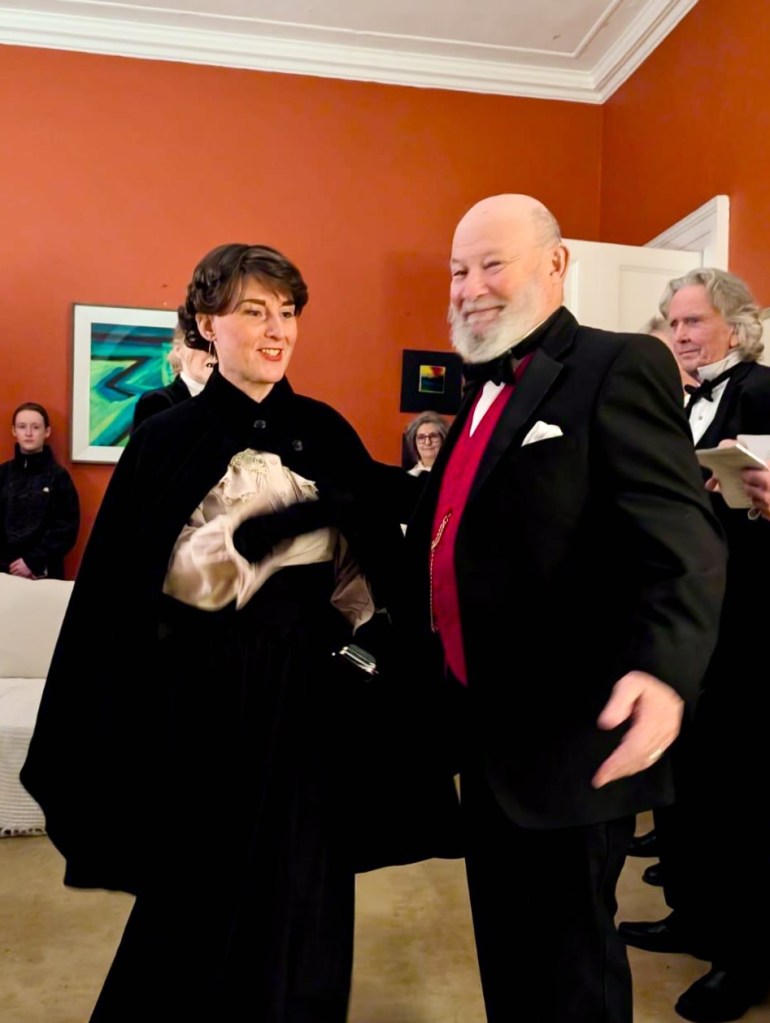
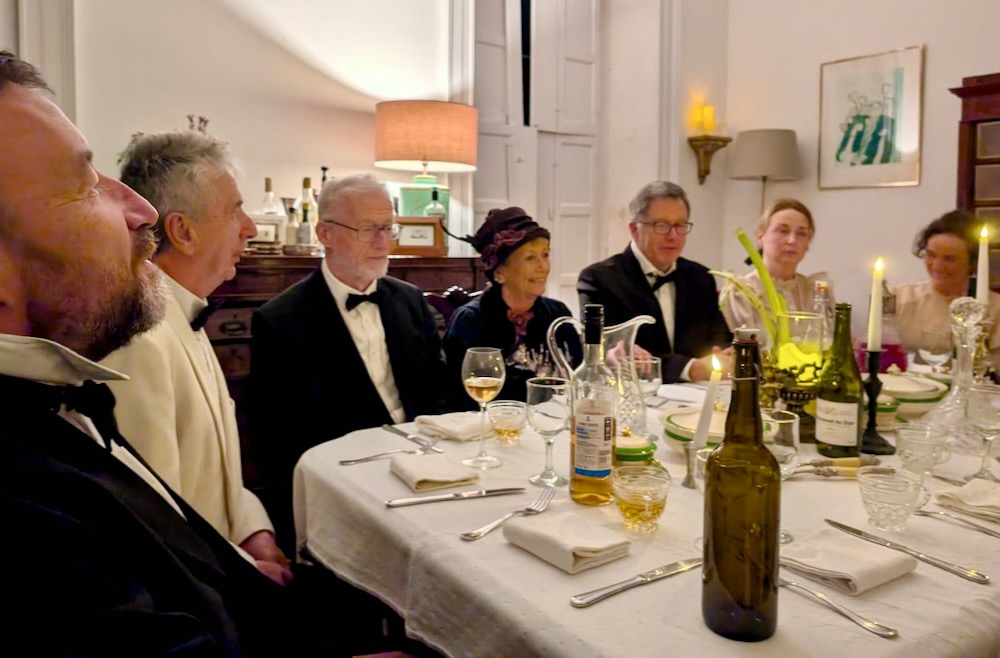
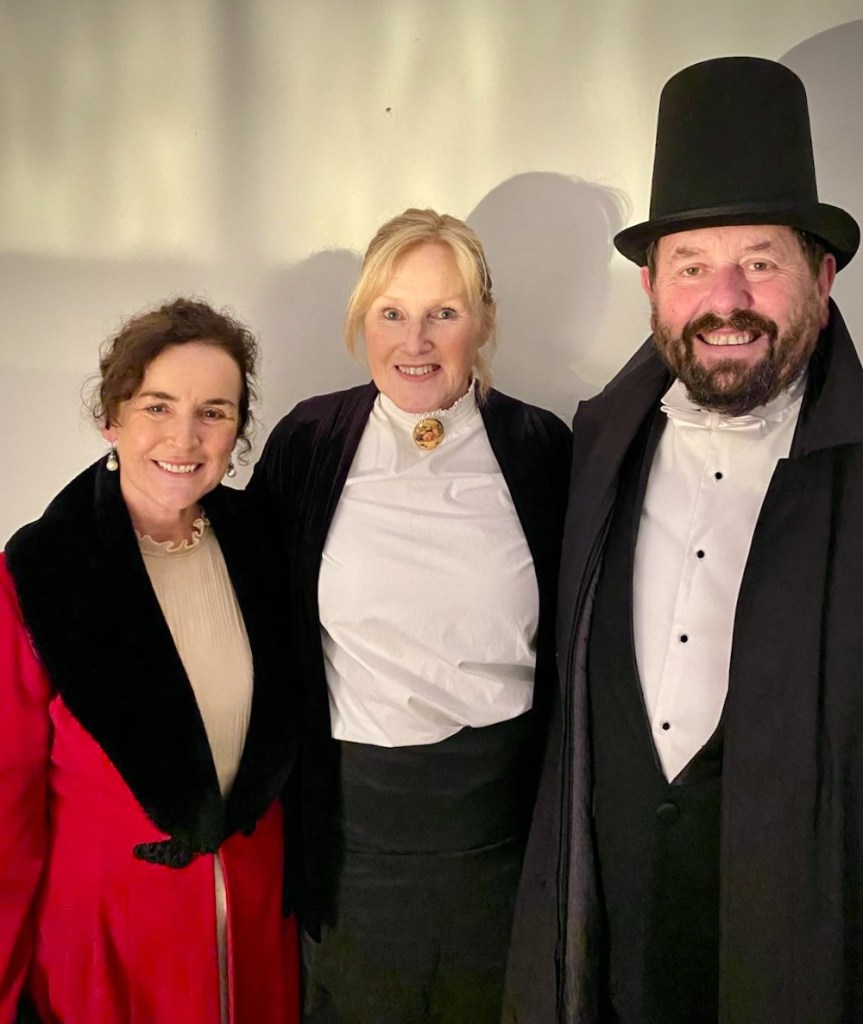
Not only did they host a superb re-enactment, complete with costumes and wigs, of James Joyce’s classic short story ‘The Dead’ set in 1904 in a most enjoyable manner, but they transformed a rural Donegal house into a 19th century multi-stage setting using most of the rooms in the house, both upstairs and downstairs, for various scenes.

Many congratulations to director Carmel MacGill, consultant director Murray Learmont, choreographer Caroline McGee, and more than twenty talented local amateur actors and musicians for a superb show.

And keep in mind, we’re not talking about well-paid West End or Broadway professional performers (though you might be mistaken that they were). We’re talking about a local bartender, a teacher, a nurse, a doctor or two, a real estate broker, a hypno-therapist, even a retired revenue sheriff, and many others, all of whom bring sheer enthusiasm and passion into treading the boards.

Here’s a few photographs to illustrate the weekend’s entertainment. 

I’ve written a much more comprehensive article in tribute to these delightful women and men for this Thursday’s edition of the Donegal News on the Digest page so pick up a copy and have a read and rejoice we have such talented artists among us.

And don’t miss out on their next production. The tickets will be red hot, so buy early. No doubt they’ll be sold for high prices on the international black market.

Thank you to Catriona Kelly, Jake Campbell McLaughlin and Maggie McKinney for photographs.

Meet The Real Simon Harris – The Dishonourable Duke Of Duping

Is it not reprehensible – the height of hypocrisy in fact – that Simon Harris the leader of the Irish Government  – has the audacity to accuse Sinn Féin in recent weeks of ‘duping’ people when it expelled several party members for substandard social behaviour?

Simon Harris – the Dishonourable Duke of Duping.

The Cambridge dictionary definition of dupe is ‘to deceive’ and if anyone is guilty of deception, it is Harris and his colleagues in the coalition Government of Fine Gael, Fianna Fail and the Green Party.

Over the last four years since being in power – and for many years before that – these parties have been nothing less than ‘repeat offenders,’ constantly deceiving the ordinary hardworking people of Ireland with false promises of a quality lifestyle as befitting a nation that is one of the earliest members of the European Union, then called the European Economic Community, or EEC for short, back in 1973.

Instead, however, we have one of the most disastrous health systems on the continent, with people waiting years for life-saving surgeries, often dying before they receive it; we are awash in homelessness and poverty, with an estimated people 30,000 living on the streets, including thousands of young children and infants; we have a forsaken, forgotten, forlorn State where retirees and newlyweds alike are unable to afford the rent of a simple home, never mind the financial resources to even remotely consider buying one to end or begin their lives together in a modicum of comfort.

Not only does the Dishonourable Duke of Duping continue to deceive people that after all these years he’ll one day consider putting a roof over our heads, but he himself basks in the lap of luxury in one of the most expensive and elitist places in Ireland, the scenic coastal town of Greystones in county Wicklow, where he was born, where he lives and where houses cost up to two million euro, and more.

But is it not somewhat harsh of us to criticise the Dishonourable Duke of Duping for his lack of common decency? Is it not unfair to ask a man of such Royal blood living in such a high falutin’ environment to understand the plight of so many desperate Irish people? Is that not akin to asking King Charles of England to make his own cupán tae once in a while?

Shamefully, while the wealthy in Ireland (many of whom are the Dishonourable Duke of Duping’s closest neighbours) while away their days in decadent lifestyles with fancy homes in fancy places or travel in  environmentally-damaging private jets (which the Dishonourable Duke of Duping does frequently) and indulge their whims in ostentatious holiday homes abroad (which the Dishonourable Duke of Duping often does), modern Ireland suffers the worst housing shortage in its entire 100-year history. 

Studies show less than a third of 30-year-olds own their home. Over half of all newly-built homes in greater Dublin alone were bought or developed by global vulture investor funds, thus locking countless people out of ever attempting to buy one. These ‘vampire funds’ don’t buy homes to sell, they buy them to extract high rents in perpetuity. In other words, they suck the lifeblood out of decent Irish society.

And to make matters worse, the Dishonourable Duke of Duping and his cadre of Government lackeys allowed a temporary no-fault eviction ban in Ireland to lapse last March, thus opening the floodgates for more than 15,000 notices of termination to be issued last year, making the number of evictions higher than it was during the Famine in the mid-1800s. 

For centuries, gutless, greedy, often absentee, landlords, have been the scourge of Ireland, rich, ruthless people who with the click of a finger, a scribbled signature on a sheet of paper, thoughtlessly tossed hungry families out into the ditches. 

Now it seems the same is happening all over again in modern Ireland, this time under the dictatorial rule of the Dishonourable Duke of Duping and his ignoble entourage.

Instead of urgently dealing with these major social and health issues that are making the lives of so many Irish people intolerable, Harris and his well-to-do cohorts, including Government coalition leaders, Micheál Martin of Fianna Fail and Roderic O’Gorman of the Green Party, are pointing their grubby finger at Sinn Féin, an oft-used political ploy to distract popular attention away from the real issues, and their own failings on them. 

In doing so, however, these ‘I’m-better-than-you’ leaders fail to realise something important. While the bitter winds of winter howl at our doors, while Storm Ashley batters the coast this weekend, Irish people are not bears. They are not hibernating. They are wide awake. And fearful. And hungry. And cold. And they remember the empty promises made to them from on high four years ago, and for many years before that.  

Maybe, just maybe, we should ask Sinn Féin leader Mary Lou McDonald to re-tell the story of these empty promises once more, to remind us how easily we were taken for fools. And in doing so, help us make sure the Dishonourable Duke of Duping and his Royal patrons don’t sneak back into power through the back door and make jesters of us for another four years in their Court of Failure.

Maybe, just maybe, we’ve learned our lesson and are wide awake enough to elect Sinn Féin, the ‘Party of Change’ and improve things for the better. For each and everyone of us, our parents, our children and the generations who come after. 

Is Sinn Fein really ready for Government?

by Sean Hillen 

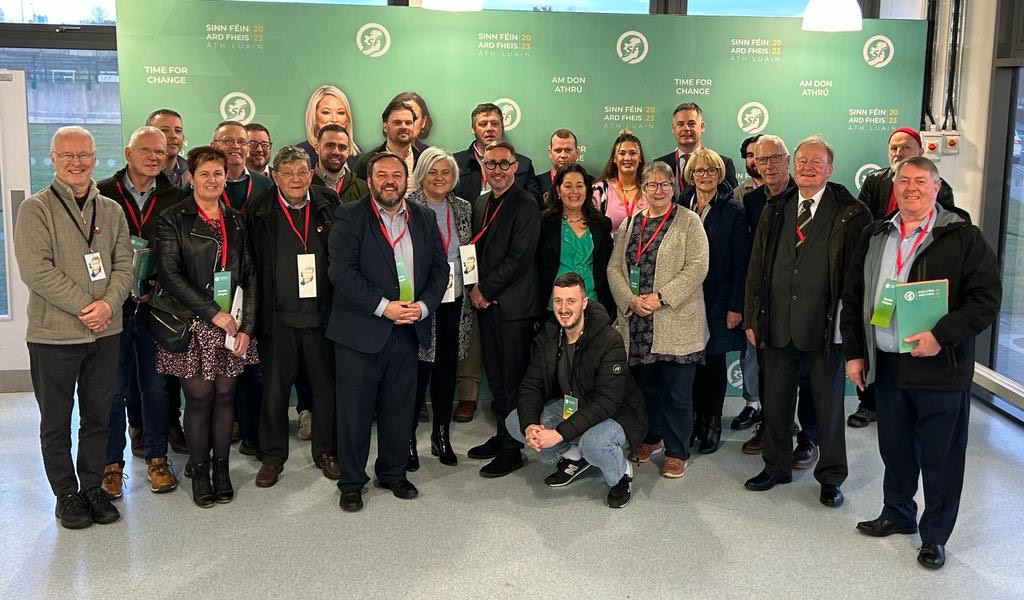
ATHLONE, WESTMEATH – A resounding ‘YES’ was the answer that rang out loud and clear all around me from around 1,500 enthusiastic and committed members, young and old, men and women, some teenagers, some retirees, gathered for the party’s annual Ard Fheis in Athlone, Westmeath several weeks ago.

A large Donegal delegation, the county where I live in northwest Ireland, attended the Ard Fheis.

I know from past experience in both Europe and the US that political party conferences can be full of hype and promise but I sensed something special in the air at this one. Positivity, definitely. Excitement, plenty. Anticipation, yes. Expectation, ditto. Even a little apprehension. Natural, considering it’s been 100 years since Sinn Fein last walked through the corridors of power as the undisputed political leader of Ireland.

Attending this annual meeting, I was extremely impressed with the overwhelming enthusiasm shown by members, their readiness to be in Government and make meaningful changes in Ireland for a better future for all and by the large number of women present, many of whom spoke incisively from the stage as delegates on a range of issues, from education to health, the high cost of living to homelessness. 

With local and EU elections, and perhaps national ones as well, occurring next year, it seemed appropriate that a party that continues to rise in national popularity was holding its annual party meeting in Athlone, a town considered the geographical center of Ireland, with Sinn Féin hoping its influence radiates from there nationwide in all directions.

Led by two women, Mary Lou McDonald, the party’s president and TD for Dublin Central, and Michelle O’Neill, party vice-president and First Minister Elect in Northern Ireland, with TDs nationwide, would-be Ministers-in-waiting, including TDs Pearse Doherty and Pádraig MacLochlainn from Donegal where I now live and with whom I spoke during breaks in the formal proceedings, all aired their views on key issues such as the cost of living crisis, plight of the health system, mounting housing problems, and many more. 

We want to build a new Ireland,” said McDonald in her keynote address after receiving a rousing reception. “A nation home for all. A unified nation of confidence and compassion, talent and ingenuity, claiming our future, our rightful place among the nations of the world. A new Ireland. The Orange and Green reconciled. No place for racism, Islamophobia, Antisemitism, sexism, homophobia, transphobia, or sectarianism.”

O’Neill spoke about the urgent need to kick-start the Stormont Assembly, the national parliament in Belfast, which has been boycotted by the Democratic Unionist Party (DUP), the main Unionist opposition, for the past year. “My message is one of positivity, one about the future, about building a better society for us all to live side by side,” she said. “My message to the DUP is that they need to be in the Executive with the rest of us, making politics work, making this a better place for everybody who lives here.”

Pearse Doherty, the party’s spokesperson on finance, thanked his fellow party members, saying, “You are the engine room of our organisation. Your work, your energy, your ideas, make Sinn Féin what it is – the only viable vehicle for the ordinary people of Ireland to achieve change in our country, and the only viable vehicle to achieve the unity of our country. We are focused on one thing – delivery for workers and family the length and breadth of our island. We are on the countdown to the general election, and we are setting out the type of change that a Sinn Féin government will deliver if the people give us that opportunity. We are setting out our plans to build a better, fairer country for all, for positive change and transformation.”

Pearse Doherty listens closely as Mary Lou McDonald gives her keynote address.

Paul Hayes, from Carrigart, Sinn Féin regional secretary in Donegal, was delighted with the weekend’s success, telling me that the Ard Fheis had brought together over 1,400 people, with more than 200 speakers over 300 issues voted on. “It’s a great success, I’m very happy,” he told me, smiling. Sitting beside me in the auditorium stalwart Pat Doherty, former Sinn Féin vice-president, wore a quiet, thoughtful – one might even say, contented – expression on his face. And no wonder. After many years of personal struggle and hard work towards the goal of a United Ireland Socialist Republic, the idea – once remote – of his party leading Government both in the north and south of of the nation seems rapidly becoming a reality.

(left to right) Paul Hayes, Sinn Féin regional secretary in Donegal, with Pat Doherty, the party’s former vice-president. Both were happy with the strong attendance and content at the Ard Fheis.

Thanking me for exclusive information I provided to Sinn Féin on RTE expenses, MacLochlainn, the party’s chief whip and spokesperson on fisheries and the marine, added, “We are mindful that this Sinn Féin Ard Fheis could be the last one before the next general election and the formation of a new government. We are confident, we are ready.”

Pádraig MacLochlainn, TD, is confident. “Sinn Féin is ready for Government,” he said.

Among the many motions passed was one affecting many people in Donegal. This pertains to an ongoing scandal – houses that are crumbling due to mica and pyrite in concrete. “Sinn Féin are determined to lead the next government so it is important to renew our commitment to one hundred percent redress and to spell out how we would implement that policy, if we get that chance,” said Sinn Féin housing spokesperson, Eoin Ó Broin. “We believe the Enhanced Defective Concrete Block Grant Scheme is another scheme that will deny redress to most affected homeowners.” 

Aside from domestic issues, Sinn Féin also debated foreign policy issues with loud cheers of support and a prolonged standing ovation given to Dr. Jilan Wahba Abdalmajid, Ambassador of Palestine to Ireland, a VIP guest speaker.

Sinn Féin initially abstained at local council and national level from calling for the expulsion of the Israeli Ambassador to Ireland but in face of horrific stories of death and life-threatening injuries, including thousands of young children, and the wholesale destruction of home and hearth in Gaza, changed tack and formally backed those calls, as well as calling for Israel to be referred to the International Criminal Court by Ireland and the Irish government to formally recognise the State of Palestine.

“We call for an immediate ceasefire and stand firmly behind Palestine in its hopes and  aspirations for its own homeland recognised by all international bodies and a long and lasting peace with all its neighbours,” said Matt Carthy, the party’s spokesperson on foreign affairs, who also thanked me for a proposal I made on a possible long-term solution to the Palestine question.

Young members of Sinn Féin show their support for Palestine.

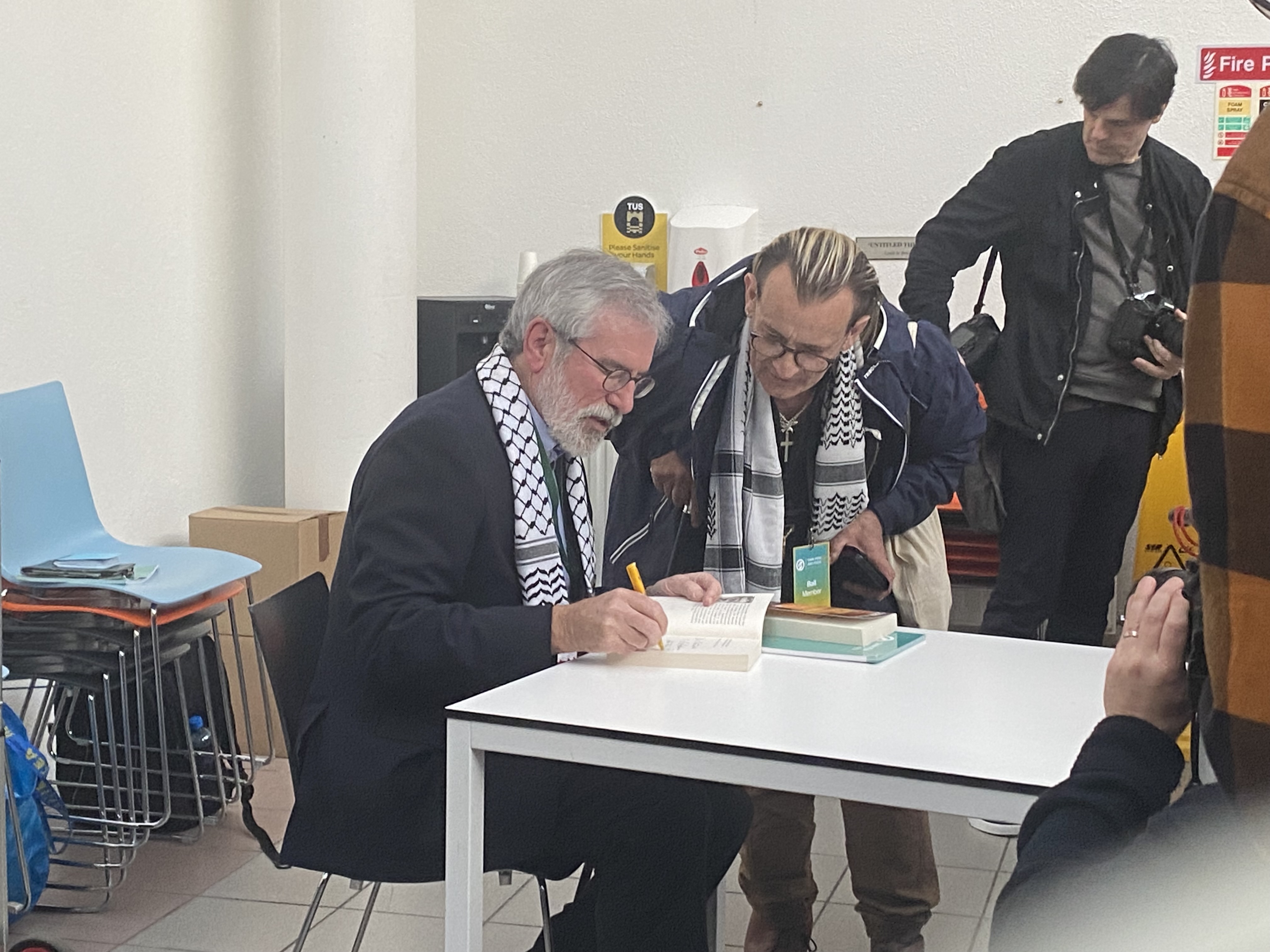
Elsewhere at the Ard Fheis, former Sinn Féin president, Gerry Adams, cheerfully met with a long line of well-wishers as he signed copies of his latest book, Black Mountain and Other Stories. Gerry has authored a number of books including Before the Dawn: An Autobiography; Cage Eleven: Writings From Prison; The Street And Other Stories; Falls Memories; and A Farther Shore: Ireland’s Long Road.

I am proud to say that Gerry’s Donegal holiday house lies less than 10 kilometers from my own home and that his mother and mine were very close friends as teenagers, working side-by-side in west Belfast and stayed together in the Donegal Gaeltacht on several occasions (with their interest in boys vying closely with their interest in the Irish language and culture, I am reliably informed).

Former Sinn Féin president, Gerry Adams, signs copies of his books.

One-Eyed One Irish legend recreated by talented Donegal drama group in Falcarragh

Ever heard about Balor of the Evil Eye?

It’s an ancient Irish legend about the nasty, one-eyed mythical tyrant of a King on Tory Island in Donegal who’s killed by his grandson, Lugh – and there’s no better way to enjoy this suspense-filled story of life and death than when it’s hosted by the Cloughaneely Players, a delightful drama group in the local town of Falcarragh.

As part of its ongoing community service programme, this amiable band of actors and friends put on a wonderful outdoor show recently that had schoolchildren and adults alike both enchanted and enthralled. 

And it took place, most appropriately, beside a 16-foot pedestal, a white limestone boulder with red veining atop a pillar known as the ‘Cloughaneely Stone (Cloich Cheann Fhaola)’, the red veining symbolising the petrified blood of a chieftain called MacKineely (Cian mac Cáinte) beheaded on the stone by Balor after he discovered he planned to kill him after he’d stolen one of MacKineely’s prized cows – Glas Gaibhnenn.

Under the astute direction of Murray Learmont and led by narrator, Joe Kelly, a leading folklorist, the actors had young schoolchildren jumping up and down like excited kangaroos just out of their pouches during the entire production (and a few adults too, though I dare not say who they were less I embarrass them).

Organiser of the event was Mark Boylan, co-manager of the Cloughaneely under 11 Irish GAA football team, with Kevin Scanlon, chairperson of the Cloughaneely Minor Board, giving a short speech to kick-off the evening. 

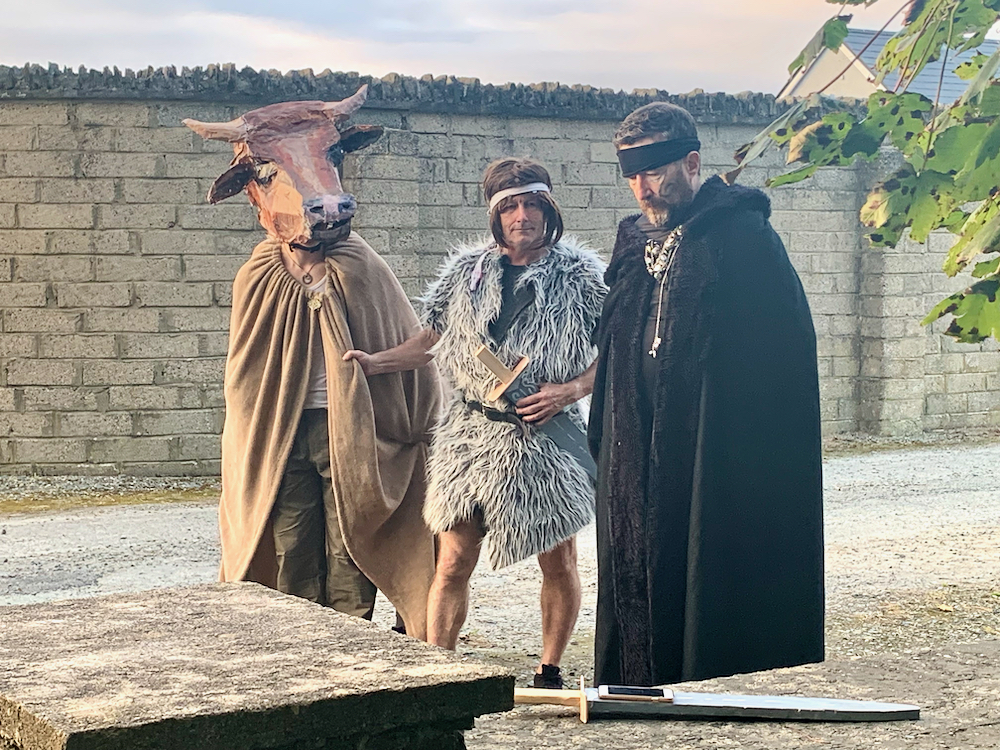
A stellar cast, one with the creative ability to slip off-script and concoct amusing dialogue spontaneously, included Denis Doohan in the lead role of Balor (I particularly liked his joke about Balor having more defenders than Jim McGuinness, the recently-named manager of the Donegal Irish senior GAA football team. 

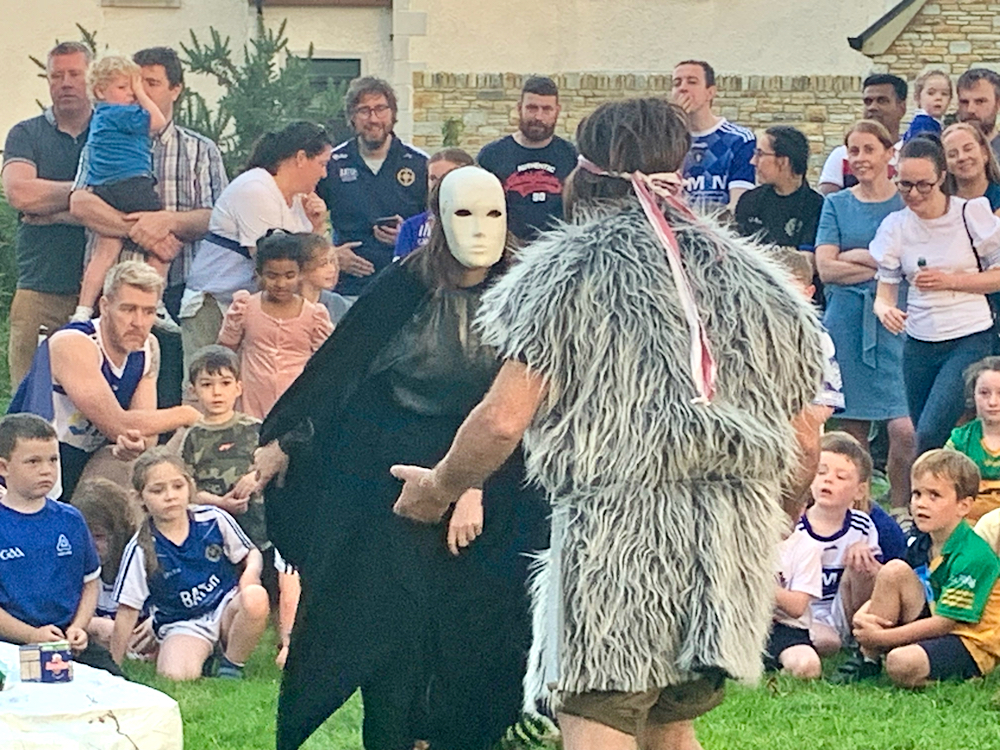
The intrepid, Mickey McHugh, showing off his dainty, Lionel Messi-like legs and dressed in a costume that looked like it was woven from the hair of a banshee, acted as MacNeely. Insiders say Mister McHugh was specifically chosen for the role due to his lifelong, hard-won, cow-milking abilities which he displayed with tremendous exuberance – by spraying the entire audience with his own brand of the liquid. 

(l to r) Yanto and Rohan as the forever-giving milk cow, Mickey McHugh alias Lionel Messi and Denis Doohan as the face-decorated Balor consider their options.

Lugh, Balor’s grandson, was played wonderfully by Pierce Butler, especially impressive with his warlike cries and deadly sword fight with his grandfather, leaving his foe prostrate among a crowd of enthusiastic youngsters.  

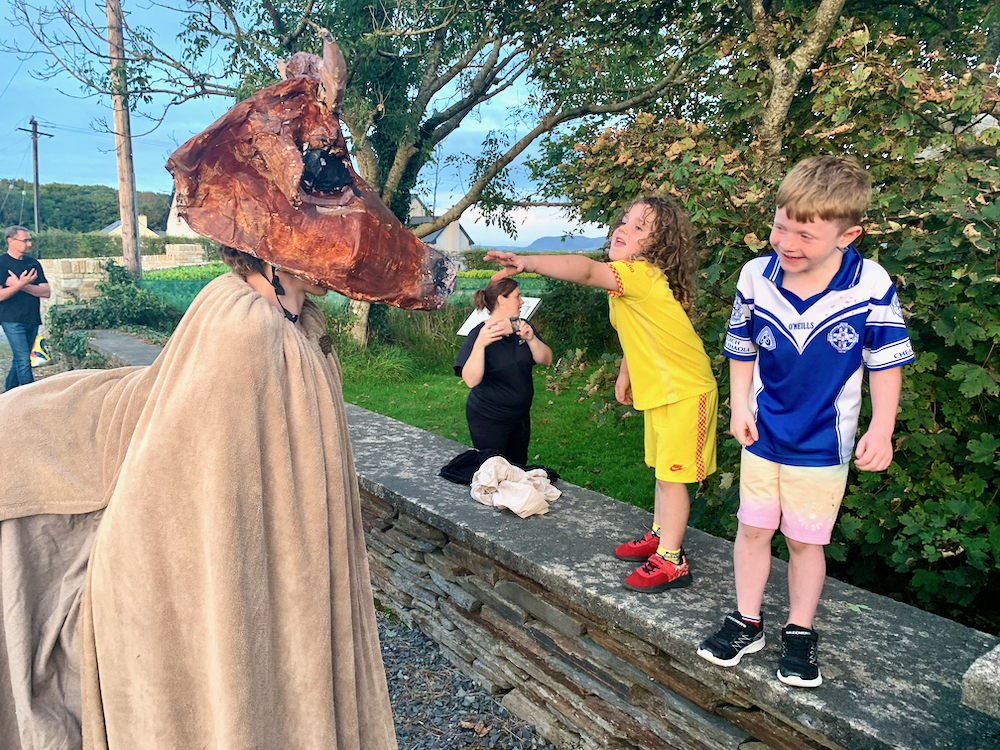
Legendary cow, Glas Gaibhnenn, receives a wee bit of attention off-stage.

Kudos also go to Maggie McKinney, a native of Castlewellan, County Down, who played not one, but two roles – the screeching witch, Biróg, who predicts Balor’s downfall, as well as the bold and brassy, what-are-ye-waiting-for-let’s-have-sex, Eithne, Balor’s daughter, who – in what must be Guinness World Record time – ‘enjoys relations’ with MacNeely and produces not one but three babies, one of which was Lugh. All done and dusted in thirty seconds.

‘Prepare to die’ says Lugh (Pierce Butler) to Balor (Denis Doohan) – but only one will emerge alive.

Mention must also be made of the cow – the beloved animal that was at the center of the entire conflict. As one who has never tried imitating a member of the bovine community, I can only presume that acting the role of a cow is not easy by any means. So many congratulations to Yanto and Rohan, members of Youthreach, for doing so.

Birog the witch (Maggie McKinney) confronts MacNeely (Mickey McHugh).

Next on the dramatic circuit for the talented Cloughaneely Players is a production of the classic story, Casablanca, which I’m reliably informed may be staged sometime in November.

Photographing the entire dramatic proceedings on the evening was Annamarie Coyle, so watch out for her excellent images capturing one of the most tantalising struggles in Irish legendary history.

‘Cute hoorism’ is alive and well in Ireland

Spotlight on corruption inside Irish state institutions

Controversy surrounding Irish public broadcaster RTE involving hidden payments and secret slush funds for music concerts, sports tickets, car loans, expensive hotels and restaurants reminds me of an investigation I conducted into misspending by another state body. 

The two examples underscore the constant need for vigilance over the spending of public money by such bodies.

Misuse of public money – a major problem in Ireland. Here RTE officials prepare to face a grilling.

Having moved to Donegal in the northwestern part of the country – an Irish speaking area known as a Gaeltacht, one of several in Ireland – I was approached as a journalist by many angry local people to investigate the spending of tens of millions of euro by Údarás na Gaeltachta, a national Irish-language organisation responsible for economic, social and cultural development.  

After comprehensive research including a series of interviews and detailed Freedom of Information (FOI) requests, I was stunned to discover the extent of financial waste and utter misuse of public money by Údarás – corruption by any another name, some might say – including all-expenses paid holidays in Florida for some executives and board members and their spouses, which was counter to existing regulations. 

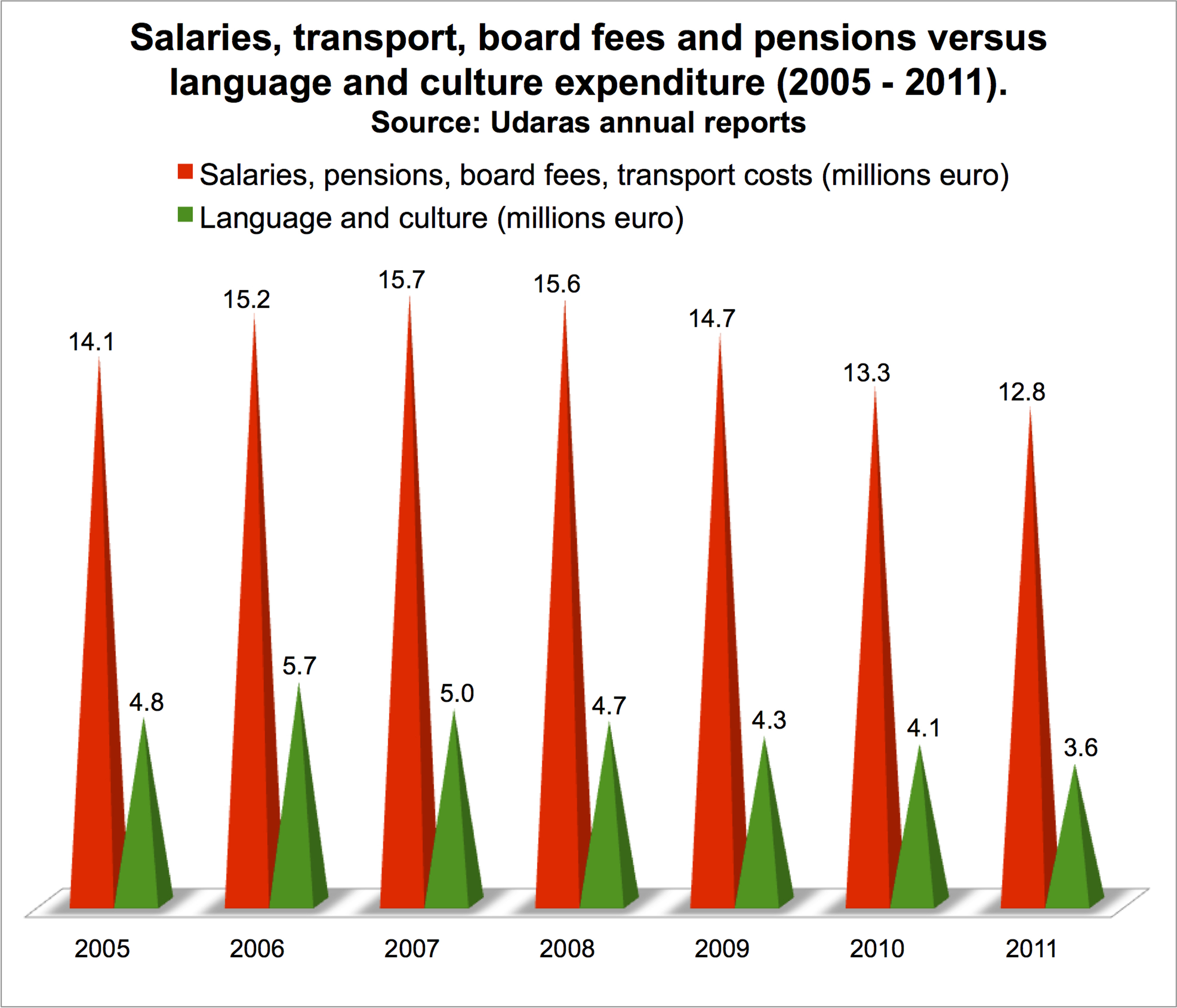
During the year I conducted my investigation, pensions alone for 136 former Údarás employees amounted to 9.8 million euro, half that year’s entire budget, which caused then Public Accounts Committee (PAC) member Sinn Fein Senator Trevor Ó Clochartaigh to declare, “I nearly fell off the chair when I heard that.

Five Donegal board members alone were paid more than half a million euro in fees and expenses over a five-year period between 2004 and 2009.

Shocking statistics I uncovered about spending on Údarás staff compared to project funding.
Key question remains: has the situation changed?

Údarás said each job it helped create back then cost around 8,000 euro, but the actual figure turned out to be 88,000 euro, ten times that number. It also spent more than 30,000 euro on all-expenses paid trips including business-class flights to Halifax, Canada to look at seaweed projects, as well as hefty expenses to other international cities including Las Vegas, Shanghai, Los Angeles and Chicago. Such was the absolute accounting mess, Bernard Allen, former Fine Gael TD and head of the PAC back then told me the expenses system of Údarás was “simply incomprehensible.” 

Údarás had become a free-for-all feeding trough for some board members and executive managers, with blatant conflicts of interest abundant. In short, the situation seemed to have become one of ‘you scratch my back and I’ll scratch yours.’

Liam O’Cuinneagain, chairperson of  Údarás for ten years then and founder of Oideas Gael in in Glencolmcille, Donegal described the investigation into his organisation’s spending as “paranoia” and said he was “satisfied” with its performance. 

After approaching the editor of the ‘Donegal News,’ a leading newspaper in the region, I completed a three-part investigation into the situation but then had to face highly-paid spin doctors for Údarás which did its very worst to prevent the series from being published, including threatening late-night calls to my home.

Padded expenses, lucrative pensions and international trips were only the tip of the ice-berg of misspending. Imagine how a small community centre or school offering classes and activities as Gaeilge or an Irish-language theatre such as Amharclann in Donegal could have used such scarce money. 

You can see some of my stories below.

Údarás na Gaeltachta, like RTE over the last few weeks, came under scrutiny by the Public Accounts Committee (PAC) back then but the government fell in the midst of the investigation, the PAC was disbanded and the investigation was never resumed after the subsequent election.

Some of those leading Údarás na Gaeltachta, both in Donegal and nationally at that time, have retired or resigned, all on very generous pensions, among the highest in Ireland’s civil service. It is hoped the present leaders are honest and transparent in their dealings. Only time will tell. Or another investigation by an enterprising journalist or a concerned citizen.

Shocking revelations at RTE and at Údarás na Gaeltachta should be a stark warning to us all. Sadly, leaders of such state and semi-state organisations with huge budgets at their disposal, if left unexamined, are tempted to misuse public money for personal gain. It is up to each one of us – private individuals and our elected representatives – to keep a close eye on how they spend that money. As both examples clearly demonstrated, we cannot rely on board member oversight alone. 

Both RTE and Údarás na Gaeltachta managed for many years to avoid public examination, the former because it was the all-powerful state broadcaster with political cronyism being a major factor in executive employment there, the latter because it was involved in the Irish language, a sacred cow in Ireland not to be questioned or criticised and it had – and still has – a big bucket of money to hand out in grants which can, in itself, buy silence.

What saddens me most is that both these organisations – RTE and Údarás na Gaeltachta – have vital roles to play in the economic, cultural and social development of Ireland so when they mislead the public, the very people who pay their high salaries and expenses, it is even more unforgivable. 

Suck key institutions should be supported, but not unquestionably so. 

After the RTE shambles, should Údarás na Gaeltachta and other such state bodies not come under extensive examination on a regular basis to make sure public money is being spent properly?

Should Údarás na Gaeltachta, for its own benefit, not be subject to the oversight of the National Treasury Management Agency (NTMA)’s NewEra unit, which provides financial and commercial advice to Government ministers and departments, the primary goal of the NTMA being to deliver long-term value to the Irish people?

Cute hoorism definition

Love boat sets sail again

With its clear water, impressive sea arches, interesting monuments and meandering stone pathways leading to a rustic cafe-cum-information centre, Gola Island is an idyllic, picture-book getaway from the hustle and bustle of modern life.

And if it wasn’t for Captain Sabba Curran and his daily ferry service, few people would be able to enjoy this west Donegal island’s rugged beauty.

C

Many’s the time, stiff from sitting on a chair in front of a computer, I’ve jumped in my car and driven the ten minutes from my home on the slopes of Bloody Foreland towards Magheragallon Pier near the Gweedore Golf Course to catch Sabba’s regular crossings, greeting an old acquaintance on board or meeting a new friend ‘up from the country’ or from another country altogether.

After a short hike and a refreshing seawater swim if the notion takes me, I head to the Uncrowned King of the Island, Eddie McGee, sup an cupán tae and enjoy his lively raconteurship at one of the outside cafe tables overlooking the back pier near the toppled stones of the old schoolhouse. 

So enamoured am I of the island and its quiet, unassuming personality, I included it as a key location in my novel, ‘Pretty Ugly.

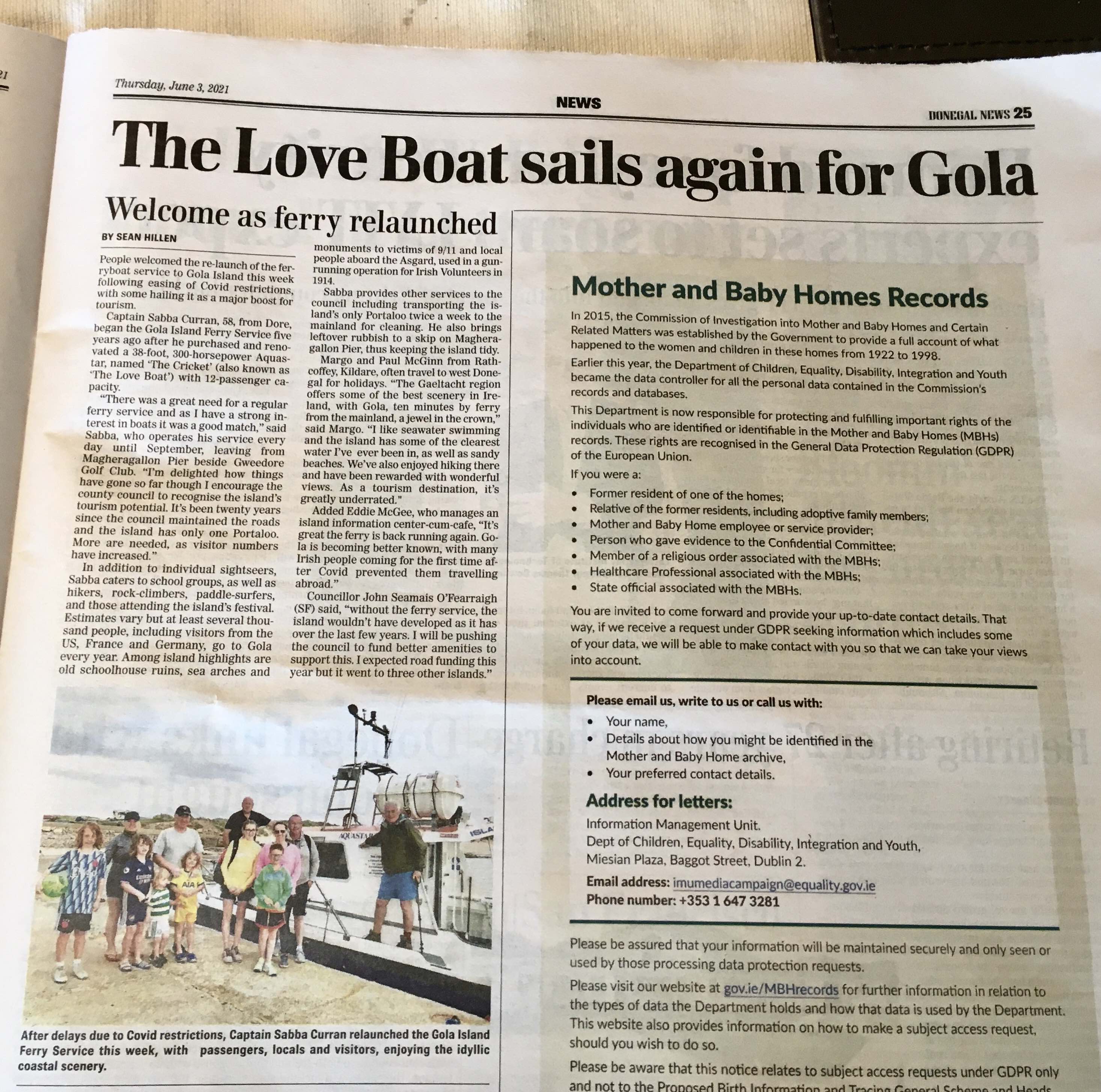
In honor of Sabba, Eddie and the beauty of the island, I penned this short news story for the ‘Donegal News’ this week.   

People welcomed the re-launch of the ferryboat service to Gola Island this week following easing of Covid restrictions, with some hailing it as a major boost for tourism.

Captain Sabba Curran, 58, from Dore, began the Gola Island Ferry Service five years ago after he purchased and renovated a 38-foot, 300-horsepower Aquastar, named ‘The Cricket’ (also known as ‘The Love Boat’) with 12-passenger capacity.

“There was a great need for a regular ferry service and as I have a strong interest in boats it was a good match,” said Sabba, who operates his service every day until September, leaving from Magheragallon Pier beside Gweedore Golf Club. “I’m delighted how things have gone so far though I encourage the county council to recognise the island’s tourism potential. It’s been twenty years since the council maintained the roads and the island has only one Portaloo. More are needed, as visitor numbers have increased.”

In addition to individual sightseers, Sabba caters to school groups, as well as hikers, rock-climbers, paddle-surfers, and those attending the island’s festival. Estimates vary but at least several thousand people, including visitors from the US, France and Germany, go to Gola every year. Among island highlights are old schoolhouse ruins, sea arches and monuments to victims of 9/11 and local people aboard the Asgard, used in a gun-running operation for Irish Volunteers in 1914.

Sabba provides other services to the council including transporting the island’s only Portaloo twice a week to the mainland for cleaning. He also brings leftover rubbish to a skip on Magheragallon Pier, thus keeping the island tidy. 

Margo and Paul McGinn from Rathcoffey, Kildare, often travel to west Donegal for holidays. “The Gaeltacht region offers some of the best scenery in Ireland, with Gola, ten minutes by ferry from the mainland, a jewel in the crown,” said Margo. “I like seawater swimming and the island has some of the clearest water I’ve ever been in, as well as sandy beaches. We’ve also enjoyed hiking there and have been rewarded with wonderful views. As a tourism destination, it’s greatly underrated.”

Added Eddie McGee, who manages an island information center-cum-cafe, “It’s great the ferry is back running again. Gola is becoming better known, with many Irish people coming for the first time after Covid prevented them travelling abroad.”

Local Sinn Fein Councillor John Seamais O’Fearraigh said, “without the ferry service, the island wouldn’t have developed as it has over the last few years. I will be pushing the council to fund better amenities to support this. I expected road funding this year but it went to three other islands.”

Gifted Donegal women host music concert for worthy cause

Death is rarely asked to sing.

But a group of immensely talented women Friday night at Amharclann theatre in the Donegal Gaeltacht invited it to join them – transforming it into a celebration of life, community spirit and artistic triumph.

Devoted to Fiona Carr, popular singer and dancer who fell victim to cancer at the young age of 30 and others like her who bid their last farewells under tender care at the Donegal Hospice, local performers known as the ‘Wild Atlantic Women’ gathered together for a heartfelt musical tribute.

wild atlantic women concert, live music donegal, donegal women singers

And what an uplifting evening it turned out to be.

Regardless of your favorite musical genre, this special concert seemed to have it all – soul and folk, traditional and country, the popular and the newly-penned.

Lead organiser, teacher-multi-instrumentalist-singer-cum-songwriter Brí (Brighdin) Carr with many local female musicians have already raised more than 15,000 euro for Donegal Hospice and the Oncology Department in Letterkenny University Hospital through such events and a double CD.

Few better ways to open such a concert than this admirable group of women together in harmony led by Emma Ní Fhioruisce, Maria McCormack and Bernie Doherty on the haunting folk ballad ‘Caledonia, the unofficial anthem of Scotland written by singer-songwriter Dougie MacLean.

And few better ways to end it than their touching interpretation of ‘Grace,’ written by Frank and Seán O’Meara, telling the tragic story of Grace Gifford who married Irish rebel leader Joseph Mary Plunkett, in Dublin’s notorious Kilmainham Gaol shortly before his execution by firing squad in 1916.

Between these songs, an appreciative audience enjoyed two hours of inspiring entertainment by women, young and old, who displayed remarkable vocal range and musical prowess, drawing a standing ovation for their efforts.

With so many highlights, it’s impossible to describe them all, but here’s a flavour of the evening –

Noeleen Ní Cholla, Gaoth Dobhair-based award-winning sean nos singer-songwriter-instrumentalist, whose angelic voice can be heard on her album ‘An Mhaighdean Mara,’ performed pitch-perfect the Irish-language version of ‘Somewhere Over The Rainbow,’ the ever-popular song written for the 1939 film The Wizard of Oz. How she managed to reach those high notes is beyond me.


Glasgow-born singer, guitarist and lawyer, Jacqui Sharkey, with three albums already to her name, sang ‘Never Be The Sun’ by Donagh Long from Cork. Recorded with her friend and fellow singer Caitlin Murtagh from county Down, and produced by Pat Gallagher of ‘Goats Don’t Shave’ fame who also plays guitar backing. This song will be officially released on February 28 and a video aired on Sky TV this week.

On keyboards, Brí Carr, who founded Blue Ribbon, a performing arts group for children, sang a song she wrote, simply entitled ‘Home,’ as well as a duet with Claire Ward called ‘Second Violin,’ by Irish band, Bagatelle, one Fiona Carr herself recorded aged 14 for Blue Ribbon.

‘H.o.m.e,’ Brí’s next album will be released in May. Her song, ‘Árainn Mhór,’ was the first iTunes chart song as Gaeilge in the Top 200 in Ireland, peaking at number 3. Bubbly Brí, who keeps a ‘big blue book’ of songs she has composed over the past 25 years, also participated in ‘South Of The Border’ festival in Ardara this past weekend. Her first album, ‘Full Circle/Rotha an tSaoil,’ is on iTunes and Spotify. Bernie Doherty sang a beautiful rendition of the wistful ballad, ‘Who Knows Where the Time Goes?’ by English folk-rock singer Sandy Denny. Bernie is now involved in the formation of the ‘Choir of Ages’ its members ranging in age from 5 to 80.

Accomplished pianist and keyboardist, Kelli Nic Ruaidhri,  from Fanad who teaches in Ballinamore and supported many of the songs on the evening, also sang ‘Sanctuary,’ which she translated into ‘Beidh mé Ann.’


Maria Mc Cormack’s contributed to the evening’s success with a song about her own personal experience of lost love. Entitled ‘Stratford to Stansted,’ about someone moving away to London for work, it will feature on her second album, her first being, ‘I Choose To Love.’ Aside from gigs this year in Slane (Purple Sessions), Drogheda (Fireside Festival), and even a St. Patrick’s Day festival in Germany, Maria will also play at the Letterkenny Jazz and Blues Festival on July 4th Maria has set up a fundit page to help support her upcoming recording.

Looking like a sultry Marilyn Monroe in black silk on stage, Rachel Akkoç, actress, singer and member of the Letterkenny Musical Society, transported listeners to a smoky uptown New York nightclub with her soft, seductive interpretation of soul song ‘I Know Where I’ve Been’ from the musical ‘Hairspray.’

Highlighting the difficulty of ‘letting go,’ and having special meaning for me as my mother died last week, Clare Ward sang ‘Reflections’ in remembrance of her friend Manus Kelly, killed tragically last year in the Donegal International Car Rally. Claire’s album is called ‘Bite the Bullet,’ an eclectic mix of folk, Celtic and easy rock music. Recent solo recordings include ‘Eye of the Storm,’ and ‘Remember,’ about a friend’s journey with Alzheimer’s.

Last but certainly not least were what could best be described as ‘the Little (Wild Atlantic) Women’ – girls, aged six and upwards, namely Caela Carr, Siofra Harvey, Clodagh Mooney, Mia Clarke, and Hannah NicPhaidín, all award-winning singers and musicians. They drew enthusiastic applause from the audience with a rousing medley that included ‘I Wish I Had Someone To Love Me,’ ‘Rós na Seirce,’ “Christmas Letter,’ ‘Fear a’Bhata,’ ‘Angels Among Us,’ ‘Liom Féin’ and finally, ‘Home To Donegal.’

Other excellent singers included –

Trish Rodgers, whose albums include ‘This Is My Island,’ ‘Home Sweet Home’ and ‘The Gold Collection’ – singing, ‘Donal Óg.’

Deirdre Bonner, whose albums include ‘Remember When’ and ‘Atlantic Bridges’ – singing, ‘Come All Ye Fair And Tender Ladies.’

Maria McCool, whose albums include ‘Ailleog, ‘Doagh and ‘Shenandoah’ – singing ‘Teddy O’Neill.’

Gearóidín Breathnach, a leading sean-nós singer, whose album is ‘Ar Fhoscadh na gCnoc‘ – singing ‘Anseo I lár an ghleanna.’

and the velvety-voiced Emma Ní fhioruisce from Gaoth Dobhair – singing ‘Ar Ais go Gaoth Dobhair.’


Kudos to Áine Ní Churrain (Barrscéalta Raidio na Gaeltachta) and Karen Gallinagh (Speech and Drama Federation Ireland) who acted as excellent MCs and to Serenity Hair & Beauty Salon Gweedore which donated a 200 euro voucher to a lucky raffle winner.

Appreciation poured in for the artists –

A great night had by all at the Valentine’s night concert by the ‘Wild Atlantic Women.’ We had a fantastic time. Such a talented group of singers and for such a worthy cause as the Donegal Hospice.” Simon Smith, Letterkenny, professor of nursing.

wild atlantic women, live music donegal,

Friends obviously having a good time at Amharclann.

I thoroughly enjoyed the ‘Wild Atlantic Women’ concert in the Amharclann, Gaoth Dobhair. It was an eclectic mix of musical genres, excellent song-writing and inventive reworking of older songs. A great night’s entertainment.” David McNally, librarian and researcher.

A great mix of talents, and all age groups, both languages, and the modern and the traditional. Agus neart craic! I particularly enjoyed the translated songs such as Maria Nic Cumhaill’s ‘Grace’ and Noleen Ní Cholla’s ‘Thar an Tuar Ceatha’(Somewhere Over The Rainbow). Given the night that was in it, we had love-songs and songs of unrequited love such as the haunting and ancient Dónal Óg, Thíos i Lár a’Ghleanna and a new song about love lost to modern day emigration.
Well done ‘Young and Tender Ladies’ of Donegal (one of ballads sung on the night) for sharing St Valentine’s evening and helping an important cause. Having the CD, I can now enjoy it all again.
Reuben Ó Conluain, retired teacher Dún Laoghaire and Machaire Rabhartaigh

Sabba Curran, gola boat ferry, gola island ferry

Sabba and Patricia Curran getting settled for an evening of music and song.

A wonderful night of entertainment, so many talented singers and musicians on stage at one time. Truly memorable.” Sabba Curran, Captain of ‘The Cricket,’ Gola Island ferryboat.