Meet The Real Simon Harris – The Dishonourable Duke Of Duping

Is it not reprehensible – the height of hypocrisy in fact – that Simon Harris the leader of the Irish Government  – has the audacity to accuse Sinn Féin in recent weeks of ‘duping’ people when it expelled several party members for substandard social behaviour?

Simon Harris – the Dishonourable Duke of Duping.

The Cambridge dictionary definition of dupe is ‘to deceive’ and if anyone is guilty of deception, it is Harris and his colleagues in the coalition Government of Fine Gael, Fianna Fail and the Green Party.

Over the last four years since being in power – and for many years before that – these parties have been nothing less than ‘repeat offenders,’ constantly deceiving the ordinary hardworking people of Ireland with false promises of a quality lifestyle as befitting a nation that is one of the earliest members of the European Union, then called the European Economic Community, or EEC for short, back in 1973.

Instead, however, we have one of the most disastrous health systems on the continent, with people waiting years for life-saving surgeries, often dying before they receive it; we are awash in homelessness and poverty, with an estimated people 30,000 living on the streets, including thousands of young children and infants; we have a forsaken, forgotten, forlorn State where retirees and newlyweds alike are unable to afford the rent of a simple home, never mind the financial resources to even remotely consider buying one to end or begin their lives together in a modicum of comfort.

Not only does the Dishonourable Duke of Duping continue to deceive people that after all these years he’ll one day consider putting a roof over our heads, but he himself basks in the lap of luxury in one of the most expensive and elitist places in Ireland, the scenic coastal town of Greystones in county Wicklow, where he was born, where he lives and where houses cost up to two million euro, and more.

But is it not somewhat harsh of us to criticise the Dishonourable Duke of Duping for his lack of common decency? Is it not unfair to ask a man of such Royal blood living in such a high falutin’ environment to understand the plight of so many desperate Irish people? Is that not akin to asking King Charles of England to make his own cupán tae once in a while?

Shamefully, while the wealthy in Ireland (many of whom are the Dishonourable Duke of Duping’s closest neighbours) while away their days in decadent lifestyles with fancy homes in fancy places or travel in  environmentally-damaging private jets (which the Dishonourable Duke of Duping does frequently) and indulge their whims in ostentatious holiday homes abroad (which the Dishonourable Duke of Duping often does), modern Ireland suffers the worst housing shortage in its entire 100-year history. 

Studies show less than a third of 30-year-olds own their home. Over half of all newly-built homes in greater Dublin alone were bought or developed by global vulture investor funds, thus locking countless people out of ever attempting to buy one. These ‘vampire funds’ don’t buy homes to sell, they buy them to extract high rents in perpetuity. In other words, they suck the lifeblood out of decent Irish society.

And to make matters worse, the Dishonourable Duke of Duping and his cadre of Government lackeys allowed a temporary no-fault eviction ban in Ireland to lapse last March, thus opening the floodgates for more than 15,000 notices of termination to be issued last year, making the number of evictions higher than it was during the Famine in the mid-1800s. 

For centuries, gutless, greedy, often absentee, landlords, have been the scourge of Ireland, rich, ruthless people who with the click of a finger, a scribbled signature on a sheet of paper, thoughtlessly tossed hungry families out into the ditches. 

Now it seems the same is happening all over again in modern Ireland, this time under the dictatorial rule of the Dishonourable Duke of Duping and his ignoble entourage.

Instead of urgently dealing with these major social and health issues that are making the lives of so many Irish people intolerable, Harris and his well-to-do cohorts, including Government coalition leaders, Micheál Martin of Fianna Fail and Roderic O’Gorman of the Green Party, are pointing their grubby finger at Sinn Féin, an oft-used political ploy to distract popular attention away from the real issues, and their own failings on them. 

In doing so, however, these ‘I’m-better-than-you’ leaders fail to realise something important. While the bitter winds of winter howl at our doors, while Storm Ashley batters the coast this weekend, Irish people are not bears. They are not hibernating. They are wide awake. And fearful. And hungry. And cold. And they remember the empty promises made to them from on high four years ago, and for many years before that.  

Maybe, just maybe, we should ask Sinn Féin leader Mary Lou McDonald to re-tell the story of these empty promises once more, to remind us how easily we were taken for fools. And in doing so, help us make sure the Dishonourable Duke of Duping and his Royal patrons don’t sneak back into power through the back door and make jesters of us for another four years in their Court of Failure.

Maybe, just maybe, we’ve learned our lesson and are wide awake enough to elect Sinn Féin, the ‘Party of Change’ and improve things for the better. For each and everyone of us, our parents, our children and the generations who come after. 

Nobel poet Seamus Heaney – spirituality and self-discovery

Irish Nobel prize-winning poet Seamus Heaney was a sublime wordsmith and a mystery.

And the veil still cloaking aspects of his life and views may be lifted Friday evening.

Seamus Heaney homeplace events, sean hillen author, seamus heaney bank of ireland

Enjoying a special exhibit on the Nobel winning poet at the Bank of Ireland Cultural and Heritage Centre in Dublin this week.

I’m delighted to be hosting a special event at the Seamus Heaney HomePlace at which three speakers with impressive credentials and diverse views on spirituality and religion will combine their thoughts to reveal more about the Derry man who made Ireland proud.

Committed Catholic Martin O’Brien long-time journalist with the Belfast Telegraph, former editor of The Irish News and award-winning producer with the BBC will be joined by poet Anne O’Reilly, performance poet and lecturer in religious studies and Noeleen Hartigan, Unitarian and human rights leader who has worked with Amnesty and the Simon Community.

anne o'reilly poet, martin o'brien, noeleen hartigan

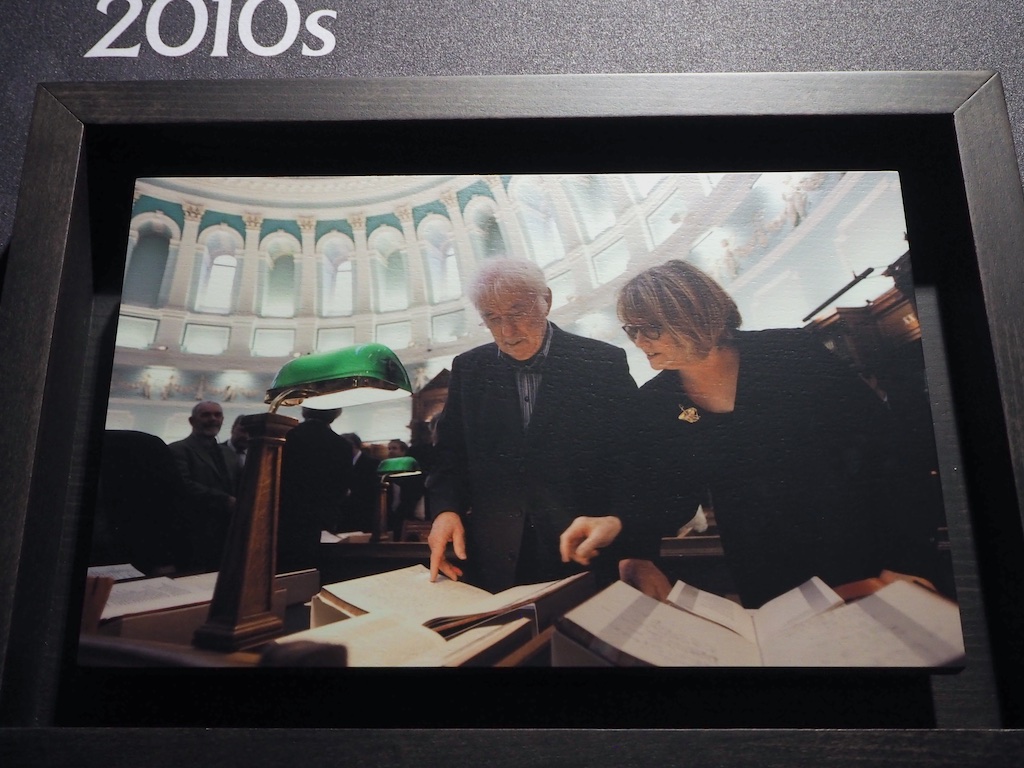
Seamus Heaney and his devoted wife, Marie, organise his papers for the National Library of Ireland archives.

Their views, some similar, some in direct contrast with each other, should prove to be an exhilarating spectacle to behold.

Aside from his love of words, what can definitely be said of the Nobel laureate is that he was a peace-loving man.

While Heaney stayed away from blunt, outright side-taking on the situation in northern Ireland during ‘The Troubles,’ he was not averse to political commentating, Chris, his son, recalls a comment his father made, on television about Barack Obama: “He said something like, ‘I’m wary of too much uplift – though in Obama’s case I can pretty much get behind it.’ ”

sean hillen hosting events at seamus heaney homeplace

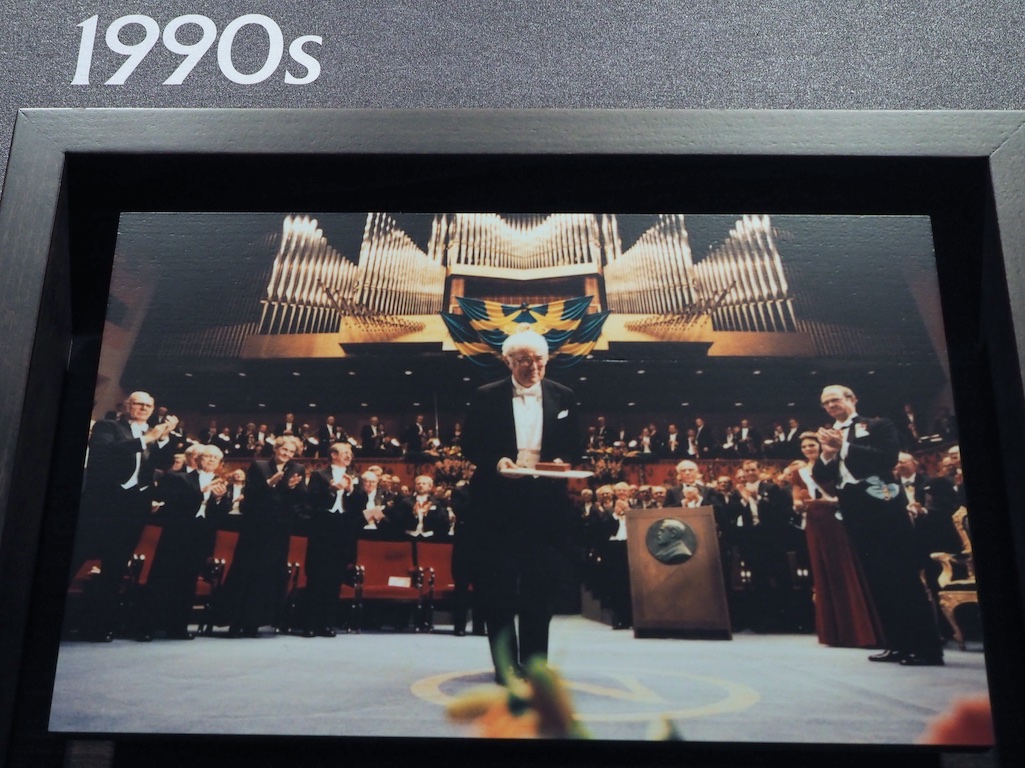
Accepting the Prize.

What we may hear Friday evening at the Seamus Heaney HomePlace is what else he may have become since his upbringing in a Catholic family in rural Derry.

To whet your whistle ahead of this event, here are some comments about Heaney –

Heaney, whose poems resonate with the rhythm of the lives of those he touched – casual reader, familiar student, his close-knit family.

Nobel laureate and beloved public figure; family man and generous friend. 

The event at the HomePlace is a perfect primer for anyone headed to Dublin to see, Seamus Heaney: Listen Now Again, the first exhibition at the new Cultural and Heritage Centre in Bank of Ireland’s former parliament building on College Green, Dublin. More than 100 people have worked on the show, wonderfully curated by Professor Geraldine Higgins, Director of the  Irish Studies Program at Emory University, Atlanta, for the National Library of Ireland, with the family included in the process. Exhibition Manager is the delightful Ann-Marie Smith.

seamus heaney homplace, sean hillen author,

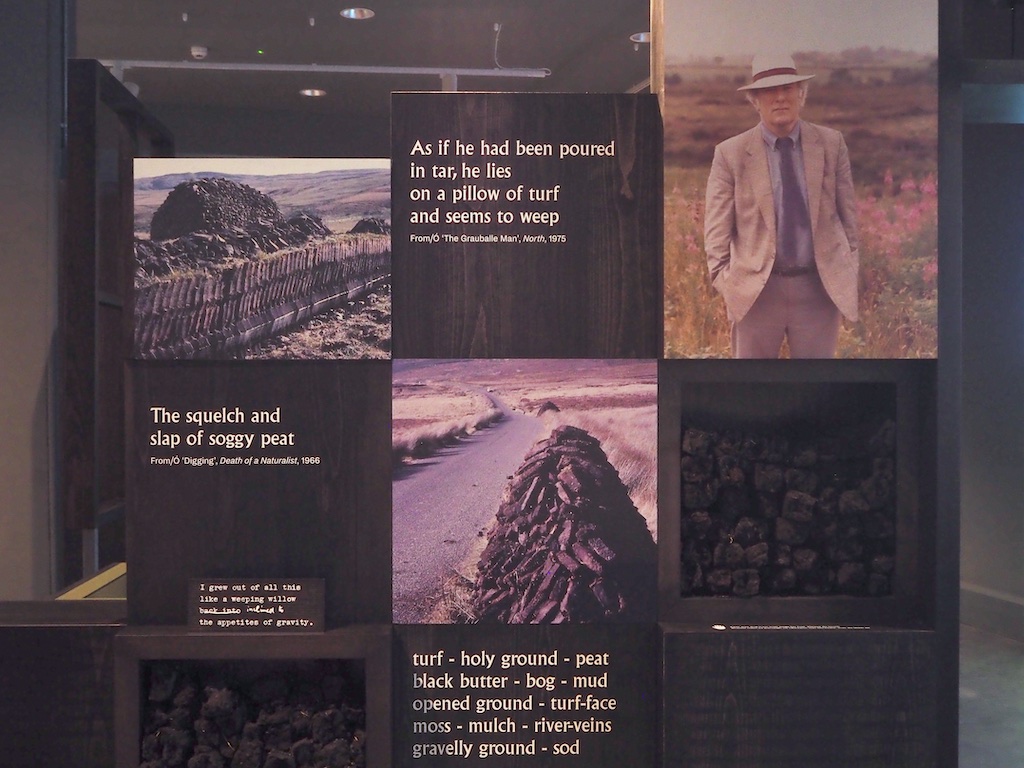
The exhibition focuses on the poetry, its genesis and its process, with glimpses of the essayist, playwright, translator, professor, literary critic and family man. The aim is to create an intimate and immersive experience of the poet’s work, and the thought and care the National Library team have brought to the task shines through.

Friday’s event at HomePlace is also a primer for a lecture by Fintan O’Toole, an Irish Times columnist for nearly 30 years, on December 1st at the same venue. Faber announced O’Toole would write the official biography of Seamus Heaney.

Background Snippets on the Life of Seamus Heaney

Born rural Catholic at the family farmhouse called Mossbawn, one of ten children, he won a scholarship to St. Columb’s College in Derry, then attended Queen’s University , later becoming a lecturer at St. Joseph’s College in Belfast in the early 1960s.

In 1972, Heaney left a lectureship he had earned at Queens University Belfast, and moved with his lovely wife, Marie, to Wicklow. In the same year, he published Wintering Out.

He became Head of English at Carysfort College in Dublin in 1976, later moving to Sandymount.

sean hillen at seamus heaney bank of ireland

Proud to add my message to those of other Seamus Heaney admirers at the exhibition of his life at Bank of Ireland Cultural and Heritage Center, College Green, Dublin.

His next volume, Field Work, was published in 1979. Selected Poems 1965-1975 and Preoccupations: Selected Prose 1968–1978 were published in 1980. When Aosdána, the national Irish Arts Council, was established in 1981, Heaney was among those elected into its first group. (He was subsequently elected a Saoi, one of its five elders and its highest honour, in 1997).

In 1981, Heaney traveled to the United States as a visiting professor at Harvard, a relationship he maintained for many years, where he was affiliated with Adams House and delighted in teaching poetry in the hallowed halls there. He was awarded two honorary doctorates, from Queen’s University and from Fordham University in New York City (1982).

In 1989, Heaney was elected Professor of Poetry at the University of Oxford, a post he held for a five-year term to 1994.

Heaney was awarded the Nobel Prize in Literature in 1995 for what the Nobel committee described as “works of lyrical beauty and ethical depth, which exalt everyday miracles and the living past.”