A Better-Informed Donegal is a Better Donegal

Finally, greater public debate has begun about the financial operations of Udaras na Gaeltachta, an organization rapidly acquiring the sobriquet ‘the secret society,’ and more specifically about spending on a church-run addiction clinic in Falcarragh.

Udaras, having managed to keep the lid on potential spending of between one and three million euro on the centre at Ballyconnell House, had board member and Fine Gael political candidate, John Curran go on the local airwaves over the last few days.

Instead, however, of presenting relevant information on the proposed project’s costing and benefits, he used valuable airtime on Highland Radio to personalize what is a legitimate community issue and attempt to tarnish it as an isolated ‘Sean Hillen‘ one.

Let me make it perfectly clear, if I have not done so already: I am not against or for an addiction clinic in Falcarragh. I have no implication, financial or otherwise in this project (can pro-addiction clinic supporters say this, hand on heart?). Golden axiom in journalism: ‘follow the money.’
ripples

Ripples of democracy begin to spread.

Another axiom for journalists, ‘if they cannot deal with the story, they will try to deal with the story-teller,’ seems more than obvious in this rather unsavory situation. I have heard myself referred to on Highland Radio by Mr. Curran as someone ‘stirring the hornet’s nest’ and as ‘an agitator’ (I have complained formally in writing to the station’s managing director, Shaun Doherty, whose daily news and chat show and Friday morning ‘press round-up’ I have appeared on several occasions, about these personal attacks). In a strange twist to the tale, there was also a reference (a cross between Harry Potter, Star Wars and superhero comic books) on Mr. Curran’s Facebook page to ‘dark forces’ behind me. All in all, it seems spin-doctoring is the unfortunate path Mr. Curran and his political advisers – and those faceless men with most to gain from the addiction clinic – have taken. That’s their prerogative, but it is unprincipled. And utterly untrue.

Owen Curran (no relation to the above), a well-respected community leader in the vanguard of the four-year long Cloughaneely ‘Can’t Pay, Won’t Pay’ campaign against household and water charges, told me this week Udaras na Gaeltachta should release immediately costs and benefits information on the proposed church-run addiction clinic and was in today’s ‘Donegal Democrat’ saying so again (page 17 – by the way, the story headline says 90 people, but I could only count 35 in photo, can’t believe someone would be left out; see also letters page 18, ‘Abused while on the canvas’). “Unfortunately,” he told me. “We live in a time of austerity, a time when there is not a lot of money around, we also live in a time when there has been a severe lack of transparency and accountability in Irish state and semi-state bodies. As such, and with the local Udaras office in Donegal receiving millions of euro every year, it is only fair that ordinary people – whom this proposed project will affect dramatically – be given as much information on the size of the investment and the benefits, including what guarantees there are for what of jobs. Open forums are obvious avenues for discussions to which all members of the community should be able to attend and voice their opinions.

Not only.

Sinn Fein local council candidate, John Sheamais O’Fearraigh, who appeared on national television (TG4 ‘An Nuacht’ last Saturday evening) on the addiction centre issue and is quoted in the ‘Donegal Democrat’ today, also called for greater transparency from Udaras. “I have been reliably informed this project will cost between one and three million euro,” the local Gaoth Dobhair-based youth worker told me. “This is yet another example of a very costly project that has not been fully considered, with a marked absence of open public debate involving local people. A lot of money will be spent on this one, single project. As there is not a lot of funding around nowadays, local people have the right to know how much public money exactly will be involved, if this money is being well spent and how many other projects will suffer funding loss as a result. Also what affect it will have on the image of the community. They also need to know what guarantee, if any, there is for local people and what quality and pay-scale these jobs will be.

spring

Spring at Ballyconnell House

Not only.

Fianna Fail local councillor, Seamus O’Domhnaill, has now also called for Udaras to hold a public meeting to discuss the Cuan Mhuire addiction project. As the Donegal Gaeltacht is much more than just Falcarragh, it is important that ‘meetings’ not ‘meeting’ be held, to give the 16,000 people in other parts of the county’s Irish-speaking region (including its three main areas, Na, Rosa, Gaoth Dobhair and Cloich Cheann Fhaola), a chance to air their views on such a costly venture.

Last Friday afternoon, an open-air petition-signing took place at Falcarragh crossroads calling for more funding for cultural tourism projects in the area and greater public debate over the proposed addiction clinic to be run by Cuan Mhuire, a church-run company, drew open, lively debate. Among concerns voiced were the project’s impact on the safety of local children; future restricted access to the estate’s grounds, the location for a series of annual community events and festivals; and resulting reduced funding for other projects, including those for cultural tourism.

Mary McGarvey, who claimed she owns property on Falcarragh’s Main Street, said at the petition-signing table that the centre would be good for the town’s business while a mother and local festival committee member said while she would “prefer a well-considered leisure facility, especially one for children, something should be done about that derelict house.” Cloughaneely Golf Club members at the petition table complained of reduced funding from Udaras and feared for the club’s survival.

It was, to use an ancient Greek term, ‘agora’ day in Falcarragh and in the classic Greek version of democracy, it was ‘agora’ in terms of open debate and exchange of views.  Why could Udaras not have done this? Why not now in open forums, especially as the seal of secrecy has been prized open?

Sadly also, people on Friday afternoon said they would like to sign the petition but were afraid to do so – including someone (whose identity will remain anonymous for obvious reasons) representing a local arts and cultural project – saying she feared being punished by Udaras and receive no funding in future from it for projects she might put forward. One person even called me after signing the petition (adding that he thought Udaras should “be disbanded”) saying some people had “approached” him and that he feared he might lose business (he asked me for his name not to be mentioned here).

Is this the kind of society we want – one where people are afraid to present their opinions openly, and be listened to; prevented, indirectly or directly, from doing so by a powerful, economic group such as Udaras? I thought, especially since we gained national independence, that the days of humiliating people by making them tug their forelocks was over.

As for Udaras and its spokesperson, Mr. Curran. Instead of presenting specific answers to specific questions on the project’s costings and benefits, all he would say on numerous Highland Radio sound-bites was that he supported the project and that it would not detract from Udaras’s overall budget spend locally (hard to believe when the budget has already been slashed and that other Gaeltachts in Ireland will hardly be so generous as to give Donegal much more money over the addiction centre’s high cost).

Mr. Curran also declined to give investment figures saying, “To date, no contracts have been signed, no budgets have been agreed, so there really isn’t any really figures to be spoken about.” Yet he was adamant forty-five jobs – note the figure is an exact one (for what reason?) – would be created. He also did not know how many of these jobs would be local and what kind of jobs they would be.

spring

Flowers and forest at Ballyconnell House

And finally, to Udaras HQ in Galway, and communications and marketing manager Siubhán Nic Grianna. Some readers may remember I sent 12 formal, written questions a couple of weeks ago, with a set deadline, to her and to all Donegal members of the group’s national board, namely John Curran, Eunan Mac Cuinneagáin and Daithí Alcorn, as well as its Arranmore-born chairperson, Anna Ní Ghallachair (see post here). Of all the board members and chairperson, only Eunan Mac Cuinneagáin had the professional courtesy of responding in person.

As Ms. Nic Grianna’s provision of relevant information on Udaras’ use of public money has been less than co-operative in the past, I am sad to say her responses show that position has remained unaltered, with no details on the investment (estimated or otherwise) or the true benefits, including jobs, of the proposed addiction clinic. Nor other key details on other aspects of Udaras’ financial operations. I will detail each response to the 12 questions in a future blog.

It is worth noting here that prominent leaders in the addiction field say two such clinics in a rural area such as Donegal is most unusual and, as such, detailed market research would be required to justify it (the other center in Donegal is in Muff). Even in Ireland, there is no such situation.

In conclusion, I believe an important step has been made to open discussions about this proposed addiction clinic – but as well respected community leaders have now said –  release of pertinent information is necessary for a more agreeable and equitable outcome for all concerned.

Questions still unanswered –

  • How can Udaras promise so categorically 45 jobs if, as its spokesman, Mr. Curran, says, no budgets have been agreed, no contracts signed?
  • How can Udaras guarantee more funds will be allocated for other projects (as Mr. Curran states on Highland Radio) when the organisation’s budget has already been severely cut?
  • How exactly will this project impact on the Donegal Gaeltacht-Cloughaneely-Falcarragh community at large?
  • What kind of addictions will be treated within the proposed clinic – drug, alcohol or/and sexual addictions?
  • What other proposals have been put forward for Ballyconnell House as stated by an Udaras spokesperson in today’s ‘Donegal Democrat’ (after Udaras tourism officer, Gearoid O’Smaolain, said previously ‘no’ proposals were put forward)?
  • What are the reasons these proposals for Ballyconnell House were rejected in favor of an addiction clinic?
  • Which company conducted the feasibility study?

Happy “May Day’ Weekend to Everyone!

Falcarragh celebrates ‘May Day’ for first time

An ancient event is being brought back to life this weekend as local people for the first time celebrate the feast day of ‘May Day’ in Falcarragh, west Donegal. The event will take place this Saturday afternoon at 2pm at the main crossroads.

Originally, in Pagan times, a day commemorating the feast of Bealtaine, in May 1890 it became a holiday recognising international workers’ day and the fight for better working conditions.

“We decided to celebrate it as an act of solidarity with our own working people, many who have been made unemployed or who have been forced to emigrate over recent years,” said Owen Curran, one of the leaders of the four-year-long ‘Cloughaneely Can’t Pay, Won’t Pay’ campaign against household charges, and now water charges. Curran gives great credit to a number of people who he says have been pioneers in the struggle for greater equality as well as anti-austerity stalwarts, including Theresa and Caroline Woods, founders of the group; Mary Bridget Sharkey; Mary Attenborough; Moire McCarry; R.J. McLean; James Woods;  Gerard Gallagher; and Martin McEhlinny.

“The stark facts are that despite the Government telling us we’re ‘turning the corner,’ mass un-employment and emigration remains the reality here,” said Curran. “More than 400,000 people are on the live register with many more on ‘Job Bridge’ type schemes. Our young people continue to emigrate.”

Curran believes there are two reasons for continuing unemployment. “One is the slump in demand because of the cuts to peoples incomes. The second is lack of investment. Meanwhile, large profits are being made and wealth has increased for the rich. Oxfam estimates that the super-wealthy have 700 billion euro stashed in Irish bank accounts. The policy of incentives for the private sector to create jobs clearly has not worked. It most certainly has not worked in the Gaeltacht where Udaras has spent large sums of tax-payers money since their foundation. The result: mass unemployment levels and emigration from the area. What is needed is a real jobs plan, with investment channeled into a programme of necessary works such as school building, the fitting of buildings for rain-water harvesting, upgrades to sewage and water infrastructure, with work to begin immediately.”

The ‘May Day’ event begins at Falcarragh crossroads and there will be an open-mike discussion on pertinent issues such as local and national government job-creation strategies, as well as the planting of a tree in solidarity with all those from the area who have been made unemployed or forced to emigrate. Mr. Curran added that there will also be music and song, “because in the words of Emma Goldman, political activist, writer and feminist, ‘If I can’t dance to it, it is not my revolution.’

For further information, contact Owen at 086 312 2784 or Maire at 086 739 3116. Organisers say everyone is welcome.

Stark racism rears its ugly head in west Donegal

Sadly, an ugly racist incident took place Friday afternoon that brings the notion of ‘Ireland of the Welcomes’ and the reputation of the Donegal Gaeltacht into severe disrepute.

In trying to encourage more open public debate on what she considers is a serious community issue – Údarás spending of what is believed to be between one and three million euro on a proposed drug addiction clinic in Falcarragh and the need for greater funding for cultural tourism projects in west Donegal – my wife, Columbia – an emigrant to Ireland, now a proud Irish citizen and happy living in the Gaeltacht – was racially abused and told to “Go back where you come from. We don’t want you here.”

The person who shouted the abuse was a man, driver of a car with the registration plate 08DL5251 who stopped as he passed by a petition-signing table my wife was manning as a volunteer at Falcarragh crossroads around 3.30 pm this Friday.

This man’s distressing contribution to what he might well call ‘community development’ is all the worse considering how so many men and women from Ireland down through the generations, including the present one – and unfortunately, many from west Donegal – are emigrants themselves, in search of a new life in other countries, including England, Australia and the US. In this context, isn’t it sad such attitudes of discrimination as this man’s still exist here? Not only were his cutting and insulting remarks an example of stark racism right here in the heart of the Gaeltacht, but also utter hypocrisy.

My wife, Columbia, is a well-educated woman, a former secondary-school language teacher, one of two sisters from an ordinary working-class family in Vișeu de Sus, Maramureş, northern Romania, a small town very similar to Falcarragh itself  – both in terms of population size, pretty, rural location and indeed, economic difficulties it faces. Like many others, Columbia and her family suffered severely under Communism there until dictator Nicolae Ceausescu was ousted from power in December 1989. Such suffering included lack of basic freedoms and constant food shortages – reminders in themselves of what our ancestors right here in west Donegal suffered.

Columbia raised herself from humble beginnings, won a scholarship to university and finished not just one degree but a number of qualifications in journalism, teaching and business, finally becoming for a number of years managing director of a company employing more than 30 full-time people. Not only do I love this lady very much, I am also extremely proud of what she has achieved in her life thus far.

If anyone should know the identity of the person driving car registered 08DL5251 on Friday afternoon through the centre of Falcarragh, please tell him an apology is in order. Doing so is the mark of a real man.

Alternatively, if he happens to pass you on the road, sound your horn – it might just act as reminder to him of the reputational damage he has done to the people around him and the place where he lives.

In defending spending on the Falcarragh addiction clinic, an apparent platform for his political career – and instead of dealing with the issue at hand – Udaras board member and Fine Gael local council candidate, John Curran, labeled myself and my wife on Highland Radio as ‘agitators’ and as people ‘stirring the hornet’s nest,’ rather than as concerned citizens.

Personalizing an issue in this way and using such incendiary terms often lights dangerous fuses in people. Ugly things – such as outright racism and violence – can occur as a result. Whether he meant to or not, Mr. Curran should now take steps to avoid such words for fear they are taken on board by such people as the racist car driver. In fact, perhaps, he should devote his attentions to dealing with such racial outbreaks, isolated though they may be.  And, of course making sure as a government-appointed Udaras board member that there is greater transparency and accountability when it comes to the organisation’s operations, and this addiction clinic specifically.

Sadly Yours,

Concerned Husband and Citizen

Bun na Leaca, Gaoth Dobhair

Druids, faeries and a giant with a hole in his head – a witch’s brew of a carnival in Falcarragh

Possessing creative flair and organizational ability in abundance Kathleen Gallagher wanted to utilize her multi-faceted talents to support cultural and tourism development in Falcarragh – hey presto, some of the most colorful carnivals ever to grace the environs of this small, west Donegal Gaeltacht town.

Born in the tiny district of Carrowcannon, Kathleen (44), a teacher of early school leavers in Letterkenny, was a member of the Cosa Meata ‘Funky Feet’ Carnival Group and the more informal, self-named, tongue-in-cheek, ‘Creative Creaturs.’

Kathleen

As such, she was plum full of innovative ideas. And anyone who had the honor of witnessing the dramatic scenes as around 90 people dressed as zombies, vampires and creatures that go ‘boo’ in the night (with Kathleen as a zombie bride) emerged over the hill from the direction of the Bridge of Tears in the Muckish Gap, slouching into Falcarragh crossroads to the pulsating sounds of Michael Jackson’s ‘Thriller’ a few years ago know exactly what the term ‘innovative idea’ means. That particular event in 2010 raised more than 14,000 euro for the victims of the Haiti earthquake and also gained national recognition by featuring in the St. Patrick’s Day parade in Dublin watched by tens of thousands.

Haiti

Then there was the ‘Great Ball Race’ event on October 30, 2011, at which 4,000 numbered balls were released at the top of Falcarragh hill rolling down towards Gortahork and captured in a specially-designed collection chute, made by Dutchman, Rein de Groot. The event raised 4,230 euro for Concern to help reduce drought in Africa.

leprachaun

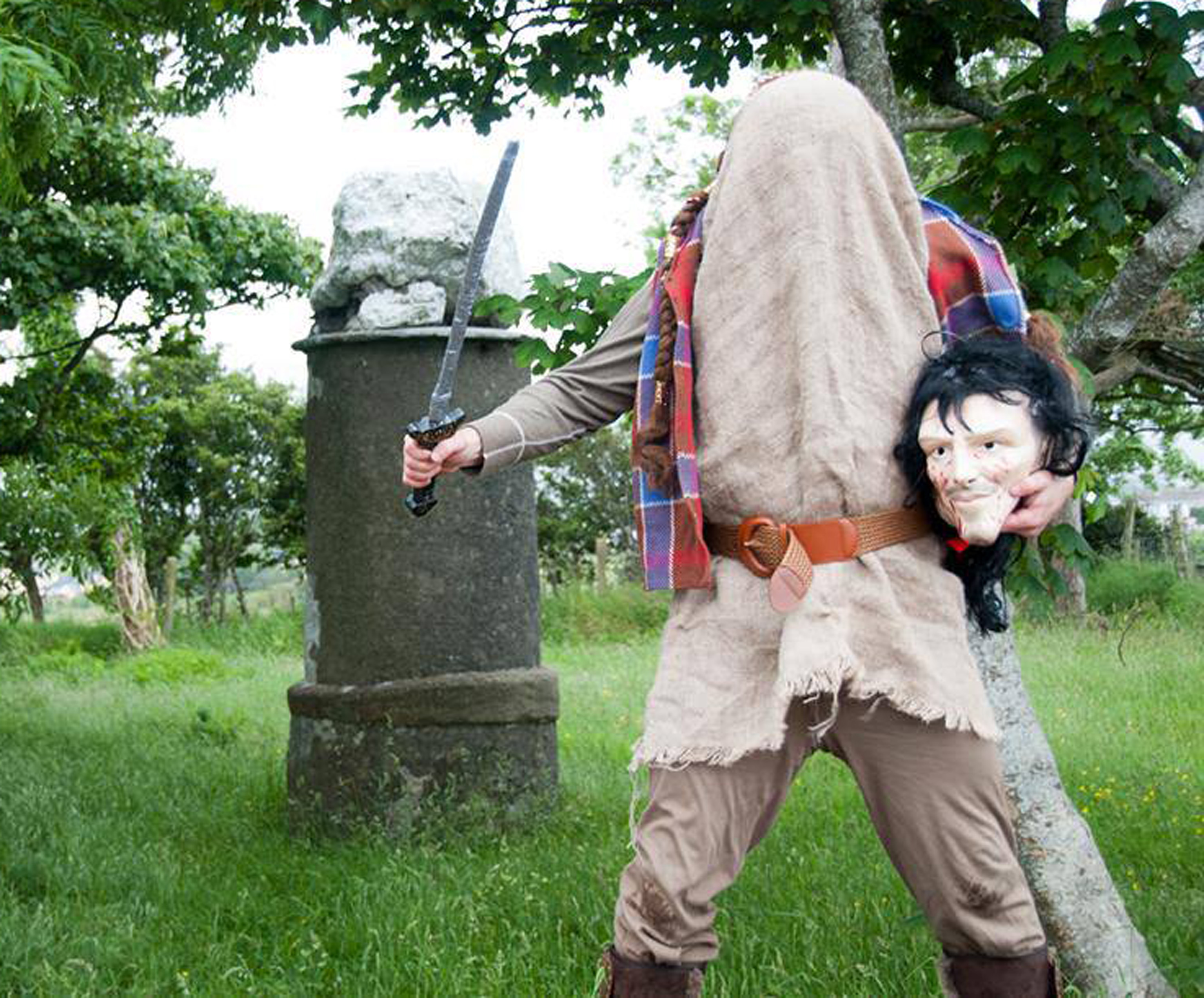
That brings us to the inaugural and intriguingly-entitled ‘Evil Eye Festival’ (Féile na Súile Nimhe) last year, which Kathleen and colleagues shaped to fit the national tourism campaign ‘The Gathering,’ and which will be repeated this year. Starring five impressive, 7-foot high puppets, two so complex they had to be operated by three people, a large cow structure made of timber and wire designed and made by Kerry Law and her partner Roger O’Shea and a 16-person squad of dynamic samba drummers representing the evil Balor’s army, as well as the assistance of the Cloughaneely Drama Group under the direction of Manus Diver and Joanne Butler and three of the area’s Irish schools of dancing (McCafferty, Maureen Byrne and Kavanagh), Kathleen and her team made local legendary history come to dynamic life. In the environs of Ballyconnell House estate (a verdant community preserve that may soon be turned into a Catholic Church-run drug addiction clinic), the story of the battle between Balor and his grandson, Lugh, son of Eithne, and the stealing of ‘An Glas Gaibleann’ (Cow of Plenty) from Mac Aneely, came to multi-colored life. Narration was in English and dialogue between characters ‘as Gaeilge,’ all replete with witches, faeries and a druidess (Biróg).

pupets 3

“It’s such a fantastic story, just waiting to be told in a multi-art form way,” is how Kathleen described the genesis of the event. “I knew we had a core of very creative people here who were well able to deliver a great spectacle. It was a case of building social capital in the area. We have plenty of local talent here. We just need the resources.”

The response to the festival last year was terrific, Kathleen recalls. “It worked out brilliantly. First of all, the weather stayed kind. And so many people – many of them locals, some of whom didn’t know the details of the legendary story of Balor and Lugh or the story about the stone behind the GAA field – came to enjoy the spectacle. Also, many people volunteered to help, even a plasterer, Martin Whoriskey from Gortahork, who saw us rehearsing at The Yard where he was working and happened to mention that he used stilts in his job to reach high spots. Immediately, we begged him to join us, which he did, playing the role of Balor – on stilts, of course. Aisling Friel from Gortahork, a former member of Cosa Meata Carnival Group, played the role of Eithne, daughter of Balor.”

headless man

For their efforts, the ‘Balor team’ was runners-up in the National Heritage Council award for ‘Most Innovative’ event, as well as the Me2U Donegal Volunteers Award.

Challenges, of course, were many, as they tend to be when launching such an ambitious idea. “It was a brand new project so people were initially a bit bewildered about it at the start. We also needed to find available space, both for the equipment and our life-size puppets, as well as for workshops such as the samba drumming training led by Roger. We were very thankful to Paul Kernan (coordinator) and his team at The Yard, who helped us very much. Sean Fitzpatrick, a wonderful designer, produced our posters and brochures.”

evil eye 1

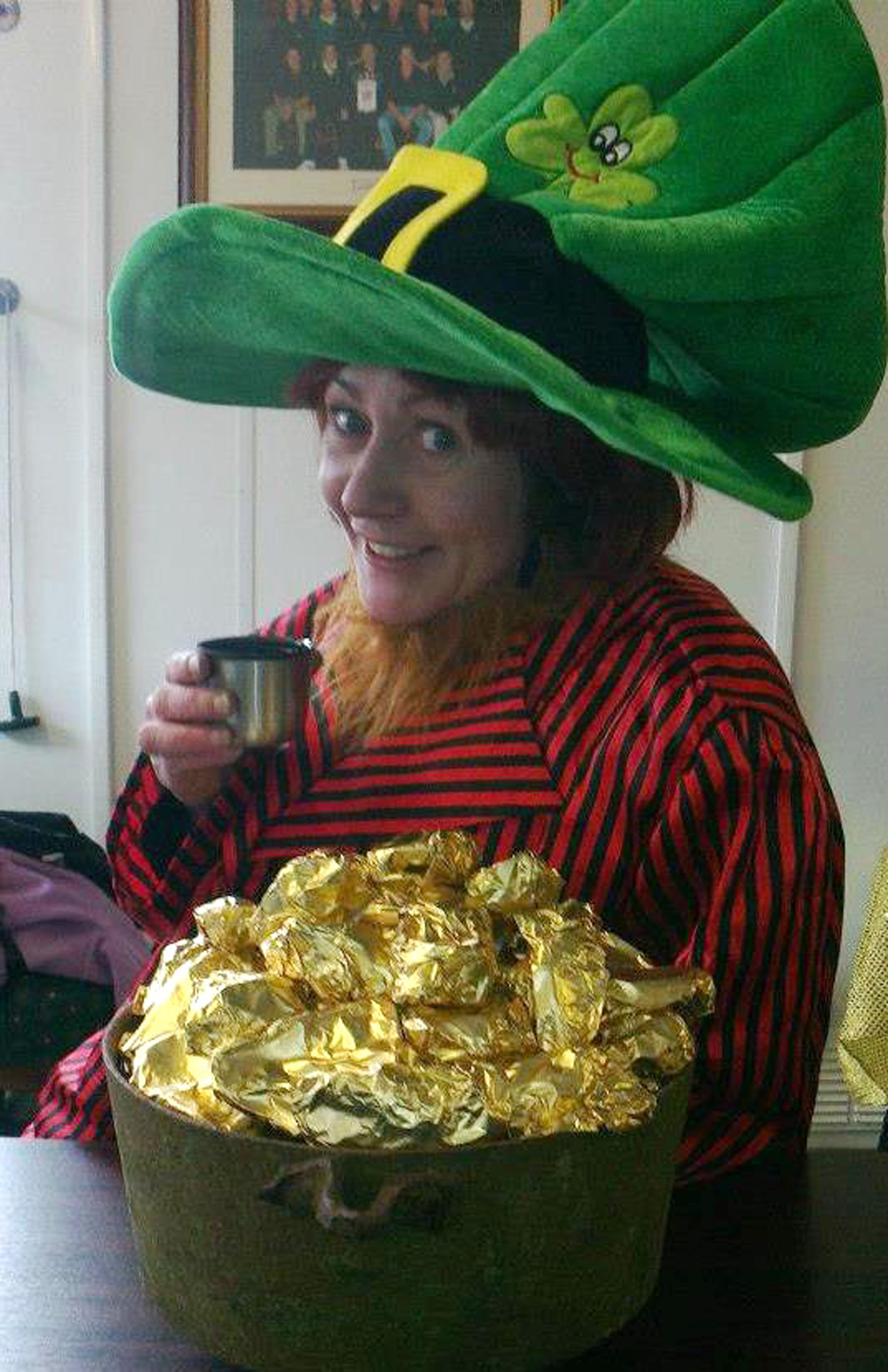
With this year’s event due to take place between August 22 to 24, Kathleen and her committee – Sarah de Groot (treasurer), Angela Boyle (administrator), Finola Early (costume design), Kerry Law and Roger O’Shea (artistic design), Sean Fitzgerald (graphic design), and Moira Gallagher (public relations), are now focusing their minds on fund-raising, not an easy matter in these recessionary times we live in. Last year, they  raised €3,500 in fundraising for the three-day festival by organizing a ‘couch to circuit’ 5km training programme, a 9-week regime of three sessions of jogging a week; a “Santa spin,’ in which people dressed as the chubby fellow in red and chose any means of transport to move around the Falcarragh area (including ‘suitcases on wheels’ and go-karts); and a leprechaun hunt in the Ballyconnell House estate.

summer

Kathleen would like to develop her team’s ideas further and expand the yearly events’ calendar both to entertain members of the local rural community and attract more tourists to the area but urgently requires greater, guaranteed funds to do so. “So much effort goes into fund-raising before we even begin to embark on our ideas and there’s only so many times you can ask someone to volunteer their time and effort,” she said during an interview at An tSean Bheairic this week. “It would be so much easier if we were financially well supported and could focus our efforts more on creating great entertainment, with strong educational value, for young and old alike.”

Kathleen and her merry band of entertainers launch their fund-raising campaign soon. They deserve our full support. Delve deep into your pocket and give generously.

New start for Udaras na Gaeltachta

With its national board due to meet for the first time as early as next week and its all-important job-creation remit still intact, a new start seems in order for Udaras na Gaeltachta.

But controversy still bedevils the beleaguered organization with criticisms of misspending of public money and investigations into alleged petty corruption by former board members in Donegal hanging over its head.

Over the next few weeks, the Donegal News analyses the Irish-language organisation, with emphasis on its operations here, in an effort to understand whether it has accomplished its tasks with adequate self-governance or whether various criticisms it faces are justified. And what, if anything, can be learned from the findings.

On a positive note, Anna Ni Ghallchoir, from Arranmore, the newly-appointed national chairperson of Udaras, told the Donegal News, “We have a very committed team with varied experience on the board now and I have every confidence their combined efforts will lead to success.”

Udaras

Sean O’Cuirean, Falcarragh solicitor, manager of Donegal Volunteer Center, and new board member, added, “Selection of board members was via open, competitive applications. I’m really looking forward to working with my colleagues to build dynamic Gaeltacht communities.”

The two, alongside ten other members, including Eunan MacCuinneagain, manager of Westbic, in Kilcar and a yet-to-be selected Donegal Council representative, face what Ni Ghallchoir termed “some daunting and challenging tasks ahead.”

At present, several former Donegal Udaras board members are under investigation by respective public ethics bodies for allegedly padding their expenses.

Concern over board and employee expenses accrued came to the fore over the last week when TDs at an Oireachtas Joint Committee were told by Minister’s Jimmy Deenihan and Dinny McGinley that half this year’s budget (€9.8 million in 2012) goes towards paying pensions of 136 former employees. Details are forthcoming as yet as to how much of the remaining budget goes into salaries and expenses of the 90 full-time employees and board members. Sinn Fein Senator Trevor Ó Clochartaigh said, “I nearly fell off the chair when I heard that,” adding, this raises serious concerns regarding the levels of monies being paid. Mean salaries at Udaras are around 80,000 euro.

In addition, it has been revealed that five Donegal board members were paid more than half a million euro in fees and expenses over the five-year period, 2004 to 2009. In this regard, board member O’Cuirean  said, “It is a major step forward that we can save half a million euro on fees and expenses by reducing the board while maintaining full geographical representation and that the money saved can go towards worthy community or entrepreneurial projects.”

Frank McBrearty, Mayor of Donegal, bemoans the delay in having a council member appointed to the board. “It is a sad reality that investigations into former board members’ expenses, including our council nominee, David Alcorn, is underway but that means we are short one person on the Udaras board. That does not benefit the community here. It must also be remembered, those being investigated are innocent until proven guilty. I can understand Minister McGinley’s not wanting to have egg on his face by appointing someone until things are clarified.

Udaras has come under criticism in the past by various national bodies in the past including the Dail’s own multi-party Public Accounts Committee (PAC) which examines the spending of public monies. Bernard Allen, former Fine Gael TD and head of the PAC, who launched an examination of Udaras financial affairs that helped lead to the board’s restructuring, told the Donegal News this week, “I recall being very concerned about the lack of transparency in the accounts of Udaras, especially in terms of travel expenses and extra payments, both for trips within Ireland and abroad.” Those trips included, it was claimed, to Las Vegas, for officials to meet with representatives of the Irish Development Authority (IDA).

Speaking to the Donegal News, Liam O’Cuinneagain, chairperson for five years, defended his and the record of Udaras, “There was a lot of paranoia at the time about whether public bodies and semi-state ones were spending public money properly, a lot of exaggeration and misinformation. We have done a relatively successful job in helping Gaeltacht communities.”

New board members are reluctant to talk about the controversies, saying they occurred before their appointment. Chairperson Ni Ghallchoir, said, “I’d rather not comment on what went on before as I was not in any way involved with Udaras then, but to my mind, utter transparency is a given. Every citizen is fully entitled to as much information as they wish about public bodies such as Udaras and as chairperson I will make sure they have complete access to the workings of the organisation.”

Falcarragh’s O’Cuirean added, “Everyone is aware of the lack of transparency in Ireland in the past on certain matters and the unfortunate results for the country as a whole. My commitment is that in future Udaras will be completely open in its dealings so that projects – whether in culture, language or economics – are selected on merit and need, not on who certain people know. Cronyism should play no part in its affairs.”

Published in Donegal News