Druids, faeries and a giant with a hole in his head – a witch’s brew of a carnival in Falcarragh

Possessing creative flair and organizational ability in abundance Kathleen Gallagher wanted to utilize her multi-faceted talents to support cultural and tourism development in Falcarragh – hey presto, some of the most colorful carnivals ever to grace the environs of this small, west Donegal Gaeltacht town.

Born in the tiny district of Carrowcannon, Kathleen (44), a teacher of early school leavers in Letterkenny, was a member of the Cosa Meata ‘Funky Feet’ Carnival Group and the more informal, self-named, tongue-in-cheek, ‘Creative Creaturs.’

Kathleen

As such, she was plum full of innovative ideas. And anyone who had the honor of witnessing the dramatic scenes as around 90 people dressed as zombies, vampires and creatures that go ‘boo’ in the night (with Kathleen as a zombie bride) emerged over the hill from the direction of the Bridge of Tears in the Muckish Gap, slouching into Falcarragh crossroads to the pulsating sounds of Michael Jackson’s ‘Thriller’ a few years ago know exactly what the term ‘innovative idea’ means. That particular event in 2010 raised more than 14,000 euro for the victims of the Haiti earthquake and also gained national recognition by featuring in the St. Patrick’s Day parade in Dublin watched by tens of thousands.

Haiti

Then there was the ‘Great Ball Race’ event on October 30, 2011, at which 4,000 numbered balls were released at the top of Falcarragh hill rolling down towards Gortahork and captured in a specially-designed collection chute, made by Dutchman, Rein de Groot. The event raised 4,230 euro for Concern to help reduce drought in Africa.
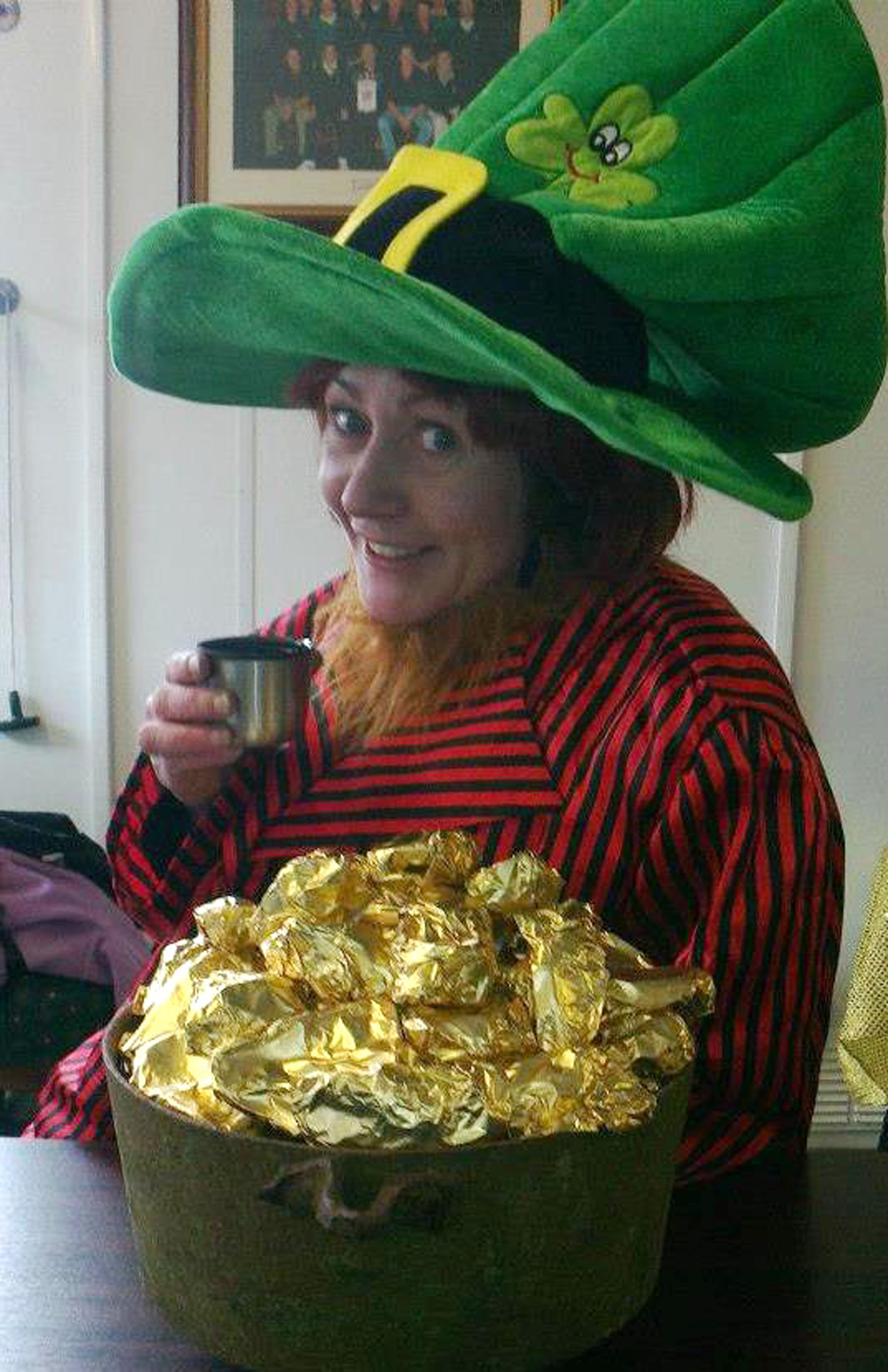
leprachaun

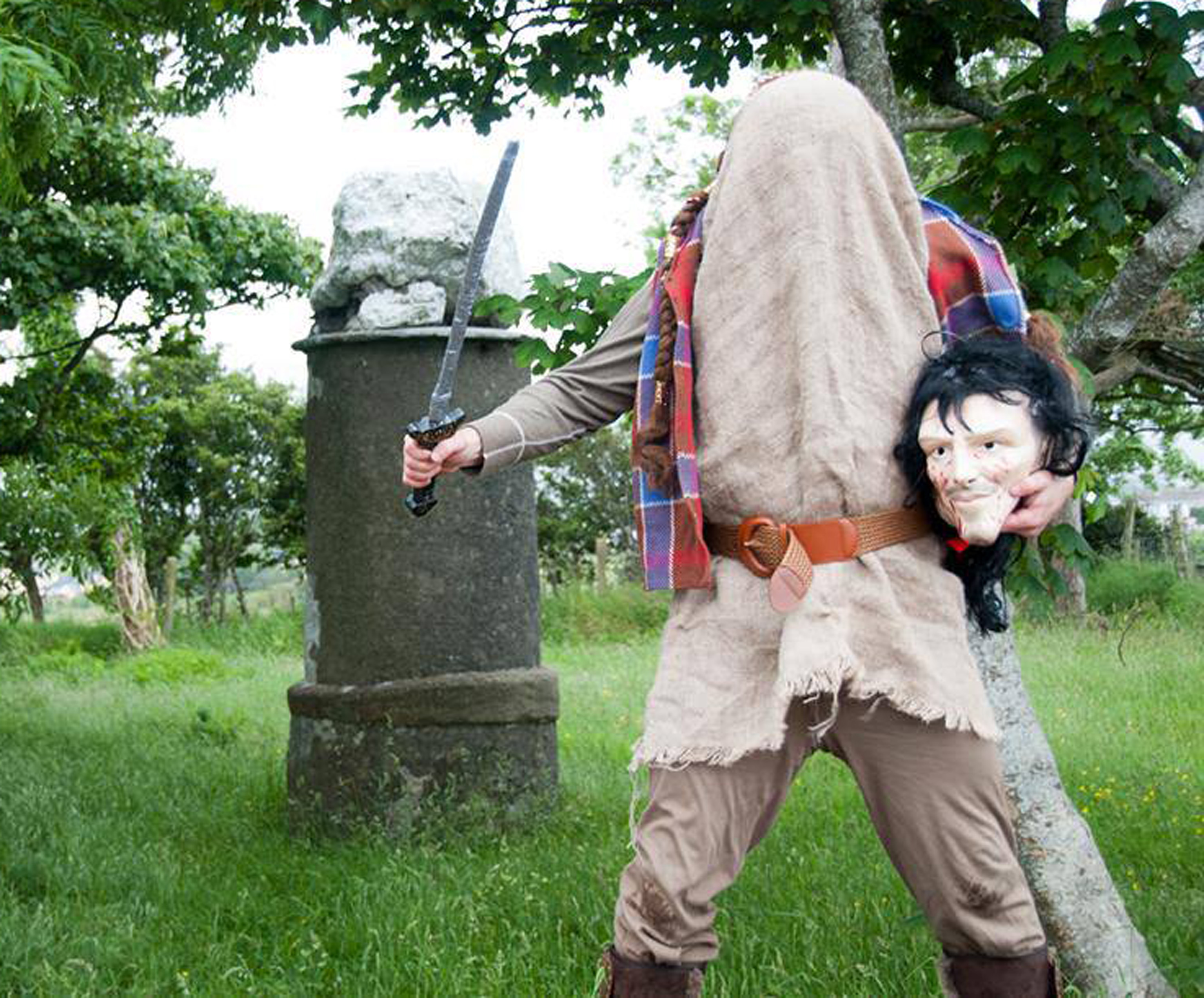
That brings us to the inaugural and intriguingly-entitled ‘Evil Eye Festival’ (Féile na Súile Nimhe) last year, which Kathleen and colleagues shaped to fit the national tourism campaign ‘The Gathering,’ and which will be repeated this year. Starring five impressive, 7-foot high puppets, two so complex they had to be operated by three people, a large cow structure made of timber and wire designed and made by Kerry Law and her partner Roger O’Shea and a 16-person squad of dynamic samba drummers representing the evil Balor’s army, as well as the assistance of the Cloughaneely Drama Group under the direction of Manus Diver and Joanne Butler and three of the area’s Irish schools of dancing (McCafferty, Maureen Byrne and Kavanagh), Kathleen and her team made local legendary history come to dynamic life. In the environs of Ballyconnell House estate (a verdant community preserve that may soon be turned into a Catholic Church-run drug addiction clinic), the story of the battle between Balor and his grandson, Lugh, son of Eithne, and the stealing of ‘An Glas Gaibleann’ (Cow of Plenty) from Mac Aneely, came to multi-colored life. Narration was in English and dialogue between characters ‘as Gaeilge,’ all replete with witches, faeries and a druidess (Biróg).

pupets 3

“It’s such a fantastic story, just waiting to be told in a multi-art form way,” is how Kathleen described the genesis of the event. “I knew we had a core of very creative people here who were well able to deliver a great spectacle. It was a case of building social capital in the area. We have plenty of local talent here. We just need the resources.”

The response to the festival last year was terrific, Kathleen recalls. “It worked out brilliantly. First of all, the weather stayed kind. And so many people – many of them locals, some of whom didn’t know the details of the legendary story of Balor and Lugh or the story about the stone behind the GAA field – came to enjoy the spectacle. Also, many people volunteered to help, even a plasterer, Martin Whoriskey from Gortahork, who saw us rehearsing at The Yard where he was working and happened to mention that he used stilts in his job to reach high spots. Immediately, we begged him to join us, which he did, playing the role of Balor – on stilts, of course. Aisling Friel from Gortahork, a former member of Cosa Meata Carnival Group, played the role of Eithne, daughter of Balor.”
headless man

For their efforts, the ‘Balor team’ was runners-up in the National Heritage Council award for ‘Most Innovative’ event, as well as the Me2U Donegal Volunteers Award.

Challenges, of course, were many, as they tend to be when launching such an ambitious idea. “It was a brand new project so people were initially a bit bewildered about it at the start. We also needed to find available space, both for the equipment and our life-size puppets, as well as for workshops such as the samba drumming training led by Roger. We were very thankful to Paul Kernan (coordinator) and his team at The Yard, who helped us very much. Sean Fitzpatrick, a wonderful designer, produced our posters and brochures.”

evil eye 1

With this year’s event due to take place between August 22 to 24, Kathleen and her committee – Sarah de Groot (treasurer), Angela Boyle (administrator), Finola Early (costume design), Kerry Law and Roger O’Shea (artistic design), Sean Fitzgerald (graphic design), and Moira Gallagher (public relations), are now focusing their minds on fund-raising, not an easy matter in these recessionary times we live in. Last year, they  raised €3,500 in fundraising for the three-day festival by organizing a ‘couch to circuit’ 5km training programme, a 9-week regime of three sessions of jogging a week; a “Santa spin,’ in which people dressed as the chubby fellow in red and chose any means of transport to move around the Falcarragh area (including ‘suitcases on wheels’ and go-karts); and a leprechaun hunt in the Ballyconnell House estate.

summer

Kathleen would like to develop her team’s ideas further and expand the yearly events’ calendar both to entertain members of the local rural community and attract more tourists to the area but urgently requires greater, guaranteed funds to do so. “So much effort goes into fund-raising before we even begin to embark on our ideas and there’s only so many times you can ask someone to volunteer their time and effort,” she said during an interview at An tSean Bheairic this week. “It would be so much easier if we were financially well supported and could focus our efforts more on creating great entertainment, with strong educational value, for young and old alike.”

Kathleen and her merry band of entertainers launch their fund-raising campaign soon. They deserve our full support. Delve deep into your pocket and give generously.

Fair or unfair? A nettlesome question of censorship

Sitting in the front row at a CeangalG (ConnectG) conference on cultural tourism at An Chuirt Hotel a few weeks back I took the opportunity to ask Udaras representative, Gearoid O’Smaolain, about his organization’s plans for a drug addiction clinic in Falcarragh.

As seems traditional policy with Udaras (a characteristic that has led to its acquiring the sobriquet ‘the Secret Society’), the organization’s local tourism official was reluctant to talk, but I persevered and asked him three separate questions on an issue that I consider is of strong importance to the local community. Ultimately, the response I eased out was that Udaras had received no decent proposals over the years for Ballyconnell House near the crossroads of the west Donegal town and was in advanced negotiations to turn it into a drug addiction clinic. This information was included in one of my stories, “Catholic church linked addiction clinic in Falcarragh – Is this the best use of tax payers job creation money?

Imagine my surprise when I received a phone call from Stephen Maguire, who established the ‘Donegal Daily’ news service with Brenda O’Neill, where my story on the addiction clinic had been published, saying he had received the following email from Mr. O’Smaolain:

email 1

Until Mr. Maguire’s phone call and even though my name was clearly on the article, I had not received any communication from Mr. O’Smaolain about any alleged misquote, not even after I asked Mr. Maguire to have him contact me to discuss the matter (Having once been the beneficiary of my dear wife’s delicious ‘Columbian’ cooking as a guest at my home for lunch, there didn’t seem any valid reason for Mr. O’Smaolain to have been too shy about contacting me).

After many years in journalism, including working for The Irish Times, Time magazine and the Daily Telegraph, the United Nations Media Centre in New York, as well as founder and publisher of a national media and events company in Eastern Europe for ten years, I hope I have developed the right skills to compile an accurate story from an event. However, we are human, mistakes happen, so I asked Mr. Maguire what Mr. O’Smaolain said he had said.

This is where things began to take on a veneer of surrealism.

Mr. Maguire received from Mr. O’Smaolain what was alleged to be a ‘transcript’ of the Q&A we had at the conference and a private conversation I had with Mr. O’Smaolain afterwards. I found this to be surprising as I had been informed by the event organisers that there was no official transcript of the conference. And certainly, nobody tape-recorded the private conversation between us both, immediately afterwards. Also, as I was in the front row not ten yards away, directly facing Mr. O’Smaolain, I doubt very much if I misheard what he said, and I told Mr. Maguire as much (My Teeline shorthand learned at postgraduate journalism school at City University, London, is also pretty darn good. I may even proudly have reached the magic 100 words per minute back then).

When Mr. Maguire called me I was in Sicily (ironically visiting a cultural tourism project) so I asked him to e-mail me the so-called ‘transcript’ and I would respond when I got back to my hotel that evening. The ‘transcript’ is alleged to have been written by Mrs. Cathy MacDonald, the person who chaired the panel meeting Mr. O’Smaolain was on.

email 2

But the so-called ‘transcript’ of the Q&A is quite porous indeed, not surprising, considering the fact that it is never easy to do ‘double duty,’ meaning take comprehensive notes while chairing a four-person, panel discussion (for example, it is truly amazing to read above that while she is speaking at the event, she is writing at the same time). And, as I had learned a week or so earlier from Udaras HQ Galway that  it had spent around 2.2 million euro last year in Donegal, I would hardly have used the term “millions and millions” in relation to one project (it also strikes me as simplistic ‘baby talk’).

Stranger still, while I had quoted Mr. O’Smaolain saying there had been no “decent proposals” for Ballyconnell House since Udaras took it over many years ago, his so-called ‘transcript’ shows him saying there had categorically been “no” applications at all. Coincidently, a week or so before the CeangalG conference, on a bus journey to Letterkenny, a well-respected Gortahork-based businessman, Milo Butler, in the seat beside me, told me he had submitted a comprehensive proposal for a tourism complex including an equestrian centre to Udaras for Ballyconnell House, a statement he reiterated with much anger when we met in Falcarragh later and I told him what Mr. O’Smaolain had said. Anger is a natural, indeed justifiable, response from anyone who has, in effect, being called a liar. Even stranger still, in an e-mail I received yesterday from Siubhan Nic Grianna, national communications and marketing manager for Udaras, she indicates there indeed were some proposals submitted for Ballyconnell House to her organisation. But more on this in a future post.

After e-mailing both myself and Mr. O’Smaolain saying:

maguire's letter

‘Donegal Daily’ then removed the article on the addiction clinic from its news site, as well as more than 240 ‘shares’ from readers.

I was not pleased, of course, as by doing so, Mr. Maguire was leaving himself open to criticisms of infringing on freedom of expression, but as a former publisher, I also could picture the kind of pressure Mr. Maguire might be under from the powers that be.

Imagine my utter anger, however, when I woke next morning, without any further communication from Mr. Maguire, to read the following on the ‘Donegal Daily’ news site:

donegal daily retraction

I, of course, tried to reach Mr. Maguire by phone and e-mail from Sicily seeking a full explanation, asking what, if any, new information had come to light. There was no response. I contacted him again several days later, sending him another e-mail. As of the time of publishing this blog article, more than a full week later, I still have not received any response from him addressing any of my questions regarding the reasons for his actions – be that legal, editorial or simply financial, meaning Udaras or bodies/individuals associated with Udaras either threatening tacitly or overtly him as an individual or Donegal Daily Ltd. as a company to withdraw advertising, or promised future revenue such as grants. (I note that Udaras board member and Fine Gael local council candidate, John Curran, ran an advertising campaign on ‘Donegal Daily’ plus stories but I would be severely disappointed if he had interfered in freedom of the press or freedom of expression issues in any way – two avenues, I notice, he himself availed of when he promptly favorited the ‘Donegal Daily’ clarification on social media outlets).

Confusing matters further is the fact that the ‘Donegal Daily’ statement was headlined ‘clarification’ not ‘correction,’ so in an effort to clarify matters for readers and respond to the retraction published without my consent, I submitted the comment below to ‘Donegal Daily.’

sean's reply

It declined to publish it and even deleted it from its Facebook. Hardly an action supporting freedom of expression.

Note

After more than 30 years in journalism, some spent in the tough world of investigative journalism, I have learned there is one sure-fire rule: if the people/institution you are writing about cannot ‘deal’ with a particular story (due to its veracity and its controversial nature), they will inevitably attempt to ‘deal’ with the storyteller, usually through accusations of bias or/and professional ineptness.

Ultimately it is sad this episode has come to pass. For more than a year, I have tried through the normal accepted means open to citizens to obtain information from Udaras, locally and nationally, and indeed directly from Mr. O’Smaolain, through phone calls, e-mails and FOI requests, without receiving sometimes as much as the professional courtesy of a response, never mind the information I’ve requested. If I had, there would have been no need to ask Mr. O’Smaolain at a CeangalG public forum.

It must be remembered, Udaras is a public body, supported by your money, the national purse. As such, it should share openly – not hide secretively – details about how it is spending what is a very precious commodity these days. As the most recent scandal at Rehab and others before it have shown, ordinary people in Ireland have already suffered enough from lack of transparency and proper accountability in public and semi-public bodies.

I welcome your views, either through comments below or the contact page.

Public accountability? Or continued secrecy?

Recent focus on this blog on Udaras na Gaeltachta and its spending of public monies and particularly funding of a proposed Catholic Church-run addiction clinic near the main Falcarragh crossroads has obviously hit a nerve.

Local media editors have informed me over the last few days that they have been approached by Udaras officials both locally and from the organisation’s headquarters in Galway in an effort to have the tone of coverage changed, by seeking so-called ‘clarifications’ – a rarely used term that in actual fact means nothing, as something is either accurate or inaccurate – and free editorial space for what it termed ‘right of reply’ – which under Council of Europe guidelines is defined as: “offering a possibility to react to any information in the media presenting inaccurate facts … which affect … personal rights.” Ironically, articles published so far are trying to do just that – encourage Udaras to release information that affects key individual rights – ‘the right to know.’

For local media, defying such pressure can be extremely onerous due to present-day financial straits on both print and digital outlets and the less than media-friendly legal system in Ireland now. At the same time, independent journalism is a cornerstone of any democracy.

Unfortunately, Udaras has not – as yet – agreed to provide what is most needed for full, open public discussion – comprehensive information, specific responses to specific questions I – as well as other reporters and even our elected national political representatives – have asked repeatedly by phone, Freedom of Information (FOI) requests and formal, written TD questions in the Dail (see earlier stories in this blog).

If such action in leaning on editors, and inaction in not providing key information, is not obstructing freedom of information, then what is? It echoes the words of Ireland’s Information Commissioner, who said at a conference last week that Ireland’s public service bodies still operate in a veil of secrecy, which changes in our FOI laws have only partially eased. He added, “There is still a long way to go.’ I agree.

Lack of transparency by Udaras sadly brings back memories from 25 years ago while working as a foreign correspondent for The Irish Times and for London-based Daily Telegraph and other publications in eastern Europe. There, in countries emerging from communist regimes, media faced great difficulties obtaining relevant information from civil service bodies that had got so used to acting in secrecy it had become ingrained in their way of thinking.

So, dear reader in continued pursuit of transparency in public matters and in consideration of their stated pledges about greater openness on issues related to Udaras, I have sent the following questions to the Donegal-based members of the national board of Udaras, namely Seán Ó Cuireáin, Eunan Mac Cuinneagáin and Daithí Alcorn, as well as to its Arranmore-born chairperson, Anna Ní Ghallachair.

In terms of fairness, I have allowed a whole week for a considered response (the deadline for their replies is Wednesday, April 16). Their pledges for greater openness should be obvious in the responses, especially as one of the board members is running for local political office on behalf of Fine Gael in the upcoming council elections.

I also include a small sample of feedback I have received from readers of this blog who are concerned about the spending practices and strategy adopted by Udaras in Donegal. Such feedback makes speedy, comprehensive responses by the aforementioned officials all the more important, details of which I will share with readers when – and if – they arrive.

The Questions –

1. Please provide all documentation related to investment and/or financial payments by Udaras to groups or individuals involved in the operation of Ballyconnell House over the years (from the date of first Udaras involvement in development of this property until present). Please include names and details of the groups and individuals as well as exact amounts.

2. Please provide all documentation related to grants by Udaras to groups or individuals involved in the operation of Ballyconnell House over the years (from the date of first Udaras involvement in development of this property until present). Please include names and details of the groups and individuals as well as exact amounts.

3. How much investment is to be made in Ballyconnell House to convert it into a proposed addiction clinic? I consider an absolute accurately figure may not be possible at this stage, but an estimation should be, as such a figure must obviously be an important part of budget discussions taking place now.

4. To whom is Udaras directly involved with in these negotiations, meaning what named organisations or individuals?

5. I understand from what John Curran said on Highland Radio last week that he has already visited three times, the Cuan Mhuire center in Newry. How many other board or executive members have visited Cuan Mhuire centres with respect to the proposed center in Falcarrgh, Donegal? And what centres have they visited? Has Mr. Curran visited other centres or met representatives, individuals or groups, of organsiations regarding the proposed clinic? Which ones?

6. What other organisations or individuals will be funding the proposed addiction clinic in Falcarragh? And how much will they be contributing (an estimate is fine)?

7.  What other organisations or individuals will be involved in the proposed addiction clinic project? And in what capacity?

8. Please name the person at the Donegal Udaras office who is spearheading the addiction clinic proposal.

9. Have any open, public discussion forums been organised by Udaras regarding the proposed addiction clinic where the community can contribute its input? If so, where and when? Please provide evidence of this.

10. What is the company-by-company breakdown of jobs created in Udaras-funded companies in 2013 in the Donegal Gaeltacht comprising the total jobs figure released to the media in January?

11. Please provide financial details on pension payments and any other payments upon retirement to the former CEO of Udaras and the former regional manager of Udaras in Donegal, Cathal MacSuibhne as mentioned in previous e-mails to you.

12. Has there been any other project proposals put forward to Udaras for the Ballyconnell House estate? If so, please provide details.


Reader Feedback:

Reader One: “Found your article on the addiction centre brilliant.  But did you know that if the state funds the centre then state is committing an illegal act?

Reader Two: “Great article on Ballyconnell House. I regularly play golf down there and I think it’s a disgrace the condition that fine property and grounds are in. That area has massive tourism potential. Udaras should be ashamed of themselves.

‘Stirring up a Hornet’s Nest?’ Or open public debate on a key issue?

I’ve just finished a radio discussion today on the Shaun Doherty Show on Highland Radio with Udaras board member and Fine Gael local council candidate, John Curran, on the proposed drug and alcohol addiction clinic in Falcarragh in west Donegal.

While I meet with John frequently – and admire what he is accomplishing in the voluntary sector and wish him every success in his upcoming political campaign for local council elections on behalf of Fine Gael – his describing me as “stirring up a hornet’s nest” by bringing to public attention an important project near the main crossroads in Falcarragh was disappointing, especially coming from someone who stated on his Facebook a day ago when launching his campaign, “I have pledged to make no empty promises, all I will say to anyone who has an issue or a suggestion is thank you and that I will try to address your issue if and when I am elected.

After all, this clinic, which is expected to cost hundreds of thousands – perhaps over a million euro – in public money, has important long-term repercussions for the local community in west Donegal, socially, culturally and economically, including:

  • restricted future access to this lovely area for members of the public;
  • perhaps (no guarantee), decent paying jobs;
  • far less money for tourism projects, cultural, arts or others, as promised by John and his fellow board members when appointed two years ago (in a beautiful and inspiring area as west Donegal such clean, environment-enhancing development could be enriching if funded is on a serious scale);
  • added trauma for local clerical abuse victims (unfortunately, the highest rate of such abuse per population is west Donegal) due to the involvement of Catholic Church-operated Cuan Mhuire, the company who will run the clinic, and which is alleged to have allowed such offending priests to say Mass at their centres.

For all of the above reasons, and more, the proposal for this clinic and its ramifications on the local community should be discussed openly. And as often as possible.

Unfortunately, the term ‘stirring up a hornet’s nest’ stated by John seems to echo a sentiment prevailing at Udaras – namely that the less the public knows about how its money is being used the better. A public body, using citizens’ hard-earned money, this economic group still refuses to reveal specific job-creation figures on a company-by-company breakdown of the ones it funds. Or the amount of money paid out from the public purse to its present and former top executives, locally and nationally, in pensions and other benefits.

John mentioned on the Shaun Doherty Show Highland Radio programme less than an hour ago that public information meetings have been held regarding the addiction clinic project. According to people who approached me, this is an erroneous comment and should be withdrawn. If such meetings had taken place, such a project – costing so much money and with such important social ramifications – would have made its way into the public arena, via media reports. Instead, the idea has remained in the realm of rumor and counter rumor and, until the story broke last week with details, might have remained there.

As a journalist and concerned social commentator, I can only do so much to highlight key issues affecting our community. It is important that others speak out (otherwise we cannot completely blame politicians for making bad decisions).

Therefore, if anyone wishes to comment, please do so – either for or against the project – on my blog or on that of other local media such as Donegal Daily, which published the story yesterday), or Highland Radio, which aired the debate today. Or directly to John Curran.

Only by voicing opinions strongly along whichever pathways open to us, can we influence what is happening in our own community. And with local elections coming up soon and campaigns well underway, there seems no better time.


Catholic Church-linked addiction clinic in Falcarragh: is this the best use of tax payers’ job creation money?

Is an addiction clinic run by the Catholic Church near the main crossroads in Falcarragh, west Donegal, where widespread clerical child abuse has taken place, the best way to spend hard-earned taxpayers’ job-creation money?
As Údarás na Gaeltachta, the area’s leading economic organisation, is expected to pour hundreds of thousands – perhaps even millions – of euro into the project, I posed the question to Gearóid Ó Smaoláin, the group’s tourism officer, at a recent EU-backed CeangalG (ConnectG) conference on the development of cultural tourism in the Gaeltacht at An Chuirt Hotel. His response: “We’ve tried to develop Ballyconnell House for many years without success as no decent projects have been put forward to us about it, so negotiations are well advanced for the clinic.

Ballyconnell House: Crumbling edifice to be turned into Catholic Church-run addiction clinic?

Ballyconnell House: Crumbling edifice to be turned into Catholic Church-run addiction clinic?

This was strange as local businessman Milo Butler, who developed the 200-year-old hostelry in Gortahork ‘Maggie Dan’s’ into a successful eating establishment, told me in an earlier conversation that he and other local entrepreneurs including a fluent, local Irish-language solicitor, put forward a comprehensive business plan to Údarás to turn the estate – on which the Cloughaneely Golf Club stands – into a hotel and tourism venture, including an equestrian centre. “It is utterly ridiculous to say no decent projects have been put forward, especially at a time when this organisation says it wants to support the growth of tourism in the area,” he said angrily. “Even worse, our proposal did not even receive so much as a response from Údarás, a simple professional courtesy in such circumstances. I am left deeply disappointed by what I’ve heard. It is more than obvious that certain influential organisations and individuals can get funding from Údarás, and others cannot. It is tantamount to discrimination. Proper use of taxpayers’ money is very important and as such it has to be properly accounted for and well spent.”

Údarás officials, still recovering from the imminent closure of Largo Foods in Bunbeg with the loss of 142 jobs after it had invested over 6.2 million euro in it, say the proposed drug and alcohol addiction clinic could provide much needed jobs in a town bereft of them.
Ballyconnell House is historically a symbol of oppression, now it will be a symbol of healing, and it could provide as many as forty-five jobs,” explained John Curran, board member of Údarás.

Others, however, are angry that a Catholic Church-controlled institution, Cuan Mhuire (Harbour of Mary), would operate the facility. Their reaction follows the well-publicised cases of paedophilia by priests, teachers and caretakers at church-run schools in this tightly-knit rural area, as well as national media reports that Cuan Mhuire allowed convicted pedophile priests to hold religious services at their other addiction centres in Ireland and gave jobs to both nuns and priests who are up on charges of child molestation. Media reports concerned two priests convicted of child abuse who allegedly stayed at a Cuan Mhuire centre after their release from prison and were allowed to say Mass to recovering alcoholics there, unbeknown to the patients. In addition, media allege that a priest jailed on multiple counts of sexually abusing altar boys, aged 10 and 11, in a church sacristy, allegedly lived at a Cuan Mhuire centre. Officials at the Catholic organisation have denied many of the allegations but have not opened their books yet for verification.

Martin Gallagher, a victim of clerical abuse from the Falcarragh-Gortahork area, who was interviewed in the BBC BAFTA-winning programme, “The Shame of the Catholic Church,” is also deeply concerned. “After the horrific things that have happened in this small area – with paedophiles linked to the Catholic Church, including Father Eugene Greene in Gortahork who abused over a 30-year period and pleaded guilty to 40 charges, as well as convicted Michael Ferry, who studied to be a priest at Maynooth, taught religion and was a caretaker at a church-run school in nearby Derrybeg where he raped several children – there is understandable apprehension about anything the Catholic Church is involved in here,” he said. The BBC-winning documentary was hosted by investigative journalist Darragh MacIntyre, former owner of the Teach Ruairi Pub in Gortahork. Unfortunately, the Gaeltacht has the highest rate of clerical paedophilia per population than any other part of Ireland.

In a phone conversation with me, Gallagher said some of the addiction cases in the Donegal Gaeltacht are “a direct result of Catholic Church-linked paedophilia, such is the trauma to the victims.” “How can that be handled sensitively by an addiction clinic run, in effect, by the Catholic Church?” he asked. Cuan Mhuire is a Catholic group with strong ties to the Vatican and fees to it for its services would be paid either by private insurance or the HSE.

Asked whether he knew about the allegations against Cuan Mhuire and if he considered them important, Curran said simply “I can’t comment on the CM project due to the fact that the project is still at an exec level within the Udaras. I don’t want to hinder this process as I don’t know what stage the discussions are at and feel that the appropriate time for the Board to get involved is when we have a concrete proposal to hand.”

Others question the need for an alcohol and drug addiction clinic in the area when Donegal already has one close by – White Oaks in Muff, adding that the high cost of the clinic to the tax-payer – with no guarantee that local people will be employed in well-paid professional positions – would restrict available funding for cultural tourism projects for the Gaeltacht that was promised by the new Údarás board after taking office two years ago.

While social workers report an increased problem with drug and alcohol addiction in west Donegal for various reasons, research in the field has shown that people who suffer such addictions rarely attend clinics in their own areas, particularly when the areas in question are rural, due to the high level of stigma attached to such treatment. As such, few people in the immediate area of west Donegal would benefit from treatments provided by a proposed new clinic established there.

It terms of cultural tourism, at the CeangalG conference, Ian Joyce, an arts and culture entrepreneur who launched Cló Ceardlann na gCnoc near Gortahork a number of years ago, told me his multi-annual 40,000 euro budget from Údarás/the Arts Council was stopped this year, leaving him desperately searching for ongoing funding. He said his printing, visual arts and design centre, which lies in the heart of the Gaeltacht, is “an artist lead initiative” which, as its website states, “provides a platform for creative exchange between artists worldwide and the Gaeltacht community.” This includes tailored courses, both residential and non-residential. While Cló has received hundreds of thousands of euro in support from various organisations over the years, Gordan says his initiative attracts many international visitors to the Gaeltacht area while also strengthening links with other countries, thus putting as he described, “the Donegal Gaeltacht on the cultural map.” He added, “Many arts and culture organisations and initiatives in west Donegal, and elsewhere in the county, have been hard-hit by cuts.”

Údarás officials declined to say how many local people might be employed at the proposed clinic or whether they would be part-time, low-skilled such as floor cleaners or higher-paid executive positions.

Ironically, one Údarás official told me the organisation had paid the Catholic Church “millions of euro for Ballyconnell House some years ago” and now plans to offer it back at a “negligible or heavily discounted rental rate as part of an overall deal.”

With the perceived need within Údarás to show healthy job creation statistics to retain its multi-million euro annual budget and well-paid staff jobs in face of a rumoured takeover by the IDA or Enterprise Ireland, a fragile position exacerbated by the loss of 142 jobs at Largo Food that left the organisation with a minus 78 tally, the worse jobs record of all the Gaeltachts of Ireland, after spending more than two million euro in Donegal last year, could the addiction clinic be a way of making its job creation statistics respectable before its key annual year-end review?

Flesh-eating plants, soaring eagles, Pagan wishing stones – all in a day’s work

His reputation was spoken of highly by good people – Mary McFadden, former headmistress and organizer of the lively ceilidh dances at Teac Jack’s and John Curran voluntary sector leader and aspiring politician. There seemed no-one better to uncover the anthropological and natural wonders of west Donegal for us than this fellow.

Seamus

So that’s how my wife, Columbia, our two small sheepdogs, Siog (‘fairy’ in Irish) and Lugh (who, according to Celtic legend, slew Balor of the Evil Eye) and myself ended up cowering for dear life under the branches of chubby furze bush as hailstones the size of a rabbit’s droppings – though much, much, much harder – pummeled down on us mercilessly from above.

But the drenching we got was worth the wetting (and sure didn’t the sun break out just a few minutes later as if to reassure us we’d be dry soon). For that’s how we got to know about flesh-eating plants, soaring eagles, Pagan wishing stones and Colmcille’s guide to the joy of sex all along the newly-Christened ‘Wild Atlantic Way.’ And many’s another thing that’s in Seamus Doohan’s head about our wee area tucked away in the far corner of this, the Forgotten County.

An electrical contractor by trade, the jolly, bald-headed 48-year-old became fascinated by the immense diversity of natural and anthropological features around him in his native Gaeltacht area of Cloughaneely after he participated in a sports endurance charity event for cancer victims three years ago. There and then he decided to study the local flora, fauna and history in greater depth and to launch a guided walks and navigation service, Walking Donegal, as an added attraction for visiting tourists and for local people. So far, he has taken several hundred on tours, including visitors from countries as diverse as Italy, the US and Japan, as well as guided walks with the Errigal Arts Festival and for schools.

Seamus 2

“We are spoiled for landscape choice in west Donegal, with such a wealth of intricate and colourful plant species and a fascinating history dating back to the time of primitive man and Pagan worship, not to mention the Christian era that came afterwards,” he said.  “There is something mysterious and magnetic about the mountains around us here, with so many routes for walkers of all ages and aspirations.”

Seamus’s walks, which include forest, island, hill and beach, range in duration from one to five hours and are graded 1 through 5 in terms of difficulty, from flat terrain to challenging gradients. They traverse places such as Horn Head, Ards Forest Park, Sli an Earagail, Dunlewey Glen, Tory, Innisboffin and Arranmore, as well as the Joey Glover Challenge, a walk from Muckish to Errigal “taking in all the mountains in between.”

devil's matchstick

Halting momentarily on the way up rolling fields to Lough Altan near Errigal, Seamus suddenly bends down and parts some blades of grass. Hidden beneath is a tiny plant with a vivid red head. ‘Devil’s matchstick, or cladonia cristatella,” he says, then points to a spot a few feet away. “And over there, some Devil’s chalices.”

devil's chalis

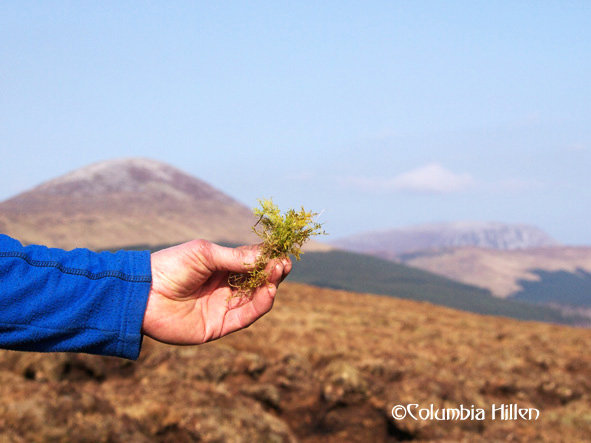
Running his fingers over a spread of soft lime-green moss, he adds, “Sphagnum. During the First World War there was a shortage of bandages and they used this to stem the flow of blood, especially from bayonet wounds. But there are a hundred other varieties.” He swings round on his hunkers to gaze at a small plant with what looks like a set of animal horns on top. “That’s staghorn. And there’s club and fern over there. Beside them, that’s bell and ling heather. You can dry their flowers and make healthy herbal teas out of them.” Turning again, his eyes searching closely, he adds, “There’s some tormentil flowers. They’re yellow in summer, natural antiseptic to ease toothaches. And there, sundew plants. They’re carnivorous, the glands on their leaves emit a sticky gel to traps insects. They then eat them to supplement the poor mineral nutrition of the soil in which they grow.”

Spagnum

Further along, by the side of an old pony and cart track used more than a hundred years ago to get to Altan Farm, he stops again, this time beside a strange rock formation that resembles the open pages of a book.  “I call this ‘leabhar cloch Cholm Ciolle’ (Colmcille’s book of stone). It’s believed the monk, who would have wandered these hills, secretly copied a mysterious text. Who knows? This could be it – magically petrified.” Somebody nearby says the book in question was probably ‘The Joy Of Sex” – a particularly delightful illustrative book that helped enlighten me greatly in the face of strict Catholic doctrine on the sacrosanct subject. But Seamus rightly ignores my nostalgic ramblings. And rambles on up the hill.

book

Below in the sunshine, the ruins of a once sturdy, castle-like structure stands at the head of the lough, still defying the elements after all these years. To our left a herd of deer dart away on to higher ground while above us two eagles glide effortlessly, on the sharp lookout for unwary prey.

eagles

Later, up a steep climb behind Gortahork, Seamus, who is secretary and training officer of the North West Mountaineering Club, points to two round indentations carved out of bare stone, resembling an alien’s head. “Cup or ring marks, prehistoric art,” he says. “Sometimes known as wishing stones in Pagan times. Supposedly the water that gathers in them heals warts, thus the Gaeilge name, Tober na bhFáithní (the Wart Stone). ”

alien

Out at Ray, he stops at a ruined church and flat run of fields beyond, “This is known as ‘Lag na gCnámh,’ the resting place of bones, after a massacre that occurred here in the 17th century,” he ssays. “No-one knows exactly where the bodies are but there’s a lot of them under this soil somewhere.” In a hillside graveyard outside Falcarragh, he stands in the wind and rain, gazing east, “Amazing to think that druids long ago in their big, flowing cloaks stood right here with this amphitheater of hills in front of them and prayed to Nature.”As he spoke and the hailstones started pouring down again, I wondered if he might just take on the role, burst into a chant and invoke the Sun God to smile upon us.

Ray church

From boatman and builder to balladeer extraordinaire 

Standing confused on a boat in the tiny west Donegal harbor of Bunbeg is how I first met musician-singer-songwriter extraordinaire Pat Gallagher.

Looking from above and seeing an obvious landlubber flabbergasted as to how to tie a main anchor rope, he kindly doled out guidance and assistance in abundance. That got us to talking, the kind of small talk strangers do to pass the time, with me rambling on about a wonderful concert – featuring ‘Goats Don’t Shave’ – that I’d heard with my wife the evening before.

boat

“So you liked it then?” he asked.

“Liked it? I loved it,” I said enthusiastically. “Great songs, great singing. Whoever wrote them is a musical genius.”

The man smiled, a quiet kind of smile. The kind you’d hardly notice, the kind where the lips barely part. I suppose that should’ve been my first clue. But who was I to know? Hadn’t I just moved to west Donegal and bought a boat soon thereafter? What I knew about either, you could write on the back of a postage stamp and still have plenty of space for a Shakespearian sonnet, or two.

“Do you know who wrote them?” I asked innocently. Then a queer feeling came over me, and in an instant, I knew what that smile meant.

Meet Pat Gallagher – banjo player, guitar player, harmonica player, singer, songwriter. And that’s only what he does for fun. As a Jack-of-all-Trades, he can also lay bricks in a straight line and tell you where the best fishing is among the offshore islands around Gaoth Dobhair in the heart of the Donegal Gaeltacht.

Pat Gallagher

And, of course, as he explained self-effacingly standing on that stony harbor pier, he’d written all the songs in the wonderful concert I’d just been to in Dungloe.

It’s no surprise then that I was delighted to meet him again this past week in the same little town, in a school auditorium between the mountains and the sea, once again with ‘Goats Don’t Shave.’ This time they were starring in a special, community-wide charity concert in aid of two-year-old infant, Lucy Gallagher, from nearby Maghery, who suffers from a rare, potentially life-threatening condition known as ‘harlequin ichthyosis.’

It was a classic sort of Irish evening, the kind I remember well from the days of my youth. The kind where – just like at Sunday Mass – the men all clump close together, too shy to be anywhere near the front of the hall. And the rest of the people are huddled on seats at the very back of the room, which left a very large intimidating space in the middle, right in front of Pat and his band members up on stage.

But where most priests don’t have the power or the charisma to raise the emotions of their listeners, the ‘High Priest of Music’ Mister Gallagher and ‘Goats Don’t Shave’ do, so it wasn’t long before the braver of souls there slipped shyly off their seats and a bit of groovin’ and gyratin’ was soon going on, others joining them, until that middle space began slowly to fill up with moving bodies. It takes some doing to turn a fairly solemn occasion into one of dancing madness but when I saw a young girl in a wheelchair spinning herself round and round to the music like there was no tomorrow – and let’s be perfectly honest, unlike the rest of us able-bodied, its not the same kind of tomorrow that awaits her – I knew the boys on stage had well and truly succeeded.

Dancing

Okay, there were still a lot of burly, muscular men – who could probably turn me into thinly sliced meat with a touch on the arm – still hugging their pints. But there were others who’d started hugging each other, as well as hugging the ladies. Some, lo and behold, unCatholic though the nefarious activity might have been, even hugging their own wives, which got me to thinking. Why is it sometimes we Irish don’t have the strength to be who we really are – emotional and affectionate? There’s a time to be subtle and retiring, and there’s a time to BE. It’s long past time we knew the difference.

But aside from our lingering awkwardness when it comes to overt shows of affection, there was plenty of that other characteristic component of Irish gatherings – rollicking good humor, especially when someone pushed a button by mistake and a giant suspended basketball board almost swiped poor Pat and his colleagues off the stage. Even funnier, as none of the band members noticed the near-catastrophe approaching them from the Heavens above.

lucy and group

As for Pat himself, his musical career has moved in an ever-increasing arc over the years. Having started early in life – he was an UlsterFleadh singing champion when he was 11 – he’s now a master of the art form known as songwriting, with more than 80 under his penmanship – whether it be the lively, foot-thumping ‘Las Vegas (in the Hills of Donegal); the hilarious lyrics and rousing satire of ‘Mary, Mary’ which opened the famous Dungloe festival years ago; the haunting melody of ‘The Evictions’, about the cruel events 0f 1861 in the Glenveigh Estate in Derryveagh under the infamous John George Adair; or the nostalgic journey Pat and thousands of other emigrant workers from Donegal took over the years on the ‘Glasgow Bus.’

He and his band have played many parts of the world, including 14 tours of the US,  taking cities like New York, Philadelphia, Boston, Chicago and Fort Lauderdale. Their debut album ‘The Rusty Razor’ went gold and London’s ‘Time Out’ magazine voted them ‘Best Band’ in 1993. Admirably, Pat is not afraid to face up to many of Ireland’s taboo subjects in his songs – ‘Lock It In,’ a bitter attack on men who physically abuse their partners; or “Let It Go,’ on bigotry against Travellers; or even “Killing Me,’ about his own past addiction to booze and cigarettes. At the same time, his ballads are rich with honest sentiment – ‘Tor,’ about the joys of fatherhood (he is the proud father of three children – Fionnuala, Sarah and Ferdia); ‘Rose Street;’ and one no doubt very close to his heart, ‘She Looked My Way,’ written especially for his wife, Cathy, and given to her as a Christmas present two years ago.

Having released six albums so far (the latest being ‘Songs from Earth’), before the tender age of 55, thankfully there’s still plenty of time left for the friendly musician to regale us with even more such quality work.

And to contribute his myriad talents to such deserving causes as that of unfortunate Lucy.

Údarás na Gaeltachta – a secret society?

Living in Gaoth Dobhair, the heart of the Irish-speaking Gaeltacht area of Donegal in northwest Ireland, I take a strong interest in how this beautiful region – arguably the most scenic part of the entire country – is governed and develops, both economically and socially.

As such, I have vested considerable investigative journalistic experience, gained after 30 years in the media sector, in analyzing the workings of the largest economic development organization here – namely Údarás na Gaeltachta, an organization that has benefited from a spending budget of around one billion euro, mainly for job creation, since it was first established in 1980.

I have penned many news and feature articles on the organization over the last five years, the latest (below) published today (Friday) in the largest circulation newspaper in Donegal, the Donegal News.

For context, it’s probably worth reading the much more comprehensive, three-part series on Údarás that I wrote for the same newspaper. You’ll find it in the earlier posts below.

Pulling the ropes

Údarás na Gaeltachta – a secret society?

Like Br’er Rabbit, west Donegal’s largest economic development group is captive.

Captive to the belief that call centres and large manufacturing companies are the only way to create jobs – and to a golden circle that benefits from such thinking.

As such, Údarás na Gaeltachta is a Tar-baby, ever-more entangled in a sticky situation.

With the recent announcement that Largo Foods in the Gaoth Dobhair industrial estate will now close, with the loss of over 140 jobs, and after spending more than two million euro in the Donegal Gaeltacht over the last year, the Irish-language organisation has suffered a net loss of 78 jobs, according to its own figures, the worst record for many years.

So what has gone wrong? Seemingly, plenty!

Remoteness, poor infrastructure and a narrow skills’ set are the reasons most often given for few companies coming to the rural Gaeltacht of west Donegal. But does this excuse Údarás’ poor performance and lack of transparency as a public body?

After announcing recently it created 220 jobs in Donegal last year, Údarás promptly declined to give a breakdown of the figure. Following a Freedom of Information (FOI) request I made earlier this year seeking a list of funded companies and their job numbers, as well as pension payments, it replied, “For data protection and commercial sensitivity reasons. We do not release specific information collated for the purposes of the Údarás employment survey to the general public,” adding that pensions, while funded by the taxpayer, were private matters.

I asked Sinn Féin Senator Trevor Ó Clochartaigh of the Oireachtas Joint Committee, which revealed Údarás pays half its annual budget in pensions for 136 former executives, to follow-up. His party leader, Gerry Adams TD, submitted Dail question Nr. 127, as well as Questions 416 and 417, asking the Minister for Arts, Heritage and the Gaeltacht to “detail final salaries levels, lump sum or additional payments and the pension payments made to each chief executive officer or regional executive of Údarás who retired in the past three years.” Minister Jimmy Deenihan answered: “I have been advised by Údarás na Gaeltachta it considers the payments referred to are covered under the Data Protection Acts 1988 and 2003. Accordingly, it is not in a position to supply the information requested.”

Mary Lou Nolan, TD, Sinn Féin’s spokesperson on public expenditure and reform, then submitted yet another Parliamentary question, Nr. 148, asking the Minister to “reference the specific provisions of the Data Protection Acts to which he refers; the basis on which he believes Údarás na Gaeltachta does not, unlike all other senior managers across the civil and public sector, have to make public, details of public service pension arrangements.” A full answer is still awaited.

Such lack of co-operation by Údarás is disconcerting and leads inevitably to suspicion, making the words of its Arranmore Island-born chairperson Anna Ní Ghallchóir to me – “utter transparency is a given” – seem pale.

About one billion euro has poured into the Donegal Gaeltacht since Údarás was founded – for a population of 24,000. Result: the highest unemployment rate nationally, ugly, empty, ghost-like industrial estates blighting a rural landscape and a horrendously under-developed tourism sector.

Two years ago, under the Fine Gael-Labour ruling coalition, a new board promised change, with both ni Ghallchoir and fellow board member John Curran saying to me in separate interviews that widespread funding for ‘cultural tourism’ projects would be given to create sustainability by attracting more visitors to west Donegal. Two years later, less than five per cent of Údarás’ budget has gone to such projects, leading people at a recent EU-backed cultural tourism CeangalG (ConnectG) conference at An Chuirt Hotel in Gaoth Dobhair to complain of dwindling support.

In the case of Largo Foods, where is the sustainability that Údarás grants totaling 6.2 million euro to it (over 43,000 euro per job) should have created, and what business-sense does it make for Údarás to allocate half a million euro for two years for this company, which didn’t even bother to draw it down? With call centers and large manufacturing units merely band-aids for local unemployment problems, why has Údarás shown so little trust in small businesses forming the backbone of the local area’s economy? Especially so when a national economist who completed her Doctorate on Údarás operations, concluded, “on supply chain factors alone, a long-term, job creation strategy based on manufacturing was, and will continue to be, insane.” Could the fixation with short-term job numbers be linked to retention of Údarás’ own staff jobs, whose salaries average 80,000 euro annually, excluding expenses?

Instead of cultural tourism being expanded with serious money, Gearóid Ó Smaoláin, the organisation’s tourism officer, said in a recent public forum that “discussions are well-advanced” on building an alcohol and drug addiction clinic in the coastal town of Falcarragh, beside an existing golf course in the Ballyconnell House estate. It is believed Údarás, having already turned down several tourism ideas for the area, will allocate between several hundred thousand and one million euro to the project, which will be run by an arm of the Catholic Church.

Ultimately, decent Donegal people deserve better. How many more millions of euro must be wasted, how many more years lost, before Údarás changes its vision, and for transparency and accountability to be achieved? Perhaps only then will the ceaseless brain-drain halt and our native language escape from withering on the vine.

Published in Donegal News

Udaras na Gaeltachta consider challenges of creating new jobs

Meeting for the first time this morning (Friday), members of the new board of Udaras na Gaeltachta face the challenging tasks of analysing the organisation’s performance and brainstorming on ways to accomplish the goals for which the Irish-language body was established.

One priority is employment in Gaeltacht areas. “Job creation and language promotion go hand-in-hand,” Anna Ni Ghallchoir, 55, the new chairperson, told the Donegal News. “With my new board colleagues, I will be examining very closely if past strategies have been successful and come up with innovative ones to help us move forward.”

Depending on whom you speak to, Udaras has either an acceptable record on job creation, or a very poor one, reflecting the age-old comment that statistics are like sausages – they look good but you’re never quite sure what’s in them.

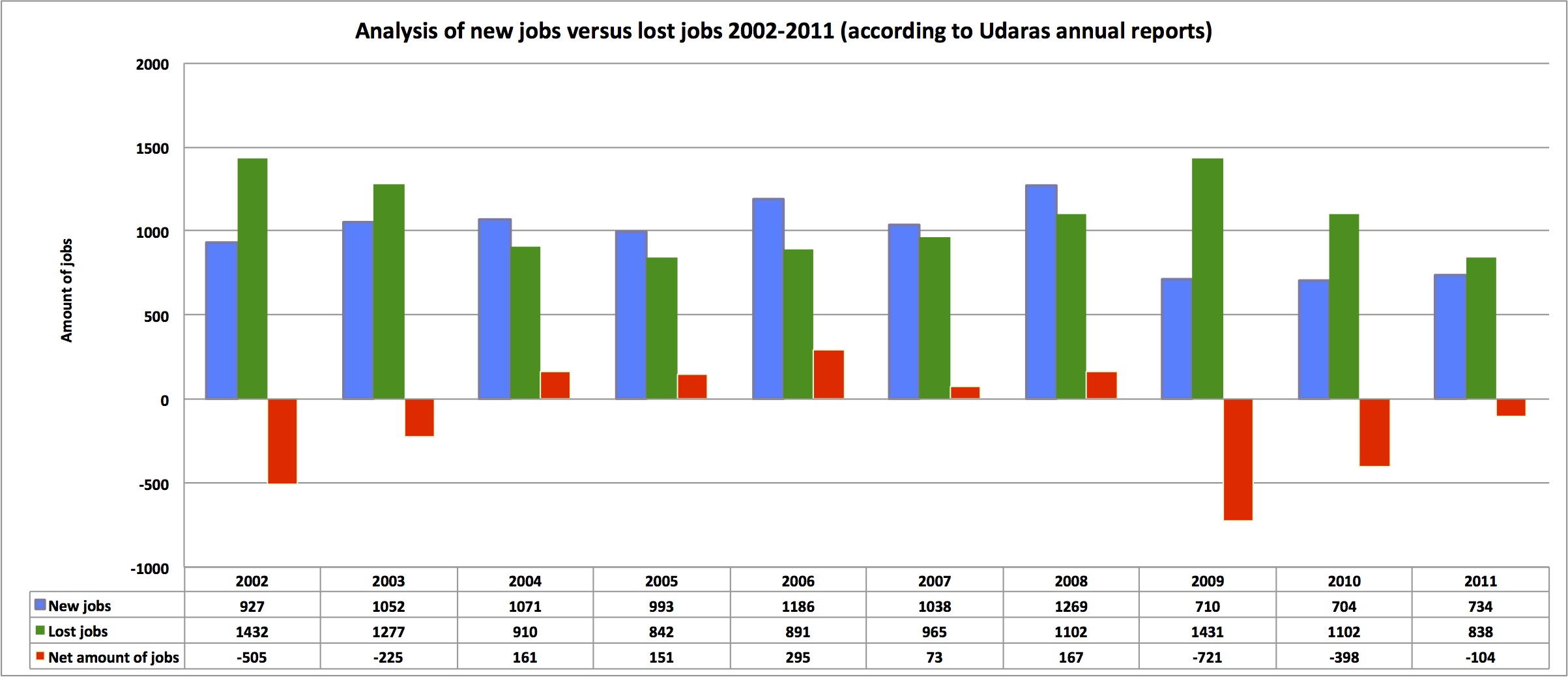
New jobs versus lost jobs

With total funding of around one billion euro so far, Udaras reported it had created 6,970 jobs as of last year in what it terms ‘client companies,’ defined as any company receiving support. When examined in the context of unemployment in Gaeltacht regions, this represents 7.75 per cent of the population there. As of last year, Udaras’ website shows it supported 1,876 jobs in the Donegal Gaeltacht, which represents 7.89 per cent of almost 24,000 people. Donegal Gaeltacht has the second largest number of Irish speakers, but ranks fifth in jobs created among the seven Gaeltacht regions.

Liam O‘Cuinneagain, Udaras chairperson for the last ten years, told the Donegal News he is “satisfied with our job creation performance,” adding, “It’s not easy to get companies to locate to rural Ireland, in part because of its remoteness and lack of transport links and limited skill-sets there.” As evidence in Donegal, he points to sectors Udaras has invested in – seafood processing, call centres (VHI), IT, sea angling, boat repair, even potato-crisp/fast food manufacturing (Largo Foods).

Other business analysts, however, are less satisfied with Udaras’ performance, including Tom Fitzgerald, fluent Irish speaker and business owner employing 50 people at Bard na nGleann, his information-management company in Béal Átha’n Ghaorthaidh in the Cork Gaeltacht. “A strong, well-run economic development organisation is important for the preservation and promotion of the Irish-language and for job creation in marginalized areas such as the Gaeltachts, including Donegal, but there’s no shying away from facts, Udaras is an extraordinarily expensive organisation,” Fitzgerald, whose company has an annual turnover of between one and two million euro, told the Donegal News. “There is little evidence of effectiveness in the statistics. By normal business practice standards, Udaras’ record so far is very poor.”

Expenditure

Fitzgerald points to the fact that the total number of jobs Údarás says it created was lower in 2010 than in 1996. “Furthermore, there’s no indication that the amount of money spent by Údarás in a single year has any impact on job creation in the Gaeltacht.  For example: Údarás spent more than 84 million euro in 2002 according to its own annual report. Yet there is no corresponding spike in jobs either in that year or following years.”

O‘Cuinneagain says during his tenure as chairperson, “cost per job was around eight thousand euro.” However, a simple look at Udaras’s total expenditure for the last ten years (613.5 million euro) relative to the number of jobs it reports creating by the end of last year (6,970) equates to 88,000 euro cost per job. As only around 10 per cent of budget goes to language-cultural activities, the final cost per job figure may be as much as ten times higher than stated. In Donegal, a case study in job costs is Largo Foods, headquartered in Ashbourne, Meath, but with facilities in the Gaoth Dobhair Industrial Estate. According to Udaras, it has received over 6.2 million euro in funding between 1999 and 2011 – with another half-million euro to be paid soon for automated equipment. Udaras said last year the company employed 120 people. Taking those figures, that works out to be over 55,000 euro investment per job created, not considering funding from other bodies for Largo. Ironically, following the installation of the automated equipment earlier this year, media reported 36 jobs were lost at Largo.

As some of Udaras’s ‘client companies’ are also the ‘client companies’ of other organisations, foreign and domestic, from whom they receive additional support, it is difficult to evaluate what specific job numbers Udaras contributions amount to. “The term ‘client companies’ is a loose one, easily manipulated to suit purpose,” said Fitzgerald. “Some organisations that partly support companies in the Gaeltachts often claim all the jobs as their own making, which is quite misleading.”

O’Cuinneagain acknowledges that criticisms of Udaras for not supporting enough micro companies – entrepreneurs wishing to hire a handful of people – are valid. “We’re not getting what we should be getting – smaller businesses,” he said. “We’ve focused too much trying to get big companies that might employ hundreds. Even though the finance and support system is there, Udaras has not been welcoming enough. Staff have not been as pro-active as they should be, have not scoured their Gaeltacht communities to find such entrepreneurs. Unfortunately, we have remained in a culture of factory jobs.”

Asked why, the director of Oideas Gael, a language group in Glencolmcille, lay the blame on factors outside Udaras ranging from lack of business teaching in education “Greek and Latin instead of entrepreneurialism” to lack of bank finance. But he did not rule out the possibility that as funding a small company with thousands of euro amounted to nearly as much paperwork for Udaras staff as funding large companies with millions of euro, there may have be a Udaras propensity for avoiding small business applications. Asked if the push for larger companies could have been simply a strategy to keep employment figures up and for Udaras to retain its all-important job-creation remit, which accounts for most of its annual budget, he said, “That’s ridiculous, sounds more like a conspiracy theory to me.”

Fitzgerald’s opinion differs, “About the only goal that Údarás is measured on is the creation of 800 or so new jobs per year, so they focus on doing just that. The problem is that this strategy doesn’t take into account what kind of jobs they are. In theory, Údarás is better off creating jobs that disappear quickly so they can place the same people again in a year or two.”

Analysts also say the Udaras board members may not have had enough business experience to spearhead a successful jobs-creation strategy. Of the Donegal members on the previous board, none could be identified as having long-time corporate management experience. O’Cuinneagain waved aside concerns that the previous national board was too large, numbering twenty, which some analysts said made it unwieldy to manage and hampered decision-making. “I did not find our board meetings too difficult to manage, but then again my experience as a teacher in inner city Dublin for many years helped a lot,” he said.

Lack of fiscal clarity within Udaras concerns some observers.

“I spent several years studying the organisation and found its finances extremely difficult to understand,” one leading business researcher told the Donegal News. “I also found frequent errors in its calculations. Some figures on spending simply did not add up. There’s really no excuse for that when we have so many accounting software programs such as Excel at our disposal.”

When the Donegal News requested a breakdown of Udaras spending for the seven Gaeltacht regions, particularly Donegal, for the last three years, Siubhán Nic Grianna, national communications and marketing manager, responded, “The distribution of total monies is not segregated on a county by county or Gaeltacht by Gaeltacht basis therefore I cannot provide breakdown for Donegal for this period.”

Bernard Allen, former TD and head of the multi-party Public Accounts Committee (PAC), which oversees the proper spending of public money, told the Donegal News that lack of transparency at Udaras may have hindered job-creation efforts. “We found its expenses system to be incomprehensible and could not understand how it was spending so much money on trips for so-called job creation efforts.”  Referring to the scandal over misspending by another state body, he added, “Udaras’ expenses read like a mini-FAS and it seemed to stymy our efforts to find out the truth and avoid disclosing pertinent facts and figures to us, especially related to board member, staff and associated expenses. With better accounting practices, perhaps its job creation efforts could have been more effective. ”

Some questions concerning expenses, including 30,000 euro over two years on trips to Halifax, Canada, to look at seaweed projects, costly business-class flights, trips to many international cities including Las Vegas, Shanghai, Los Angeles and Chicago, and expenses for spouses – which is counter to existing regulations – have still not been fully answered, Allen said.

Nic Grianna said such concerns lack basis. Describing the first story in this newspaper series as, “a slanted view, full of insinuations,” she added, “There was no reprimand from the Public Accounts Committee (PAC). We are very open and transparent and explained everything. There has been no abuse of public money.” In response, Allen said simply, “We did not get all our questions answered satisfactorily and a national election was called and the PAC disbanded before we could investigate fully.” Even though the information is in the public domain, Nic Grianna declined a request for a breakdown of pensions for 136 Udaras former executives costing around 4.3 million euro this year, half of this year’s current budget. Efforts to contact retired executives Cathal MacSuibhne in Donegal and CEO Padraig O’hAolain through Udaras for comment, were unsuccessful.

With allegations of cronyism and clintelism tainting many public bodies, O’Cuinneagain said he did not experience conflicts of interest while Udaras chairperson. “My organisation, Oideas Gael, did not receive any money from Udaras so I certainly did not feel the need to excuse myself from board discussions on funding, nor did any of the other board members as they did not receive any money either.”

As the Udaras board meeting gets underway this morning, Sean O’Cuirean, a new member from Falcarragh, remains optimistic. “A good thing about this board is that there are a new set of eyes looking at the situation. Such fresh perspectives often result in greater success and money well spent.”

Published in Donegal News

New start for Udaras na Gaeltachta

With its national board due to meet for the first time as early as next week and its all-important job-creation remit still intact, a new start seems in order for Udaras na Gaeltachta.

But controversy still bedevils the beleaguered organization with criticisms of misspending of public money and investigations into alleged petty corruption by former board members in Donegal hanging over its head.

Over the next few weeks, the Donegal News analyses the Irish-language organisation, with emphasis on its operations here, in an effort to understand whether it has accomplished its tasks with adequate self-governance or whether various criticisms it faces are justified. And what, if anything, can be learned from the findings.

On a positive note, Anna Ni Ghallchoir, from Arranmore, the newly-appointed national chairperson of Udaras, told the Donegal News, “We have a very committed team with varied experience on the board now and I have every confidence their combined efforts will lead to success.”

Udaras

Sean O’Cuirean, Falcarragh solicitor, manager of Donegal Volunteer Center, and new board member, added, “Selection of board members was via open, competitive applications. I’m really looking forward to working with my colleagues to build dynamic Gaeltacht communities.”

The two, alongside ten other members, including Eunan MacCuinneagain, manager of Westbic, in Kilcar and a yet-to-be selected Donegal Council representative, face what Ni Ghallchoir termed “some daunting and challenging tasks ahead.”

At present, several former Donegal Udaras board members are under investigation by respective public ethics bodies for allegedly padding their expenses.

Concern over board and employee expenses accrued came to the fore over the last week when TDs at an Oireachtas Joint Committee were told by Minister’s Jimmy Deenihan and Dinny McGinley that half this year’s budget (€9.8 million in 2012) goes towards paying pensions of 136 former employees. Details are forthcoming as yet as to how much of the remaining budget goes into salaries and expenses of the 90 full-time employees and board members. Sinn Fein Senator Trevor Ó Clochartaigh said, “I nearly fell off the chair when I heard that,” adding, this raises serious concerns regarding the levels of monies being paid. Mean salaries at Udaras are around 80,000 euro.

In addition, it has been revealed that five Donegal board members were paid more than half a million euro in fees and expenses over the five-year period, 2004 to 2009. In this regard, board member O’Cuirean  said, “It is a major step forward that we can save half a million euro on fees and expenses by reducing the board while maintaining full geographical representation and that the money saved can go towards worthy community or entrepreneurial projects.”

Frank McBrearty, Mayor of Donegal, bemoans the delay in having a council member appointed to the board. “It is a sad reality that investigations into former board members’ expenses, including our council nominee, David Alcorn, is underway but that means we are short one person on the Udaras board. That does not benefit the community here. It must also be remembered, those being investigated are innocent until proven guilty. I can understand Minister McGinley’s not wanting to have egg on his face by appointing someone until things are clarified.

Udaras has come under criticism in the past by various national bodies in the past including the Dail’s own multi-party Public Accounts Committee (PAC) which examines the spending of public monies. Bernard Allen, former Fine Gael TD and head of the PAC, who launched an examination of Udaras financial affairs that helped lead to the board’s restructuring, told the Donegal News this week, “I recall being very concerned about the lack of transparency in the accounts of Udaras, especially in terms of travel expenses and extra payments, both for trips within Ireland and abroad.” Those trips included, it was claimed, to Las Vegas, for officials to meet with representatives of the Irish Development Authority (IDA).

Speaking to the Donegal News, Liam O’Cuinneagain, chairperson for five years, defended his and the record of Udaras, “There was a lot of paranoia at the time about whether public bodies and semi-state ones were spending public money properly, a lot of exaggeration and misinformation. We have done a relatively successful job in helping Gaeltacht communities.”

New board members are reluctant to talk about the controversies, saying they occurred before their appointment. Chairperson Ni Ghallchoir, said, “I’d rather not comment on what went on before as I was not in any way involved with Udaras then, but to my mind, utter transparency is a given. Every citizen is fully entitled to as much information as they wish about public bodies such as Udaras and as chairperson I will make sure they have complete access to the workings of the organisation.”

Falcarragh’s O’Cuirean added, “Everyone is aware of the lack of transparency in Ireland in the past on certain matters and the unfortunate results for the country as a whole. My commitment is that in future Udaras will be completely open in its dealings so that projects – whether in culture, language or economics – are selected on merit and need, not on who certain people know. Cronyism should play no part in its affairs.”

Published in Donegal News